Fabric for pool, surf or both
We ask where your customer actually swims, then specify PBT or chlorine-resistant elastane for pool use and nylon/elastane for the beach, with elastic to match.
Bikinis, one-pieces, rash guards and swim shorts cut and sewn to your pattern, in fabric chosen for Australian pools and surf, and delivered duty paid to your door.
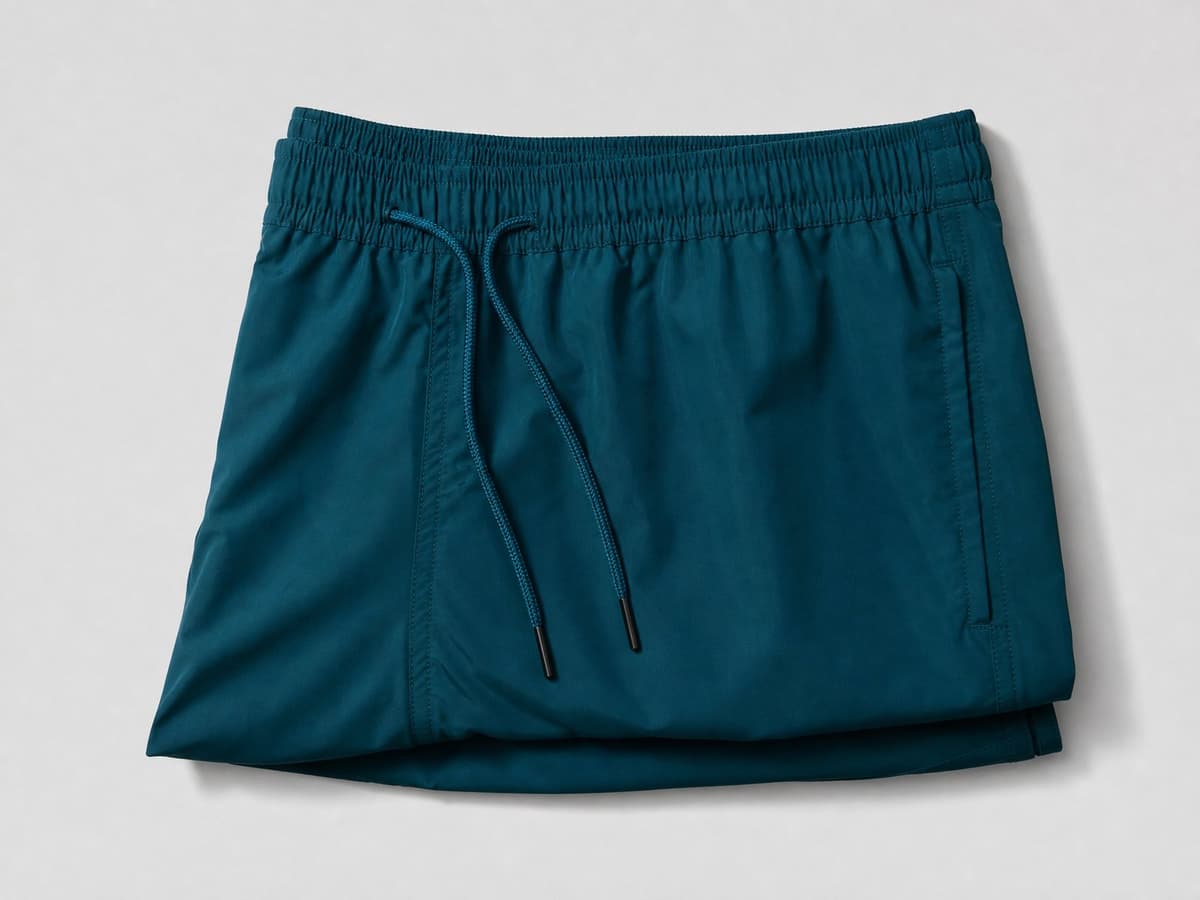
Collective Studio makes bikinis, one-pieces, rash guards and swim shorts for Australian brands in Narayanganj, Bangladesh, from 150 pieces per style and colourway. Fabric is chosen for pool or ocean use, UPF claims are lab-tested first, and orders ship DDP at Australia's LDC duty rate of Free: about 70 days from order to your door by air.
Or message the factory directly: WhatsApp +880 1980 055026 · hello@collectivestudioltd.com · Homaira replies within one business day.
Short answer: we cut and sew bikinis, one-pieces, rash guards and knit swim shorts for Australian brands on our own floor in Narayanganj, Bangladesh, from 150 pieces per style and per colourway. Orders ship DDP to any Australian address at Australia's LDC duty rate of Free, and take about 70 days from order to your door by air. Janelle Rawlins, in Noosa, Queensland, coordinates orders for Australian brands in your own hours.
Making swimwear for Australia is not the same job as making it for Europe or the US. Three things change. Your customer may swim laps in a chlorinated pool on Tuesday and surf on Saturday, so the fabric has to suit the water it will actually meet. The sun is strong enough that rash guards and swim tops are bought for protection, and sun protection claims follow a national standard, AS/NZS 4399:2020, which decides which garments may carry a UPF rating at all. And the season runs the other way round, so a spring launch means approving samples in late autumn.
On the standard, the point most brands miss is that a UPF number belongs to the fabric, while the right to claim it belongs to the garment. Under AS/NZS 4399:2020 a bikini or bikini top cannot be promoted as sun protective whatever its fabric rates, and a women's one-piece can be only if it meets the standard's body coverage requirements (ARPANSA). So in an Australian swim range the UPF story usually sits on rash guards and covered swim tops, and it rests on a laboratory test of your fabric, which we arrange before any rating goes on a label or swing tag.
The rest decides your landed cost and your compliance. Swimwear cut and sewn here takes Australia's LDC rate of Free when the last process of manufacture happens in Bangladesh and the allowable factory cost is at least 50% of the total factory cost; GST of 10% applies at the border. Care labels follow the care labelling standard the ACCC enforces, origin labels read Made in Bangladesh, and we cut and grade to your AU size chart. Each point is worked through below. Our swimwear page covers swim fabrics and construction for every market.
| Style | Usual Australian use | Shell we would suggest | Can it carry a UPF claim under AS/NZS 4399:2020? | Settle before bulk |
|---|---|---|---|---|
| Bikini and bikini top | Beach, resort and holidays | Nylon/elastane for hand feel; polyester/elastane if the range is sublimated | No. The standard excludes bikinis and bikini tops, whatever the fabric rates | Wet opacity with lining; chlorine-resistant elastic if it will see pools |
| One-piece | Beach, pool and lap swimming | PBT polyester or chlorine-resistant elastane for pools; nylon/elastane for the beach | Only if the design meets the standard's body coverage requirements; check the cut before planning a claim | ISO 105-E03 if sold for pools; exactly which panels are lined |
| Long-sleeve rash guard | Surf, beach and outdoor swimming | Polyester/elastane, which also takes an all-over sublimated print | Yes, if the design meets the upper-body coverage requirements and a laboratory rates the material | A UPF test on the production fabric; the label statement the standard requires |
| Short-sleeve rash guard or swim top | Surf and beach | Polyester/elastane | Depends on the cut: check it against the upper-body coverage requirements first | Sleeve length fixed in the tech pack; a UPF test if a claim is planned |
| Knit swim shorts | Beach, pool and summer wear | Nylon or polyester blend with elastane; polyester if printed | Only if the design meets the lower-body coverage requirements; check the leg length first | Mesh liner comfort when wet; ISO 105-E02 for colour in sea water |
We ask where your customer actually swims, then specify PBT or chlorine-resistant elastane for pool use and nylon/elastane for the beach, with elastic to match.
A rating goes on the label only after a laboratory has tested your production fabric, and only on styles the AS/NZS 4399:2020 coverage rules allow.
Swimwear cut and sewn here takes Australia's LDC rate of Free. DDP puts freight, the customs entry and any duty inside one landed price.
Janelle Rawlins in Noosa coordinates orders for Australian brands in AEST and works directly with our team in Narayanganj.
Test a swim range in Australia with 150 pieces per style and colourway; a sublimated print lets several designs share one base cloth instead of one dye lot each.
Last verified: 5 November 2026, against ARPANSA's guidance on the standard. The full standard is published by Standards Australia; read it before you label.
AS/NZS 4399:2020, Sun protective clothing: evaluation and classification, sets how a material's ultraviolet protection factor is measured and how it may be shown to buyers. It has three classifications across four ratings: UPF 15 is minimum protection, UPF 30 is good protection, and UPF 50 and 50+ are excellent protection. ARPANSA, which runs a NATA-accredited UPF testing laboratory, puts the practical advice plainly: for any outdoor activity, wear clothing made from materials rated UPF 50.
The 2020 edition matters for swim in three ways. It excludes low-coverage clothing from any sun protection claim, whatever the rating of the material, and ARPANSA names bikini swimwear, bikini tops, crop and halter tops, briefs and G-strings among the excluded items. It removed the earlier exemption for women's swimwear, so a one-piece may be promoted as sun protective only if it meets the body coverage requirements. And it sets label wording: for clothing, a statement that the rating applies only to the area of skin covered and that protection may be reduced if the material is wet, stretched, or affected by normal wear or chemicals. On a garment worn wet and stretched by design, that sentence is not fine print.
A rating describes the cloth that was tested, and ARPANSA's test reports rate the material without assessing a garment's design or coverage. So a claim rests on two checks: the cut against the coverage rules, which we work through with you at tech pack stage, and the fabric in a laboratory. ARPANSA's explanatory notes add that many materials show significant batch-to-batch variation, so the material tested should be the production material.
How we arrange it. During sampling we can send a cut of the mill's sample fabric for an early reading, so a weak result changes the fabric before bulk cloth is ordered. When your production fabric arrives, we cut a test length from it and courier it to an accredited laboratory. ARPANSA's testing service, for example, takes fabric samples (it prefers one metre by half a metre), lists charges for companies outside Australia, and returns results in 10 business days, often less, which fits inside a 40–50 day production window. You can also submit the sample yourself and hold the report in your brand's name. Either way, no UPF rating goes on a label or swing tag until a report covers your fabric.
| UPF rating | Classification | Where it fits in a swim range |
|---|---|---|
| 15 | Minimum protection | Can be claimed once tested, on a style the coverage rules allow; sits below the UPF 50 ARPANSA advises for outdoor activity |
| 30 | Good protection | As above |
| 50 | Excellent protection | The level ARPANSA advises for outdoor activity; the usual target for a rash guard sold for sun |
| 50+ | Excellent protection | The highest rating; the same coverage and labelling rules apply |
Ask where your customer swims, then ask again, because in Australia the honest answer is often both. A suit bought for the beach ends up in the local pool through winter, and a training suit goes to the beach in January. Standard elastane is the weak point in chlorine, so when a range will see regular pool use we specify PBT polyester or a chlorine-resistant elastane, with chlorine-resistant elastic at the leg and neck to match. For surf and resort ranges, nylon/elastane gives the softer hand most swim buyers expect.
Salt and sun are the other two stresses. Sea water and pool water are tested by separate methods, ISO 105-E02 and ISO 105-E03, because a colour that survives one can still bleed in the other, and strong sun fades bright shades. If a range leans on saturated colour, a polyester shell holds colour better under UV than nylon, and an all-over print sublimated onto polyester sits inside the fibre rather than on top of it.
Whatever you choose, write the use into the tech pack and the tests into the spec, then make the marketing match. A “chlorine resistant” line on a swing tag is a claim about the fabric, and like any claim to Australian buyers it has to be accurate under the Australian Consumer Law, so ask for the test report on your production lot before you print it.
| How the range is worn | Shell | Elastic and lining | Tests to name |
|---|---|---|---|
| Lap pool, aqua fitness, swim training | PBT polyester or chlorine-resistant elastane | Chlorine-resistant elastic; lining specified for chlorine resistance to match the shell | ISO 105-E03 at a swimwear concentration (50 or 100 mg/l active chlorine) |
| Surf and beach | Polyester/elastane for colour hold and print; nylon/elastane for hand feel | Four-way stretch tricot lining wherever the suit must stay opaque wet | ISO 105-E02; a wet opacity check on the sewn sample |
| Resort and holiday | Nylon or recycled nylon with elastane | Tricot lining; chlorine-resistant elastic if pool use is likely | ISO 105-E02; GRS or RCS paperwork before any recycled claim |
| Rash guards sold for sun | Polyester/elastane | Lining only where the design needs it | UPF to AS/NZS 4399:2020 on the production fabric; ISO 105-E02 |
| Pool and ocean alike | Choose for the pool, the harder of the two on elastane | Chlorine-resistant elastic throughout | ISO 105-E03 and ISO 105-E02 |
Last verified: 5 November 2026, against the instrument on the Federal Register of Legislation.
Swimwear is clothing, so it falls under the Consumer Goods (Care Labelling) Information Standard 2023, the information standard made under the Australian Consumer Law and enforced by the ACCC. Swimwear is not on the standard's short list of goods, such as hosiery, gloves and reversible garments, that may carry care instructions on a removable ticket or the packaging instead, so a swimsuit needs a permanent label. It can follow AS/NZS 1957:1998 as the standard varies it, which works in words, or the ISO 3758:2012 care symbols, or carry both, and any wording must be in English and clearly legible.
The rule that bites on swim is that the instructions must take account of every element of the garment, and the standard lists dyes, finishes, fasteners, padding, trims and linings among them. A one-piece with removable cups, a tricot lining and metal sliders needs care advice that damages none of those parts. Swim instructions typically deal with rinsing out chlorine or salt, washing by hand and drying out of direct sun; your fabric and trims decide what yours say, and we check the wording against the mill's care guidance before the labels are made.
Origin is a separate rule. Under the Commerce (Trade Descriptions) Regulation 2016, imported clothing must carry a true trade description that includes the country where it was made, so ours read Made in Bangladesh. Fibre content is not required by the care standard, but if you state it, it must be accurate. Agree the label position and material in the tech pack, because a stiff label is felt far more on wet skin. Our guide to care labels and wash symbols shows the symbols, and our Australia page sets out the standard in full.
Last verified: 5 November 2026.
Australian women's swimwear is sold in AU numeric sizes, and fuller-bust styles add a cup. That is a convention rather than a rule: each brand sets its own sizing, and the measurements behind a size differ between labels. One established Australian swim label's published chart, below, runs from AU 6 (XXS) to AU 20 (XXXL), sets the numeric size from the underbust and the cup from the bust, and offers D to G cups on its fuller-bust styles.
For your own range, decide early whether tops are sold by numeric size alone or by size and cup, because a cup-sized top means more pattern grades and more fit sampling. Then send finished-garment measurements, laid flat, for every size, with the stretch you expect at bust, waist and hip. Swim is cut smaller than the body so the suit holds close when wet, which is why a body chart like the one below is a reference for your customer, not the measurements we cut to. Men's knit swim shorts are graded from your chart too, by letter or waist size as your brand prefers. Our guide on how to build a size chart covers measurements and tolerances.
| AU size | Letter size | Bust (cm) | Underbust (cm) | Waist (cm) | Hip (cm) |
|---|---|---|---|---|---|
| 6 | XXS | 82 | 69 | 62 | 92 |
| 8 | XS | 84.5 | 71.5 | 64.5 | 94.5 |
| 10 | S | 87 | 74 | 67 | 97 |
| 12 | M | 92 | 79 | 72 | 102 |
| 14 | L | 97 | 84 | 77 | 107 |
| 16 | XL | 102 | 89 | 82 | 112 |
| 18 | XXL | 107 | 94 | 87 | 117 |
| 20 | XXXL | 112 | 99 | 92 | 122 |
A planning guide, not a promise: we confirm the dates for your order when we quote.
Australia's spring runs from September to November (Bureau of Meteorology), with summer from December, so swim stock is sampled while the northern hemisphere is in its summer. The table counts back from four on-sale dates, on the same assumptions as the calendar on our Australia page. Sampling takes about 10 days, plus a few days for you to sign the sample off. Production runs 40–50 days from approval, and we count 50. Freight is about 5–8 days by air or about four to six weeks by sea, door to door, and we count the long end of each. Then we leave two weeks of buffer and land the stock in your warehouse four weeks before it goes on sale.
Swim adds one risk the arithmetic does not show: fit. A new swim style is checked wet as well as dry and often needs a second sample round, so for a new block add about 10 days and send the tech pack earlier still. A split shipment suits swim well: the first share by air to open spring, the balance by sea to restock for summer, both quoted DDP. Bangladesh's two Eid holidays move earlier each year, and we tell you at quote stage if your window crosses one. The launch date calculator runs the same sum for any date.
| Launch (on sale) | Stock in your warehouse by | Air: send tech pack by | Air: approve sample by | Sea: send tech pack by | Sea: approve sample by |
|---|---|---|---|---|---|
| Early spring, 1 September | About 4 August | About 10 May | About 24 May | About 6 April | About 20 April |
| Mid-spring, 1 October | About 3 September | About 9 June | About 23 June | About 6 May | About 20 May |
| Late spring, 1 November | About 4 October | About 10 July | About 24 July | About 6 June | About 20 June |
| Summer, 1 December | About 3 November | About 9 August | About 23 August | About 6 July | About 20 July |
Last verified: 5 November 2026, against the official sources listed under Sources below.
Swimwear follows the same origin rule as any garment we make. Under section 153NA of the Customs Act 1901, goods are the manufacture of a Least Developed Country if the last process in their manufacture was performed there and their allowable factory cost is at least 50% of their total factory cost, and LDC goods take the LDC rate, Free, under the Customs Tariff Act 1995. The swim shell and lining come from partner mills; the cutting, sewing, printing and finishing that make the garment happen on our floor in Narayanganj, and we document the cost split so the preference can be claimed.
GST is separate. The ATO sets it at 10% of the value of the taxable importation, which adds any duty and the cost of international transport and insurance to the customs value, and a GST-registered business may be able to claim it back as a GST credit. On a DDP order, freight, the customs entry and any duty sit inside one landed price, and how GST is handled is confirmed in your quote.
Bangladesh is scheduled to graduate from LDC status on 24 November 2029 (UN LDC portal). Australia's foreign ministry states that products from Bangladesh will continue to enter Australia duty-free and quota-free after graduation (DFAT country brief, read 5 November 2026). That is stated policy rather than a tariff rule, so we confirm the live rate for each order. Your contact for all of it in Australian hours is Janelle Rawlins, founder of Mindful Merch in Noosa, Queensland: send your brief through our contact form and say you are in Australia.
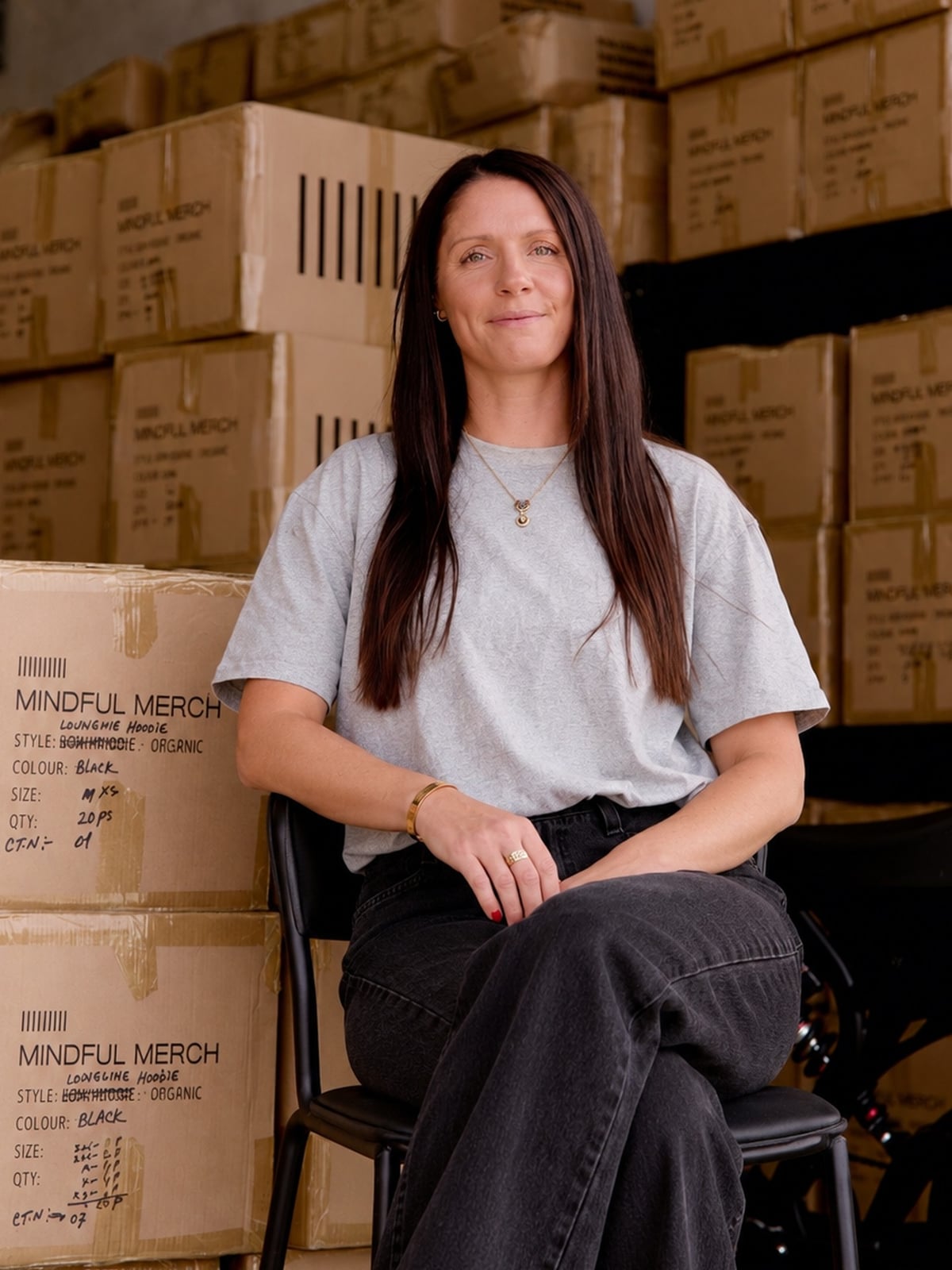
Janelle Rawlins founded Mindful Merch (opens in a new tab) in Noosa and has spent more than 14 years in the fashion industry. She now coordinates Collective Studio orders for Australian brands: you deal with someone who knows your market and keeps your hours, and she works directly with our team in Narayanganj.
Email her directly, or tell us you’re in Australia when you get in touch, and Janelle will take it from there. Your order is still cut, sewn and finished on our own floor and quoted DDP to your door.

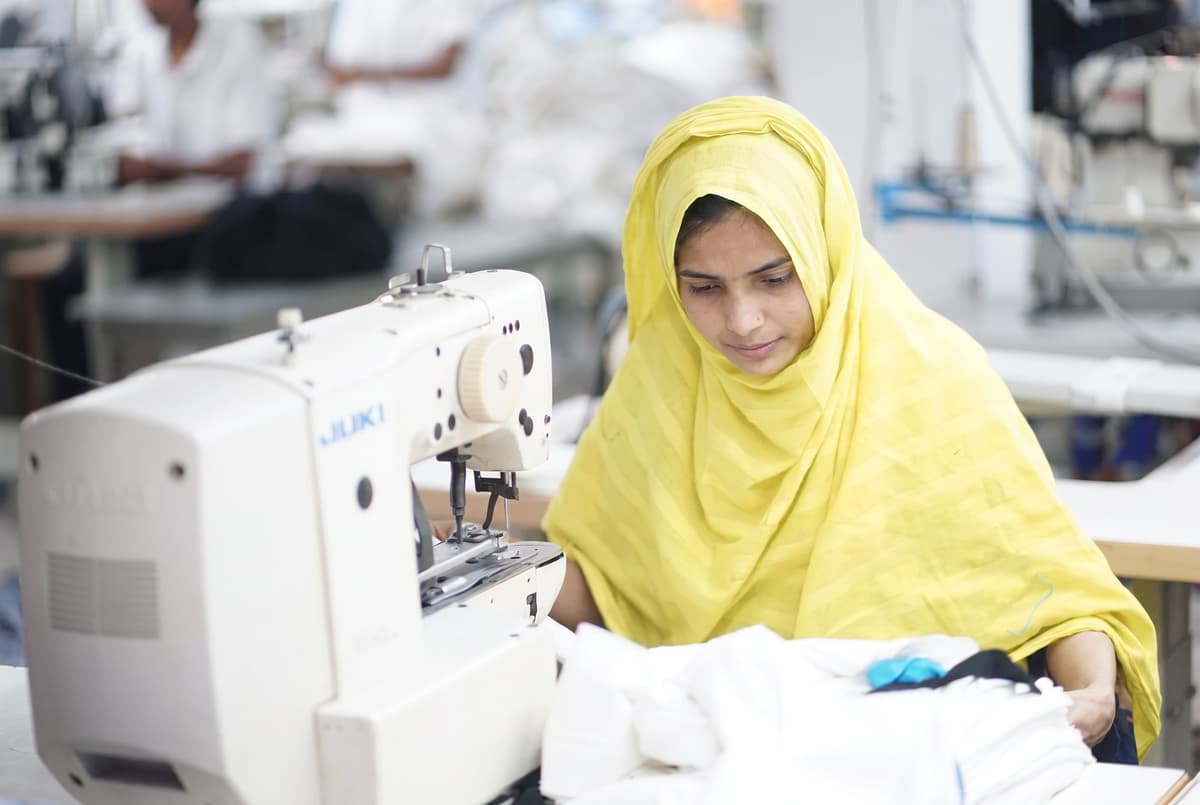
Your swimsuits are cut, sewn and finished in our own building. The cloth, some trims and every laboratory test come from outside it, and we say which is which.
If a test result or a mill lot is not right, we tell you before bulk is cut, because swim fabric reordered after cutting costs weeks of an Australian season.
Wonderful people to work with — very professional and knowledgeable, also accommodating to the needs of their customers.
Talk to the factory directly: +880 1980 055022 · hello@collectivestudioltd.com
Yes. We cut and sew bikinis, one-pieces, rash guards and knit swim shorts for Australian brands from 150 pieces per style and per colourway, on our own floor in Narayanganj, Bangladesh. For a first Australian range the useful test is narrow: one or two styles in one colourway each, rather than a full bikini wardrobe spread thin. Every solid colour is a separate dye lot at the mill, so colours multiply an order faster than styles do. If you want variety without the dye lots, an all-over print sublimated onto white polyester base cloth lets several designs share one fabric, though each design is still 150 pieces and it needs a polyester-based shell. Orders ship DDP to any Australian address and take about 70 days from order to your door by air. The MOQ calculator totals your styles and colourways.
Yes, on the right styles and only after a test. AS/NZS 4399:2020, the sun protective clothing standard, rates the material from UPF 15 to 50+, and lets a garment be promoted as sun protective only if its design meets the standard's body coverage requirements. In a swim range that usually means long-sleeve rash guards and covered swim tops. The rating comes from a laboratory test of your fabric, not the mill's brochure, and ARPANSA warns that many materials vary from batch to batch, so test the production material. We cut a sample length from your bulk fabric when it arrives and send it to an accredited laboratory such as ARPANSA, which returns results in 10 business days, often less, inside the production window. The label must then say that the rating applies only to the skin covered and that protection may be reduced when the fabric is wet or stretched.
Because the standard rules it out, whatever the fabric rates. AS/NZS 4399:2020 excludes clothing with low body coverage from any sun protection claim, and ARPANSA's summary of the standard names bikini swimwear, bikini tops, crop and halter tops, briefs and G-strings. A bikini cut from a UPF 50+ fabric still leaves most of the body bare: the rating describes the cloth, while the coverage rules describe the garment. The 2020 edition also removed the old exemption for women's swimwear, so a one-piece now has to meet the body coverage requirements before it is promoted as sun protective. For a brand, the practical answer is to put the sun story where it belongs: a matching rash guard or long-sleeve swim top in the same print, tested and labelled, sold beside a bikini that is sold on fit and fabric. On polyester-based shells we can sublimate one artwork across both pieces.
It depends on which water your customer meets most, and in Australia that is often both. Chlorine is the harder test: standard elastane breaks down in pool water, so a suit worn for laps or aqua classes should be PBT polyester or a chlorine-resistant elastane, with chlorine-resistant elastic at the openings. For surf and resort ranges, nylon/elastane gives the softer hand most buyers expect, and recycled nylon performs essentially like virgin nylon. Polyester holds colour better under strong sun and takes a sublimated print, which suits rash guards and bright, patterned ranges. Whatever the shell, line the panels that must stay opaque wet with four-way stretch tricot. Then name the tests: ISO 105-E03 for colour fastness in chlorinated water, ISO 105-E02 for sea water, and a UPF test if a sun claim is planned. Tell us how the range will be worn and we will specify it before quoting.
No, under current arrangements: swimwear made here takes Australia's LDC rate, which is Free. The test is in section 153NA of the Customs Act 1901: the last process of manufacture must be performed in Bangladesh, and the allowable factory cost must be at least 50% of the total factory cost. Our own floor does the cutting, sewing, printing and finishing, which is the last process, and we document the cost split so your claim is supported. GST is separate, at 10% of the value of the taxable importation, which adds any duty and international transport and insurance to the customs value; a GST-registered business may be able to claim it back. Bangladesh is due to graduate from LDC status on 24 November 2029, and DFAT states that its products will keep entering duty-free and quota-free afterwards. That is policy rather than tariff law, so we confirm the live rate on each DDP quote.
Care instructions that will not damage any part of the suit, in English, on a permanent label. Swimwear falls under the Consumer Goods (Care Labelling) Information Standard 2023, and it is not on the short list of goods allowed a removable ticket instead. You can use words under AS/NZS 1957:1998 as the standard varies it, the ISO 3758:2012 care symbols, or both. The instructions must account for everything that forms part of the garment, and the standard lists linings, trims, fasteners and padding among them, so a one-piece with removable cups and metal sliders needs care advice that suits all of them. Separately, the origin label must read Made in Bangladesh under Australia's trade descriptions law. Fibre content is not required by the care standard, but if you state it, it must be accurate. We sew labels to your artwork, so settle the wording at tech pack stage; our care symbols guide helps.
For swim on sale on 1 September, send the tech pack by about 10 May and approve the sample by about 24 May for air freight, or by about 6 April and 20 April for sea. Counting back from launch, that allows four weeks for stock to sit in your warehouse, two weeks of buffer, freight of about 5–8 days by air or about four to six weeks by sea door to door, 40–50 days of production after approval, and about 10 days of sampling plus a few days for you to sign off. Swim carries an extra fit risk, because a new style is checked wet as well as dry and often needs a second round, so add about 10 days for a new block. For a summer launch on 1 December, the air dates move to about 9 and 23 August. Treat this as planning guidance and run your own date through the launch date calculator.
Air when the launch date is fixed, sea when the calendar has room, and a split often suits swim best. By air, door to door to Sydney, Melbourne or Brisbane is about 5–8 days. By sea from Chattogram, which involves transhipment, allow about four to six weeks door to door, of which about 19–24 days is port to port. These are typical figures, never a promise for a particular order. Swimwear is light and packs small, so choosing air weighs less on a swim order than on a carton of fleece hoodies, though air is still the dearer option. One plan that suits swim is the first share by air to open the spring season and the balance by sea to restock for summer. Both are quoted DDP, so the freight, the customs entry and any duty are already inside each price you compare. By air, plan on about 70 days from order to your door.
AU numeric sizes for women's swim, with cups if you make fuller-bust styles, and your own measurement chart behind them. That is convention rather than regulation: each brand sets its own sizing. One established Australian swim label's published chart runs from AU 6 (XXS) to AU 20 (XXXL), sets the numeric size from the underbust and the cup from the bust, and offers D cups and above on fuller-bust styles. Use charts like that to sense-check yours, not to copy. What we need is finished-garment measurements, laid flat, for each size, plus the stretch you expect at bust, waist and hip, because swim is cut smaller than the body so it holds close when wet. A cup-sized top adds pattern grades and fit sampling, so decide on it early. Men's knit swim shorts are graded from your chart too. Our guide on building a size chart covers tolerances.
Yes. Janelle Rawlins coordinates Collective Studio orders for Australian brands from Noosa, Queensland, where she founded Mindful Merch, and she works directly with our team in Narayanganj. Queensland does not change its clocks, so she is always four hours ahead of our floor, and your afternoon overlaps our working day. Send your brief through our contact form, say you are in Australia and that it is swimwear, and include four things: where the range will be worn, the styles and colourways, any UPF claim you want to make, and your launch date. Those four answers decide the fabric, the tests and the calendar, so they save a round of questions. Nothing about the factory changes: your swimwear is still made on our own floor in Bangladesh, from 150 pieces per style and colourway, and quoted DDP to your Australian address, with freight, the customs entry and any duty included.
Trade and regulatory details on this page last verified 5 November 2026. Tariff and compliance terms change — ask us to confirm the current position for your order.
Whether it’s a large bulk or wholesale run or your first batch of 150, send a sketch, a reference, or a sentence. We’ll reply within one business day with fabric options and an indicative price.
Or message the factory directly: WhatsApp +880 1980 055026 · hello@collectivestudioltd.com · Homaira replies within one business day.