How to Import Clothing into Australia
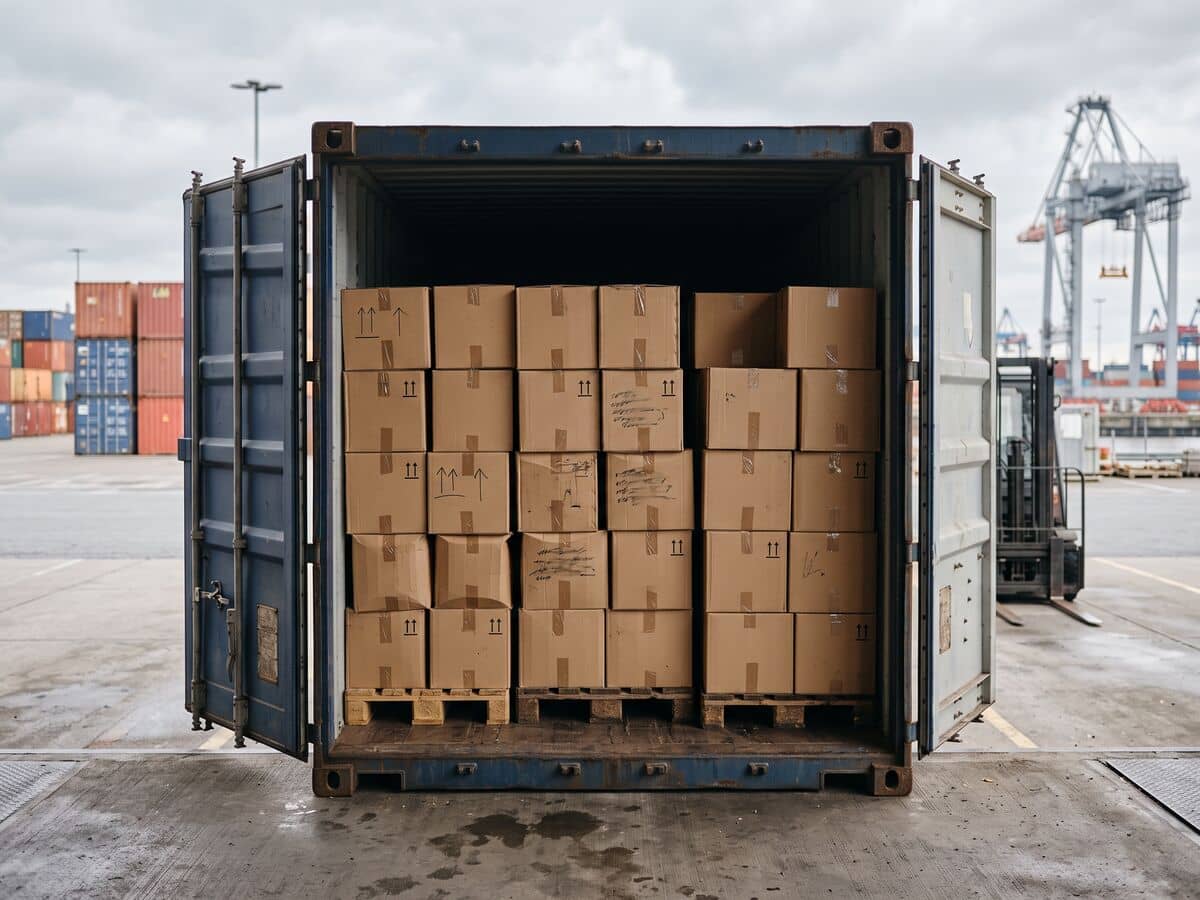
If you are an Australian brand importing clothing for the first time, the factory quote is not the number that matters. What matters is the landed cost: what has left your account by the time the cartons are in your warehouse in Sydney, Melbourne or Brisbane. For clothing made in Bangladesh that sum is simpler than most founders expect, because the duty line is zero. This guide sets out each line, the origin test that earns the zero, the tax you pay at the border and get back, and the labels Australian law asks for. Every figure here was checked against the Australian sources listed at the end.
The short version
- Duty: 0%. Australia admits goods from least developed countries duty-free, and Bangladesh is on that list. The general rate on clothing is 5%.
- The condition: the last process of manufacture must happen in Bangladesh, and at least 50% of the total factory cost must be allowable factory cost.
- GST: 10%, charged at the border on the value of the goods plus transport, insurance and any duty. A GST-registered business normally claims it back.
- Labels: care instructions are compulsory, and imported clothing must show its country of origin in English when it arrives.
- Children's nightwear has its own mandatory standard, with fire-hazard wording that is prescribed word for word.
How much duty do you pay on clothing from Bangladesh?
None, when the goods qualify. Under the Customs Tariff Act 1995 the rate for a least developed country is Free wherever the tariff does not set a different LDC rate, and the Australian Border Force's preferential rules of origin guide records that Australia has given duty-free entry to goods originating in least developed countries since 1 July 2003. Bangladesh is named in the LDC list in the Customs Tariff Regulations 2004. Without the preference, clothing would pay the general rate of 5%. Our duty guide compares this with the other main markets.
The origin test Australia applies
This is where Australia differs from the UK, the EU and Canada. Those three accept cutting and sewing in Bangladesh as enough. Australia asks for two things, set out in the Customs Act 1901 and explained in the ABF guide:
- Last process of manufacture in Bangladesh. A garment cut and sewn on a Bangladeshi floor meets this.
- Allowable factory cost of at least 50% of the total factory cost. Materials, labour and overheads from the qualifying area count towards it.
- A cap on some inputs. Materials from developing countries that are not themselves least developed can count for no more than 25% of the total factory cost.
In plain terms: where the fabric and trims come from matters more for Australia than for the other markets. Ask your factory, before you order, where the fabric is knitted and dyed and what share of the factory cost that represents. A factory that makes the garment itself can answer that; an agent who does not know which floor will sew your order usually cannot.
What happens after Bangladesh graduates from LDC status?
Bangladesh is scheduled to graduate from the UN's least developed country list on 24 November 2026. Australia's foreign ministry says goods from Bangladesh will stay duty-free and quota-free after graduation (DFAT country brief, read 23 September 2026). That is stated policy and not a tariff rule, and Bangladesh remains on the LDC list in the Customs Tariff Regulations today. So the honest position is: zero now, and stated to continue, but confirm the live rate with a licensed customs broker before each shipment. Our LDC graduation guide sets out the scenarios for every market.
GST at the border, and why it is not a cost
Goods and services tax of 10% is charged when the goods are imported. It is calculated on the customs value of the goods plus transport, insurance and any duty, so freight is inside the taxable amount. If your business is registered for GST, it is input tax like any other and you claim it back on your activity statement. The Australian Taxation Office also runs a deferred GST scheme that lets eligible monthly filers defer the payment to the first activity statement after import, so the money never has to leave the account at the port. If you are not registered, the 10% is a real cost and belongs in your pricing.
A worked example
Take 500 T-shirts with a customs value of US$6.00 each: US$3,000 in total, with US$500 of freight and insurance on top.
| Line | Australia | For comparison: United States |
|---|---|---|
| Customs value | US$3,000 | US$3,000 |
| Duty | US$0 (LDC rate: Free) | US$795 (26.5%) |
| Tax at the border | GST 10% of US$3,500 = US$350 | None |
| Recoverable if registered | US$350 | US$0 |
| Net border cost for a registered business | US$0 | US$795 |
The landed-cost calculator runs the same sum for any quantity, price and market, and our guide to import VAT and GST on clothing explains how the tax base differs between countries.
What has to be on the label
Two separate rules apply, and they come from different laws.
- Care instructions. The Consumer Goods (Care Labelling) Information Standard 2023 requires clothing and household textiles to carry adequate care instructions in English, using the five international care symbols, or both, on a label attached to the item.
- Country of origin. Under the Commerce (Trade Descriptions) Act 1905 and the Commerce (Trade Descriptions) Regulation 2016, imported clothing must carry a true trade description that includes the country where it was made, in English, prominent and legible, at the time of import. The Australian Border Force asks for it at the centre back of the garment.
- Fibre content is not required by the care labelling standard, but any fibre claim you make must be accurate under the Australian Consumer Law.
Goods that need the origin label and arrive without it can be seized, so the label has to be sewn in at the factory, not added after landing. Our guide to clothing labelling requirements by country puts Australia beside the other four markets, which helps if you sell in more than one.
Children's nightwear
If your range includes children's pyjamas, nightdresses or similar garments, the nightwear for children mandatory standard applies. It is based on AS/NZS 1249:2014, sorts garments into four categories by fabric and design, requires fabric and trim testing, and prescribes the exact wording of the fire-hazard label: WARNING: High fire danger. Keep away from heat and flame. for category 4, the high-risk group, and CAUTION: Keep away from heat and flame. for categories 1 to 3. For drawstrings and cords on children's clothing we found no product-specific mandatory standard in Australia; the general safety provisions of the Australian Consumer Law apply. Our children's clothing safety guide covers this in detail.
How Australia compares with the other markets
| Market | Duty on Bangladesh-made cotton knit tops | Tax at the border |
|---|---|---|
| Australia | 0% (LDC rate: Free) | GST 10% on value plus transport, insurance and duty |
| United Kingdom | 0% | Import VAT 20% |
| European Union | 0% | Import VAT at the member state's rate (Germany 19%) |
| Canada | 0% | GST 5% |
| United States | 26.5% | None (state sales tax applies at retail) |
DDP or FOB: the choice that decides your real cost
Under DDP (delivered duty paid) the factory's forwarder moves the goods to your door, files the origin paperwork and clears customs, and you receive one landed figure. Under FOB you take over at the port in Bangladesh, appoint your own forwarder and customs broker, and they will ask you for the origin documents. Either way the documents come from the factory: the commercial invoice, the packing list, and origin documentation showing the last process and the factory-cost split. A first-time importer usually finds DDP simpler, because nothing has to be learned at the port. Whichever you choose, make sure the quote says who is the importer of record, because that is who pays the GST and who claims it back.
Someone in your own time zone
Janelle Rawlins, founder of Mindful Merch in Noosa, Queensland, coordinates Collective Studio orders for Australian brands. She has spent more than 14 years in the fashion industry, so the first conversation about your range can happen in Australian business hours with someone who knows the local market. Production happens on our own knitwear floor in Narayanganj, Bangladesh.
How to check any supplier's Australian claims
- "Duty-free to Australia": ask which origin rule they rely on and what the allowable factory cost share is. A correct answer mentions the last process and the 50% test.
- "We handle the labels": ask to see a sample care label and where the country of origin will sit. It should be in English and at the centre back.
- "Price includes everything": ask whether GST is in the figure and who the importer of record is.
- "We are the factory": ask for a live video call from the production floor and the address the goods will ship from. Our list of questions to ask a manufacturer has the rest.
We make knitwear for Australian brands from 150 pieces per style and colour, with GOTS-certified organic options (certificate RSC 9687, scope certificate on request), and we quote DDP to your door. See clothing manufacturing for Australian brands, or send us your brief and we will reply within one business day.
Frequently asked questions
How much duty do I pay to import clothing into Australia from Bangladesh?
Nothing, provided the goods meet Australia's origin test. Australia has given duty-free entry to goods from least developed countries since 1 July 2003, and Bangladesh is named in the least developed country list in the Customs Tariff Regulations 2004, so the rate that applies to qualifying clothing is Free. Without that preference the general rate on clothing is 5 percent. To qualify, the last process of manufacture has to take place in Bangladesh and at least 50 percent of the total factory cost has to be allowable factory cost, with a cap on materials from developing countries that are not themselves least developed. Duty is also separate from goods and services tax, which is charged at 10 percent at the border whatever the duty rate is. Rates and lists change, so ask a licensed customs broker to confirm the position for your commodity code before each shipment.
Do I pay GST on imported clothing, and can I claim it back?
Yes to both, if your business is registered for GST. Goods and services tax of 10 percent is charged when clothing is imported into Australia, and it is worked out on the customs value of the goods plus transport, insurance and any duty. On an order worth US$3,000 with US$500 of freight and insurance, that is 10 percent of US$3,500, or US$350. A registered business treats this as input tax and claims it on its activity statement, so it is a cash-flow item and not a cost. The Australian Taxation Office also runs a deferred GST scheme under which eligible monthly filers defer the payment to the first activity statement after import, so nothing is paid at the port. If you are not registered, the 10 percent stays with you as a real cost and has to be built into your retail price.
What is the 50% rule for clothing made in Bangladesh?
It is the main origin test Australia applies before it grants the duty-free rate. Two conditions have to be met. First, the last process of manufacture must be carried out in Bangladesh, which a garment cut and sewn on a Bangladeshi factory floor satisfies. Second, the allowable factory cost must be at least 50 percent of the total factory cost of the goods. Allowable cost covers materials, labour and overheads from the qualifying area, and materials from developing countries that are not least developed can make up no more than 25 percent of the total factory cost. This is stricter than the United Kingdom, the European Union and Canada, where cutting and sewing in Bangladesh is enough. In practice it means the origin of your fabric matters. Ask your factory where the fabric is knitted and dyed and for the cost split, before you place the order.
What labels does clothing need to be sold in Australia?
Two things are compulsory. Care instructions must be on a label attached to the garment, in English, using the five international care symbols, or both, under the Consumer Goods (Care Labelling) Information Standard 2023. And imported clothing must carry a true trade description showing the country where it was made, in English, prominent and legible, at the time of import, under the Commerce (Trade Descriptions) Act 1905 and its 2016 Regulation. The Australian Border Force asks for the origin statement at the centre back of the garment, and goods that arrive without it can be seized. Fibre content is not required by the care labelling standard, but any fibre claim you choose to make has to be accurate under the Australian Consumer Law. Children's nightwear needs an additional fire-hazard label with wording that the mandatory standard sets out exactly, so check that before you design a kids' range.
Will clothing from Bangladesh still be duty-free in Australia after November 2026?
Australia's foreign ministry says it will. Bangladesh is scheduled to graduate from the United Nations list of least developed countries on 24 November 2026, and the Department of Foreign Affairs and Trade country brief, which we read on 23 September 2026, states that goods from Bangladesh will continue to enter Australia duty-free and quota-free after graduation. We describe that as stated policy and not as a tariff rule, because the legal basis for today's zero rate is Bangladesh's place on the least developed country list in the Customs Tariff Regulations, and it is still on that list. A change to the list needs a change to the regulations. So plan on zero duty, but do not treat it as guaranteed for years ahead. Ask your customs broker to confirm the rate for each shipment, and keep your origin documents complete so the preference can be claimed without delay.
Where this applies
The manufacturing pages this guide relates to, if you are costing a real run.
Free tools & guides for this
Sources & further reading
- Australian Border Force — Preferential rules of origin guide
- Federal Register of Legislation — Customs Tariff Regulations 2004, Schedule 1 (LDC list)
- ATO — GST and imported goods
- ACCC Product Safety — Care labelling for clothing and textiles mandatory standard
- Federal Register of Legislation — Commerce (Trade Descriptions) Regulation 2016
- ACCC Product Safety — Nightwear for children mandatory standard
- DFAT — Bangladesh country brief
Have an idea? Let’s make it.
We manufacture from 150 pieces per style and colour, with GOTS-certified organic options and photos at every stage. Send a sketch or a sentence — we’ll reply within one business day.