Pre-Production Samples: How to De-Risk a Large Clothing Order
Every flaw you miss in a sample gets reproduced thousands of times in bulk. The sampling stage is the cheapest place to catch problems and the most expensive place to rush. Here's the sample ladder that protects a large order.
The sample stages
- Proto / fit sample — the first physical version, to dial in fit, proportion and construction.
- Size set — one sample per size, to confirm your grading works across the range.
- Pre-production (PP) sample — made with the actual bulk fabric, trims and process. This is the make-or-break approval.
- Sealed / counter sample — the approved PP sample, signed and "sealed" as the reference bulk is judged against.
- Top of production (TOP) — a piece pulled from the start of the real run to confirm bulk matches the seal.
Why the PP sample matters most
The PP sample is the first time everything is real at once — your fabric, your trims, your factory's process. Approving it means you're approving what bulk will actually look like. Skipping or rushing it to save a week is the single most common cause of expensive bulk disappointment.
Approving bulk without a proper PP sample is signing for a delivery you haven't seen. The week it saves is never worth the order it risks.
What a PP sample is actually testing
A pre-production sample is not a preview. It is a test of whether the factory can make your garment repeatedly, using the exact inputs bulk will use, and it answers four separate questions that a fit sample cannot.
- Does the pattern work in the real fabric? A pattern that hangs correctly in a substitute knit can drape differently in yours, because weight and stretch recovery change how a garment falls.
- Does the colour match the approved lab dip in daylight, on the actual fabric rather than a swatch?
- Do the trims work together? Labels, drawcords, zips and thread are sourced separately and only meet for the first time here.
- Can it be sewn at speed? A construction that works when one machinist takes their time may not survive a production line, and this is the stage where a factory will tell you so.
The measurement record that protects you
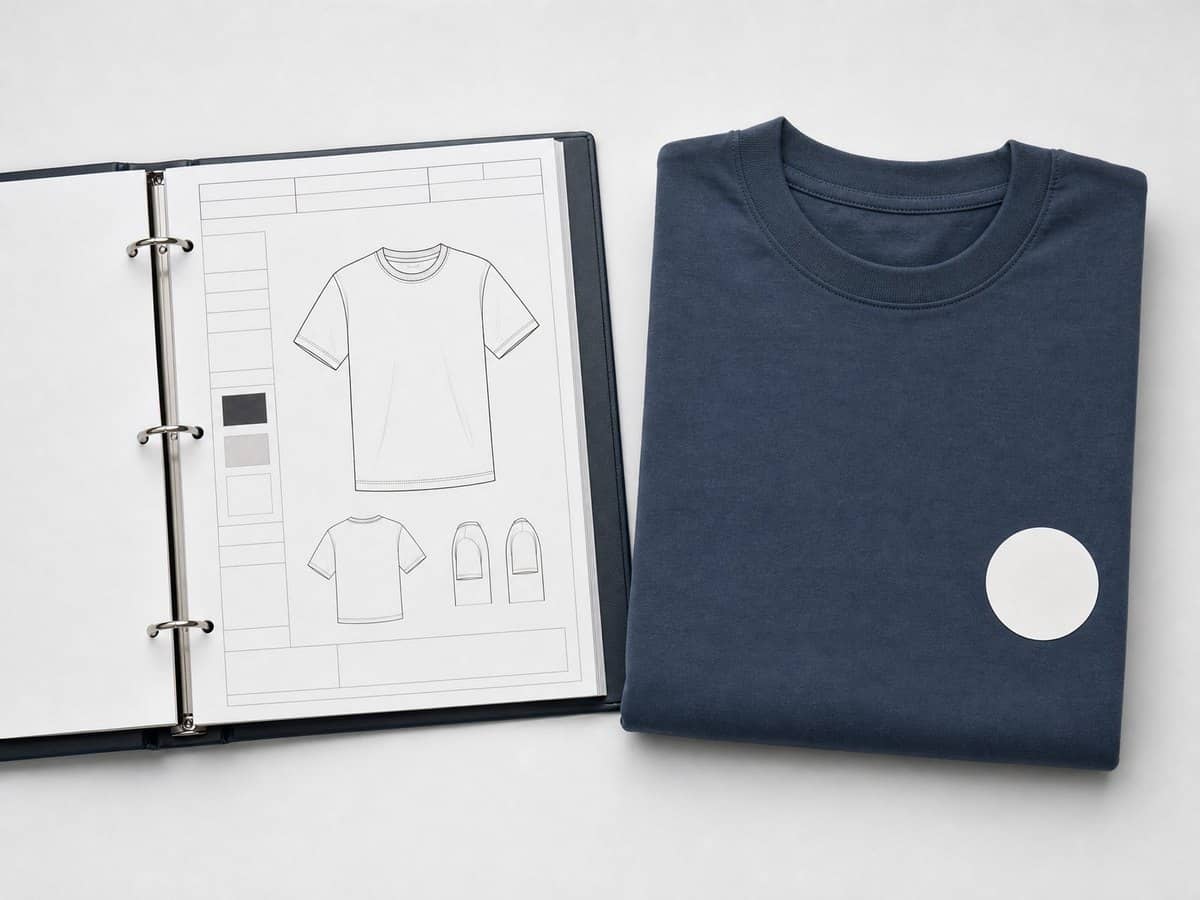
Approving a sample without recording measurements leaves you with an opinion instead of a specification. Before you sign anything off, measure the sample against the tech pack at every point of measure, write the actuals next to the targets, and agree the tolerance in writing — typically half a centimetre on key points for knitwear.
Wash it, then measure again and record the shrinkage. Shrinkage you have measured and specified is a tolerance both sides are working to; shrinkage you notice later is a dispute with no agreed reference point. This single sheet of paper is the most useful document in the whole order, because it is what a QC inspector checks bulk against.
When to reject rather than revise
Most PP samples need a small revision, which is normal. A few need rejecting outright, and it is worth knowing the difference. Revise when the issue is dimensional or cosmetic — a sleeve a centimetre long, a label placed low. Reject and re-sample when the fabric is not the one you approved, when construction differs from the tech pack, or when the same fault reappears after being raised once. A fault that survives a correction round is a communication problem, and shipping 5,000 pieces into a communication problem is how brands end up with stock they cannot sell.
Approve properly — and in writing
- Check fit and measurements against tolerance, fabric hand and weight, colour, trims and labelling.
- Compare against your tech pack, not your memory.
- Sign off in writing, and keep the sealed sample as the QC reference (see AQL & inspection).
New to the process? Read how clothing sampling works, then send us your tech pack — we'll sample properly before a single bulk piece is cut.
Frequently asked questions
What is a pre-production (PP) sample?
A pre-production sample is made with the actual bulk fabric, the actual trims, and the actual production process — not the development fabric or a substitute button used during fitting. That distinction is the entire point. Earlier samples answer questions about fit and proportion; the PP sample is the first moment every real variable exists simultaneously, which is when problems that were invisible in isolation surface. A fabric can behave differently once it is the production dye lot rather than a swatch. A trim can sit differently once it is the one actually ordered. Approving a PP sample is the last checkpoint where a change costs one garment instead of the whole order, and it is the single highest-value hour a brand spends on a production run.
What is a sealed sample?
The sealed sample is the approved pre-production sample, physically signed off and retained as the benchmark that production is measured against. The word "sealed" is literal: it is tagged and stored so it cannot be quietly swapped or altered, and both factory and buyer work from the same object. Its value is that it removes interpretation. A written specification can be read two ways; a physical garment cannot. During quality control, inspectors compare production units to the sealed sample rather than to a description, which is what makes a defect an objective finding rather than a matter of opinion. It is also what protects consistency on reorders months later, when the people involved may have changed.
Can I skip sampling on a repeat order?
On a identical repeat from the same factory, often yes, because the sealed sample already exists as the reference and nothing about the specification has moved. The word doing the work is identical. If the fabric supplier has changed, if the dye lot is new and colour matters, if any measurement or trim has been adjusted, or if the order has moved to a different factory, then it is not a repeat — it is a new product wearing the same name, and it needs a PP sample. The temptation to skip is always strongest under deadline pressure, which is precisely when the risk is highest. The week saved never covers the cost of a full run that misses.
Free tools & guides for this
Sources & further reading
Have an idea? Let’s make it.
We manufacture from 100 pieces per style, with GOTS-certified organic options and photos at every stage. Send a sketch or a sentence — we’ll reply within a day.