Quality Control for Bulk Apparel: AQL & Inspection Levels Explained
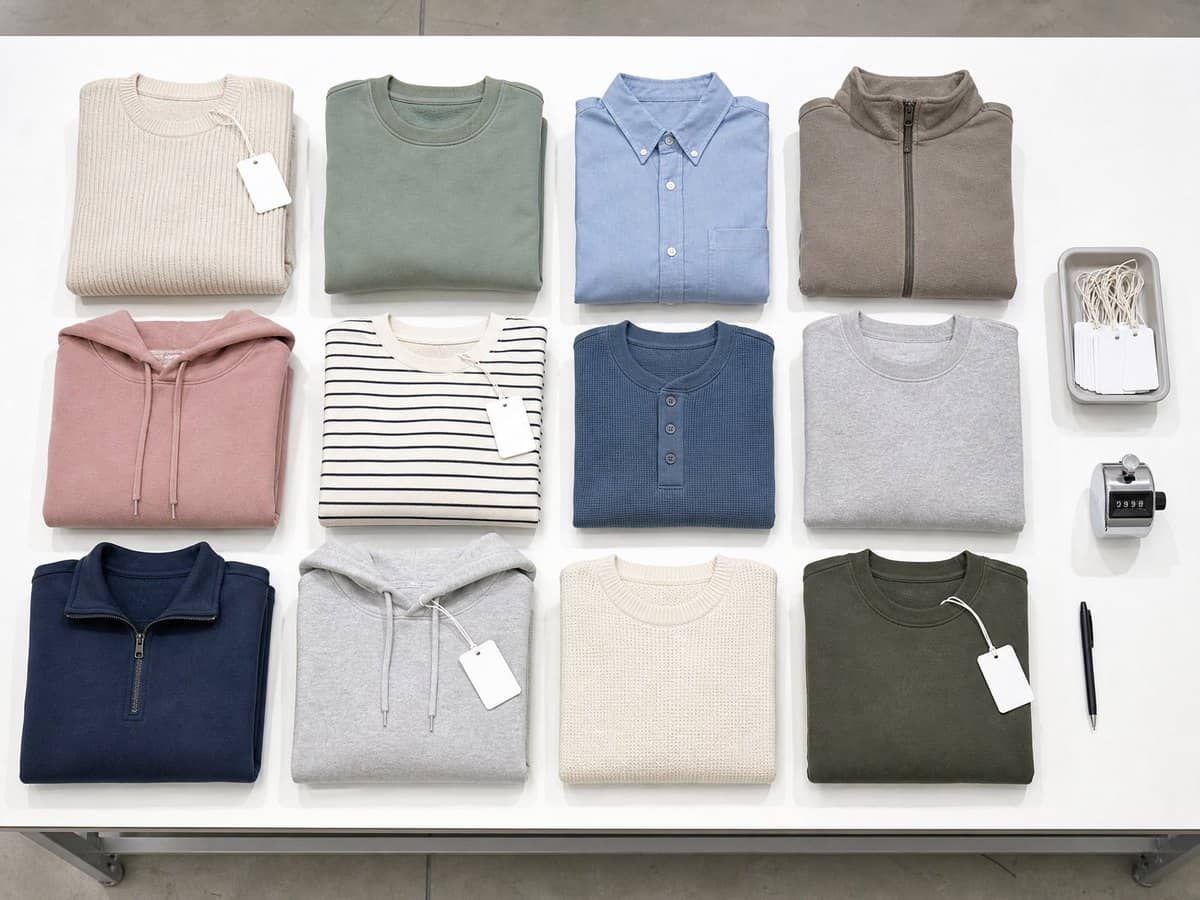
On a 50-piece run you can eyeball every garment. On a 50,000-piece run you can't — so the industry inspects a statistically chosen sample and accepts or rejects the batch on the result. Understanding that system is how you protect a large order.
The QC checkpoints
- Pre-production (PP) sample — approved before bulk starts; it becomes the standard everything is judged against.
- In-line inspection (DUPRO) — checks during production, so a problem is caught at 10% complete, not 100%.
- Final random inspection — once the order is packed, a sample is pulled and inspected against the agreed standard.
What AQL actually means
AQL stands for Acceptable Quality Limit — the maximum number of defects allowed in the inspected sample before the whole batch is rejected. It uses internationally recognised sampling tables (ISO 2859 / ANSI Z1.4): the inspector pulls a set sample size based on your order quantity, then counts defects against the limit.
Major, minor and critical defects
Defects are graded. A common apparel standard is AQL 2.5 for major defects and 4.0 for minor defects, with zero tolerance for critical defects (anything unsafe). A "major" defect would likely cause a return; a "minor" is a small flaw a customer might overlook. You set these limits in your purchase order.
The AQL table: how many pieces get checked
This is the part that surprises people: even on a 50,000-piece order, the inspector doesn't check every garment — they pull a fixed sample and judge the whole batch on it. Here's what that looks like at AQL 2.5 for major defects (the common apparel default):
| Order (lot) size | Units inspected | Accept (max defects) | Reject (at / above) |
|---|---|---|---|
| 51 – 90 | 13 | 1 | 2 |
| 151 – 280 | 32 | 2 | 3 |
| 281 – 500 | 50 | 3 | 4 |
| 501 – 1,200 | 80 | 5 | 6 |
| 1,201 – 3,200 | 125 | 7 | 8 |
| 3,201 – 10,000 | 200 | 10 | 11 |
| 10,001 – 35,000 | 315 | 14 | 15 |
| 35,001 – 150,000 | 500 | 21 | 22 |
QC isn't about catching the factory out — it's a shared standard, agreed up front, that protects both sides from an expensive surprise.
Reading an AQL table without the jargon
AQL sounds technical and the underlying idea is simple: nobody inspects every garment in a bulk run, so a random sample is checked and the batch is accepted or rejected based on how many faults appear in that sample.
Two numbers do the work. The sample size depends on the order quantity, and the acceptance number is how many defects are tolerated before the batch fails. Defects are graded: critical (unsafe or unsellable), major (a customer would return it), minor (noticeable but tolerable). Apparel commonly runs at AQL 2.5 for majors and 4.0 for minors, with zero tolerance for critical.
So “AQL 2.5” does not mean 2.5% of your order will be faulty. It defines the threshold at which a sample suggests the run as a whole is not acceptable — a statistical trigger for rejection, not a promised defect rate.
What to agree before production, not after
- The AQL levels for major and minor defects, stated in the order confirmation.
- What counts as which grade for your product — a loose thread and a skipped seam are not the same thing, and the boundary is worth naming.
- Who inspects: the factory’s own QC, you, or a third party.
- When: inline inspection during the run catches a systemic fault at 200 pieces rather than 5,000. Final-only inspection finds it when it is expensive.
- What happens on a fail — rework, replacement, discount, or rejection. Agreeing this before there is a problem is what makes it a process rather than a dispute.
Should you use a third-party inspector?
For a first large order with a new factory, an independent inspection agency (or your own QC visit) adds confidence. Once you have a trusted partner with strong in-house QC, you may rely on their final inspection report with periodic spot checks. Either way, agree who inspects, when, and to what AQL before production starts.
Our QC is led in-house and every order is inspected before it ships. Ask us about our QC process, or read how pre-production samples de-risk a bulk order.
Frequently asked questions
What does AQL mean in clothing manufacturing?
AQL stands for Acceptable Quality Limit — the maximum number of defective units permitted in an inspected sample before the entire batch is rejected. It exists because inspecting every single garment in a large order is impractical, so the industry uses statistical sampling instead, governed by standard tables published as ISO 2859-1 and ANSI/ASQ Z1.4. Those tables take your total order quantity and inspection level, and return two numbers: how many pieces to pull and inspect, and the maximum defects allowed before the batch fails. Crucially, AQL is something you specify rather than something the factory decides — it belongs in your purchase order before production starts. Agreeing it upfront also removes most of the ambiguity from a quality dispute later, because "acceptable" is defined numerically rather than being a matter of opinion after the fact.
What is a good AQL for garments?
The widely used apparel standard is AQL 2.5 for major defects, 4.0 for minor defects, and zero tolerance for critical defects. The categories matter as much as the numbers. A critical defect makes the garment unsafe or unsellable — a broken needle left in a seam, a choking hazard on childrenswear — and no quantity is acceptable. A major defect is one a customer would likely notice and return the item for, such as a badly misaligned print or a broken seam. A minor defect is a small cosmetic imperfection unlikely to trigger a return. Tighter limits than 2.5 are available and appropriate for premium positioning, but they cost more, because a stricter standard means more rejected units. Most inspections also default to General Inspection Level II, which balances sample size against confidence, and you can specify a stricter level if the product warrants it.
What are the stages of garment quality control?
Three checkpoints, and skipping any of them shifts risk onto you. First, the pre-production sample: one physical garment made and approved before bulk begins, which then becomes the sealed sample that everything else is measured against. This is the single most valuable step, because it is the last point where a change costs one garment rather than the whole order. Second, in-line inspection during production, catching drift while the run is still in progress and correctable — a fabric batch variation or a sewing issue found at 20% completion is fixable, the same issue found at 100% is not. Third, final random inspection once the order is packed, applying the AQL sampling standard you agreed upfront. Alongside these, ask for staged photographs, so you can see fabric, cutting, sewing and finishing rather than waiting for the shipment to arrive.
Free tools & guides for this
Sources & further reading
Have an idea? Let’s make it.
We manufacture from 100 pieces per style, with GOTS-certified organic options and photos at every stage. Send a sketch or a sentence — we’ll reply within a day.