Bangladesh vs China vs Vietnam: Where Should You Manufacture Clothing?
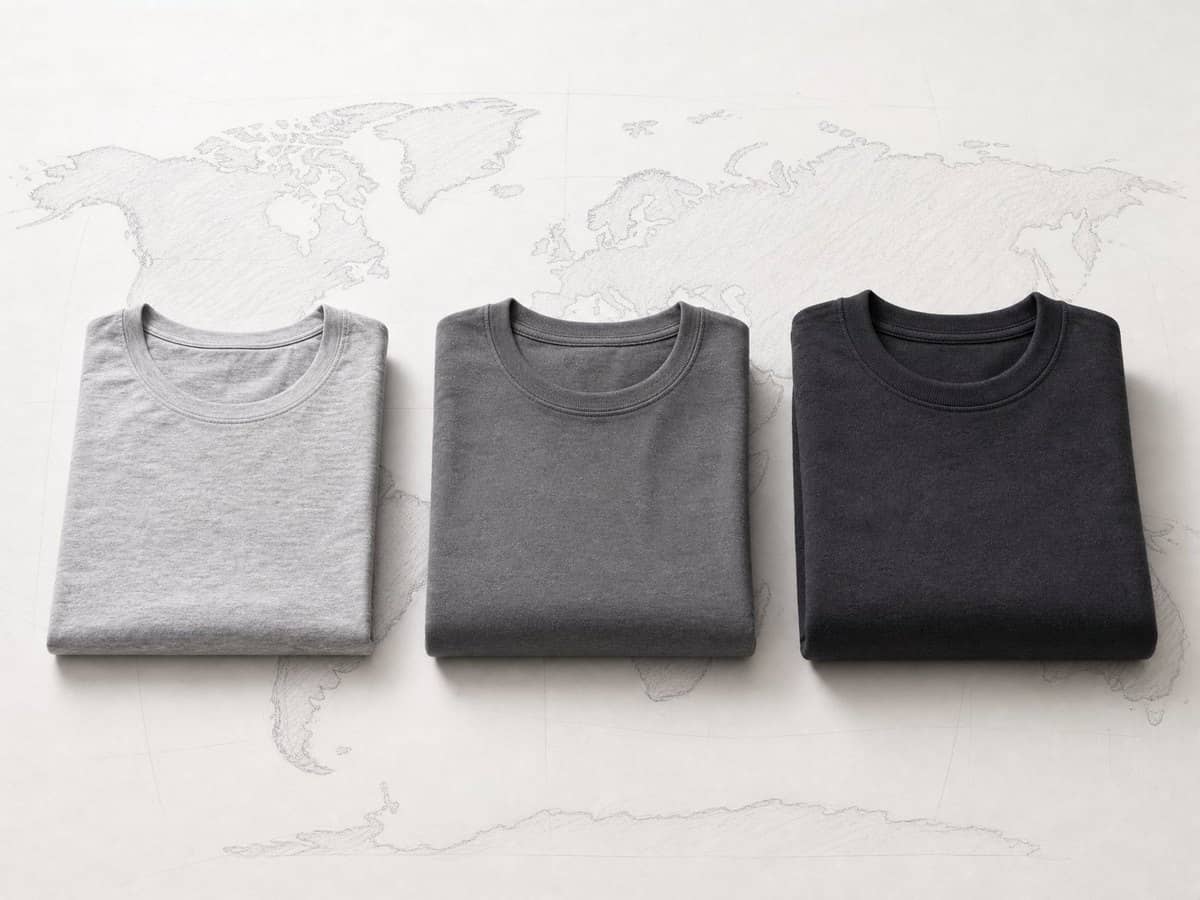
Three countries dominate the conversation when you start sourcing clothing: Bangladesh, China, and Vietnam. Each has real strengths, and the right one depends on your product, volume, and budget. Here's the honest comparison.
Bangladesh
The world's number-two clothing exporter, and especially strong in knitwear — tees, hoodies, joggers. Competitive pricing, deep knitwear-manufacturing expertise, and vertically integrated mills. Big factories want huge volumes, but smaller, custom-focused factories here work at low MOQs — a good fit for emerging brands weighing low MOQ vs high MOQ.
China
Unmatched scale and versatility — China can make almost anything, including complex fashion and hardware-heavy items, with a vast supplier base. Trade-offs for newer brands: good factories often want higher minimums, and recent US tariffs have made importing from China to the US more expensive than from Bangladesh.
Vietnam
Known for solid quality, especially in woven and technical garments, and a fast-growing industry. It often sits at a slightly higher cost than Bangladesh, and capacity at good factories can be tight for small orders.
- Best for knitwear + low MOQ + price: Bangladesh.
- Best for huge scale, complex items, hardware: China.
- Best for woven/technical quality: Vietnam.
At a glance
| Bangladesh | China | Vietnam | |
|---|---|---|---|
| Strongest at | Cotton knitwear — tees, hoodies, joggers | Almost anything; complex & hardware-heavy items | Woven & technical garments |
| Price feel | Most competitive for knitwear | Wide range; small runs cost more | Usually a little above Bangladesh |
| Low-MOQ fit | Good — many small-batch factories | Often wants higher minimums | Capacity can be tight for small runs |
| Into the US (2026) | 19% tariff, or 0% with US-grown cotton | Higher base rate, plus added US duties | Depends on the product category |
| Best for | Emerging knitwear brands | Huge scale or complex construction | Woven / technical quality |
There's no single "best country" — only the best fit for your product, your volume, and your budget.
Start with your product, not the country
The most common sourcing mistake is picking a country first and then trying to make the product fit it. Countries specialise because their machinery, mills and labour skills developed around particular categories, and those advantages are physical rather than marketing. If you are making cotton knitwear, Bangladesh’s vertically integrated knitting and dyeing is a genuine structural advantage. If you are making a technical shell with welded seams and hardware, it is not, and no amount of negotiating changes that.
How duty changes the answer
Landed cost, not unit price, is what you actually pay, and duty often moves it more than the factory quote does. A garment that is two percent cheaper to make and eight percent more expensive to import is not cheaper. Ask every supplier which incoterm they are quoting before comparing numbers, because an FOB price and a DDP price are not the same kind of number — FOB covers the goods only as far as the port of origin, leaving duty, brokerage and inland delivery to arrive separately weeks later.
The duty picture also moves, and it moves differently in each market. Bangladesh is scheduled to graduate from Least Developed Country status on 24 November 2026 — a date now itself under a pending UN vote on deferring it to 2029 — and the arrangements after it differ sharply. Canada renewed its preference programmes to 2034 in legislation and, separately, dropped the value-added origin test for apparel in January 2025; the UK confirmed a three-year transition in writing and dropped the double-transformation origin rule for garments in July 2025; the EU applies a transition period whose terms are less settled. We confirm the live position for a specific market and order rather than asking anyone to rely on a web page — see our Bangladesh manufacturing page for the current detail.
Where each one is the wrong answer
A comparison that only lists strengths is a brochure. Here is the other half, and it is the half worth reading twice.
- Bangladesh is wrong if you need tailored suiting, structured outerwear, denim at scale, or a genuinely tiny run of 30 pieces. It is also wrong if your product is hardware-heavy — moulded plastic, metal fittings, injection tooling.
- China is wrong if you are placing a first order of a few hundred pieces and want a factory that treats it seriously, or if your route to market is the US and duty exposure matters to your margin.
- Vietnam is wrong if you are price-sensitive on basic cotton knitwear, or if you need a factory with spare capacity for small, frequent repeat runs.
Questions that actually separate factories
Once you have chosen a country, the country stops mattering and the specific factory becomes everything. Quality varies far more between two factories in the same district than it does between three countries. These five questions separate them faster than any brochure:
- What is your minimum per style and per colour, not per order?
- Which certifications do you hold, and what is the certificate number I can look up myself?
- Which incoterm is this quote — FOB or DDP?
- Can I see the production floor, in person or on a live video call during a working shift?
- Who does your quality control, and what happens if a batch fails inspection?
A supplier who answers all five plainly is worth more than one in a cheaper country who does not. Our guide to vetting a factory goes through the documentation to ask for.
Which is right for an emerging brand?
If you're making knitwear in small batches and care about price and certified-organic options, Bangladesh is hard to beat — and the right factory makes the whole thing simple. See how we manufacture in Bangladesh, or read how to choose one in our guide to the best clothing factory in Bangladesh. Want a quote? Tell us what you're making.
Frequently asked questions
Is it better to manufacture clothing in Bangladesh, China or Vietnam?
Each has a defensible primary case and the answer follows from product category rather than general ranking. China offers the broadest capability, the deepest component and hardware supply base, and the fastest turnaround on complex or technical products; unit costs are the highest of the three and minimums often substantial. Vietnam sits between the two, with particular strength in woven outerwear, technical sportswear and footwear, and generally strong compliance records. Bangladesh leads on knit — the deepest domestic knit chain outside China — and on unit cost, with more negotiable minimums because capacity is fragmented across many mid-sized factories. Duty treatment differs materially by destination market and is worth modelling before deciding, since it can outweigh unit-price differences.
Which country is cheapest for clothing manufacturing?
Bangladesh generally has the lowest unit labour costs of the three, but unit price is an incomplete basis for comparison and frequently a misleading one. Landed cost is the relevant figure, and it comprises unit price, freight, duty and the cost of any quality or delay risk. Duty in particular can invert an apparent ranking: duty-free access into the UK, EU, Canada and Australia has historically favoured Bangladesh, while the US applies tariffs that alter the calculation, and Bangladesh's LDC graduation on 24 November 2026 changes part of this picture. Minimum order quantity is a second distorting factor — a lower unit price at five thousand pieces is not cheaper than a higher one at three hundred if three hundred is what the business needs.
Is Bangladesh good for clothing manufacturing?
For knit garments, it is among the strongest options available, and the reasons are structural rather than promotional. The domestic knit chain is the deepest outside China, so yarn, knitting, dyeing, trims and sewing sit within a concentrated geography and a garment is produced without crossing a border mid-process. Unit costs are below regional comparators. Fragmented capacity means minimum quantities are more negotiable than in consolidated markets. The qualifications are equally structural: complex woven outerwear and products requiring specialist hardware are generally better served elsewhere, and variance in standards between factories is wide enough that supplier-level verification matters more here than country-level reputation. Duty treatment shifts with LDC graduation on 24 November 2026.
Where this applies
The manufacturing pages this guide relates to, if you are costing a real run.
Free tools & guides for this
Sources & further reading
Have an idea? Let’s make it.
We manufacture from 100 pieces per style, with GOTS-certified organic options and photos at every stage. Send a sketch or a sentence — we’ll reply within a day.