Wholesale Clothing from Bangladesh: Stock Lots, Export Surplus or Made to Order?
Search for wholesale clothing from Bangladesh and you get two different businesses on the same page. Some sellers have finished garments in stock: export surplus, cancelled orders, rejected shipments, sold by the carton or the kilo. Others are factories that make garments to your order, in your sizes and colours and with your labels. Both are called "wholesale". They solve different problems, and buyers who mix them up usually find out at the customs desk or on the shop floor.
We are the second kind: a cut-and-sew knitwear factory in Narayanganj that makes to order from 150 pieces per style and per colour. We do not sell stock. That is exactly why this guide sets out the first kind honestly. If ready stock is what you need, you should know what you are buying and what can go wrong. If it is not, you should know why made to order costs you time and gives you control.
Three things sold as "wholesale" from Bangladesh
| Stock lots / export surplus | Made-to-order manufacturing | |
|---|---|---|
| What you buy | Garments that already exist, made for someone else's order | Garments cut and sewn for your order |
| Design, sizes, colours | Whatever is in the lot, often broken size runs | Your design, your size chart, your colours |
| Labels | Another brand's, removed, or none | Yours: neck label, care and content label, hang tag |
| Repeat the same item | Rarely; the lot is gone when it is gone | Yes, from the same pattern and approved sample |
| Compliance documents | Usually none that name you | Made to your market's rules, with test reports where required |
| Time to ship | Immediate, if the goods are what they claim | About 10 days sampling, then 40–50 days production, then freight |
| Suits | Opportunistic resale, market trading, off-price channels | A brand that wants the same product again |
Where stock lots come from
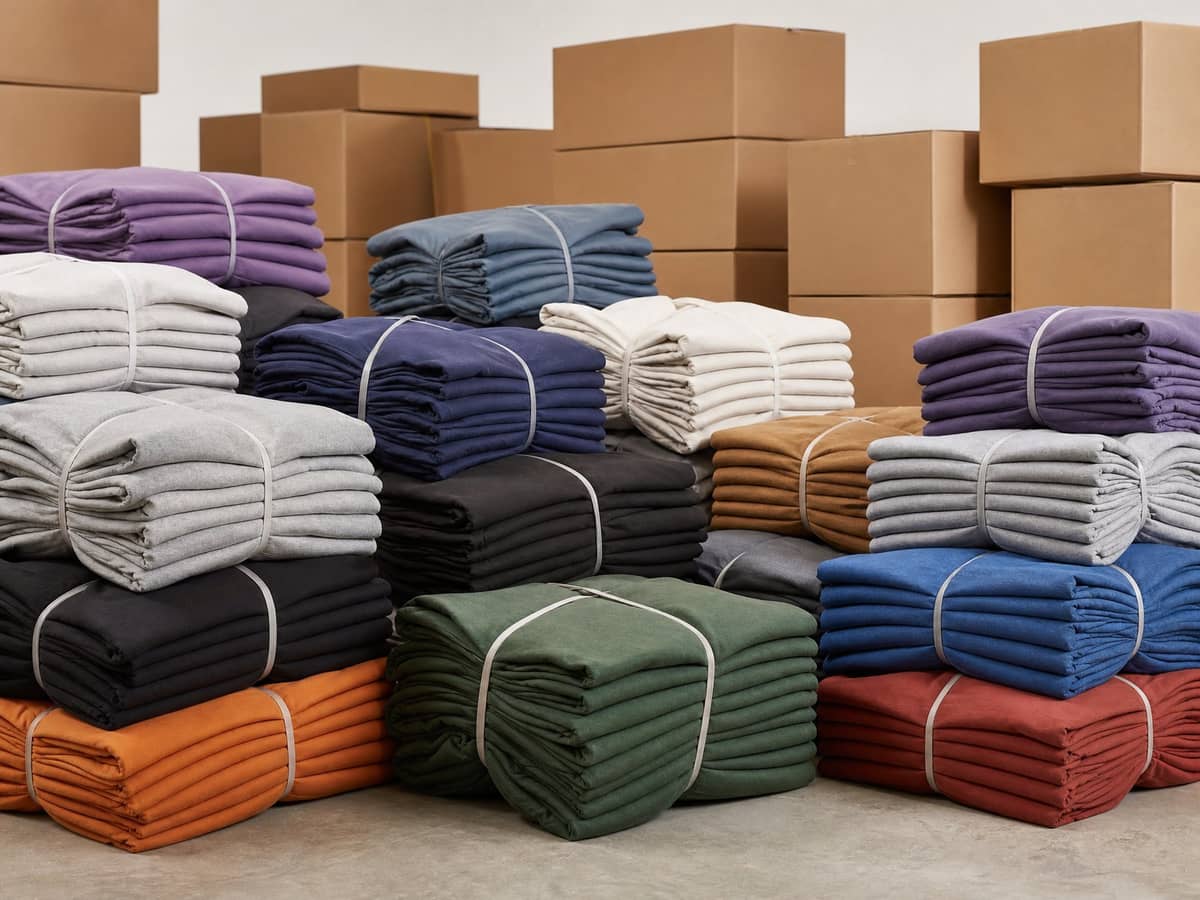
Stock lots are the leftovers of export production, and the trade press has described where they come from for years. A 2013 Apparel Resources article named the usual sources. One is extra pieces cut to cover rejections at final packing, which it put at around 5–7% per style. Another is shipments rejected before dispatch or at the destination port, often for an unapproved colour or a visible defect. The third is orders the importer cancelled because of excess stock or financial trouble. The article called the result "a parallel market in itself", with demand coming mainly from small wholesalers and price-led buyers. The percentages are more than a decade old, but the three sources have not changed.
Each source tells you something about the goods. Overrun pieces are usually first quality but come in whatever sizes were left. Rejected shipments were rejected for a reason, and you need to know which reason. Cancelled orders can be complete and perfect, or they can be a style the buyer walked away from because the sample never passed. A seller who cannot tell you which of the three you are looking at is telling you something too.
The label problem: another brand's trade mark
Most export surplus was made for a brand, and much of it still carries that brand's labels, prints or embroidery. This is where buyers get into real trouble, because "genuine" and "lawful to resell" are not the same thing.
In the EU, the customs enforcement regulation, Regulation (EU) No 608/2013, sets out how customs act on goods suspected of infringing an intellectual property right. It expressly does not apply to goods made by a person authorised by the right-holder "in excess of the quantities agreed", which is a factory overrun. But the same article says the regulation "shall not affect national or Union law on intellectual property". Under the EU trade mark regulation, the brand owner loses the right to object only once goods have been put on the market in the European Economic Area "by the proprietor or with his consent". Overruns the brand never released have not been through that step. In plain terms, customs procedure may not catch them, but trade-mark law still can.
In the United States, Customs and Border Protection says it "targets and seizes imports of counterfeit and pirated goods" and works with rights holders recorded with it. A carton of another company's branded garments with no paperwork showing that company's consent invites exactly that scrutiny. We are a factory, not a law firm, and this is not legal advice. The practical rule is simple enough, though. Buy de-labelled goods with any branded print or embroidery removed, or get the brand's written consent, or do not buy.
The paperwork problem: labels and safety rules
Removing another brand's label creates the next problem: the goods now need your compliance labelling. In the US, the FTC's guidance under the Textile Act says labels must show fibre content, country of origin, and the company name or RN of the manufacturer, importer or dealer. It also says that "an importer is legally responsible for the proper labeling of imported textile, wool and fur products". A dealer may replace a label as long as the new one carries the name or RN of whoever made the change.
In the EU, Regulation (EU) No 1007/2011 requires textile products to be labelled or marked with their fibre composition whenever they are made available on the market. Where the manufacturer is not established in the EU, the importer must ensure the label is supplied and accurate. A distributor who attaches the label or sells under its own name is treated as the manufacturer. Buying stock lots, in other words, makes you the party responsible for labels you did not write, on garments whose fibre content you cannot always confirm. Our guide to clothing labelling requirements by country sets out what each market asks for, and the GPSR guide covers the EU's general product-safety duties.
Children's clothing is stricter again. In the US, domestic manufacturers and importers of children's products must issue a Children's Product Certificate based on test results from a CPSC-accepted third-party laboratory. A stock lot of kidswear with no test history cannot be certified after the fact without testing it. See our guide to children's clothing safety rules by market before you buy any.
The sourcing problem: where the goods were meant to go
Bangladesh's export factories can import raw materials duty-free under a bonded warehouse licence, on the basis that the goods they make are exported. Diverting bonded materials into the local market is a long-running enforcement issue. In January 2026, Apparel Resources reported that the National Board of Revenue was collecting five years of banking data from suspect exporters, had moved bond services onto its Customs Bond Management System, and planned routine stock inspections at bonded warehouses.
That matters to you for a simple reason. Goods with a clean history come with clean documents, and a seller who can show where a lot came from, and export it properly in its own name, is a different proposition from one who cannot. Ask before you pay, not after the goods are held.
When stock lots make sense
To be fair to the trade: stock lots are a legitimate market and they suit some buyers well. If you trade on a market stall, run an off-price shop or resell on a marketplace where the next delivery can be anything, buying what already exists at a discount is a sensible model. It is fast, and you see the goods before you commit. Inspect in person or through a third-party inspector, insist on a packing list with sizes and fibre content, and treat every lot as a one-off.
Stock lots work badly for anyone building a brand. You cannot reorder a lot. You cannot put your own size chart on a garment graded for someone else. And you cannot hand a retailer's compliance team a test report for goods you did not have made. The first sell-out is also the last.
When made to order is the better wholesale
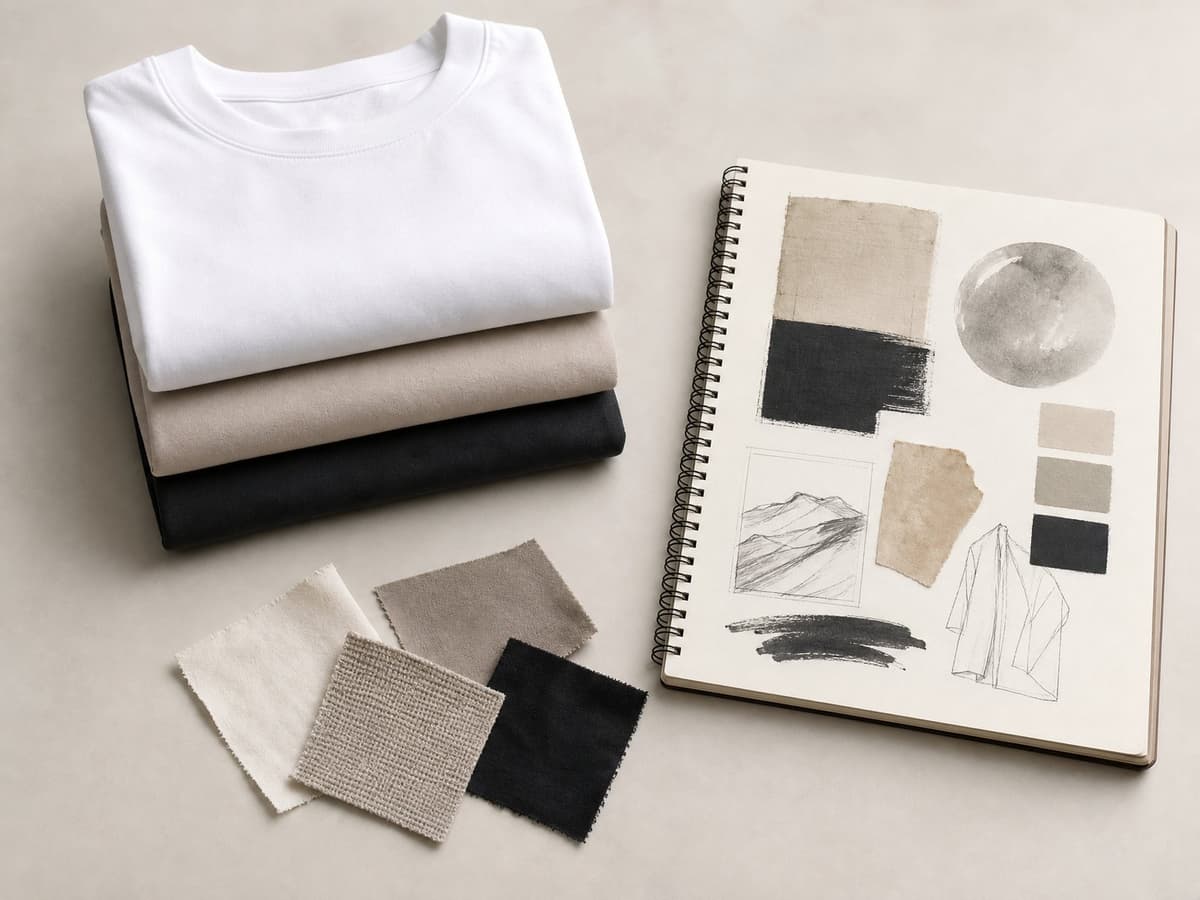
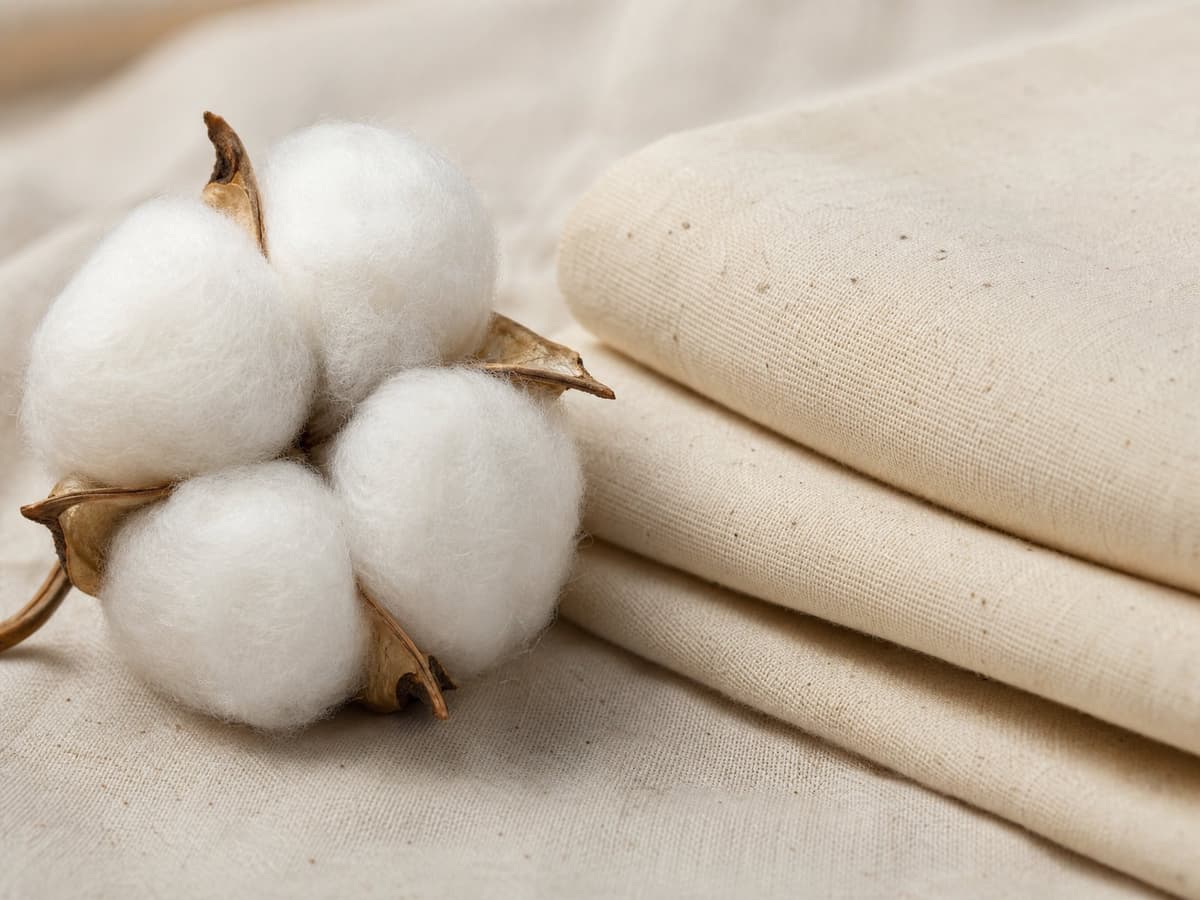
Made to order is slower to start and quicker to grow. You approve a sample, the factory seals it as the reference, and every later run is measured against it. That means the twelfth reorder of a hoodie can match the first. Your labels go in during sewing rather than over someone else's. Fibre content and origin are known because the fabric was bought for your order. For organic lines, the certification can follow the goods: we make organic cotton garments under our GOTS certification (RSC 9687), and the scope certificate is available on request.
| Step | Typical time | What you do |
|---|---|---|
| Enquiry and quote | A reply within one business day, then a quote | Send a sketch or a reference garment; we build the tech pack with you |
| Sampling | About 10 days | Review the sample, request changes, approve |
| Production | 40–50 days after sample approval | Approve the pre-production sample; we cut, sew, finish and inspect |
| Freight | Air about 5–7 days; sea longer | Nothing if you choose DDP: duties and delivery are included |
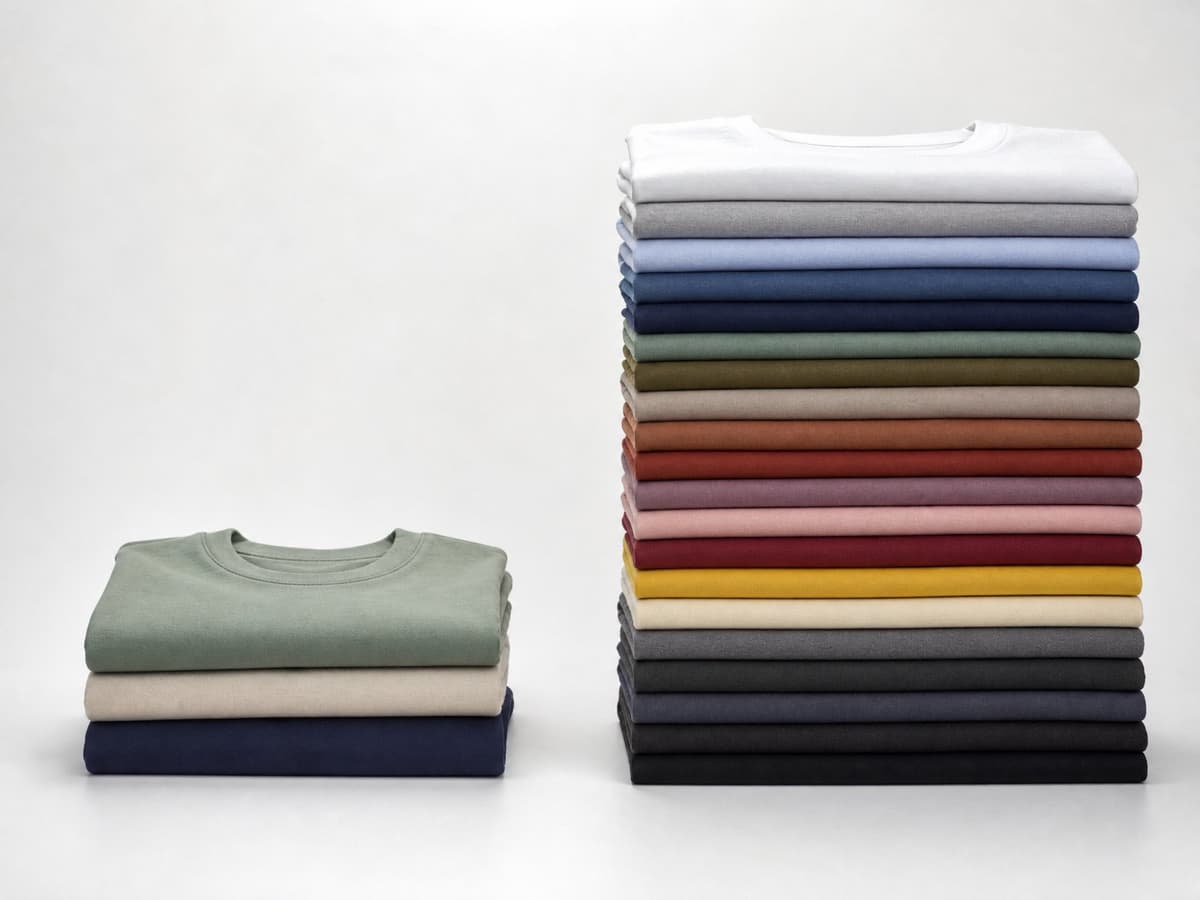
The minimum is 150 pieces per style and per colour, which lets a new label start small without buying someone else's leftovers. Our wholesale and bulk manufacturing page covers how pricing changes with volume, and how to order clothing in bulk walks through a first order step by step. We make knitwear only: t-shirts, polos, sweatshirts, hoodies, joggers and the like. Woven garments are handled through our partner buying house, CMB Sourcing Ltd.
Questions to ask any Bangladeshi wholesale seller
- Is this stock or made to order? A surprising number of sellers offer both without saying which a given quote is.
- For stock: where did this lot come from? Overrun, rejection or cancellation, and if it was rejected, why.
- Whose labels, prints or embroidery are on it? If any belong to a brand, ask for written consent or buy it de-labelled.
- What is the fibre content and size breakdown? On paper, carton by carton, before you pay.
- Who is the exporter of record? You want the seller's legal name on the export documents, matching your invoice.
- For made to order: is this your factory? Ask for the street address, check it against the public registers, and ask for a live video call from the floor. Our guide to choosing a clothing factory in Bangladesh lists what to check.
- What is the minimum, per style and per colour? A minimum per order and a minimum per colour are very different commitments.
If you have read this far and decided ready stock is right for you, good. Go in with the questions above. If what you actually want is your garment, made again whenever it sells out, that is the work we do every week on our floor in Narayanganj. Tell us what you are making and we will tell you honestly whether we are the right factory for it.
Frequently asked questions
Can I buy wholesale clothing directly from Bangladesh?
Yes, in two quite different ways, and it pays to know which one a seller is offering. The first is ready stock: export surplus, cancelled orders and rejected shipments, sold as lots. You see the goods, pay, and ship them quickly, but you take whatever designs, sizes and labels the lot contains, and you usually cannot buy the same item again. The second is made-to-order manufacturing, where a factory cuts and sews garments to your design, sizes and labels after you approve a sample. That takes longer, around ten days for sampling and then 40–50 days of production before freight at our factory, but you can reorder the same product whenever it sells. Many Bangladeshi suppliers advertise both under the word "wholesale", so ask directly which one a quote refers to before you compare prices, terms or timelines with anyone else's.
What is a stock lot in the garment trade?
A stock lot is a quantity of finished garments that were made for someone else's order and never reached that customer as planned. The trade press has long described three usual sources. The first is extra pieces cut to cover rejections at final packing, which a 2013 Apparel Resources article put at around five to seven per cent per style. The second is shipments rejected before dispatch or at the destination port, often for colour or visible defects. The third is orders cancelled by the importer because of excess stock or financial trouble. Lots are sold as they stand, usually by the piece, carton or kilo. Quality ranges from perfect first-quality goods to seconds, and size runs are often broken. Before buying, ask which of the three sources a lot came from, and if it was a rejection, exactly why the original buyer refused it.
Is it legal to resell export-surplus clothing that carries a brand's label?
Often not, and genuine goods can still get you into trouble. In the EU, the customs enforcement regulation, Regulation (EU) No 608/2013, does not apply to overruns made by an authorised manufacturer beyond the agreed quantity. But it states that it does not affect national or Union intellectual property law. Under the EU trade mark regulation, a brand loses the right to object only once goods have been put on the market in the European Economic Area by the brand or with its consent, and overruns the brand never released have not been. In the US, Customs and Border Protection targets and seizes counterfeit and pirated imports. We are not lawyers and this is not legal advice. The safe commercial rule is to buy de-labelled goods with branded prints and embroidery removed, or to obtain the brand's written consent, or to walk away from the lot.
What labels do I need if I relabel stock-lot clothing for my own shop?
You need the labels your own market requires, and you become responsible for them. In the US, the FTC's guidance under the Textile Act says a label must show fibre content, country of origin, and the company name or Registered Identification Number of the manufacturer, importer or dealer. It also says an importer is legally responsible for proper labelling of imported textile products. A dealer may replace a label if the new one carries the name or RN of whoever made the change. In the EU, Regulation (EU) No 1007/2011 requires fibre composition labelling whenever a textile product is made available on the market. The importer must ensure the label is supplied and accurate where the manufacturer is outside the EU. The practical difficulty with stock lots is confirming the fibre content in the first place, so ask the seller for it in writing.
What is the minimum order for made-to-order clothing from your factory?
Our minimum is 150 pieces per style and per colour. That means a hoodie in black and grey is two lots of 150, not one order of 150 split across two colours. The reason is upstream at the mills. Each colour is its own dye lot and its own cutting lay, and those set the real floor rather than our sewing lines. We make knitwear only: t-shirts, polos, tank tops, sweatshirts, hoodies, joggers, shorts, loungewear and similar cut-and-sew knit garments. Woven garments are handled through our partner buying house, CMB Sourcing Ltd. Many export factories in Bangladesh quote higher minimums, and our comparison of low-MOQ manufacturers in Bangladesh sets out what others publish. If you need fewer than 150 pieces of a style, a blank-printing service or print-on-demand will usually serve you better than any factory, and we will say so if you ask.
How long does a made-to-order wholesale order from Bangladesh take?
At our factory, plan for three stages. Sampling takes about ten days from an agreed tech pack, and longer if the sample needs a second round. Production then takes 40–50 days after you approve the sample, covering fabric, cutting, sewing, finishing, inspection and packing. Freight comes on top: air is about five to seven days, and sea freight is longer, depending on the route and the port. Orders ship DDP, so duties and delivery to your door are included in the price you agree rather than arriving as a separate bill. A stock lot is faster to ship, which is its main advantage, but it cannot be repeated. If you are planning a launch date, work backwards from it with our launch date calculator, and leave room for a second sample round. That is the stage first-time brands most often underestimate.
Where this applies
The manufacturing pages this guide relates to, if you are costing a real run.
Free tools & guides for this
Sources & further reading
- Apparel Resources — "Stock lot: a growing business with great potential" (1 Nov 2013): sources of stock lots
- Apparel Resources Bangladesh — NBR crackdown on bonded warehouse abuse (3 Jan 2026)
- EUR-Lex — Regulation (EU) No 608/2013 on customs enforcement of intellectual property rights, Art. 1(5)–(6)
- EUR-Lex — Regulation (EU) 2017/1001 on the European Union trade mark, Art. 15 (exhaustion)
- EUR-Lex — Regulation (EU) No 1007/2011 on textile fibre names and labelling, Arts. 14–15
- U.S. Customs and Border Protection — Intellectual Property Rights
- FTC — Threading Your Way Through the Labeling Requirements Under the Textile and Wool Acts
- U.S. CPSC — Children's Product Certificate (CPC)
Have an idea? Let’s make it.
We manufacture from 150 pieces per style and colour, with organic cotton options from our GOTS-certified facility and photos at every stage. Send a sketch or a sentence — we’ll reply within one business day.