Bangladesh: Land, People and History · Chapter 8 of 16 · 1947 to 1971
East Pakistan, 1947 to 1971: The Language Movement and the Road to 1971
From 14 August 1947 to March 1971 the land that is now Bangladesh was the eastern wing of Pakistan, called East Bengal until 1955 and East Pakistan after it.1 More of Pakistan's people lived there than in the West, yet its per capita income fell further behind, from Rs 51 below the West's in FY1949-50 to Rs 206 below in FY1969-70 (at 1959-60 prices), and on 21 and 22 February 1952 police in Dhaka fired on people demanding Bangla as a state language, killing several.2 When Pakistan held its first election on universal adult franchise in December 1970, the Awami League won 167 of the 313 seats in the National Assembly, an absolute majority; on 1 March 1971 the Assembly was postponed indefinitely.3
- 21 February 1952
- Police fire on students in Dhaka who were demanding Bangla as a state language4
- Rs 51 to Rs 206
- Gap between West and East Pakistan's per capita income, FY1949-50 to FY1969-70, at 1959-60 prices5
- 20% to 36%
- East Pakistan's share of central government expenditure in the two wings, FY1950-51 to FY1954-55 compared with FY1965-66 to FY1969-706
- 6
- Points of the autonomy programme Sheikh Mujibur Rahman presented in Lahore in February 19667
- 200,000 to 500,000
- Range of published estimates of deaths in the Bhola cyclone of 12 to 13 November 19708
- 167 of 313
- National Assembly seats won by the Awami League in the 1970 election9
Sources: Banglapedia; Asadullah (2010); Gull (2015); Mason, Dorfman and Marglin (1971); Bangla Desh Documents; WMO; and the sources in the notes.10
21 February 1952: the day the argument changed
On 21 February 1952, 8 Falgun 1359 in the Bangla calendar, students in Dhaka faced a choice.11 The government had banned gatherings in the city under Section 144, and on the night of 20 February the All-Party Language Action Committee had voted by a majority not to break the ban; the students decided to defy it.12 As they moved towards the Legislative Assembly, police opened fire near the Dhaka Medical College hostel.13
Rafiq Uddin Ahmed, Abdul Jabbar and Abul Barkat were killed.14 Abdus Salam was wounded and died later, and a nine-year-old boy named Ohiullah was also killed.15 The next day police fired on a mourning procession, and Shafiur Rahman, a clerk at the High Court, was shot on Nawabpur Road; he died at 7 pm.16
Their demand, that Bangla be one of Pakistan's state languages, was about numbers. In 1948 a member from East Bengal had told the Constituent Assembly that 4 crore 40 lakh of Pakistan's 6 crore 90 lakh people spoke Bangla.17 This chapter argues, as an interpretation rather than a fact any one source states, that the whole quarrel between East Pakistan and the central government, from 1947 to 1971, turned on the same question: would the majority of Pakistan's people be treated as a majority? Language was the first form the question took; money and political power came later, and in December 1970 the voters answered it themselves.
What did Partition give East Bengal?
Partition gave East Bengal most of Bengal's jute fields but none of the mills that turned raw jute into jute goods.18 The province came into being on 14 August 1947, when Khwaja Nazimuddin formed its first cabinet; after the death of Muhammad Ali Jinnah in September 1948 he became Governor-General, and Nurul Amin was Chief Minister until 2 April 1954.19 How Bengal came to be divided is told in the chapter on colonial Bengal.
The economic split was stark. All 108 jute mills of Bengal stayed in India, while about 80 per cent of the jute-growing area lay in the new Pakistan.20 From 29 February 1948 India treated Pakistan as a foreign country for trade, and customs tariffs applied.21 People moved too: Banglapedia's geographer K. Moudud Elahi estimates that about two million refugees came into East Bengal from India and about one million Bengalis left for India, while another Banglapedia entry gives "about a million Muslims" entering the province.22
The province took the name East Pakistan on 8 September 1955, according to Banglapedia, the only source for the exact date that this guide has checked.23 It was the more populous of the two wings throughout: in the United Nations' later estimates, East Pakistan had 41.8 million people in 1950 against 39.7 million in the West, and 66.3 million in 1970 against 61.8 million.24
The Language Movement, 1947 to 1956
The Language Movement, ভাষা আন্দোলন (Bhasha Andolan), was the campaign, from 1947 to 1956, to make Bangla a state language of Pakistan alongside Urdu, and 21 February 1952 was its turning point.25 It began within months of independence. A meeting at Dhaka University demanded Bangla as a state language on 6 December 1947, according to Banglapedia; Prothom Alo's chronology dates the protest meeting to 8 December.26 At the end of December the first Rastrabhasa Sangram Parishad, or Language Action Committee, was formed; the Tamaddun Majlish led the first agitation.27
On 23 February 1948 Dhirendranath Datta of the East Pakistan Congress Party moved in the Constituent Assembly that Bangla be one of its languages.28 Liaquat Ali Khan and Khwaja Nazimuddin opposed the motion, and it was rejected.29 A general strike followed on 11 March 1948, and student and political leaders, Sheikh Mujibur Rahman among them, were arrested.30
Then Jinnah came. He arrived in Dhaka on 19 March 1948, declared at a public meeting at the Race Course on 21 March that Urdu alone would be the state language, and said the same at Dhaka University on 24 March.31
The issue did not go away. On 27 January 1952 Khwaja Nazimuddin, by then Prime Minister, told a meeting at Paltan Maidan that only Urdu would be the state language.32 Four days later, on 31 January, an all-party meeting chaired by Abdul Hamid Khan Bhashani formed the All-Party Central Language Action Committee, with Kazi Golam Mahboob as convener, and called a hartal, a general strike, for 21 February.33 The government replied with Section 144, imposed on 20 February according to Banglapedia and on 18 February according to Prothom Alo.34
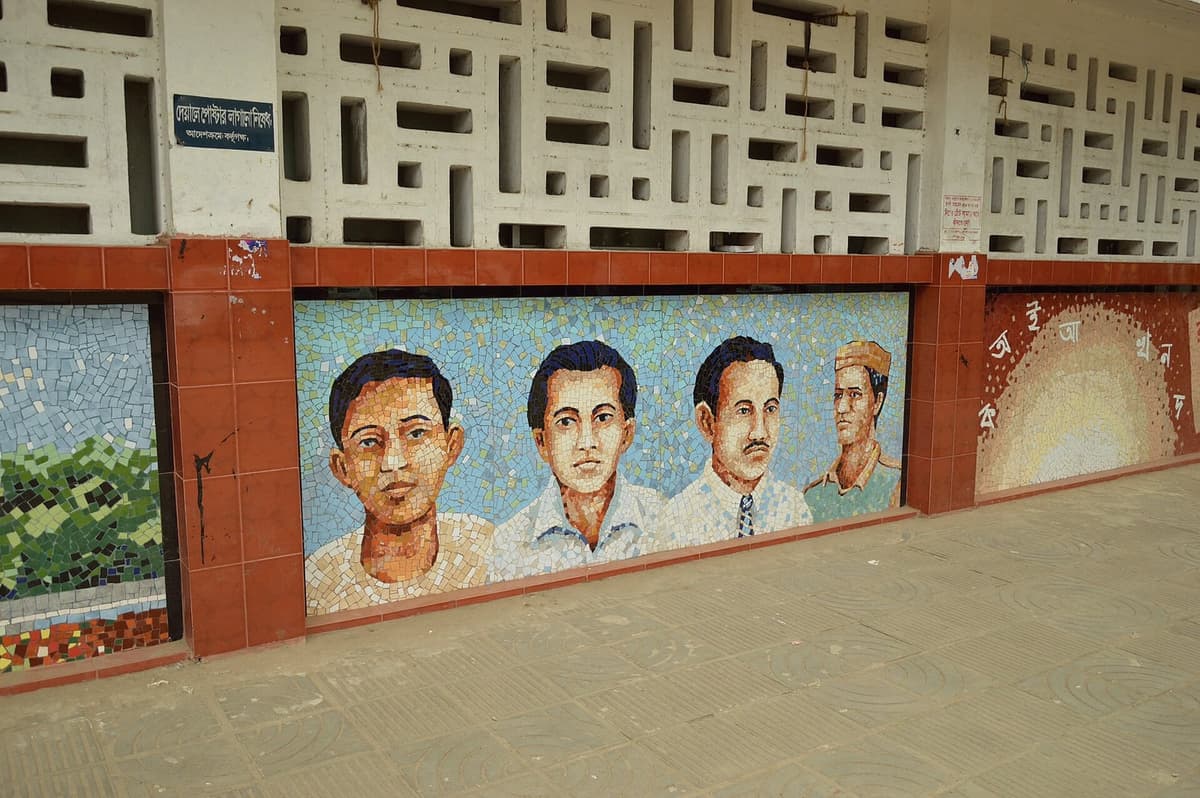
Who were the language martyrs?
Six people are named in the sources this guide could verify.36 Five of them, Rafiq Uddin Ahmed, Abul Barkat, Abdul Jabbar, Abdus Salam and Shafiur Rahman, were each awarded the Ekushey Padak after their deaths, in 2000.37
Those killed on 21 and 22 February 1952
Rafiq Uddin Ahmed
Worked in his father's printing business 30 October 1926 to 21 February 1952
Born at Paril in Singair, Manikganj. He was shot dead on 21 February 1952.38
Abul Barkat
MA student in political science, Dhaka University 13 June (or 16 June) 1927 to 21 February 1952
Born at Babla in Murshidabad. He was shot on 21 February and died at about 8 pm that day.39
Abdul Jabbar
Had worked in Burma 1919 to 21 or 22 February 1952
From Panchua in Gafargaon, Mymensingh. His Banglapedia biography says he died on the night after he was shot; other accounts list him among those killed on 21 February.40
Abdus Salam
Sources differ on his occupation 27 November 1925 to 7 April 1952
From Laxmanpur, now Salam Nagar, in Daganbhuiyan, Feni. He was wounded on 21 February and died of his wounds on 7 April. Sources describe his work differently: a record keeper in the Department of Industries, a peon at the Secretariat, or a bank employee.41
Ohiullah
A nine-year-old boy Died 21 February 1952
He was killed on 21 February. No photograph of him existed, so the Language Movement Museum in Dhaka commissioned the artist Shyamal Biswas to paint a portrait.42
Shafiur Rahman
Clerk at the Dhaka High Court 1918 to 22 February 1952
Born at Konnagar in the 24 Parganas. He was shot on Nawabpur Road during the procession of 22 February and died at 7 pm.43
The true number of dead is not settled. The government's press note admitted three deaths on 21 February, while the Daily Azad reported four deaths on 22 February, according to Prothom Alo's chronology.44 Banglapedia says "at least two others are also believed to have been killed" on 21 February.45 Later newspaper features give further names and higher counts; this guide has not been able to verify them.
The Shaheed Minar
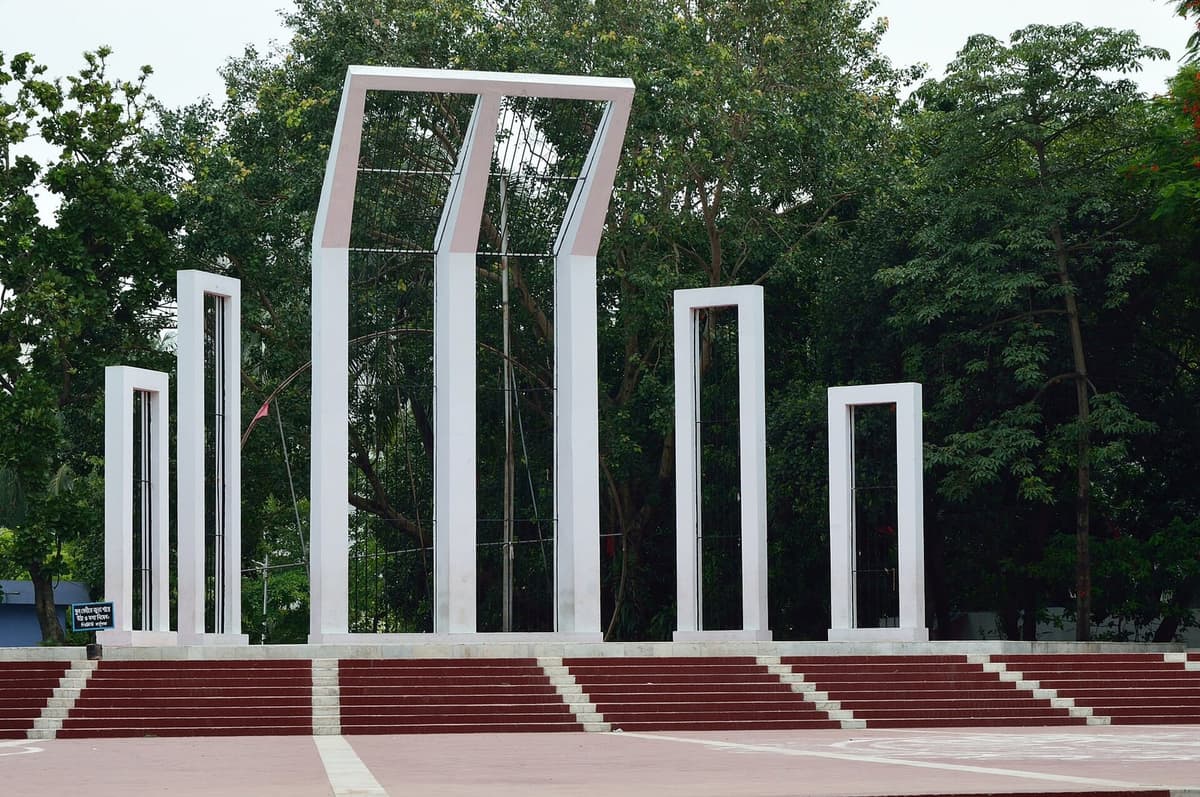
The শহীদ মিনার (Shaheed Minar), the martyrs' monument, was first put up by students and knocked down on the day it was opened. Students of Dhaka Medical College put it up on 23 February 1952; it was inaugurated on the morning of 26 February by Abul Kalam Shamsuddin, editor of the Azad, and demolished by police that afternoon.46 The foundation stone of a permanent monument was laid on 21 February 1956 by Chief Minister Abu Hossain Sarkar together with Bhashani and Hasina Begum, the mother of Abul Barkat.47 Work to Hamidur Rahman's design, with the sculptor Novera Ahmed assisting, began in November 1957 and stopped after martial law in 1958.48
A reduced Shaheed Minar was inaugurated by Hasina Begum on 21 February 1963.49 The Pakistan army demolished it in 1971; it was rebuilt from 1972 and enlarged to its present size in 1983.50
When did Bangla become a state language?
Bangla became a state language of Pakistan, alongside Urdu, in the constitution of 1956, after the East Bengal Legislative Assembly had recommended it in the wake of the killings; the sources date the decisive step differently.52
- 9 May 1954: Bangla was recognised as a state language at a session of the (Constituent) National Assembly, according to Banglapedia's entry on Ekushey February.53
- 16 February 1956: the decisive amendment, moved by Adel Uddin Ahmed, was adopted, according to Banglapedia's entry on the Language Movement.54
- 26 February and 3 March 1956: the constitution that recognised Bangla and Urdu was passed on 26 February and came into force on 3 March, according to Prothom Alo's chronology, the only source for these two dates that this guide found; they have not been checked against the official text.55
From Ekushey to International Mother Language Day
On 17 November 1999 UNESCO's General Conference proclaimed 21 February International Mother Language Day, on a proposal from Bangladesh, and it has been observed around the world since 2000.56 UNESCO's own page is plain about where the idea came from: "The idea to celebrate International Mother Language Day was the initiative of Bangladesh."57 In Bangladesh the day is still called একুশে, Ekushey, "the twenty-first".58 How it is marked today is described in the chapter on culture.
1954: the United Front election
The provincial election of March 1954 was a rout of the Muslim League, the party of the provincial government.59 Opposition parties formed a United Front on 4 December 1953, after the Awami League's council at Mymensingh had backed the idea on 14 November.60 Its main partners were the Awami Muslim League of Bhashani and Suhrawardy, the Krishak Sramik Party of A. K. Fazlul Huq, the Nezam-e-Islam and the Ganatantri Dal.61
Its 21-point manifesto asked, among other things, for Bangla as a state language, abolition of zamindari without compensation, nationalisation of the jute trade, a monument to the language martyrs, and full autonomy, leaving only defence, foreign affairs and currency to the centre.62 One pledge, to give Burdwan House to Bangla research, was kept: Bangla Academy opened there on 3 December 1955.63
Polling ran from 8 to 12 March 1954 on universal adult franchise, with separate electorates, for a House of 309 seats; 1,285 candidates stood.64 The Muslim League was routed, and all five members of Nurul Amin's ministry, Nurul Amin included, lost their seats.65 The exact seat counts depend on which Banglapedia entry you read, and none of the three is clearly the authoritative one.
| "Elections 1954" | "United Front" and "Twenty One Point Programme" | "History" | |
|---|---|---|---|
| United Front seats | 228 (including 9 women's seats) | 223 | 215 of 237 Muslim seats, with 7 independents joining later (222) |
| Muslim League seats | 7 | 9 | 9 |
| Awami Muslim League | 143 | 130 | 142 |
| Krishak Sramik Party | 48 | 48 | |
| Nezam-e-Islam | 22 | 19 | |
| Ganatantri Dal | 13 | 13 | |
| Khilafat-e-Rabbani | 2 | 1 | |
| Electorate | 19,748,568 | 19,739,086 | |
| Turnout | 7,344,216 (37.19%) | 37.6% (Muslim seats) |
Source: Banglapedia, "Elections 1954", "United Front", "Twenty One Point Programme" and "History". Blank cells: the entry gives no figure.66
The victory lasted weeks. Fazlul Huq formed a cabinet on 3 April 1954, enlarged on 15 May to take in Awami Muslim League members, Sheikh Mujibur Rahman among them.67 The same day, 15 May, riots between Bengali and non-Bengali workers at the Adamjee Jute Mills near Narayanganj caused many deaths; Banglapedia's figure is "nearly 1500", which no other source this guide consulted confirms.68 The central government dismissed the ministry and imposed Governor's rule on 30 May (29 May in another Banglapedia entry), and about 1,600 Front leaders and workers, 30 legislators among them, were jailed.69
Between March 1954 and August 1958 East Pakistan had seven cabinets and three spells of Governor's rule.70 The Awami Muslim League dropped "Muslim" from its name in 1955, and Suhrawardy led the central government as Prime Minister from 12 September 1956 to 18 October 1957.71 At the Kagmari Conference in February 1957 Bhashani opposed his support for the SEATO and CENTO pacts, and later that year Bhashani founded the National Awami Party.72
How wide was the gap between the two wings?
By the official income figures the gap between East and West Pakistan widened over the two decades, though economists then and now disagree about how wide it was and why.73 The World Bank, writing in July 1970, put the starting point plainly: "In 1949/50, its [West Pakistan's] income per capita was about 25 percent higher than that in East Pakistan."74 A table published by the economist M. Niaz Asadullah from Pakistan's own planning documents shows the gap growing in rupees from 51 to 88 to 206 per head.75
Show the numbers
| Year | West Pakistan | East Pakistan |
|---|---|---|
| FY1949-50 | 338 | 287 |
| FY1959-60 | 366 | 278 |
| FY1969-70 | 537 | 331 |
Source: Third Five Year Plan, p. 11, and the Panel of Economists' report on the Fourth Plan (1970), p. 132, as quoted by Asadullah (2010), table I.76
The Planning Commission's own panel of economists put the gap in percentages. As quoted by the Harvard economists Edward Mason, Robert Dorfman and Stephen Marglin, its 1970 report put West Pakistan's income per head 32 per cent above the East's in 1959-60 and 61 per cent above in 1969-70, with income growing 6.2 per cent a year in the West over the decade and 4.2 per cent in the East.77 The report itself called these estimates "understatements", because prices were higher in the East.78 The World Bank thought the true disparity lay "somewhere between the official estimate of 38 percent and private calculations of over 100 percent".79 It also found that the East's share of Pakistan's GDP fell from 43.8 per cent in 1964-65 to 40.6 per cent in 1969-70.80
| Year | West above East | Who says so |
|---|---|---|
| 1949-50 | About 25% | World Bank (1970) |
| 1949-50 | 17% | Asadullah (2010) |
| 1959-60 | 32% | Panel of Economists (1970), as quoted by Mason, Dorfman and Marglin |
| 1969-70 | 61% | Panel of Economists (1970), as quoted by Mason, Dorfman and Marglin |
| 1969-70 | 81% | G. W. Choudhury, as cited by Gull (2015) |
| c. 1970 | 38% (official) to over 100% (private) | World Bank (1970) |
Source: World Bank (1970), paras. 59 and 64; Asadullah (2010), n. 5; Mason, Dorfman and Marglin (1971), 11-12; Gull (2015), 10.81
Where the money went
Most central government expenditure went to the West throughout, though the East's share rose.82 A table drawn up by East Pakistani economists for the 1970 panel, reprinted by Ayyaz Gull in 2015, gives the central government's total expenditure in each wing (revenue and development spending together, in crore rupees at current prices): 271 crore in the East against 1,120 crore in the West in FY1950-51 to FY1954-55, and 2,304 crore against 5,193 crore in FY1965-66 to FY1969-70.83 On those totals the East's share rose from 20 per cent to 36 per cent.84 Mason, Dorfman and Marglin, citing the Panel of Economists' report, give the same two figures, 20 and 36 per cent, but as the East's share of central government development expenditure, a narrower measure; they add that the East received under a quarter of private investment.85 The World Bank counted differently: by its reckoning the East got 50 per cent of all public Plan outlays in the Third Plan (1965 to 1970), up from 38 per cent in the five years before, or 43 per cent if the Indus and Tarbela works in the West are included.86
Show the numbers
| Year | East Pakistan | West Pakistan |
|---|---|---|
| 1950-55 | 20 | 80 |
| 1955-60 | 26 | 74 |
| 1960-65 | 32 | 68 |
| 1965-70 | 36 | 64 |
Source: Report of the East Pakistan economists in the Panel of Economists' report (1970), as reproduced by Gull (2015), 8, from the totals column (East 271, 524, 1,404 and 2,304 crore rupees; West 1,120, 1,655, 3,355 and 5,193 crore rupees). Some revenue and development sub-columns in that printing do not add up, so only the totals are used. Mason, Dorfman and Marglin (1971), 11, give 20 and 36 per cent as the East's share of development expenditure, a different measure. Periods are five fiscal years, FY1950-51 to FY1954-55 and so on.87
Trade ran the other way. East Pakistan earned between 50 and 70 per cent of Pakistan's export earnings over two decades but received only 25 to 30 per cent of its imports, and the Harvard economists, citing the official panel report, put the net transfer of resources from East to West at about US$2.6 billion (nominal) between 1948-49 and 1968-69.88 Industry and roads went west too. Under the Second Plan (1960 to 1965) industrial value added grew 11.6 per cent a year in the West and 5.8 per cent in the East, and about 5,000 miles of good roads were built in the West between 1947 and 1960, against 500 miles in the East.89
One large industry did grow in the East. The first jute mills, Bawa, Victory and Adamjee, went into production in 1951, and by 1969-70 East Pakistan had 77 mills employing about 170,000 people, while jute goods rose from 0.2 per cent of Pakistan's foreign-exchange earnings in 1952-53 to 46 per cent in 1969-70.90 Adamjee, at Siddhirganj near Narayanganj, was half financed by the state's Pakistan Industrial Development Corporation and had 3,000 looms by June 1955.91 That story, and how it led to the garment industry, is told in the garment guide's chapter on the years before the garment boom.
Who ran the state?
Bengalis were a small minority of those who governed Pakistan.92 In 1960, 87 per cent of senior officers in the central civil services were West Pakistanis, and by 1966 East Pakistanis held 20 per cent of Class I posts in the central government.93 Banglapedia gives about 2,900 East Pakistanis among 42,000 central government officers in 1956, and a ratio of 10 to 90 among officers of the defence services.94 A 1971 paper by J. Lee Auspitz, Stephen Marglin and Gustav Papanek said Bengali representation in the army was "believed to be 10% or less".95
Some of this was hidden at the time. A Finance Commission appointed in 1960 to study economic relations between the two wings saw its report kept secret, and the World Bank recorded that it was "a Government rule during the sixties to refrain from preparing regional data".96
Schools: where the East started ahead
Education complicates the picture. On the official measure the East started ahead: literacy among people aged five and over was 18.8 per cent in the East and 7.6 per cent in the West in 1951, and 19.9 against 14.4 per cent in 1961.97 On a stricter measure, functional literacy among people aged ten and over with five years' schooling, Asadullah gives 10.1 per cent in the West and 7.8 per cent in the East.98 And the East's stock of primary schools actually shrank, from 29,633 in 1948 to 28,908 in 1969, while the West's grew more than fourfold, from 8,413 to 38,900.99
Show the numbers
| Year | East Pakistan | West Pakistan |
|---|---|---|
| 1948 | 29,633 | 8,413 |
| 1969 | 28,908 | 38,900 |
Source: Fifty Years of Pakistan in Statistics, as quoted by Asadullah (2010), table VIII.100
Ayub Khan and the Basic Democracies, 1958 to 1969
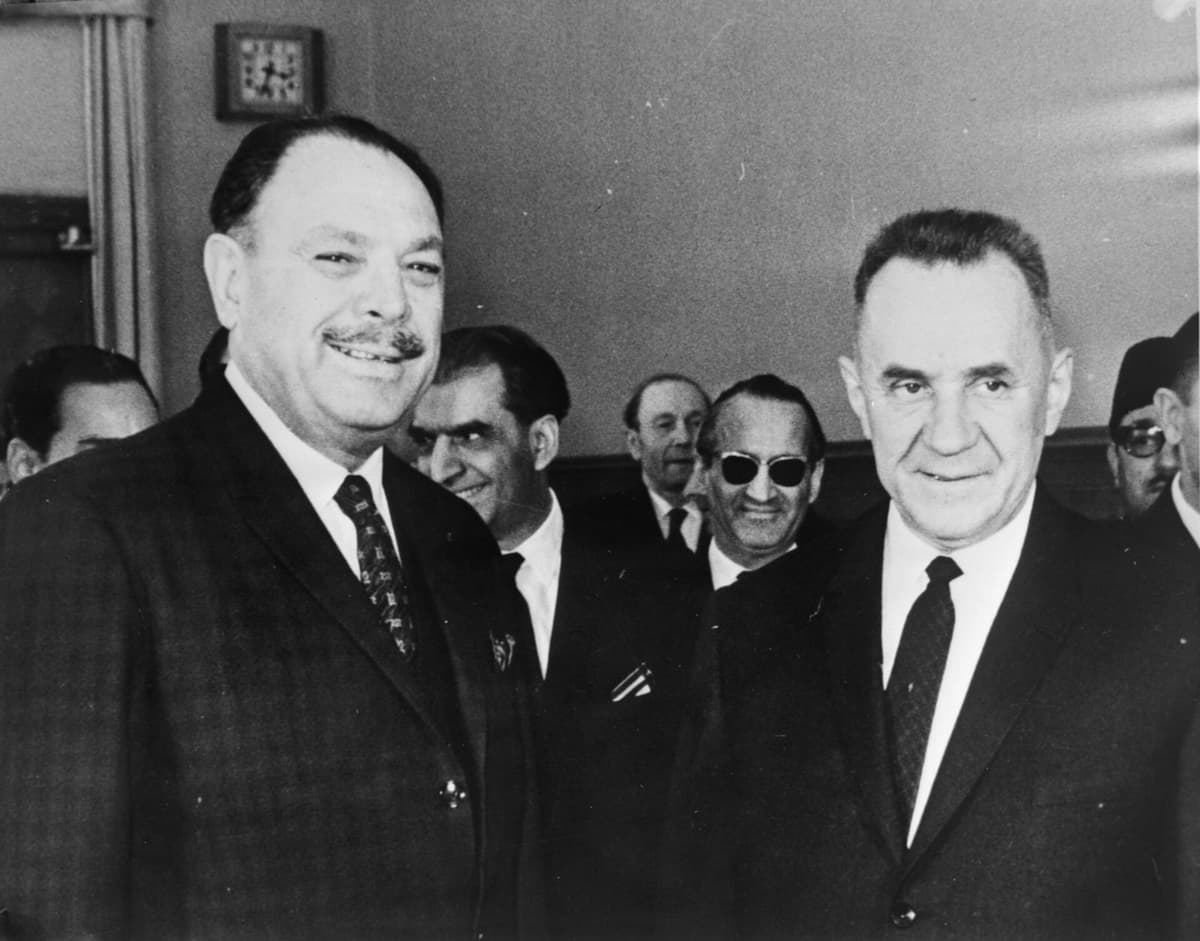
From 1958 to 1969 Pakistan was run by its army chief, Mohammad Ayub Khan, under a system that let 80,000 local councillors, not the voters, choose the President.105 President Iskander Mirza and Ayub imposed martial law on 7 October 1958 and abrogated the 1956 constitution; Ayub became Chief Martial Law Administrator the next day and pushed Mirza out on 27 October.106 Under the Elective Bodies Disqualification Order of 1959, 3,978 politicians from East Pakistan and 3,000 from West Pakistan were barred from politics, according to Banglapedia.107
The Basic Democracies Order of 1959 created tiers of local councils, and 80,000 elected "basic democrats", 40,000 in each wing, became the electoral college for the President and the assemblies.108 Equal numbers in each wing meant the East's larger population counted for no more than the West's. The basic democrats confirmed Ayub as President in a referendum on 14 February 1960.109 A new constitution was announced on 1 March 1962, and martial law was lifted on 8 June 1962.110
Students pushed back. They protested the arrest of Suhrawardy on 30 January 1962 and the report of the Sharif Education Commission, and in the strike of 17 September 1962 students including Babul, Golam Mostafa and Waziullah were killed by police fire; the day has been observed since as Education Day.112 In the presidential election of 2 January 1965, with the 80,000 basic democrats voting, Ayub received 49,951 votes and Fatima Jinnah, the candidate of the combined opposition, 28,961.113 In August 1967 the government banned the broadcast of Tagore's songs on radio and television.114 Banglapedia judges that the basic democrats' monopoly of the vote was widely resented and fed the upheaval of 1969.115
What were the Six Points?
The Six Points were a plan, put forward by Sheikh Mujibur Rahman in February 1966, to turn Pakistan into a federation in which the centre kept only defence and foreign affairs.116 He presented them to the opposition's national conference in Lahore, to its subject committee on 5 February and the conference on 6 February, and they were rejected.117
In summary, the six points were:118
- A federation on the basis of the Lahore Resolution, with a parliament directly elected by adult franchise.
- A federal government limited to defence and foreign affairs.
- Two freely convertible currencies, or one currency with safeguards against the flight of capital and a separate reserve bank for the East.
- Powers of taxation held by the federating units.
- Separate foreign-exchange accounts, and power for the units to make their own trade links.
- A militia or paramilitary force for East Pakistan.
The Constitution should provide for a Federation of Pakistan in its true sense on the basis of the Lahore Resolution, and Parliamentary form of Government with supremacy of Legislature directly elected on the basis of universal adult franchise.
The Awami League adopted them in February or March 1966 (Banglapedia's entries differ on the date).120 Arrests followed. Sheikh Mujibur Rahman was detained on 8 May 1966; in the hartal of 7 June, 10 people were killed in Dhaka and Narayanganj; and Tofazzal Hossain (Manik Mia), editor of Ittefaq, was arrested on 15 June and the paper banned the next day.121
The Agartala case and the uprising of 1969
The Agartala Conspiracy Case was a prosecution brought by the Pakistan government against Sheikh Mujibur Rahman and others on a charge of conspiring to separate East Pakistan by armed revolt, and the government withdrew it in February 1969, in the middle of a mass uprising.122 A Home Department press note of 6 January 1968 announced that a conspiracy to separate East Pakistan by armed revolt had been detected the month before, and a statement of 18 January named Sheikh Mujibur Rahman, already in detention since May 1966.123 The case, officially "State vs Sheikh Mujibur Rahman and others", charged 35 people; hearings began on 19 June 1968 in Dhaka Cantonment before a special tribunal of three judges.124
Protest grew in January 1969. On 4 January, according to Banglapedia's entry on the 1969 upsurge, student organisations formed a Students' Action Committee and issued an 11-point programme that took in the Six Points, the nationalisation of banks, insurance, the jute trade and large industries, and the withdrawal of the Agartala case; Banglapedia's entry on the Eleven Points dates the committee to January 1968.125 Eight parties formed the Democratic Action Committee on 8 January 1969.126 Then came the deaths:
- 20 January 1969: Asaduzzaman (Asad), an MA history student, was shot dead, by the police according to one Banglapedia entry and by the army according to another.127
- 24 January 1969: Matiur, a schoolboy, was killed.128
- 15 February 1969: Sergeant Zahurul Haq of the Pakistan Air Force, accused no. 17 in the Agartala case, was shot in custody in Dhaka Cantonment and died that night.129
- 18 February 1969: Mohammad Shamsuzzoha, proctor of Rajshahi University, was killed while trying to stop soldiers firing on students.130
Banglapedia estimates that about 100 East Pakistanis were killed in the movement.131 On 22 February 1969 the government withdrew the case and released the accused.132 At a public reception the next day Sheikh Mujibur Rahman was given the appellation "Bangabandhu", a title Banglapedia uses for him; Banglapedia places the reception at Paltan Maidan in one entry and at the Race Course, with "around 5 lakh" people, in another.133
Ayub Khan's Round Table Conference with opposition leaders in Rawalpindi, dated 26 February 1969 in one Banglapedia entry and 10 to 13 March in another, failed.134 On 24 March 1969 Ayub handed power to the army chief, Agha Mohammad Yahya Khan, who imposed martial law the next day, abrogated the 1962 constitution and became President and Chief Martial Law Administrator.135
The Bhola cyclone, November 1970
On the night of 12 to 13 November 1970 a cyclone struck the coast of East Pakistan; in 2017 the World Meteorological Organization's archive of weather extremes named it the deadliest tropical cyclone on record.136 Banglapedia gives a maximum wind of about 222 km/h and a storm surge of 6 to 10 metres, at most about 10.6 metres, arriving at high tide.137 The Election Commission listed the areas worst hit as large parts of the Patuakhali, Barisal and Noakhali districts and parts of Khulna and Chittagong.138
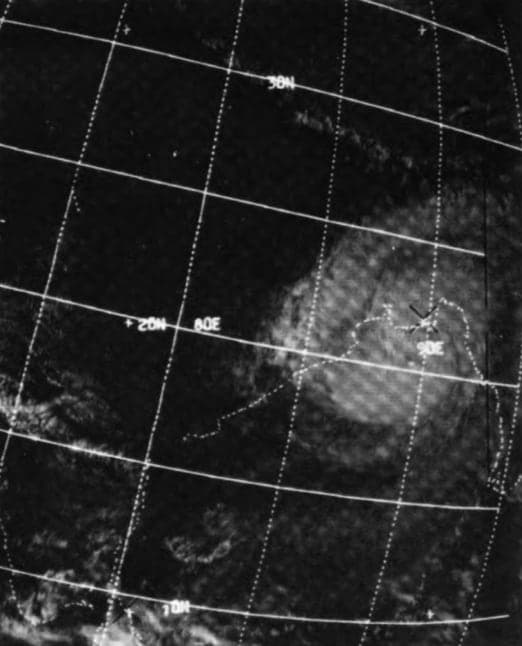
There is no exact count of the dead. The published estimates run from 200,000 to 500,000.140
| Estimate | Who gives it |
|---|---|
| 200,000 ("2 lakh") | Banglapedia, "History" |
| 300,000 | WMO Archive of Weather and Climate Extremes, as reported by UN News (2017) |
| 300,000 to 500,000; "up to 500 000" | World Meteorological Organization (2020) |
| 350,000 | Mehmood and Mobarak, NBER working paper (2026), not peer-reviewed |
| 500,000, "officially", and "it could be more" | Banglapedia, "Cyclone" |
Source: Banglapedia; UN News, 18 May 2017; WMO, 12 November 2020; Mehmood and Mobarak (2026).141
Banglapedia adds that about 46,000 inland fishermen died, more than 20,000 fishing boats were destroyed, over a million cattle were lost, and more than 400,000 houses and 3,500 educational institutions were damaged.142
The storm also became a political event. The historians Sravani Biswas and Patrick Daly argue that the military government's relief effort came under attack from East Pakistani politicians, the press and international actors, and that the cyclone became bound up with the demand for autonomy three weeks before the election.143 A 2026 working paper by the economists Sultan Mehmood and Ahmed Mushfiq Mobarak, published by the National Bureau of Economic Research and not peer-reviewed, finds that exposure to the cyclone strengthened separatist voting and later guerrilla participation, and estimates that 48,613 more people joined the guerrilla war because of it.144
The 1970 election: who won, and by how much?
The Awami League won the 1970 election outright: 167 of 313 seats in the National Assembly, every one of them in East Pakistan.145 On 28 November 1969 Yahya Khan announced polls for 5 October 1970 "on the principle of one man one vote", and on 28 March 1970 he announced the Legal Framework Order: a National Assembly of 313 seats, 300 general and 13 reserved for women, shared out by population at the 1961 census.146 East Pakistan received 162 general seats and 7 for women; the West received 138 and 6.147 Because seats followed population, the East's 169 seats were a majority of the Assembly.148
Floods across East Pakistan in August 1970 forced the polls back from 5 October to 7 December for the National Assembly and 17 December for the provincial assemblies; the Pakistan government's later White Paper places the floods in September.149 After the cyclone, the Election Commission decided against a general postponement. On 27 November it announced that 9 National Assembly and 18 provincial constituencies in the cyclone areas would not vote on schedule, and on 15 December it set 17 January 1971 for both.150 The Pakistan government's White Paper of August 1971, its own official account, says that nearly all East Pakistani leaders wanted a postponement, that Sheikh Mujibur Rahman opposed one, and that 21 provincial constituencies were affected.151
| Party | East Pakistan | Punjab | Sind | NWFP | Baluchistan | Tribal Areas | Women's seats | Total |
|---|---|---|---|---|---|---|---|---|
| Awami League | 160 | 0 | 0 | 0 | 0 | 0 | 7 | 167 |
| Pakistan People's Party | 0 | 64 | 18 | 1 | 0 | 0 | 5 | 88 |
| Muslim League (Qaiyum) | 0 | 1 | 1 | 7 | 0 | 0 | 0 | 9 |
| Muslim League (Council) | 0 | 7 | 0 | 0 | 0 | 0 | 0 | 7 |
| Jamiat-ul-Ulema-i-Islam (Hazarvi) | 0 | 0 | 0 | 6 | 1 | 0 | 0 | 7 |
| Markazi Jamiat-ul-Ulema-i-Pakistan (Thanvi) | 0 | 4 | 3 | 0 | 0 | 0 | 0 | 7 |
| National Awami Party (Wali) | 0 | 0 | 0 | 3 | 3 | 0 | 1 | 7 |
| Jamaat-e-Islami | 0 | 1 | 2 | 1 | 0 | 0 | 0 | 4 |
| Muslim League (Convention) | 0 | 2 | 0 | 0 | 0 | 0 | 0 | 2 |
| Pakistan Democratic Party | 1 | 0 | 0 | 0 | 0 | 0 | 0 | 1 |
| Independents | 1 | 3 | 3 | 0 | 0 | 7 | 0 | 14 |
| Total | 162 | 82 | 27 | 18 | 4 | 7 | 13 | 313 |
Source: "Pakistan National Assembly Election Results", Bangla Desh Documents, 130-131, rebuilt from a damaged scan so that every row and column adds up to the printed totals; seat allocation from the Election Commission's report, ch. III. The compilation does not name the table's source.152
In East Pakistan the Awami League took 12,338,921 votes for the National Assembly, 74.9 per cent; the other two eastern seats went to the Pakistan Democratic Party and an independent.153 It won 288 of the 300 general seats in the East Pakistan Provincial Assembly.154 The Pakistan People's Party won a large majority in the West, especially in Punjab and Sind; neither the People's Party nor the Awami League won a seat in the other wing.155 The People's Party's own total depends on the source: 88 in the table above and in Banglapedia, 85 in the government's White Paper, "approximately 80 out of 140" in one 1971 paper and "80-odd" in another.156
| Electorate | Votes polled | Turnout (%) | Source | |
|---|---|---|---|---|
| East Pakistan | 31,211,220 | 17,769,497 | 56.93 | Election Commission |
| West Pakistan | 25,730,280 | 16,318,814 | 63.42 | Election Commission |
| Pakistan | 56,941,500 | 34,088,311 | 59.87 | Election Commission |
| East Pakistan (other figure) | 29,479,386 | 17,005,163 | 57.68 | Banglapedia |
Source: Election Commission of Pakistan, Report on General Elections, Pakistan, 1970-71, vol. I, ch. XV, 141; Banglapedia, "Election".157
The Awami League had called the election a referendum on the Six Points and the students' Eleven Points.161 On those terms it won. On 14 February 1971 Yahya Khan announced that the new National Assembly would meet in Dhaka on 3 March; on 1 March he postponed it indefinitely.162 What followed is the subject of the chapter on the Liberation War of 1971.
Seen from the eve of March 1971, the twenty-three years of East Pakistan read, in this guide's interpretation, as one long test of a single idea. The language decision of 1948 ignored the majority's language; the spending figures show its share of public money below its share of the people throughout; the basic democracies of 1959 gave the larger wing the same votes as the smaller; and when seats were finally shared out by population in 1970, the Assembly the voters elected was postponed before it could meet. Each refusal was met with a larger demand: a state language in 1952, autonomy in 1966, a majority government in 1970.
The years at a glance
- 14 August 1947East Bengal becomes a province of Pakistan; Khwaja Nazimuddin forms its first cabinet.163
- 21 March 1948Jinnah declares in Dhaka that Urdu alone will be the state language.164
- 21 to 22 February 1952Police fire on students and a mourning procession in Dhaka.165
- 8 to 12 March 1954The United Front defeats the Muslim League in the provincial election.166
- 1956The first constitution makes Bangla and Urdu state languages (exact dates differ by source).167
- 7 October 1958Martial law; Ayub Khan takes power later that month.168
- 5 to 6 February 1966Sheikh Mujibur Rahman presents the Six Points in Lahore.169
- 22 February 1969The Agartala case is withdrawn after weeks of protest.170
- 25 March 1969Yahya Khan imposes martial law and takes over from Ayub.171
- 12 to 13 November 1970The Bhola cyclone strikes the coast.172
- 7 December 1970National Assembly polls; the Awami League wins 160 of the East's 162 general seats.173
- 1 March 1971The National Assembly, due to meet on 3 March, is postponed indefinitely.174
Further reading
- Rounaq Jahan, Pakistan: Failure in National Integration (1972): the classic political study of the period.175
- Willem van Schendel, A History of Bangladesh (2009; 2nd ed. 2020): the standard one-volume history.176
- M. Niaz Asadullah, "Educational Disparity in East and West Pakistan, 1947-71" (2010): the source of this chapter's income and school tables.177
- Rehman Sobhan, From Two Economies to Two Nations (2015): a memoir of the "two economies" argument by one of its authors.178
- Badruddin Umar, Language Movement in East Bengal (2000): the standard history of the Language Movement in English.179
- Sravani Biswas and Patrick Daly, "Cyclone Not Above Politics" (2021): the Bhola cyclone and the politics of relief, open access.180
Questions students and journalists ask
What was the economic disparity between East and West Pakistan?
At 1959-60 prices, income per head in West Pakistan was Rs 338 in 1949-50 against Rs 287 in the East; by 1969-70 it was Rs 537 against Rs 331. The Planning Commission's 1970 panel put the West 61 per cent ahead and called that an understatement. The East earned 50 to 70 per cent of export earnings but received about a fifth of central government expenditure in the early 1950s and about a third by the late 1960s.
What happened on 21 February 1952?
Students in Dhaka defied a government ban on gatherings to demand that Bangla be made a state language of Pakistan. Police opened fire near the Dhaka Medical College hostel. Rafiq Uddin Ahmed, Abdul Jabbar, Abul Barkat and a nine-year-old boy, Ohiullah, were killed, and Abdus Salam was fatally wounded. Shafiur Rahman was shot the next day during a mourning procession. The date became Ekushey, the twenty-first.
Who were the language martyrs of 1952?
The names verified in the main sources are Rafiq Uddin Ahmed, Abul Barkat, Abdul Jabbar, Abdus Salam, the nine-year-old Ohiullah, and Shafiur Rahman, who was killed on 22 February. Five of them received the Ekushey Padak after their deaths in 2000. The government admitted three deaths on 21 February; newspapers of the time and later writers give higher counts and other names that have not been verified.
Why is 21 February International Mother Language Day?
The date comes from the Language Movement: on 21 February 1952 police in Dhaka fired on students demanding that Bangla be made a state language of Pakistan. On 17 November 1999 UNESCO's General Conference proclaimed 21 February International Mother Language Day, on a proposal from Bangladesh. UNESCO says the idea was Bangladesh's initiative, and the day has been observed worldwide since 2000.
When did Bangla become a state language of Pakistan?
Bangla became a state language, alongside Urdu, under Pakistan's first constitution of 1956. Sources date the key step differently: one Banglapedia entry says it was recognised at an assembly session on 9 May 1954, another dates the decisive amendment to 16 February 1956, and a Prothom Alo chronology says the constitution was passed on 26 February 1956 and came into force on 3 March 1956.
What were the Six Points of 1966?
The Six Points were an autonomy programme presented by Sheikh Mujibur Rahman in Lahore in February 1966. They asked for a federal parliamentary system elected by adult franchise; a centre limited to defence and foreign affairs; separate currencies or safeguards against capital flight; taxation by the provinces; separate foreign-exchange accounts and trade powers; and a militia for East Pakistan. The opposition conference rejected them.
What was the Agartala Conspiracy Case?
It was a trial, officially State vs Sheikh Mujibur Rahman and others, of 35 people accused of plotting to separate East Pakistan by armed revolt. Hearings began in Dhaka Cantonment on 19 June 1968. During the mass protests of early 1969 one accused, Sergeant Zahurul Haq, was shot in custody, and on 22 February 1969 the government withdrew the case and released the accused.
What was the 1969 mass uprising in East Pakistan?
It was a wave of protest from January to March 1969, led by students with an 11-point programme that included the Six Points. Asaduzzaman, the schoolboy Matiur and the Rajshahi University proctor Mohammad Shamsuzzoha were among those killed; Banglapedia estimates about 100 deaths. The government withdrew the Agartala case in February, and the movement ended with Ayub Khan handing power to Yahya Khan in March 1969.
How many people died in the 1970 Bhola cyclone?
No exact count exists. Published estimates range from 200,000 to 500,000. The World Meteorological Organization has given 300,000 and also a range of 300,000 to 500,000; a 2026 working paper uses 350,000; Banglapedia gives 500,000 as the official figure and says it could be more. The WMO ranks it as the deadliest tropical cyclone on record.
Who won the 1970 election in Pakistan, and why was power not transferred?
The Awami League won 167 of the 313 National Assembly seats, all from East Pakistan, an absolute majority. The Pakistan People's Party came second, with about 80 to 88 seats depending on the source, all from the West. President Yahya Khan summoned the Assembly for 3 March 1971 but postponed it indefinitely on 1 March, and the crisis that followed led to the war of 1971.
Notes
- , "History," Banglapedia: National Encyclopedia of Bangladesh, Dhaka: Asiatic Society of Bangladesh; online edition, section "Pakistan Period (1947-71)", accessed 22 November 2026, https://en.banglapedia.org/index.php?title=History. ↩
- M. Niaz Asadullah, "Educational Disparity in East and West Pakistan, 1947-71: Was East Pakistan Discriminated Against?" Bangladesh Development Studies 33, no. 3 (2010): 5, table I, 9, table III, https://doi.org/10.57138/GKGT5294; Ahmed Rafique, "Ekushey February," Banglapedia: National Encyclopedia of Bangladesh, Dhaka: Asiatic Society of Bangladesh; online edition, accessed 22 November 2026, https://en.banglapedia.org/index.php?title=Ekushey_February; Rafiqul Akbar, "Rahman, Shafiur," Banglapedia: National Encyclopedia of Bangladesh, Dhaka: Asiatic Society of Bangladesh; online edition, accessed 22 November 2026, https://en.banglapedia.org/index.php?title=Rahman,_Shafiur. ↩
- Election Commission of Pakistan, Report on General Elections, Pakistan, 1970-71, Vol. I. Scan hosted by Bangladesh on Record (Karachi: Manager of Publications, 1972), https://bangladeshonrecord.com/?p=3376; , Bangla Desh Documents, Undated; contents run to late 1971; compiler not named on the scanned title page. Digital Library of India item 2015.174406 (Madras: B.N.K. Press), 130-131, https://archive.org/details/in.ernet.dli.2015.174406; , "History, Pakistan Period"; Muazzam Hussain Khan, "Khan, Aga Mohammad Yahya," Banglapedia: National Encyclopedia of Bangladesh, Dhaka: Asiatic Society of Bangladesh; online edition, accessed 22 November 2026, https://en.banglapedia.org/index.php?title=Khan,_Aga_Mohammad_Yahya. ↩
- Bashir Al Helal, "Language Movement," Banglapedia: National Encyclopedia of Bangladesh, Dhaka: Asiatic Society of Bangladesh; online edition, accessed 22 November 2026, https://en.banglapedia.org/index.php/Language_Movement; Rafique, "Ekushey February". ↩
- Asadullah, "Educational Disparity in East and West Pakistan", 5, table I. ↩
- Ayyaz Gull, "Development of Underdevelopment: The Case of East Pakistan 1947-1969," Journal of the Punjab University Historical Society 28, no. 1 (2015): 8, https://pu.edu.pk/images/journal/HistoryPStudies/PDF-FILES/Ayyaz%20Gul_v28No1jun2015.pdf; Edward S. Mason, Robert Dorfman, and Stephen A. Marglin, "Conflict in East Pakistan: Background and Prospects," in Bangla Desh Documents (Madras: B.N.K. Press, 1971), 11, https://archive.org/details/in.ernet.dli.2015.174406. ↩
- Ashfaq Hossain, "Six-point Programme," Banglapedia: National Encyclopedia of Bangladesh, Dhaka: Asiatic Society of Bangladesh; online edition, accessed 22 November 2026, https://en.banglapedia.org/index.php/Six-point_Programme; , Bangla Desh Documents, 23-32. ↩
- , "History, Pakistan Period"; , "Cyclone," Banglapedia: National Encyclopedia of Bangladesh, Dhaka: Asiatic Society of Bangladesh; online edition, accessed 22 November 2026, https://en.banglapedia.org/index.php/Cyclone; World Meteorological Organization, "World's Deadliest Tropical Cyclone Was 50 Years Ago," WMO News, 12 November 2020, https://wmo.int/media/news/worlds-deadliest-tropical-cyclone-was-50-years-ago; "Identifying All-Time Deadliest Weather Events, UN Says History Can Help Mitigate Future Disasters," UN News, 18 May 2017, https://news.un.org/en/story/2017/05/557622; Sultan Mehmood and Ahmed Mushfiq Mobarak, How Climate Shocks Produce Armed Rebellion: The 1970 Bhola Cyclone and the Birth of Bangladesh, NBER Working Paper 35360, June 2026 (Cambridge, MA: National Bureau of Economic Research, 2026), https://doi.org/10.3386/w35360. ↩
- , Bangla Desh Documents, 130-131; , "History, Pakistan Period". ↩
- Al Helal, "Language Movement"; Asadullah, "Educational Disparity in East and West Pakistan", 5; Gull, "Development of Underdevelopment", 8; Mason, Dorfman, and Marglin, "Conflict in East Pakistan", 11; , Bangla Desh Documents; World Meteorological Organization, "World's Deadliest Tropical Cyclone". ↩
- Rafique, "Ekushey February". ↩
- Rafique, "Ekushey February"; Al Helal, "Language Movement"; Shameem Reza, "Chronology of Important Events of Language Movement," Prothom Alo English, 22 February 2019, https://en.prothomalo.com/bangladesh/Chronology-of-important-events-of-Language. ↩
- Al Helal, "Language Movement"; Rafique, "Ekushey February". ↩
- Al Helal, "Language Movement"; Rafique, "Ekushey February". ↩
- Al Helal, "Language Movement"; Rafique, "Ekushey February". ↩
- Al Helal, "Language Movement"; Akbar, "Rahman, Shafiur". ↩
- Al Helal, "Language Movement"; Rafique, "Ekushey February". ↩
- , "Adamjee Jute Mill," Banglapedia: National Encyclopedia of Bangladesh, Dhaka: Asiatic Society of Bangladesh; online edition, accessed 22 November 2026, https://en.banglapedia.org/index.php?title=Adamjee_Jute_Mill; , "Jute Industry," Banglapedia: National Encyclopedia of Bangladesh, Dhaka: Asiatic Society of Bangladesh; online edition, accessed 22 November 2026, https://en.banglapedia.org/index.php?title=Jute_Industry. ↩
- , "History, Pakistan Period". ↩
- , "Adamjee Jute Mill"; , "Jute Industry". ↩
- , "Jute Industry". ↩
- K. Moudud Elahi, "Political Geography," Banglapedia: National Encyclopedia of Bangladesh, Dhaka: Asiatic Society of Bangladesh; online edition, accessed 22 November 2026, https://en.banglapedia.org/index.php?title=Political_Geography; Asha Islam, "Pakistan," Banglapedia: National Encyclopedia of Bangladesh, Dhaka: Asiatic Society of Bangladesh; online edition, accessed 22 November 2026, https://en.banglapedia.org/index.php?title=Pakistan. ↩
- , "History, Pakistan Period". ↩
- Asadullah, "Educational Disparity in East and West Pakistan", 9, table III. ↩
- Al Helal, "Language Movement"; Rafique, "Ekushey February". ↩
- Al Helal, "Language Movement"; Reza, "Chronology of Important Events". ↩
- Al Helal, "Language Movement". ↩
- Al Helal, "Language Movement"; Rafique, "Ekushey February". ↩
- Al Helal, "Language Movement"; Rafique, "Ekushey February". ↩
- Al Helal, "Language Movement". ↩
- Al Helal, "Language Movement"; Rafique, "Ekushey February"; Reza, "Chronology of Important Events". ↩
- Al Helal, "Language Movement"; Rafique, "Ekushey February". ↩
- Al Helal, "Language Movement"; Rafique, "Ekushey February"; Reza, "Chronology of Important Events". ↩
- Rafique, "Ekushey February"; Reza, "Chronology of Important Events". ↩
- Shahida Akhter, "Salam, Abdus," Banglapedia: National Encyclopedia of Bangladesh, Dhaka: Asiatic Society of Bangladesh; online edition (entry "Salam, Abdus2"), accessed 22 November 2026, https://en.banglapedia.org/index.php?title=Salam,_Abdus2. ↩
- Al Helal, "Language Movement"; Rafique, "Ekushey February"; Akbar, "Rahman, Shafiur". ↩
- ASM Rafiqul Akbar, "Ahmed, Rafiq Uddin," Banglapedia: National Encyclopedia of Bangladesh, Dhaka: Asiatic Society of Bangladesh; online edition, accessed 22 November 2026, https://en.banglapedia.org/index.php?title=Ahmed,_Rafiq_Uddin; Rozina Kader, "Barkat, Abul," Banglapedia: National Encyclopedia of Bangladesh, Dhaka: Asiatic Society of Bangladesh; online edition, accessed 22 November 2026, https://en.banglapedia.org/index.php?title=Barkat,_Abul; Dilruba Begum, "Jabbar, Abdul," Banglapedia: National Encyclopedia of Bangladesh, Dhaka: Asiatic Society of Bangladesh; online edition, accessed 22 November 2026, https://en.banglapedia.org/index.php?title=Jabbar,_Abdul; Akhter, "Salam, Abdus"; Akbar, "Rahman, Shafiur". ↩
- Akbar, "Ahmed, Rafiq Uddin". ↩
- Kader, "Barkat, Abul". ↩
- Begum, "Jabbar, Abdul"; Rafique, "Ekushey February"; Reza, "Chronology of Important Events". ↩
- Akhter, "Salam, Abdus"; Al Helal, "Language Movement"; Rafique, "Ekushey February". ↩
- Al Helal, "Language Movement"; MR Mahbub, "Language Movement Museum," Banglapedia: National Encyclopedia of Bangladesh, Dhaka: Asiatic Society of Bangladesh; online edition, accessed 22 November 2026, https://en.banglapedia.org/index.php?title=Language_Movement_Museum. ↩
- Akbar, "Rahman, Shafiur"; Al Helal, "Language Movement". ↩
- Reza, "Chronology of Important Events". ↩
- Rafique, "Ekushey February". ↩
- Ahmed Rafique, "Shaheed Minar," Banglapedia: National Encyclopedia of Bangladesh, Dhaka: Asiatic Society of Bangladesh; online edition, accessed 22 November 2026, https://en.banglapedia.org/index.php/Shaheed_Minar. ↩
- Rafique, "Shaheed Minar". ↩
- Rafique, "Shaheed Minar". ↩
- Rafique, "Shaheed Minar". ↩
- Rafique, "Shaheed Minar". ↩
- Rafique, "Shaheed Minar". ↩
- , "History, Pakistan Period"; Al Helal, "Language Movement"; Reza, "Chronology of Important Events". ↩
- Rafique, "Ekushey February". ↩
- Al Helal, "Language Movement". ↩
- Reza, "Chronology of Important Events". ↩
- Sirajul Islam, "International Mother Language Day," Banglapedia: National Encyclopedia of Bangladesh, Dhaka: Asiatic Society of Bangladesh; online edition, accessed 22 November 2026, https://en.banglapedia.org/index.php/International_Mother_Language_Day; Al Helal, "Language Movement"; UNESCO, "International Mother Language Day," accessed 22 November 2026, https://www.unesco.org/en/days/mother-language. ↩
- UNESCO, "International Mother Language Day". ↩
- Rafique, "Ekushey February". ↩
- Kamal Uddin Ahmed, "United Front," Banglapedia: National Encyclopedia of Bangladesh, Dhaka: Asiatic Society of Bangladesh; online edition, accessed 22 November 2026, https://en.banglapedia.org/index.php/United_Front; Enamul Haq, "Elections 1954," Banglapedia: National Encyclopedia of Bangladesh, Dhaka: Asiatic Society of Bangladesh; online edition, accessed 22 November 2026, https://en.banglapedia.org/index.php?title=Elections_1954. ↩
- Muazzam Hussain Khan, "Twenty One Point Programme," Banglapedia: National Encyclopedia of Bangladesh, Dhaka: Asiatic Society of Bangladesh; online edition, accessed 22 November 2026, https://en.banglapedia.org/index.php?title=Twenty_One_Point_Programme; Ahmed, "United Front". ↩
- Khan, "Twenty One Point Programme"; Ahmed, "United Front"; Haq, "Elections 1954". ↩
- Khan, "Twenty One Point Programme". ↩
- Khan, "Twenty One Point Programme"; , "Bangla Academy," Banglapedia: National Encyclopedia of Bangladesh, Dhaka: Asiatic Society of Bangladesh; online edition, accessed 22 November 2026, https://en.banglapedia.org/index.php?title=Bangla_Academy. ↩
- Haq, "Elections 1954"; Ahmed, "United Front"; , "History, Pakistan Period". ↩
- Ahmed, "United Front"; Haq, "Elections 1954"; , "History, Pakistan Period". ↩
- Haq, "Elections 1954"; Ahmed, "United Front"; Khan, "Twenty One Point Programme"; , "History, Pakistan Period". ↩
- Haq, "Elections 1954"; Ahmed, "United Front". ↩
- Haq, "Elections 1954". ↩
- Haq, "Elections 1954"; , "History, Pakistan Period". ↩
- , "History, Pakistan Period". ↩
- , "History, Pakistan Period". ↩
- , "Kagmari Conference," Banglapedia: National Encyclopedia of Bangladesh, Dhaka: Asiatic Society of Bangladesh; online edition, accessed 22 November 2026, https://en.banglapedia.org/index.php?title=Kagmari_Conference; , "History, Pakistan Period". ↩
- Asadullah, "Educational Disparity in East and West Pakistan", 5, table I; World Bank (International Bank for Reconstruction and Development), South Asia Department, Current Economic Position and Prospects of Pakistan, Vol. I, The Main Report. Report No. SA-15a, 17 July 1970. Scanned PDF (Washington, DC: World Bank, 1970), para. 64, 24, https://documents1.worldbank.org/curated/en/476711468287133417/pdf/multi0page.pdf. ↩
- World Bank (International Bank for Reconstruction and Development), South Asia Department, Current Economic Position of Pakistan, para. 59, 23. ↩
- Asadullah, "Educational Disparity in East and West Pakistan", 5, table I. ↩
- Asadullah, "Educational Disparity in East and West Pakistan", 5, table I. ↩
- Mason, Dorfman, and Marglin, "Conflict in East Pakistan", 11-12. ↩
- Mason, Dorfman, and Marglin, "Conflict in East Pakistan", 11-12. ↩
- World Bank (International Bank for Reconstruction and Development), South Asia Department, Current Economic Position of Pakistan, para. 64, 24. ↩
- World Bank (International Bank for Reconstruction and Development), South Asia Department, Current Economic Position of Pakistan, summary, para. xiv. ↩
- World Bank (International Bank for Reconstruction and Development), South Asia Department, Current Economic Position of Pakistan, paras. 59, 64; Asadullah, "Educational Disparity in East and West Pakistan", n. 5; Mason, Dorfman, and Marglin, "Conflict in East Pakistan", 11-12; Gull, "Development of Underdevelopment", 10. ↩
- Gull, "Development of Underdevelopment", 8. ↩
- Gull, "Development of Underdevelopment", 8. ↩
- Gull, "Development of Underdevelopment", 8. ↩
- Mason, Dorfman, and Marglin, "Conflict in East Pakistan", 11; Asadullah, "Educational Disparity in East and West Pakistan", 6. ↩
- World Bank (International Bank for Reconstruction and Development), South Asia Department, Current Economic Position of Pakistan, para. 68, 25. ↩
- Gull, "Development of Underdevelopment", 8; Mason, Dorfman, and Marglin, "Conflict in East Pakistan", 11. ↩
- Mason, Dorfman, and Marglin, "Conflict in East Pakistan", 12. ↩
- World Bank (International Bank for Reconstruction and Development), South Asia Department, Current Economic Position of Pakistan, paras. 61-62, 22-23. ↩
- , "Jute Industry". ↩
- , "Adamjee Jute Mill". ↩
- Mason, Dorfman, and Marglin, "Conflict in East Pakistan", 12; , "History, Pakistan Period". ↩
- Mason, Dorfman, and Marglin, "Conflict in East Pakistan", 12 and n. 4. ↩
- , "History, Pakistan Period". ↩
- J. Lee Auspitz, Stephen A. Marglin, and Gustav F. Papanek, "History of Economic and Political Domination of East Pakistan," in Bangla Desh Documents (Madras: B.N.K. Press, 1971), 6, https://archive.org/details/in.ernet.dli.2015.174406. ↩
- World Bank (International Bank for Reconstruction and Development), South Asia Department, Current Economic Position of Pakistan, para. 65, 24. ↩
- Asadullah, "Educational Disparity in East and West Pakistan", table VI. ↩
- Asadullah, "Educational Disparity in East and West Pakistan", 12. ↩
- Asadullah, "Educational Disparity in East and West Pakistan", 17, table VIII. ↩
- Asadullah, "Educational Disparity in East and West Pakistan", 17, table VIII. ↩
- , "Intelligentsia," Banglapedia: National Encyclopedia of Bangladesh, Dhaka: Asiatic Society of Bangladesh; online edition, accessed 22 November 2026, https://en.banglapedia.org/index.php?title=Intelligentsia; Gull, "Development of Underdevelopment", 9. ↩
- , Bangladesher Swadhinata Juddha: Dalilpatra [History of Bangladesh War of Independence: Documents], 15 vols., vol. 15 (testimony of Rehman Sobhan); repr. Hakkani Publishers, 2009. Digitised copy, Internet Archive (Dhaka: Ministry of Information, Government of the People's Republic of Bangladesh, 1982), vol. 15, https://archive.org/details/HISTORY_OF_BANGLADESH_WAR_OF_INDEPENDENCE_DOCUMENTS. ↩
- World Bank (International Bank for Reconstruction and Development), South Asia Department, Current Economic Position of Pakistan, para. 70, 26. ↩
- Asadullah, "Educational Disparity in East and West Pakistan", n. 7, 6. ↩
- Shamsur Rahman, "Basic Democracies," Banglapedia: National Encyclopedia of Bangladesh, Dhaka: Asiatic Society of Bangladesh; online edition, accessed 22 November 2026, https://en.banglapedia.org/index.php?title=Basic_Democracies; Helal Uddin Ahmed, "Khan, Field Marshal Mohammad Ayub," Banglapedia: National Encyclopedia of Bangladesh, Dhaka: Asiatic Society of Bangladesh; online edition, accessed 22 November 2026, https://en.banglapedia.org/index.php?title=Khan,_Field_Marshal_Mohammad_Ayub. ↩
- Ahmed, "Khan, Field Marshal Mohammad"; Islam, "Pakistan". ↩
- , "History, Pakistan Period". ↩
- Rahman, "Basic Democracies"; , "History, Pakistan Period"; Election Commission of Pakistan, Report on General Elections. ↩
- Rahman, "Basic Democracies"; , "History, Pakistan Period". ↩
- , "History, Pakistan Period". ↩
- Ahmed, "Khan, Field Marshal Mohammad"; Khan, "Khan, Aga Mohammad Yahya". ↩
- , "History, Pakistan Period". ↩
- , "History, Pakistan Period"; Ahmed, "Khan, Field Marshal Mohammad". ↩
- , "History, Pakistan Period". ↩
- Rahman, "Basic Democracies". ↩
- Hossain, "Six-point Programme". ↩
- Hossain, "Six-point Programme"; , "History, Pakistan Period". ↩
- Hossain, "Six-point Programme"; , Bangla Desh Documents, 23-32. ↩
- , Bangla Desh Documents, 23-24. ↩
- Hossain, "Six-point Programme"; , "History, Pakistan Period". ↩
- , "History, Pakistan Period". ↩
- Shahida Begum, "Agartala Conspiracy Case," Banglapedia: National Encyclopedia of Bangladesh, Dhaka: Asiatic Society of Bangladesh; online edition, accessed 22 November 2026, https://en.banglapedia.org/index.php/Agartala_Conspiracy_Case; Mesbah Kamal and Arifatul Kibria, "Mass Upsurge, 1969," Banglapedia: National Encyclopedia of Bangladesh, Dhaka: Asiatic Society of Bangladesh; online edition, accessed 22 November 2026, https://en.banglapedia.org/index.php/Mass_Upsurge,_1969. ↩
- Begum, "Agartala Conspiracy Case". ↩
- Begum, "Agartala Conspiracy Case". ↩
- Kamal and Kibria, "Mass Upsurge, 1969"; , "Eleven Points Programme," Banglapedia: National Encyclopedia of Bangladesh, Dhaka: Asiatic Society of Bangladesh; online edition, accessed 22 November 2026, https://en.banglapedia.org/index.php?title=Eleven_Points_Programme. ↩
- Kamal and Kibria, "Mass Upsurge, 1969". ↩
- Mesbah Kamal and Arifatul Kibria, "Asad, Shaheed," Banglapedia: National Encyclopedia of Bangladesh, Dhaka: Asiatic Society of Bangladesh; online edition, accessed 22 November 2026, https://en.banglapedia.org/index.php?title=Asad,_Shaheed; Md Mahbub Murshed, "Shamsuzzoha, Shaheed Mohammad," Banglapedia: National Encyclopedia of Bangladesh, Dhaka: Asiatic Society of Bangladesh; online edition, accessed 22 November 2026, https://en.banglapedia.org/index.php?title=Shamsuzzoha,_Shaheed_Mohammad. ↩
- Kamal and Kibria, "Mass Upsurge, 1969". ↩
- S. M. Mahfuzur Rahman, "Haq, Zahurul," Banglapedia: National Encyclopedia of Bangladesh, Dhaka: Asiatic Society of Bangladesh; online edition, accessed 22 November 2026, https://en.banglapedia.org/index.php?title=Haq,_Zahurul; Begum, "Agartala Conspiracy Case". ↩
- Murshed, "Shamsuzzoha, Shaheed Mohammad"; Kamal and Kibria, "Mass Upsurge, 1969". ↩
- , "History, Pakistan Period". ↩
- Begum, "Agartala Conspiracy Case". ↩
- Begum, "Agartala Conspiracy Case"; , "History, Pakistan Period". ↩
- Ahmed, "Khan, Field Marshal Mohammad"; , "History, Pakistan Period". ↩
- Ahmed, "Khan, Field Marshal Mohammad"; Khan, "Khan, Aga Mohammad Yahya"; Islam, "Pakistan". ↩
- , "Cyclone"; Election Commission of Pakistan, Report on General Elections, ch. V, 49; "Identifying All-Time Deadliest Weather Events". ↩
- , "Cyclone". ↩
- Election Commission of Pakistan, Report on General Elections, ch. II, 4. ↩
- , "Cyclone". ↩
- , "History, Pakistan Period"; , "Cyclone". ↩
- , "History, Pakistan Period"; "Identifying All-Time Deadliest Weather Events"; World Meteorological Organization, "World's Deadliest Tropical Cyclone"; Mehmood and Mobarak, How Climate Shocks Produce Armed Rebellion; , "Cyclone". ↩
- , "Cyclone". ↩
- Sravani Biswas and Patrick Daly, ""Cyclone Not Above Politics": East Pakistan, Disaster Politics, and the 1970 Bhola Cyclone," Modern Asian Studies 55, no. 4 (2021), https://doi.org/10.1017/S0026749X20000293. ↩
- Mehmood and Mobarak, How Climate Shocks Produce Armed Rebellion. ↩
- , Bangla Desh Documents, 130-131; , "History, Pakistan Period"; Mason, Dorfman, and Marglin, "Conflict in East Pakistan", 13. ↩
- Election Commission of Pakistan, Report on General Elections, ch. I-II, 1-3. ↩
- Election Commission of Pakistan, Report on General Elections, ch. III, 11. ↩
- Election Commission of Pakistan, Report on General Elections, ch. III, 11. ↩
- Election Commission of Pakistan, Report on General Elections, ch. V, 48; Government of Pakistan, White Paper on the Crisis in East Pakistan, 5 August 1971. Official Pakistani account. Digitised copy, Internet Archive (Islamabad: Government of Pakistan, 1971), 9, https://archive.org/details/white-paper-east-pakistan-crisis-19971. ↩
- Election Commission of Pakistan, Report on General Elections, ch. V, 49-50. ↩
- Government of Pakistan, White Paper on the Crisis, 9-10. ↩
- , Bangla Desh Documents, 130-131; Election Commission of Pakistan, Report on General Elections, ch. III, 11. ↩
- , "Election," Banglapedia: National Encyclopedia of Bangladesh, Dhaka: Asiatic Society of Bangladesh; online edition, tables "General Election, 1970", accessed 22 November 2026, https://en.banglapedia.org/index.php?title=Election; , Bangla Desh Documents, 130-131. ↩
- , "History, Pakistan Period"; , "Election, General Election 1970"; , Bangla Desh Documents. ↩
- Islam, "Pakistan"; , "History, Pakistan Period"; Government of Pakistan, White Paper on the Crisis. ↩
- , Bangla Desh Documents, 130-131; , "History, Pakistan Period"; Government of Pakistan, White Paper on the Crisis, 9; Auspitz, Marglin, and Papanek, "History of Economic and Political Domination", 6; Mason, Dorfman, and Marglin, "Conflict in East Pakistan", 13. ↩
- Election Commission of Pakistan, Report on General Elections, ch. XV, 141; , "Election, General Election 1970". ↩
- Election Commission of Pakistan, Report on General Elections, ch. V, 48-50; Islam, "Pakistan". ↩
- Election Commission of Pakistan, Report on General Elections, 141; , Bangla Desh Documents, 130-131. ↩
- Election Commission of Pakistan, Report on General Elections, 140-141. ↩
- , "History, Pakistan Period". ↩
- , "History, Pakistan Period"; Khan, "Khan, Aga Mohammad Yahya". ↩
- , "History, Pakistan Period". ↩
- Rafique, "Ekushey February"; Reza, "Chronology of Important Events". ↩
- Al Helal, "Language Movement"; Rafique, "Ekushey February"; Akbar, "Rahman, Shafiur". ↩
- Haq, "Elections 1954". ↩
- Al Helal, "Language Movement"; , "History, Pakistan Period"; Reza, "Chronology of Important Events". ↩
- Ahmed, "Khan, Field Marshal Mohammad". ↩
- Hossain, "Six-point Programme"; , "History, Pakistan Period". ↩
- Begum, "Agartala Conspiracy Case". ↩
- Khan, "Khan, Aga Mohammad Yahya". ↩
- , "Cyclone"; Election Commission of Pakistan, Report on General Elections, ch. V, 49. ↩
- Election Commission of Pakistan, Report on General Elections; , Bangla Desh Documents, 130-131. ↩
- , "History, Pakistan Period"; Khan, "Khan, Aga Mohammad Yahya". ↩
- Rounaq Jahan, Pakistan: Failure in National Integration (New York: Columbia University Press, 1972). ↩
- Willem van Schendel, A History of Bangladesh, 2nd ed. 2020 (Cambridge: Cambridge University Press, 2009), https://doi.org/10.1017/9781108684644. ↩
- Asadullah, "Educational Disparity in East and West Pakistan". ↩
- Rehman Sobhan, From Two Economies to Two Nations: My Journey to Bangladesh (Dhaka: Daily Star Books, 2015). ↩
- Badruddin Umar, Language Movement in East Bengal (Dhaka: Jatiya Grontha Prakashan, 2000). ↩
- Biswas and Daly, "Cyclone Not Above Politics". ↩
Bibliography
- . "Adamjee Jute Mill." Banglapedia: National Encyclopedia of Bangladesh. Dhaka: Asiatic Society of Bangladesh; online edition. Accessed 22 November 2026. https://en.banglapedia.org/index.php?title=Adamjee_Jute_Mill.
- . "Bangla Academy." Banglapedia: National Encyclopedia of Bangladesh. Dhaka: Asiatic Society of Bangladesh; online edition. Accessed 22 November 2026. https://en.banglapedia.org/index.php?title=Bangla_Academy.
- . "Cyclone." Banglapedia: National Encyclopedia of Bangladesh. Dhaka: Asiatic Society of Bangladesh; online edition. Accessed 22 November 2026. https://en.banglapedia.org/index.php/Cyclone.
- . "Election." Banglapedia: National Encyclopedia of Bangladesh. Dhaka: Asiatic Society of Bangladesh; online edition, tables "General Election, 1970". Accessed 22 November 2026. https://en.banglapedia.org/index.php?title=Election.
- . "Eleven Points Programme." Banglapedia: National Encyclopedia of Bangladesh. Dhaka: Asiatic Society of Bangladesh; online edition. Accessed 22 November 2026. https://en.banglapedia.org/index.php?title=Eleven_Points_Programme.
- . "History." Banglapedia: National Encyclopedia of Bangladesh. Dhaka: Asiatic Society of Bangladesh; online edition, section "Pakistan Period (1947-71)". Accessed 22 November 2026. https://en.banglapedia.org/index.php?title=History.
- . "Intelligentsia." Banglapedia: National Encyclopedia of Bangladesh. Dhaka: Asiatic Society of Bangladesh; online edition. Accessed 22 November 2026. https://en.banglapedia.org/index.php?title=Intelligentsia.
- . "Jute Industry." Banglapedia: National Encyclopedia of Bangladesh. Dhaka: Asiatic Society of Bangladesh; online edition. Accessed 22 November 2026. https://en.banglapedia.org/index.php?title=Jute_Industry.
- . "Kagmari Conference." Banglapedia: National Encyclopedia of Bangladesh. Dhaka: Asiatic Society of Bangladesh; online edition. Accessed 22 November 2026. https://en.banglapedia.org/index.php?title=Kagmari_Conference.
- . Bangla Desh Documents. Undated; contents run to late 1971; compiler not named on the scanned title page. Digital Library of India item 2015.174406. Madras: B.N.K. Press. https://archive.org/details/in.ernet.dli.2015.174406.
- . Bangladesher Swadhinata Juddha: Dalilpatra [History of Bangladesh War of Independence: Documents]. 15 vols., vol. 15 (testimony of Rehman Sobhan); repr. Hakkani Publishers, 2009. Digitised copy, Internet Archive. Dhaka: Ministry of Information, Government of the People's Republic of Bangladesh, 1982. https://archive.org/details/HISTORY_OF_BANGLADESH_WAR_OF_INDEPENDENCE_DOCUMENTS.
- Ahmed, Helal Uddin. "Khan, Field Marshal Mohammad Ayub." Banglapedia: National Encyclopedia of Bangladesh. Dhaka: Asiatic Society of Bangladesh; online edition. Accessed 22 November 2026. https://en.banglapedia.org/index.php?title=Khan,_Field_Marshal_Mohammad_Ayub.
- Ahmed, Kamal Uddin. "United Front." Banglapedia: National Encyclopedia of Bangladesh. Dhaka: Asiatic Society of Bangladesh; online edition. Accessed 22 November 2026. https://en.banglapedia.org/index.php/United_Front.
- Akbar, ASM Rafiqul. "Ahmed, Rafiq Uddin." Banglapedia: National Encyclopedia of Bangladesh. Dhaka: Asiatic Society of Bangladesh; online edition. Accessed 22 November 2026. https://en.banglapedia.org/index.php?title=Ahmed,_Rafiq_Uddin.
- Akbar, Rafiqul. "Rahman, Shafiur." Banglapedia: National Encyclopedia of Bangladesh. Dhaka: Asiatic Society of Bangladesh; online edition. Accessed 22 November 2026. https://en.banglapedia.org/index.php?title=Rahman,_Shafiur.
- Akhter, Shahida. "Salam, Abdus." Banglapedia: National Encyclopedia of Bangladesh. Dhaka: Asiatic Society of Bangladesh; online edition (entry "Salam, Abdus2"). Accessed 22 November 2026. https://en.banglapedia.org/index.php?title=Salam,_Abdus2.
- Al Helal, Bashir. "Language Movement." Banglapedia: National Encyclopedia of Bangladesh. Dhaka: Asiatic Society of Bangladesh; online edition. Accessed 22 November 2026. https://en.banglapedia.org/index.php/Language_Movement.
- Asadullah, M. Niaz. "Educational Disparity in East and West Pakistan, 1947-71: Was East Pakistan Discriminated Against?" Bangladesh Development Studies 33, no. 3 (2010): 1-46. https://doi.org/10.57138/GKGT5294.
- Auspitz, J. Lee, Stephen A. Marglin, and Gustav F. Papanek. "History of Economic and Political Domination of East Pakistan." In Bangla Desh Documents, 5-9. Madras: B.N.K. Press, 1971. https://archive.org/details/in.ernet.dli.2015.174406.
- Begum, Dilruba. "Jabbar, Abdul." Banglapedia: National Encyclopedia of Bangladesh. Dhaka: Asiatic Society of Bangladesh; online edition. Accessed 22 November 2026. https://en.banglapedia.org/index.php?title=Jabbar,_Abdul.
- Begum, Shahida. "Agartala Conspiracy Case." Banglapedia: National Encyclopedia of Bangladesh. Dhaka: Asiatic Society of Bangladesh; online edition. Accessed 22 November 2026. https://en.banglapedia.org/index.php/Agartala_Conspiracy_Case.
- Biswas, Sravani, and Patrick Daly. ""Cyclone Not Above Politics": East Pakistan, Disaster Politics, and the 1970 Bhola Cyclone." Modern Asian Studies 55, no. 4 (2021): 1382-1410. https://doi.org/10.1017/S0026749X20000293.
- Elahi, K. Moudud. "Political Geography." Banglapedia: National Encyclopedia of Bangladesh. Dhaka: Asiatic Society of Bangladesh; online edition. Accessed 22 November 2026. https://en.banglapedia.org/index.php?title=Political_Geography.
- Election Commission of Pakistan. Report on General Elections, Pakistan, 1970-71. Vol. I. Scan hosted by Bangladesh on Record. Karachi: Manager of Publications, 1972. https://bangladeshonrecord.com/?p=3376.
- Government of Pakistan. White Paper on the Crisis in East Pakistan. 5 August 1971. Official Pakistani account. Digitised copy, Internet Archive. Islamabad: Government of Pakistan, 1971. https://archive.org/details/white-paper-east-pakistan-crisis-19971.
- Gull, Ayyaz. "Development of Underdevelopment: The Case of East Pakistan 1947-1969." Journal of the Punjab University Historical Society 28, no. 1 (2015): 1-12. https://pu.edu.pk/images/journal/HistoryPStudies/PDF-FILES/Ayyaz%20Gul_v28No1jun2015.pdf.
- Haq, Enamul. "Elections 1954." Banglapedia: National Encyclopedia of Bangladesh. Dhaka: Asiatic Society of Bangladesh; online edition. Accessed 22 November 2026. https://en.banglapedia.org/index.php?title=Elections_1954.
- Hossain, Ashfaq. "Six-point Programme." Banglapedia: National Encyclopedia of Bangladesh. Dhaka: Asiatic Society of Bangladesh; online edition. Accessed 22 November 2026. https://en.banglapedia.org/index.php/Six-point_Programme.
- Islam, Asha. "Pakistan." Banglapedia: National Encyclopedia of Bangladesh. Dhaka: Asiatic Society of Bangladesh; online edition. Accessed 22 November 2026. https://en.banglapedia.org/index.php?title=Pakistan.
- Islam, Sirajul. "International Mother Language Day." Banglapedia: National Encyclopedia of Bangladesh. Dhaka: Asiatic Society of Bangladesh; online edition. Accessed 22 November 2026. https://en.banglapedia.org/index.php/International_Mother_Language_Day.
- Jahan, Rounaq. Pakistan: Failure in National Integration. New York: Columbia University Press, 1972.
- Kader, Rozina. "Barkat, Abul." Banglapedia: National Encyclopedia of Bangladesh. Dhaka: Asiatic Society of Bangladesh; online edition. Accessed 22 November 2026. https://en.banglapedia.org/index.php?title=Barkat,_Abul.
- Kamal, Mesbah, and Arifatul Kibria. "Asad, Shaheed." Banglapedia: National Encyclopedia of Bangladesh. Dhaka: Asiatic Society of Bangladesh; online edition. Accessed 22 November 2026. https://en.banglapedia.org/index.php?title=Asad,_Shaheed.
- Kamal, Mesbah, and Arifatul Kibria. "Mass Upsurge, 1969." Banglapedia: National Encyclopedia of Bangladesh. Dhaka: Asiatic Society of Bangladesh; online edition. Accessed 22 November 2026. https://en.banglapedia.org/index.php/Mass_Upsurge,_1969.
- Khan, Muazzam Hussain. "Khan, Aga Mohammad Yahya." Banglapedia: National Encyclopedia of Bangladesh. Dhaka: Asiatic Society of Bangladesh; online edition. Accessed 22 November 2026. https://en.banglapedia.org/index.php?title=Khan,_Aga_Mohammad_Yahya.
- Khan, Muazzam Hussain. "Twenty One Point Programme." Banglapedia: National Encyclopedia of Bangladesh. Dhaka: Asiatic Society of Bangladesh; online edition. Accessed 22 November 2026. https://en.banglapedia.org/index.php?title=Twenty_One_Point_Programme.
- Mahbub, MR. "Language Movement Museum." Banglapedia: National Encyclopedia of Bangladesh. Dhaka: Asiatic Society of Bangladesh; online edition. Accessed 22 November 2026. https://en.banglapedia.org/index.php?title=Language_Movement_Museum.
- Mason, Edward S., Robert Dorfman, and Stephen A. Marglin. "Conflict in East Pakistan: Background and Prospects." In Bangla Desh Documents, 9-15. Madras: B.N.K. Press, 1971. https://archive.org/details/in.ernet.dli.2015.174406.
- Mehmood, Sultan, and Ahmed Mushfiq Mobarak. How Climate Shocks Produce Armed Rebellion: The 1970 Bhola Cyclone and the Birth of Bangladesh. NBER Working Paper 35360, June 2026. Cambridge, MA: National Bureau of Economic Research, 2026. https://doi.org/10.3386/w35360.
- Murshed, Md Mahbub. "Shamsuzzoha, Shaheed Mohammad." Banglapedia: National Encyclopedia of Bangladesh. Dhaka: Asiatic Society of Bangladesh; online edition. Accessed 22 November 2026. https://en.banglapedia.org/index.php?title=Shamsuzzoha,_Shaheed_Mohammad.
- Rafique, Ahmed. "Ekushey February." Banglapedia: National Encyclopedia of Bangladesh. Dhaka: Asiatic Society of Bangladesh; online edition. Accessed 22 November 2026. https://en.banglapedia.org/index.php?title=Ekushey_February.
- Rafique, Ahmed. "Shaheed Minar." Banglapedia: National Encyclopedia of Bangladesh. Dhaka: Asiatic Society of Bangladesh; online edition. Accessed 22 November 2026. https://en.banglapedia.org/index.php/Shaheed_Minar.
- Rahman, S. M. Mahfuzur. "Haq, Zahurul." Banglapedia: National Encyclopedia of Bangladesh. Dhaka: Asiatic Society of Bangladesh; online edition. Accessed 22 November 2026. https://en.banglapedia.org/index.php?title=Haq,_Zahurul.
- Rahman, Shamsur. "Basic Democracies." Banglapedia: National Encyclopedia of Bangladesh. Dhaka: Asiatic Society of Bangladesh; online edition. Accessed 22 November 2026. https://en.banglapedia.org/index.php?title=Basic_Democracies.
- Reza, Shameem. "Chronology of Important Events of Language Movement." Prothom Alo English, 22 February 2019. https://en.prothomalo.com/bangladesh/Chronology-of-important-events-of-Language.
- Schendel, Willem van. A History of Bangladesh. 2nd ed. 2020. Cambridge: Cambridge University Press, 2009. https://doi.org/10.1017/9781108684644.
- Sobhan, Rehman. From Two Economies to Two Nations: My Journey to Bangladesh. Dhaka: Daily Star Books, 2015.
- Umar, Badruddin. Language Movement in East Bengal. Dhaka: Jatiya Grontha Prakashan, 2000.
- UN News. "Identifying All-Time Deadliest Weather Events, UN Says History Can Help Mitigate Future Disasters." 18 May 2017. https://news.un.org/en/story/2017/05/557622.
- UNESCO. "International Mother Language Day." Accessed 22 November 2026. https://www.unesco.org/en/days/mother-language.
- World Bank (International Bank for Reconstruction and Development), South Asia Department. Current Economic Position and Prospects of Pakistan. Vol. I, The Main Report. Report No. SA-15a, 17 July 1970. Scanned PDF. Washington, DC: World Bank, 1970. https://documents1.worldbank.org/curated/en/476711468287133417/pdf/multi0page.pdf.
- World Meteorological Organization. "World's Deadliest Tropical Cyclone Was 50 Years Ago." WMO News. 12 November 2020. https://wmo.int/media/news/worlds-deadliest-tropical-cyclone-was-50-years-ago.
How to cite this page
Free to quote and reuse under CC BY 4.0. Please credit Collective Studio and link to this page. Pick the style your course uses.
Chicago (notes and bibliography)
Rahman, AB. "East Pakistan, 1947 to 1971: The Language Movement and the Road to 1971." Collective Studio, 22 November 2026. https://collectivestudioltd.com/research/bangladesh/east-pakistan.
Harvard
Rahman, A.B. (2026) East Pakistan, 1947 to 1971: The Language Movement and the Road to 1971. Collective Studio. Available at: https://collectivestudioltd.com/research/bangladesh/east-pakistan (Accessed: [date you read it]).
APA 7th edition
Rahman, A. B. (2026, November 22). East Pakistan, 1947 to 1971: The Language Movement and the Road to 1971. Collective Studio. https://collectivestudioltd.com/research/bangladesh/east-pakistan
About the publisher
This guide is written and published by Collective Studio Ltd, a family-run clothing factory in Narayanganj, Bangladesh, as a free public resource about the country we come from. It is not a commercial project: nothing in the chapters promotes our business. Every statement of fact is footnoted to a published source, and where historians disagree, the guide shows each view with its source.