Bangladesh: Land, People and History · Chapter 10 of 16 · about 600 to 1947
Rulers of Bengal: Kings, Sultans and Nawabs Before 1947
Bengal's rulers before 1947 run from Shashanka, king of Gauda in about 600 to 625 CE, through the Pala, Chandra and Sena kings, the independent sultans of 1338 to 1576, the Mughal subahdars and the nawabs of Murshidabad, to the British governors whose line ended on 14 August 1947.1 Almost every reign date before 1600 is an estimate rebuilt from copper-plate grants and dated coins, so the standard authorities often differ by a few years; this list gives each version and says whose it is.2
- c. 600 to 625
- Generally accepted reign of Shashanka, called the first important king of ancient Bengal3
- 1026
- Date of Mahipala I's Sarnath inscription, the one fixed point from which all Pala dates are counted4
- 18
- Generations of Pala kings, who ruled Bengal and Bihar for about four centuries5
- 1352
- Year Shamsuddin Ilyas Shah came to rule the whole of Bengal6
- 12 July 1576
- Battle of Rajmahal, which ended the independent sultanate7
- 23 June 1757
- Battle of Palashi (Plassey), where Siraj ud-Daulah was defeated8
Sources: Banglapedia; Majumdar (1943); and the sources in the notes.9
How do we know who ruled Bengal?
In 1026 an inscription at Sarnath was dated in the reign of the Pala king Mahipala I. It is the only fixed date in four centuries of Pala history, and R. C. Majumdar's standard chronology of 1943 works out every other Pala reign by counting the regnal years written on copper-plate grants backwards and forwards from it.10 Change one reign length and every date downstream moves.
Three centuries later the evidence changes metal. The sultans of Bengal struck silver coins with the year of issue on them, and most sultanate reign dates rest on those coins.11 Every sultan issued silver and several issued gold; the weight of the silver tanka fell over time from about 177 grains (11.6 g) to about 166 grains (10.8 g).12 The Pala and Sena kings, by contrast, are not known to have minted any coins at all, although their inscriptions mention coin-terms and reckoning in cowries.13
That is the argument of this chapter: a list of Bengal's rulers is not a record handed down from the past but a reconstruction built from objects, and the disagreements between authorities are part of the evidence, not noise to be smoothed away. Where Banglapedia, Majumdar's History of Bengal, Jadunath Sarkar's second volume of it and Richard Eaton's list of the principal Muslim rulers give different dates, the tables below show each one.14 The pictures follow the same rule. For rulers before the Mughals they are coins, copper plates and buildings, not portraits, and every picture that is not a portrait made in its subject's lifetime says what it is.
The sections run in order: Shashanka; the Pala, Chandra and Sena kings, covered at length in the chapter on the kingdoms of Bengal; the sultans, told as a story in the chapter on the Bengal Sultanate; the Mughal subahdars and the nawabs; and, in brief, the British heads of Bengal.
Shashanka and Gauda, c. 600 to 625
Shashanka is the earliest ruler in this list: Banglapedia calls him the first important king of ancient Bengal and says he is generally believed to have ruled between about 600 and 625.15 His capital was Karnasuvarna, near Chiruti railway station in Murshidabad district, West Bengal, close to the site of the Raktamrittika Mahavihara.16 The earlier history of the region is in the chapter on ancient Bengal.
King of Gauda
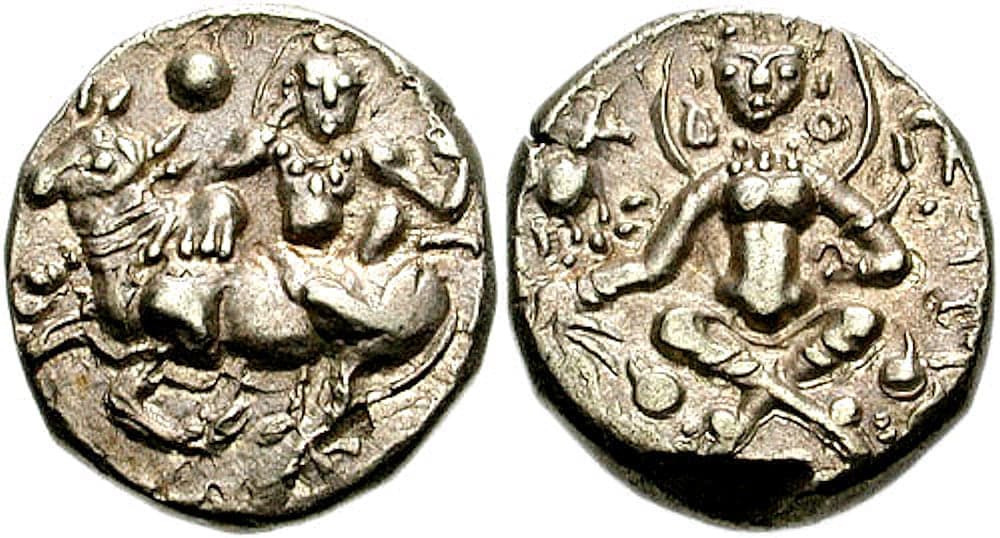
Base-gold dinar struck in his name: Shiva seated on a bull, and Lakshmi on a lotusImage: CNG Coins, CC BY-SA 3.0, via Wikimedia Commons Shashanka
King of Gauda; capital Karnasuvarna c. 600 to c. 625
Two inscriptions dated in his 8th and 10th regnal years come from Midnapore, and a seal-matrix from Rohtasgarh names him "Shri Mahasamanta Shashanka".17 His gold coins were minted in two varieties and weight standards, one for Gauda-Vanga and one for Samatata.18
Much of what is said against Shashanka comes from his enemies. Bana, the court poet of his rival Harsha, and the Chinese pilgrim Hiuen Tsang blame him for the death of Rajyavardhana and call him a hater of Buddhism; Banglapedia judges both accounts partisan and points out that a Buddhist monastery, the Raktamrittika Mahavihara, stood near his capital.19 The Aryamanjushrimulakalpa gives him a reign of 17 years ending in defeat at Pundravardhana, a claim "not supported by any other contemporary accounts".20
After his death came about a century of disorder, which a later Pala copper plate calls matsyanyayam.21
| King | Reign | Capital | Note |
|---|---|---|---|
| Shashanka | c. 600 to c. 625 (Banglapedia); coin dealers' catalogues give c. 600 to 630 or c. 600 to 635 | Karnasuvarna | Gold and silver coins; Midnapore grants of regnal years 8 and 10 |
| Jayanaga | Not dated | Karnasuvarna | Banglapedia's Shashanka article puts him "close to the date of Shashanka"; its Coins article says he probably ruled in the Gauda region after Shashanka |
Source: Banglapedia, "Shashanka", "Karnasuvarna" and "Coins".22
The Pala kings, mid-8th to mid-12th century
The Palas ruled Bengal and Bihar for about four centuries from the middle of the 8th century, through eighteen generations of kings.23 Their dates come in two systems. Banglapedia, following A. M. Chowdhury, gives reign spans such as c. 781 to 821 for Dharmapala; Majumdar's 1943 table gives approximate accession years, such as c. 770 for the same king.24 Both are reconstructions from the same kind of evidence, the regnal years written in inscriptions, and both are shown in the table.
The capital is a gap in the record. The sources consulted for this chapter do not name a Pala capital until Ramapala founded Ramavati in the late 11th century, which remained the capital until Madanapala.25
Notable Pala kings
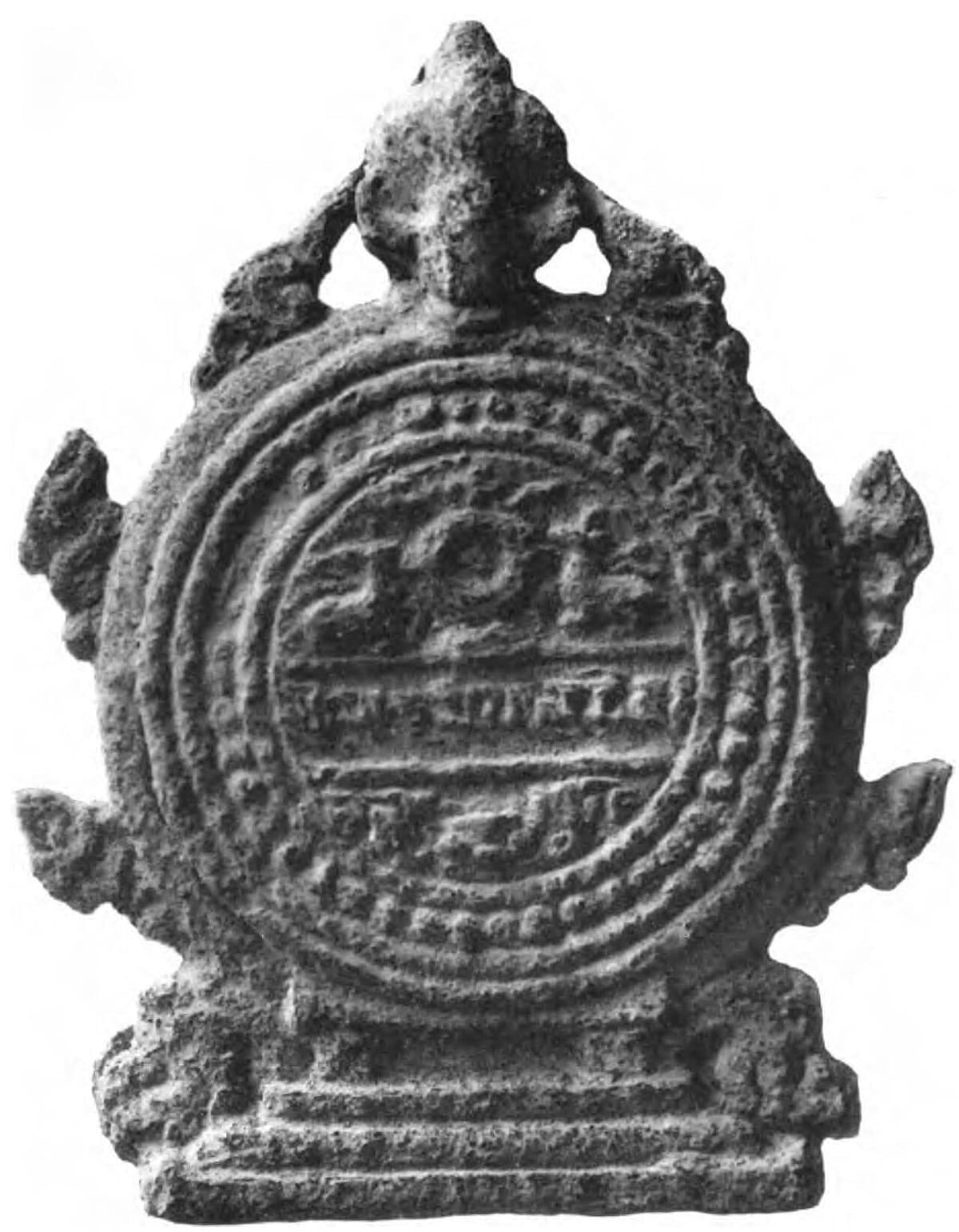
Seal of the Khalimpur copper plate of his son Dharmapala, the grant that records Gopala's rise; reproduction published in 1897Image: Lorenz Franz Kielhorn, Public domain, via Wikimedia Commons Gopala I
Founder of the Pala dynasty c. 756 to 781 (Banglapedia); accession c. 750 (Majumdar)
The son of Vapyata and grandson of Dayitavishnu, he was made king, says the Khalimpur copper plate, by the prakritis to end matsyanyayam.26 Whether prakriti here means the subjects or the principal officers is uncertain, so the popular claim that the people "elected" Gopala is an interpretation.27
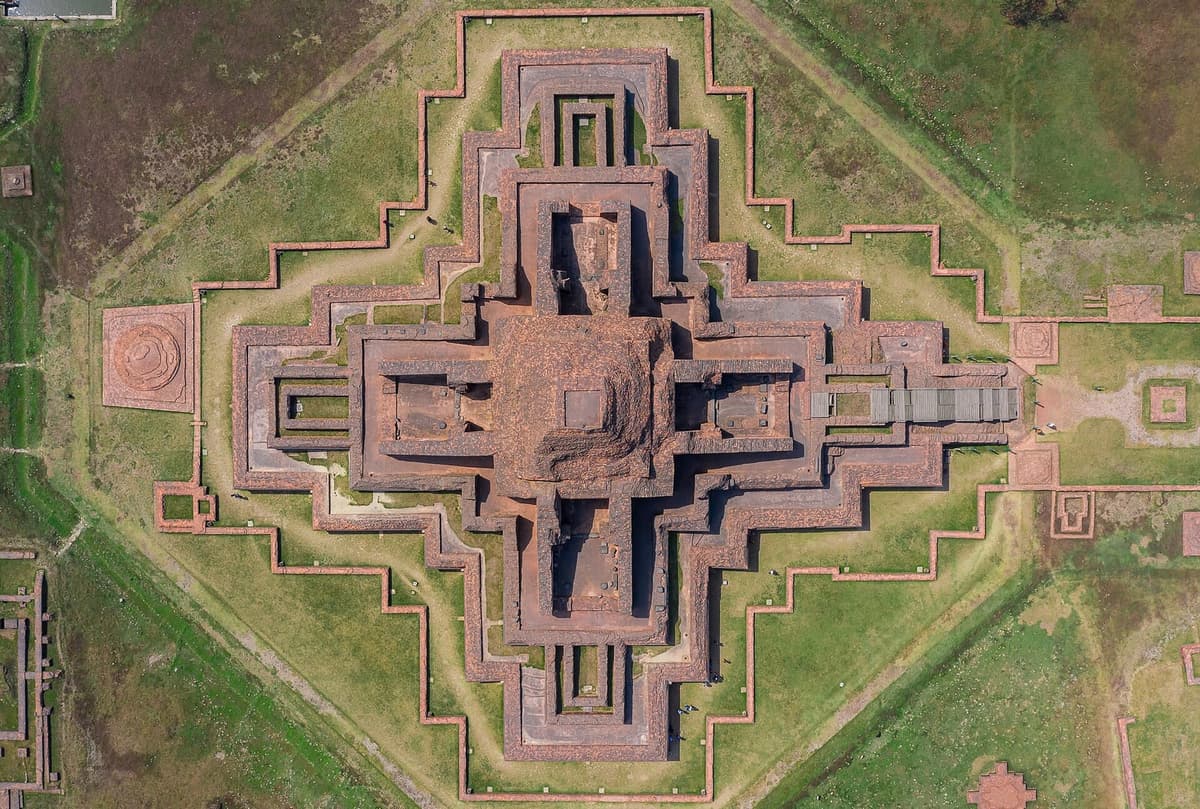
Somapura Mahavihara at Paharpur, which seals from the site attribute to Dharmapala; modern photographImage: Md. Ahsanul Haque Nayem, CC BY-SA 4.0, via Wikimedia Commons Dharmapala
Pala emperor c. 781 to 821 (Banglapedia); accession c. 770, known reign 32 years (Majumdar)
He placed his protege Chakrayudha on the throne of Kanauj, possibly for a short time, and is credited with founding the Vikramashila monastery.28 Clay seals from Paharpur name the Somapura Mahavihara after him, though Tibetan sources credit Devapala.29
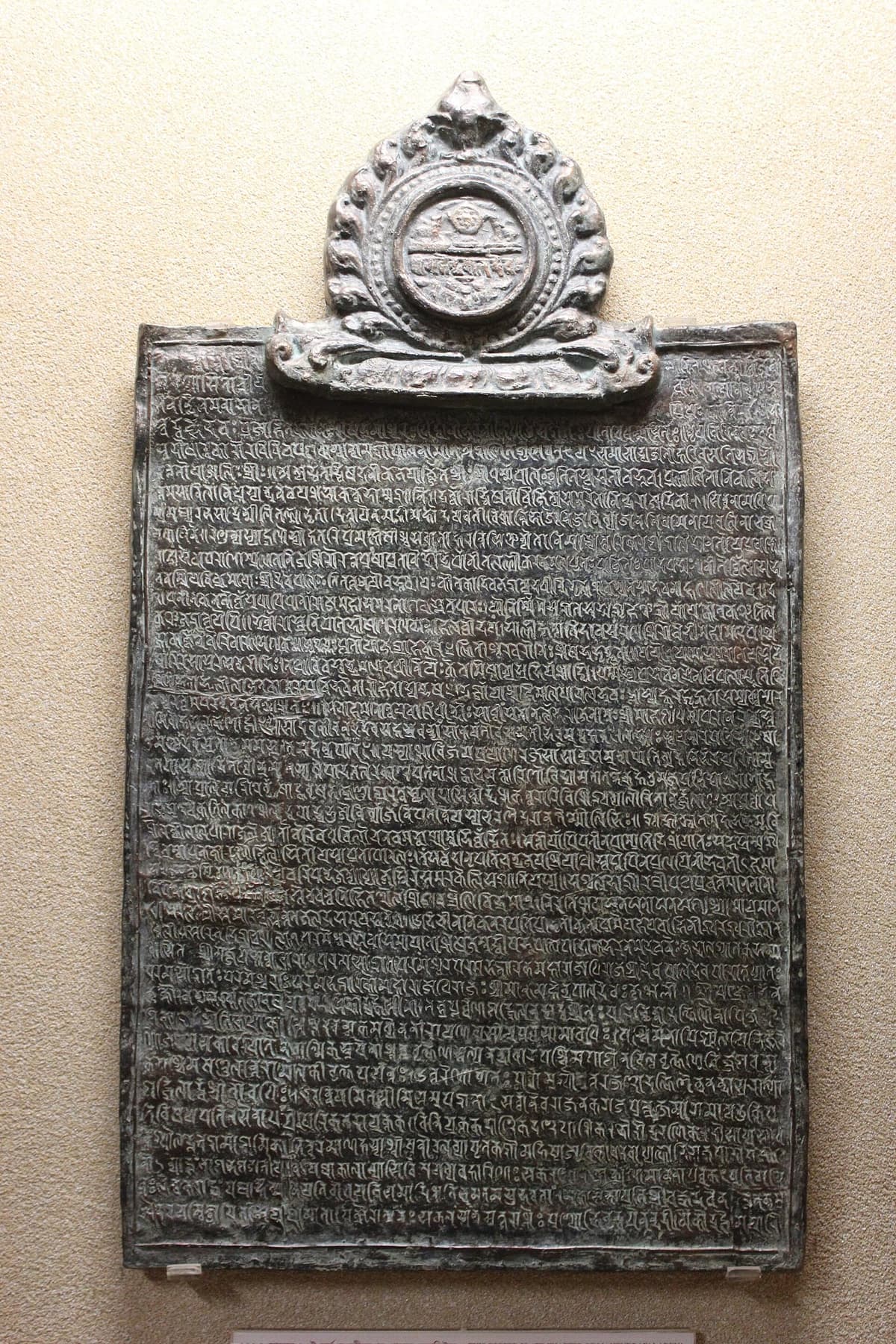
Copper-plate grant issued in his reign, State Archaeological Museum, West BengalImage: SuvadipSanyal, CC BY-SA 4.0, via Wikimedia Commons Mahipala I
Pala king, the "second founder" c. 995 to 1043 (Banglapedia); accession c. 988, known reign 48 years (Majumdar)
Banglapedia calls him the "second founder" of the dynasty; two inscriptions from Imadpur are dated in his 48th year.36 Rajendra Chola's army met him in northern Radha between 1021 and 1024, and his Sarnath inscription of 1026 anchors the whole Pala chronology.37
Ramapala
Pala king; founder of Ramavati c. 1082 to 1124 (Banglapedia); accession c. 1077 (Majumdar); reigned 42 years
Under his brother Mahipala II the Kaivarta chief Divya had taken Varendra (northern Bengal); Ramapala won it back, with the help of fourteen samanta chiefs, and founded Ramavati as his capital.38 His reign is the subject of Sandhyakara Nandi's poem Ramacharitam.39
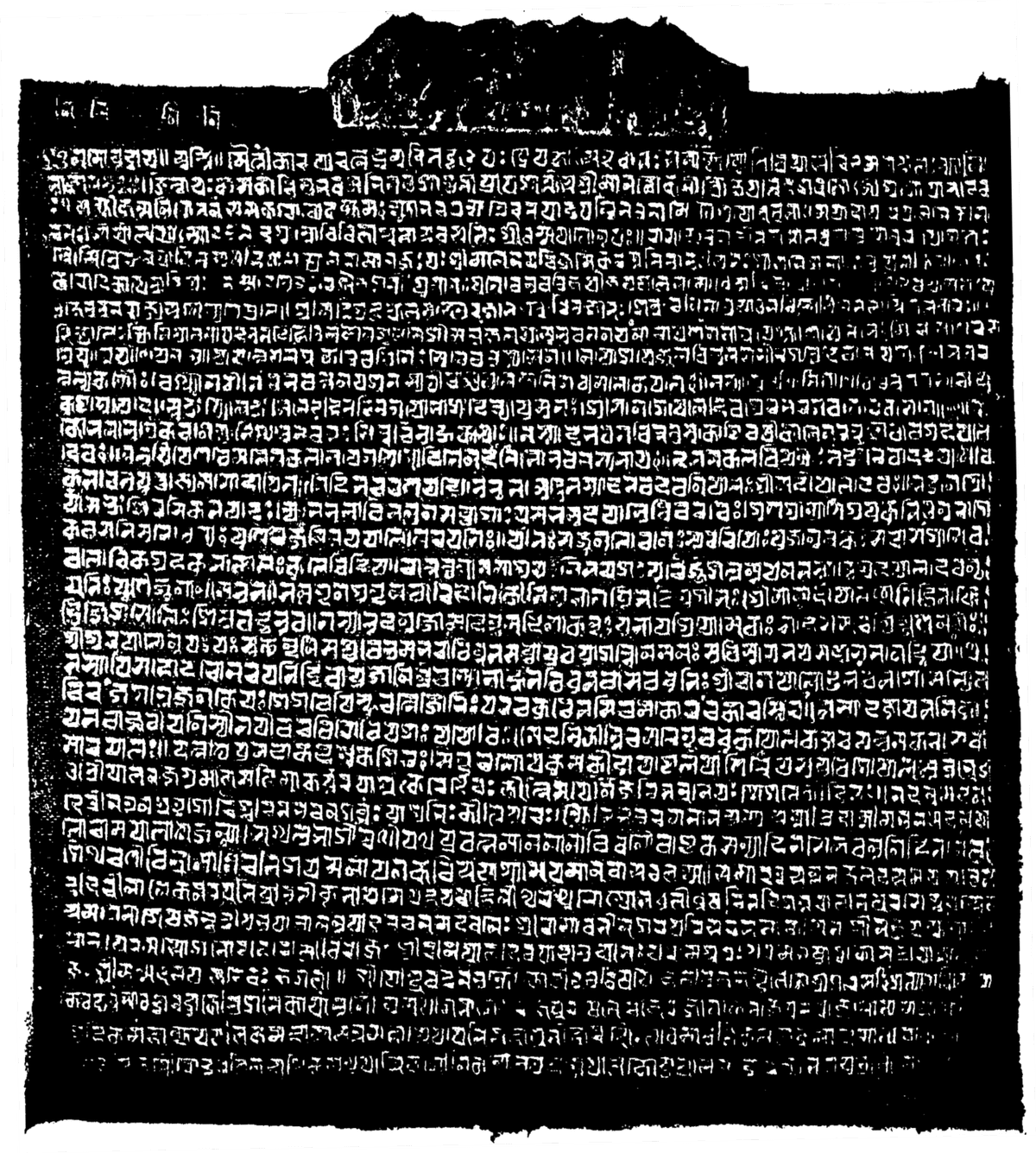
Manahali copper plate issued in his reign; reproduction published in 1900Image: Nagendranath Basu, Public domain, via Wikimedia Commons
Show the numbers
| Year | Known reign |
|---|---|
| Dharmapala | 32 |
| Devapala (39 or 35) | 39 |
| Vigrahapala I | 3 |
| Narayanapala | 54 |
| Rajyapala | 32 |
| Gopala II | 17 |
| Vigrahapala II (?) | 26 |
| Mahipala I | 48 |
| Nayapala | 15 |
| Ramapala | 42 |
| Gopala III (?) | 14 |
| Madanapala | 14 |
Source: R. C. Majumdar, ed., The History of Bengal, vol. 1 (1943). Question marks are Majumdar's.46
| # | King | Reign (Banglapedia) | Accession, c. (Majumdar 1943) | Known reign, years (Majumdar) | Note |
|---|---|---|---|---|---|
| 1 | Gopala I | c. 756 to 781 | 750 | Not given | Made king to end matsyanyayam |
| 2 | Dharmapala | c. 781 to 821 | 770 | 32 | Vikramashila; Somapura credited to him |
| 3 | Devapala | c. 821 to 861 | 810 | 39 (or 35) | Grant to Nalanda |
| 4 | Mahendrapala | Not dated | Not listed | Not given | Known from the Jagjivanpur plate |
| 5 | Surapala I / Vigrahapala I | Not given | 850 | 3 | One king to Majumdar; rival claimants to Banglapedia |
| 6 | Narayanapala | Not given | 854 | 54 | Bhagalpur plate |
| 7 | Rajyapala | Not given | 908 | 32 | Not the Kamboja Gaudapati king of the same name |
| 8 | Gopala II | Not given | 940 | 17 | Chandella and Kalachuri invasions |
| 9 | Vigrahapala II | Not given | 960 | 26 (?) | Predecessor of Mahipala I |
| 10 | Mahipala I | c. 995 to 1043 | 988 | 48 | Sarnath inscription of 1026 |
| 11 | Nayapala | Not given | 1038 | 15 | Contemporary of the Kalachuri Karna |
| 12 | Vigrahapala III | Not given | 1055 | Not given | Father of Mahipala II, Surapala II and Ramapala |
| 13 | Mahipala II | Not given | 1070 | Not given | Lost Varendra to Divya |
| 14 | Surapala II | Not given | 1075 | Not given | Elder brother of Ramapala |
| 15 | Ramapala | c. 1082 to 1124 | 1077 | 42 | Founded Ramavati |
| 16 | Kumarapala | Not given | 1120 | Not given | Senas may have become independent in southern Radha |
| 17 | Gopala III | Not given | 1125 | 14 (?) | |
| 18 | Madanapala | Not given | 1140 | 14 | Last known Pala emperor |
| 19 | Govindapala | Not given | 1155 | Not given | Known from Bihar inscriptions; link to the imperial Palas unproven |
Source: Banglapedia articles by A. M. Chowdhury; R. C. Majumdar, ed., The History of Bengal, vol. 1 (1943).47 In the mid-10th century the Kamboja Gaudapatis held parts of western and northern Bengal, and for a time Pala rule was confined to Bihar.48
The Chandra kings of south-eastern Bengal, c. 900 to 1050
While the Palas held the north and west, the Chandra dynasty ruled south-eastern Bengal (Vanga and Samatata) for about a century and a half from the beginning of the 10th century; five generations of kings are known from copper plates.49 Their ancestors Purnachandra and Suvarnachandra were landlords at Rohitagiri, possibly the Lalmai area, under the rulers of Harikela.50 Under the Chandras the seat of government moved to Vikramapura, which then served as capital of the Chandra, Varman and Sena rulers until the early 13th century.51
The Chandra kings
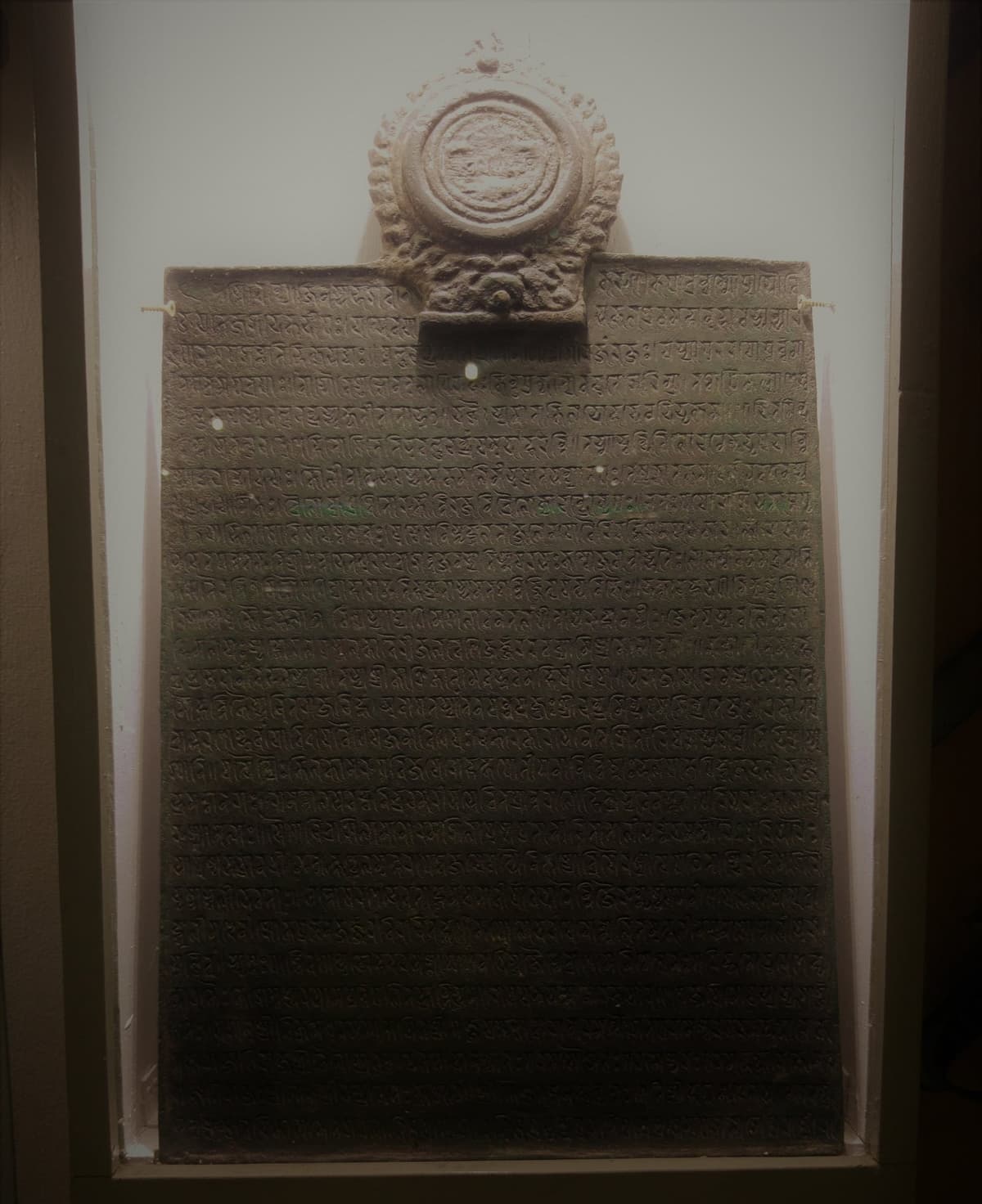
The Paschimbhag copper plate, issued in his reign, at the Bhasha Soinik Matin Uddin Ahmed MuseumImage: Dwoha Chowdhury, CC BY-SA 4.0, via Wikimedia Commons Srichandra
Chandra king; capital Vikramapura c. 930 to 975
Banglapedia calls him the most important king of the dynasty, with a reign of about 45 years, in which the centre of government moved to Vikramapura in Vanga.54 Vikramapura first appears in his copper plates, issued "from the royal camp of victory situated at Vikramapura".55
Govindachandra
Last known Chandra king c. 1020 to 1050 (dynasty article) or 1020 to 1045 (his own article)
Rajendra Chola's Tirumalai inscription records that the Chola army met Govindachandra in Vangaladesha between 1021 and 1024.58 He was defeated by Rajendra Chola and by the Kalachuri king Karna.59
| King | Reign (Banglapedia) | Capital | Note |
|---|---|---|---|
| Purnachandra; Suvarnachandra | Before c. 900 | Rohitagiri (possibly Lalmai) | Ancestors; vassals of Harikela, not independent kings |
| Trailokyachandra | c. 900 to 930 | Devaparvata | First independent king |
| Srichandra | c. 930 to 975 | Vikramapura | About 45 years; Paschimbhag copper plate |
| Kalyanachandra | c. 975 to 1000 | Vikramapura | One copper plate |
| Ladahachandra | c. 1000 to 1020 | Vikramapura | Mainamati copper plate |
| Govindachandra | c. 1020 to 1050 (dynasty article); c. 1020 to 1045 (his own article) | Vikramapura | Last known king |
Source: Banglapedia, "Chandra Dynasty, The", "Trailokyachandra", "Govindachandra" and "Vikramapura".60
The Sena kings, c. 1097 to 1225
The Senas came from the Karnata country in South India; the Deopara inscription names Samantasena as the ancestor who settled on the Ganges.61 Under them the whole of Bengal came under a single rule for the first time.62 Their dates are also uncertain. Banglapedia gives the dynasty c. 1097 to 1225 in one article and c. 1097 to 1223 in another; for Vijayasena's accession, J. C. Ghosh proposed 1088, C. C. Das Gupta 1095, Banglapedia c. 1097, and Majumdar himself preferred "a date near about 1125".63
The Senas, like the Chandras and Varmans before them, ruled from Vikramapura, though Lakshmanasena held court at Nadia until Bakhtiyar Khalji took it "towards the end of 1204 or the beginning of 1205".64 Eaton gives the year as 1204.65
The Sena kings
Vijayasena
Founder of Sena rule; capital Vikramapura c. 1097 to 1160 (Banglapedia); accession 1095 or c. 1125 (Majumdar)
He was possibly the Vijayaraja of Nidravali, one of the fourteen chiefs who helped Ramapala recover Varendra.66 The Deopara Prashasti, a stone eulogy of him composed by the poet Umapatidhara, was found in 1865 near Deopara in Godagari upazila, Rajshahi district.67
Vallalasena (Ballalasena)
Sena king c. 1160 to 1178 (Banglapedia); accession 1158, known reign 11 years (Majumdar)
Tradition credits him with introducing Kulinism, but the texts that say so were composed five or six centuries later and no Sena inscription mentions it.68
Vishvarupasena
Sena king in south-eastern Bengal accession 1206, known reign 14 years (Majumdar)
A son of Lakshmanasena, he ruled for a short period from the Vikramapura area, where his land grants were issued.71
Keshavasena
Sena king in south-eastern Bengal accession 1225, known reign 3 years (Majumdar)
Another son of Lakshmanasena, he is the last Sena king in Majumdar's table.72
| King | Reign (Banglapedia) | Accession (Majumdar 1943) | Known reign, years (Majumdar) | Capital |
|---|---|---|---|---|
| Samantasena; Hemantasena | Ancestors, 11th century | Not given | Not given | Radha (no fixed capital named) |
| Vijayasena | c. 1097 to 1160 | 1095 (or 1125); also 1088 (J. C. Ghosh) and 1095 (C. C. Das Gupta) | 62 (?) or 32 | Vikramapura |
| Vallalasena | c. 1160 to 1178 | 1158 | 11 | Vikramapura |
| Lakshmanasena | c. 1178 to 1206 | 1179 | 27 | Nadia to 1204 or 1205, then Vikramapura |
| Vishvarupasena | Short reign | 1206 | 14 | Vikramapura area |
| Keshavasena | Short reign | 1225 | 3 | Vikramapura area |
Source: Banglapedia articles by A. M. Chowdhury and C. R. Misra; R. C. Majumdar, ed., The History of Bengal, vol. 1 (1943), App. I to ch. VIII.73
The independent sultans, 1338 to 1576
For more than a century after the fall of Nadia, Bengal's Muslim rulers governed from Lakhnauti, which remained the capital, with a break from 1206 to 1211, until 1342.74 In 1338 the province split three ways: Fakhruddin Mubarak Shah at Sonargaon, Haji Ilyas at Satgaon and Ali Mubarak at Lakhnauti.75 By 1352 Ilyas had taken all three, and independent rule, under several dynasties and with Sur and Karrani interludes, lasted until the Mughal victory at Rajmahal in 1576.76
The coins in this section are the strongest evidence in the whole chapter. Each was struck in the reign of the sultan named on it and carries an inscription rather than a portrait; those pictured here are in the collection of the American Numismatic Society. Coins are also why the sultans' dates differ between authorities: most reign dates rest on the years struck on them, and scholars have read that evidence in different ways.77
Sonargaon and Lakhnauti, 1338 to 1352
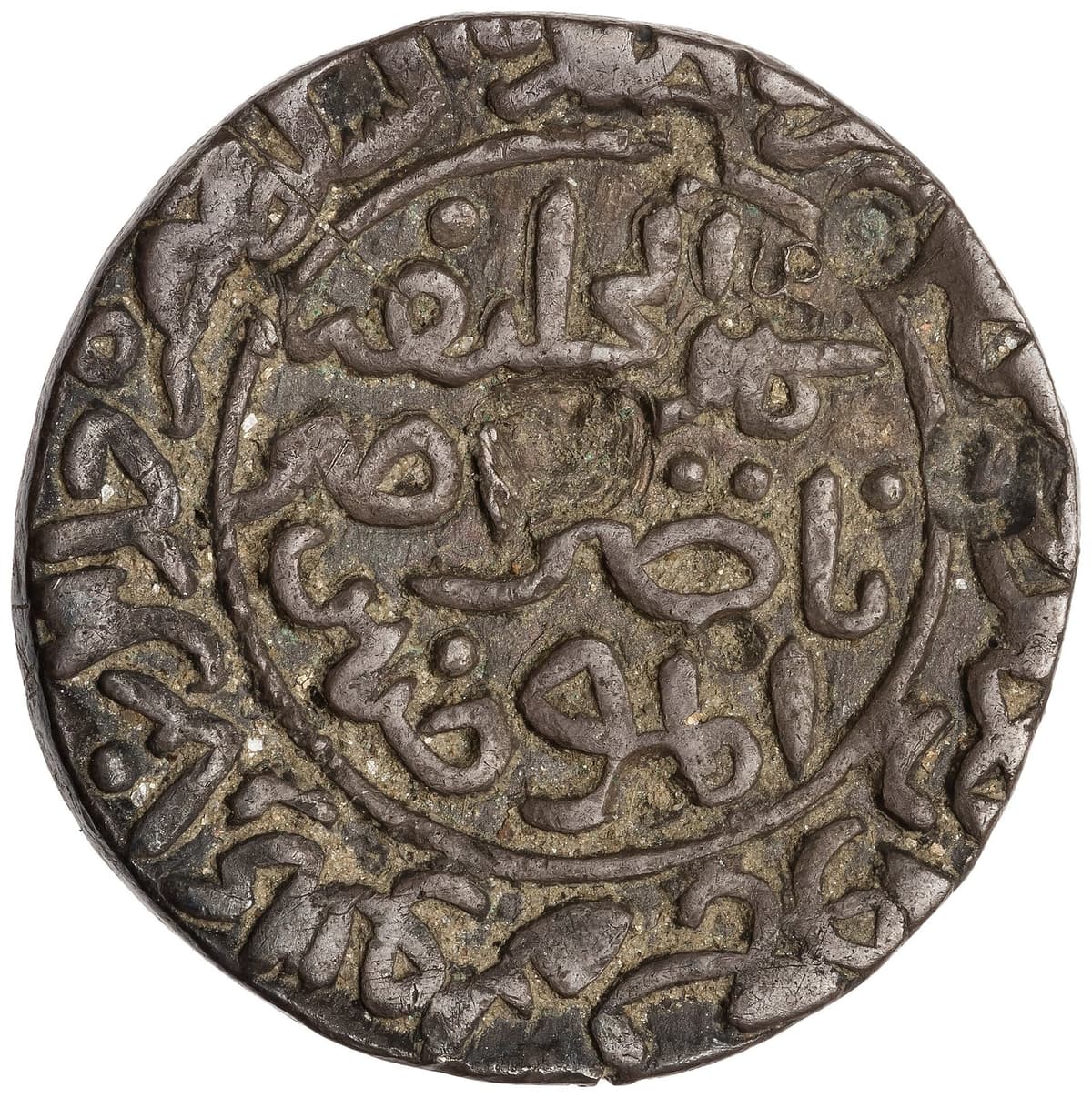
Silver tanka struck in his name, Sonargaon mint, 749 AH (1348-49)Image: American Numismatic Society, Public domain, via Wikimedia Commons Fakhruddin Mubarak Shah
Sultan at Sonargaon 1338 to 1349
Formerly the armour-keeper (silahdar) of the Tughluq governor Bahram Khan, he founded the earliest independent sultanate in Bengal, with its seat at Sonargaon.78
Ikhtiyaruddin Ghazi Shah
Sultan at Sonargaon 1349 to 1352
He is known almost only from coins struck at Sonargaon until 753 AH; Shamsuddin Ilyas Shah took Sonargaon from him in 1352.79
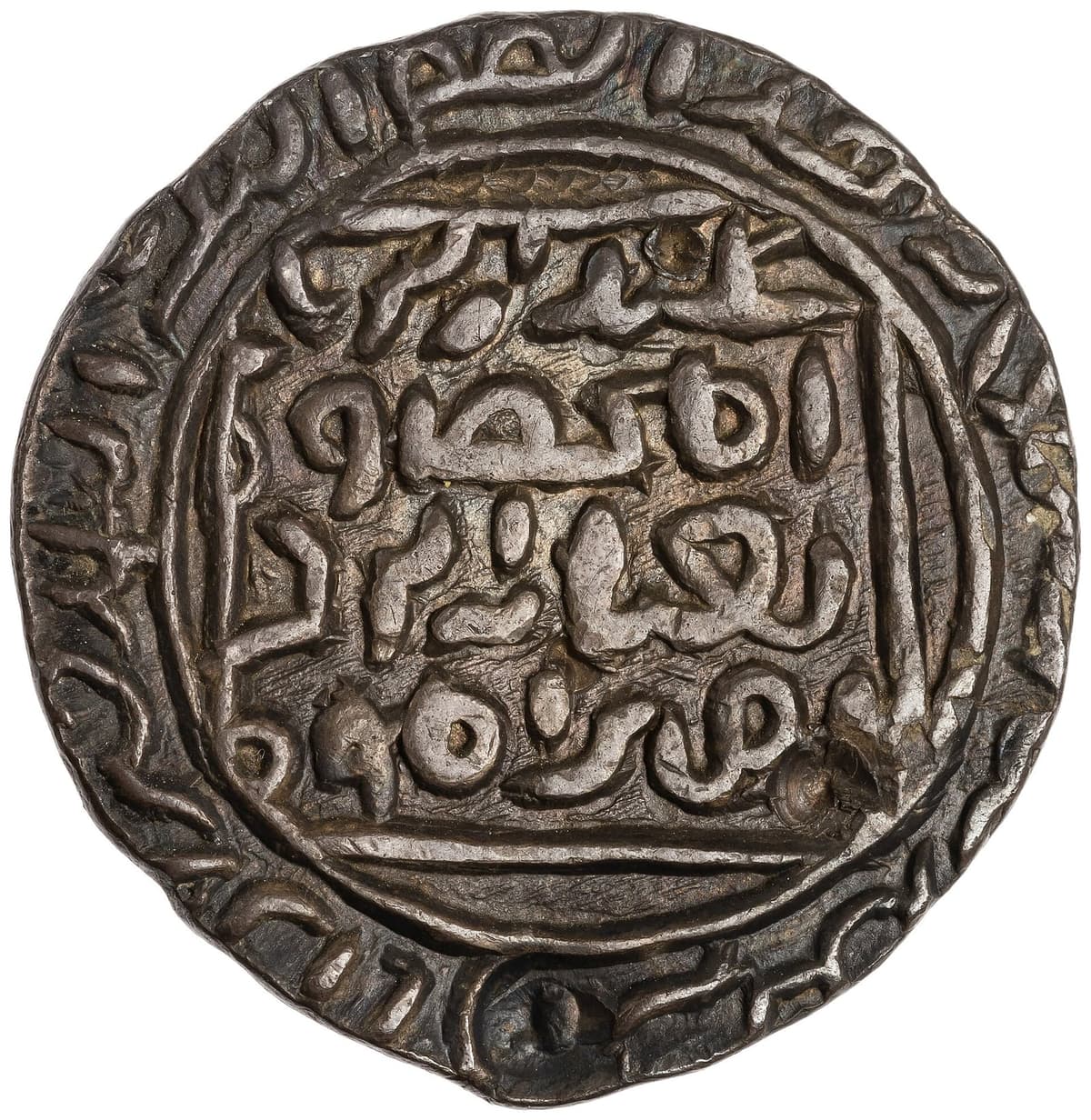
Silver tanka struck in his name, Firuzabad mint, 743 AH (1342-43)Image: American Numismatic Society, Public domain, via Wikimedia Commons Alauddin Ali Shah (Ali Mubarak)
Sultan at Lakhnauti 1339 to 1342 (Banglapedia); 1341 to 1342 (Eaton)
He declared independence at Lakhnauti in 1339 and was displaced there by Ilyas Shah in 1342.80
The Ilyas Shahi dynasty, 1342 to 1414
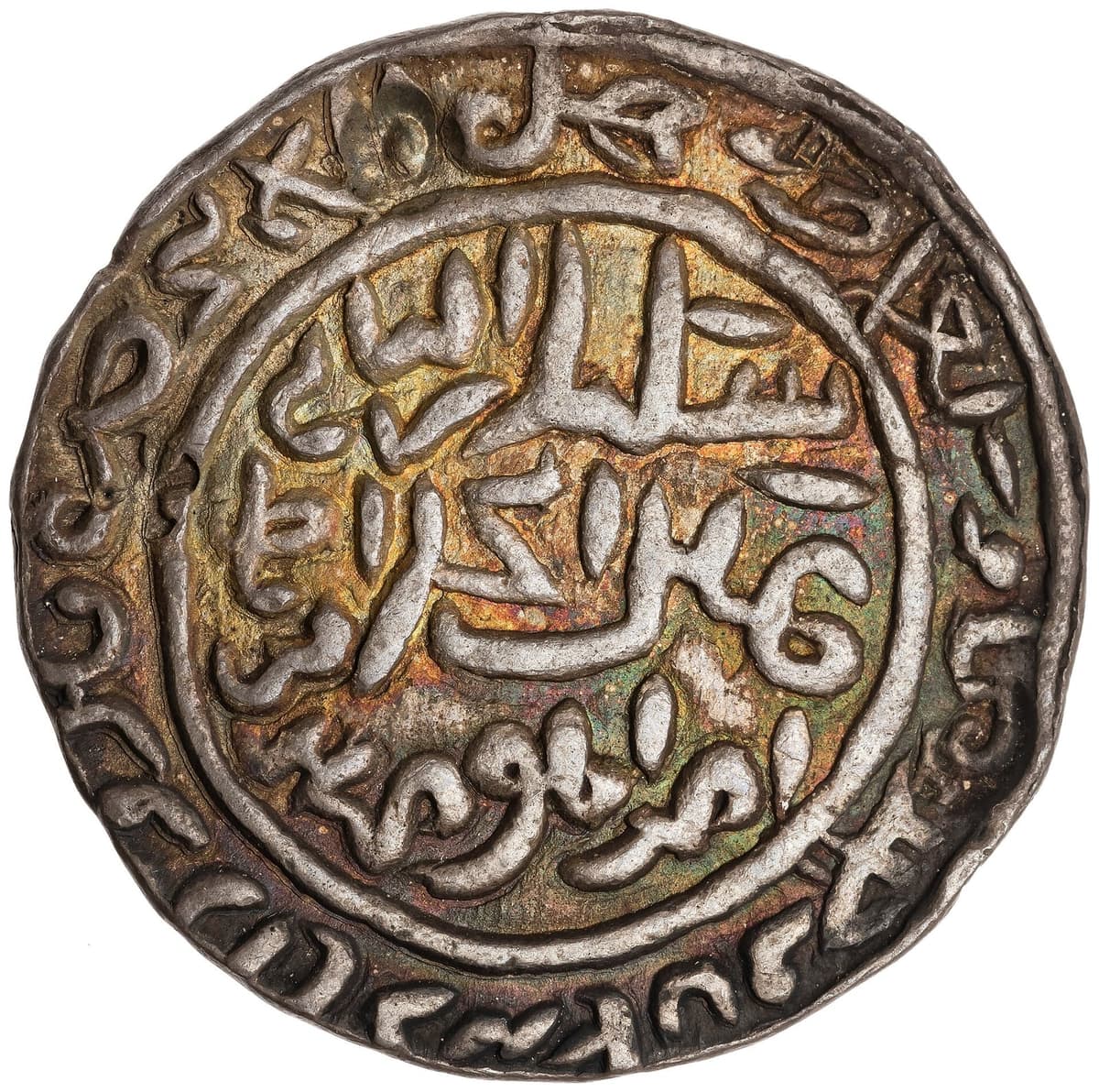
Silver tanka struck in his name, Firuzabad (Pandua) mint, 758 AH (1356-57)Image: American Numismatic Society, Public domain, via Wikimedia Commons Shamsuddin Ilyas Shah (Haji Ilyas)
Sultan of Bengal; capital Lakhnauti, then Pandua 1342 to 1358 (Banglapedia); 1342 to 1357 (Eaton)
He took the throne of Lakhnauti in 1342, made Pandua his capital and by 1352 ruled the whole of Bengal; the Delhi chronicler Shams-i Siraj Afif called him Shah-i-Bangalah and Sultan-i-Bangalah.81 Eaton notes that Afif's naming of Ilyas Shah as "sultan of the Bengalis" is the first indigenous reference to "Bengal" known to him.82
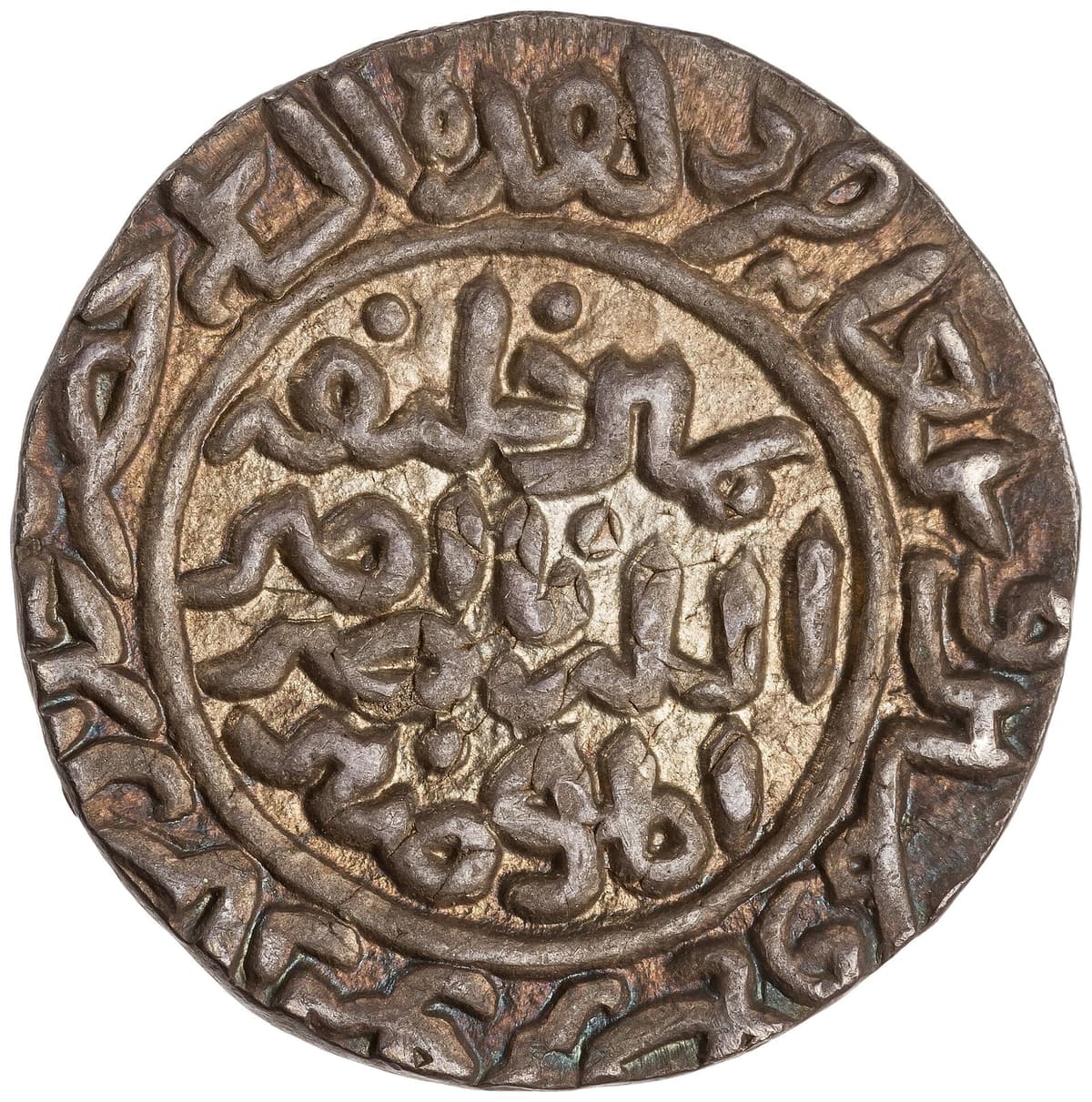
Silver tanka struck in his name, Sonargaon mint, 759 AH (1357-58)Image: American Numismatic Society, Public domain, via Wikimedia Commons Sikandar Shah
Sultan of Bengal; capital Pandua 1358 to 1390 (Banglapedia); 1357 to 1389 (Eaton)
When Firuz Shah Tughluq invaded, Sikandar held out in the fort of Ekdala, and Firuz Shah left in 1359, recognising Bengal's independence.83 He built the Adina Mosque at Pandua, dated by an inscription to 1373.84
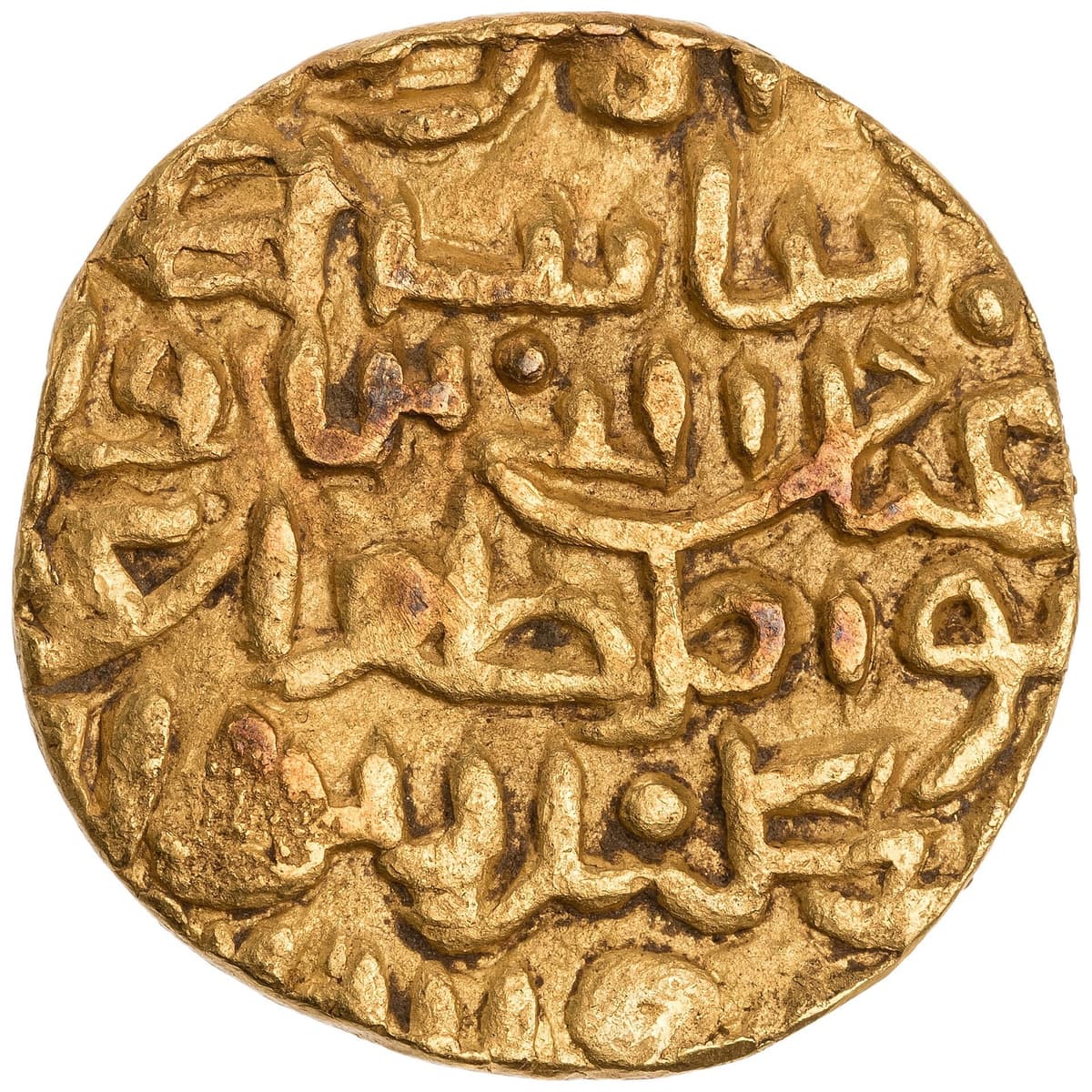
Gold tanka struck in his name, dated 1389 to 1396 in the museum recordImage: American Numismatic Society, Public domain, via Wikimedia Commons Ghiyasuddin Azam Shah
Sultan of Bengal; capital Pandua 1389 to 1410
He is remembered for the story that he submitted to a qazi's court and for a letter to the poet Hafiz, though the Hafiz story's authenticity "is disputed by many".85
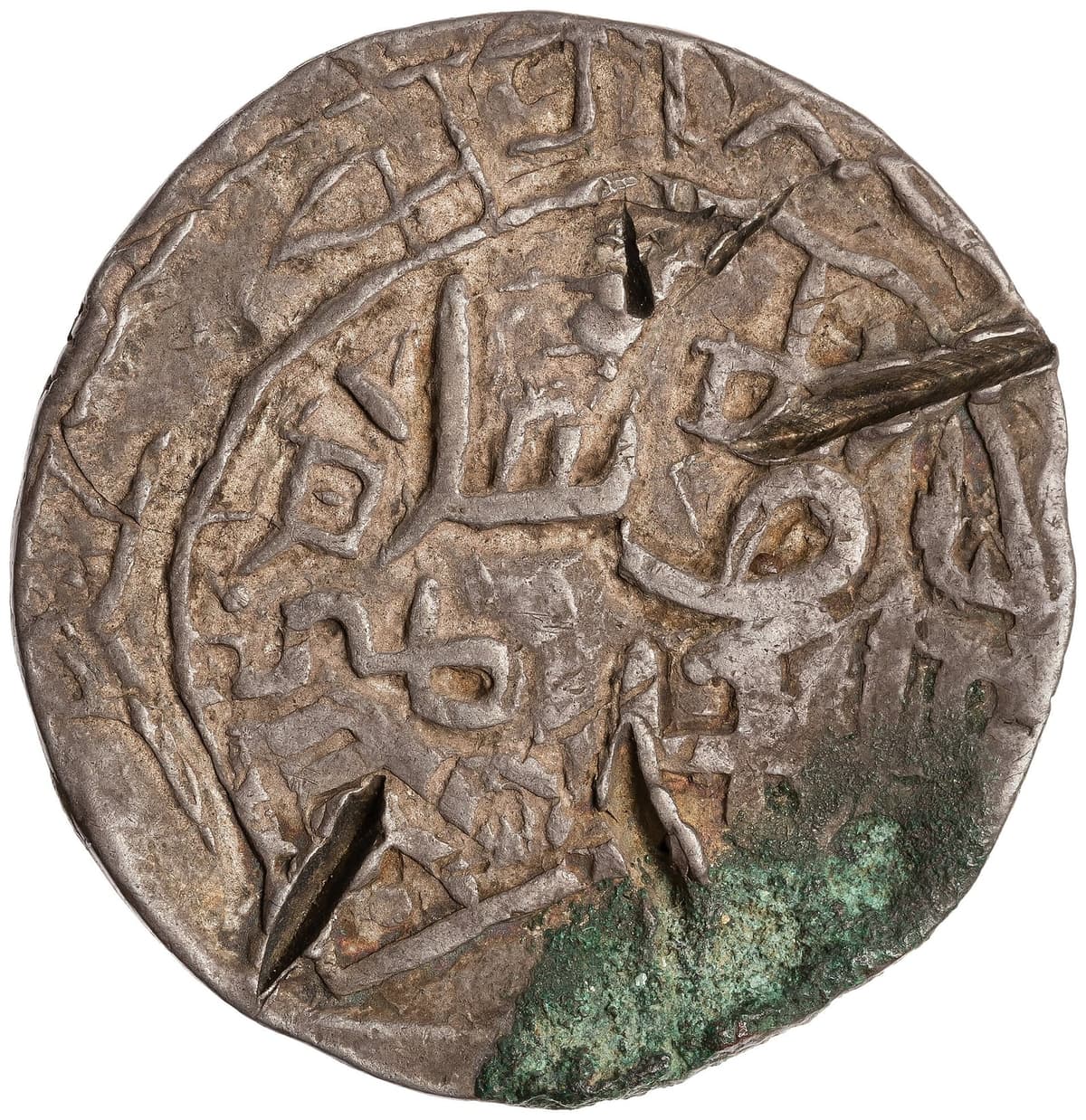
Silver tanka struck in his name, dated 1410 to 1413 in the museum recordImage: American Numismatic Society, Public domain, via Wikimedia Commons 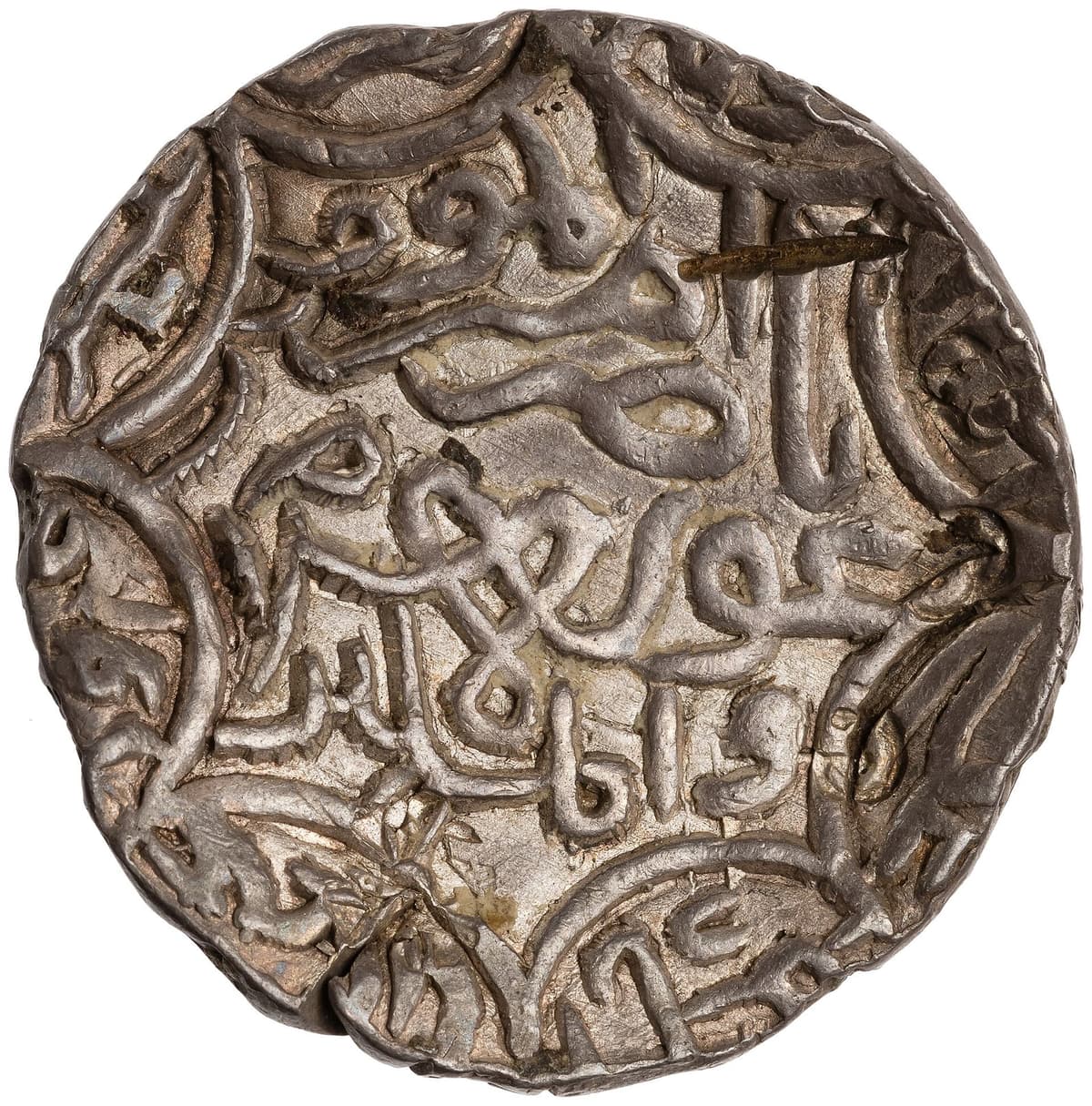
Silver tanka struck in his name, Firuzabad mint, 816 AH (1413-14)Image: American Numismatic Society, Public domain, via Wikimedia Commons
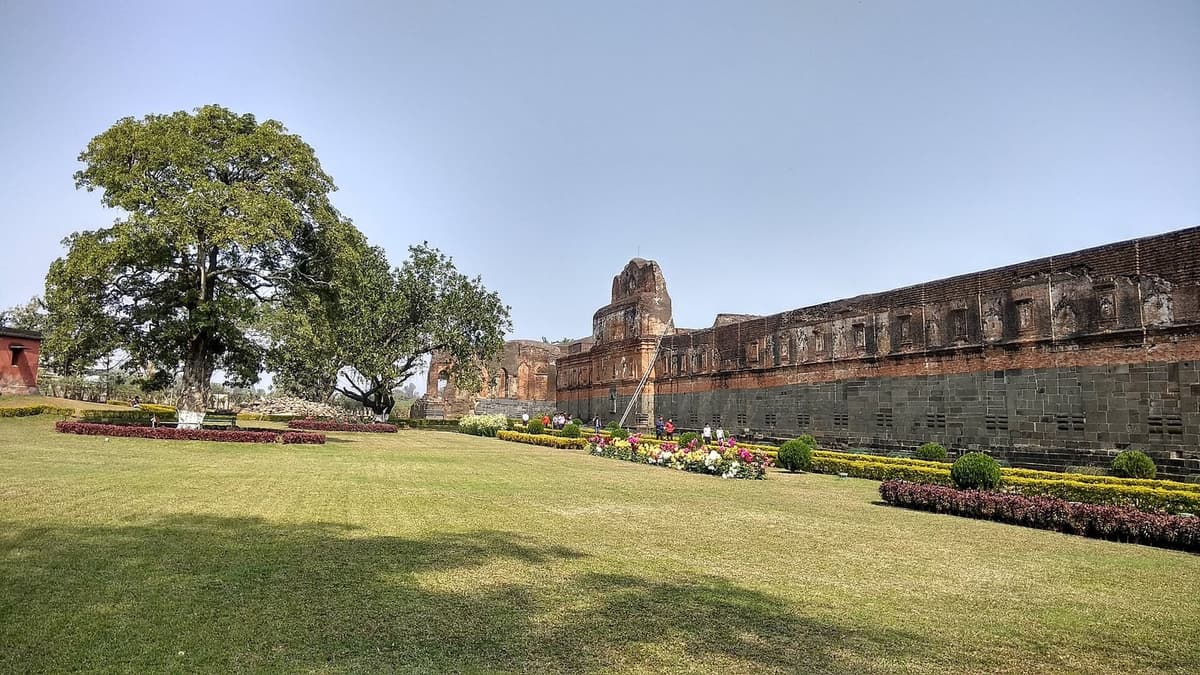
The house of Raja Ganesha, 1414 to 1435
For about two decades a Hindu landholder and his family held the throne. Raja Ganesha's coins, struck in the name Danujamardanadeva, carry legends in Bengali script dated in the Saka era; his son Jadu, converted to Islam, then brought back Arabic script, the Hijri year and the Kalima.91
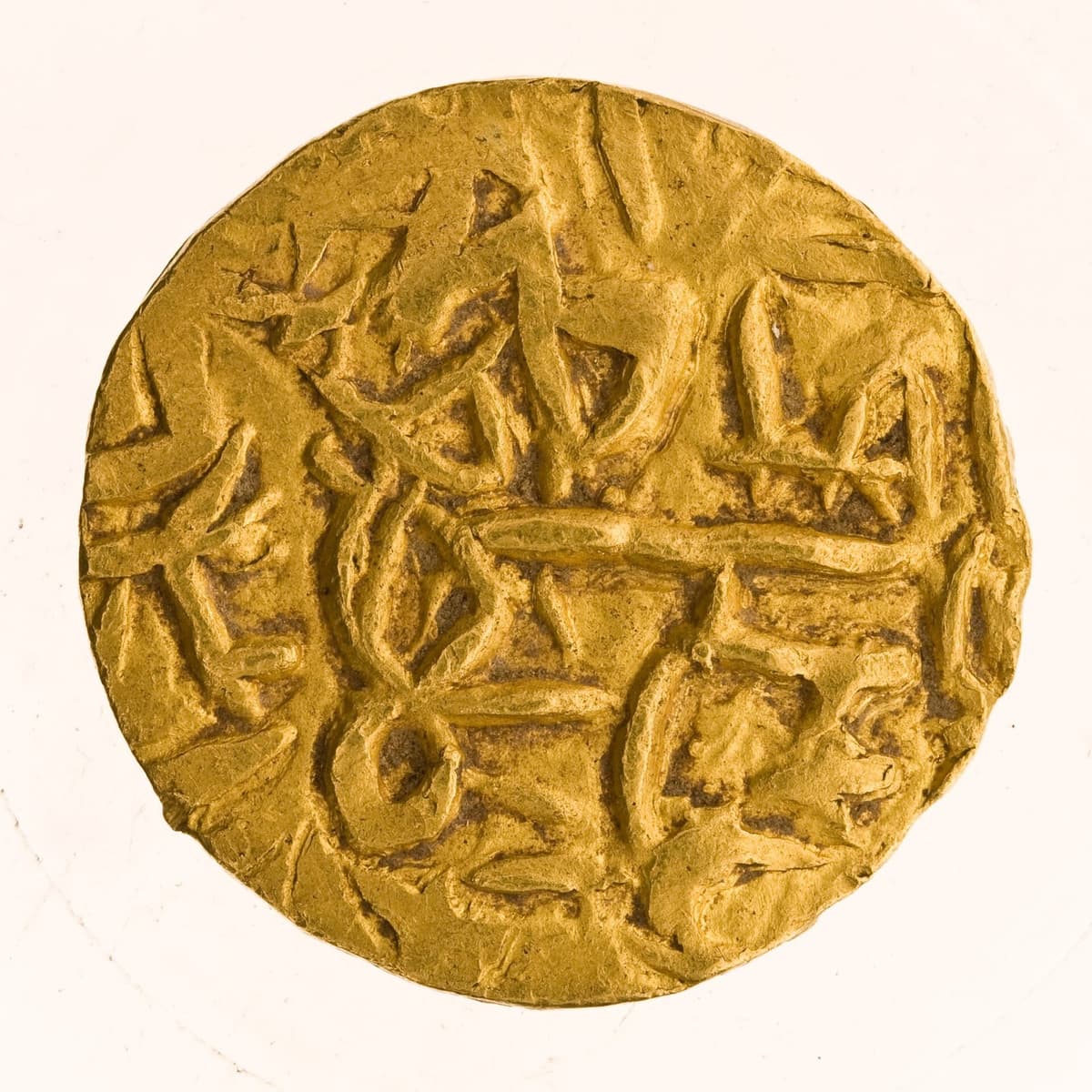
Gold tanka struck in his name, dated 1414 to 1430 in the museum recordImage: American Numismatic Society, Public domain, via Wikimedia Commons Jalaluddin Muhammad Shah (Jadu)
Sultan of Bengal; capital Pandua 1415 to 1416 and 1418 to 1433 (Banglapedia); 1415 to 1432 (Eaton)
Ganesha's son ruled in two phases; between them Ganesha returned to power and his younger son Mahendra briefly struck coins in Bengali script.94 His coinage includes the one hexagonal coin among the round coins of the sultanate.95
Shamsuddin Ahmad Shah
Sultan of Bengal 1433 to 1435 (Banglapedia); 1432 to 1433 (Eaton)
He came to the throne at 14 in 837 AH (1433) and was killed in 839 AH (1435) by his slaves Sadi (or Shadi) Khan and Nasir Khan; Nasir Khan then held the throne for only a few days.96
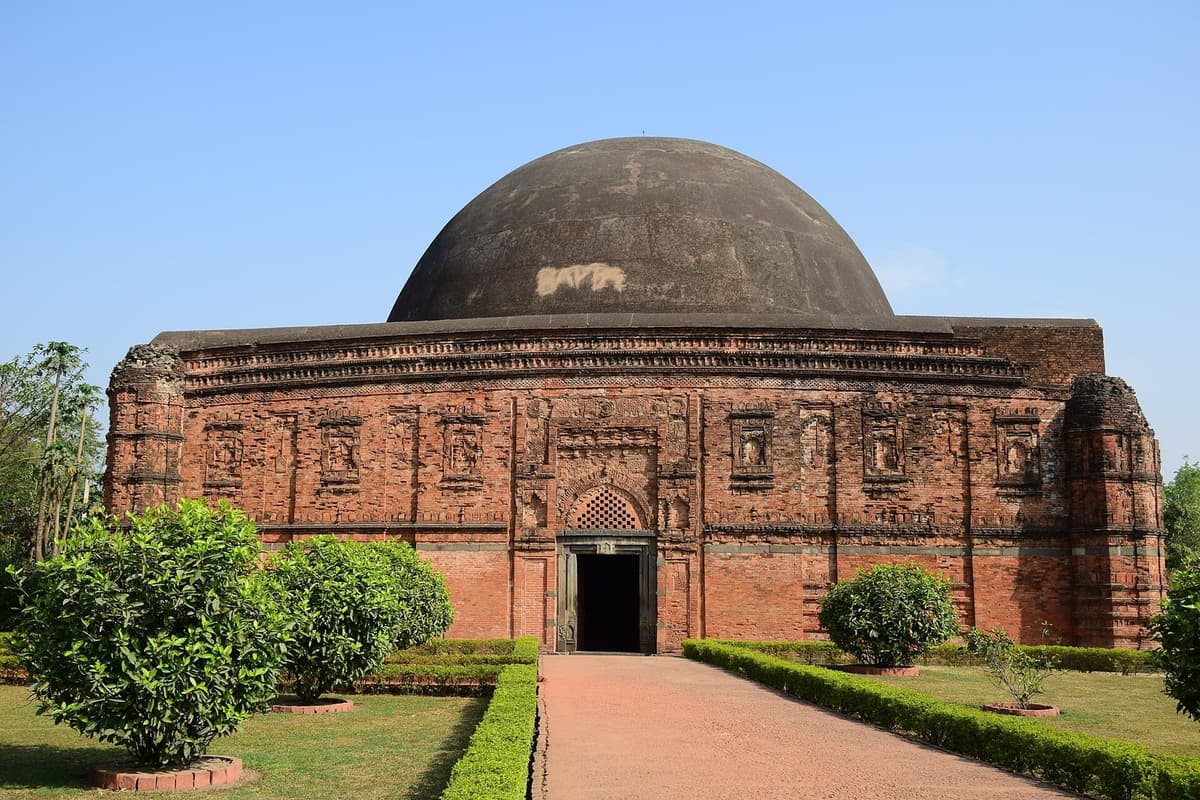
The restored Ilyas Shahi dynasty, 1435 to 1487
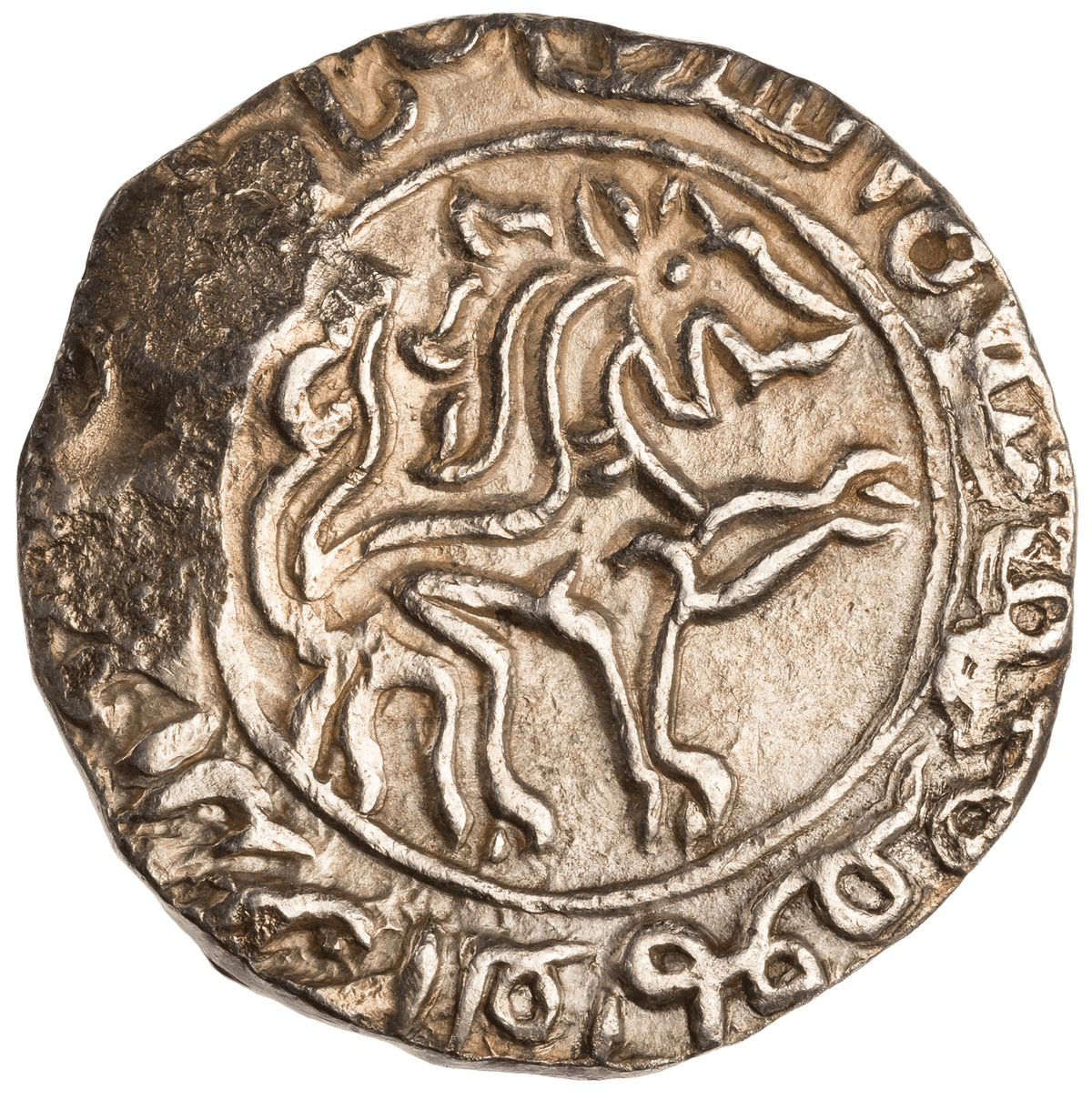
Silver tanka struck in his name, 849 AH (1445-46), with later countermarksImage: American Numismatic Society, Public domain, via Wikimedia Commons Nasiruddin Mahmud Shah I
Sultan of Bengal; capital Pandua, then Gaur 1435 to 1459 (Banglapedia); 1433 to 1459 (Eaton)
His accession restored the house of Ilyas Shah after a gap of about 23 years.98 The first inscription at Gaur is dated December 1457, in his reign, and Banglapedia's Gaur article reads it as the date the capital moved there from Pandua.99
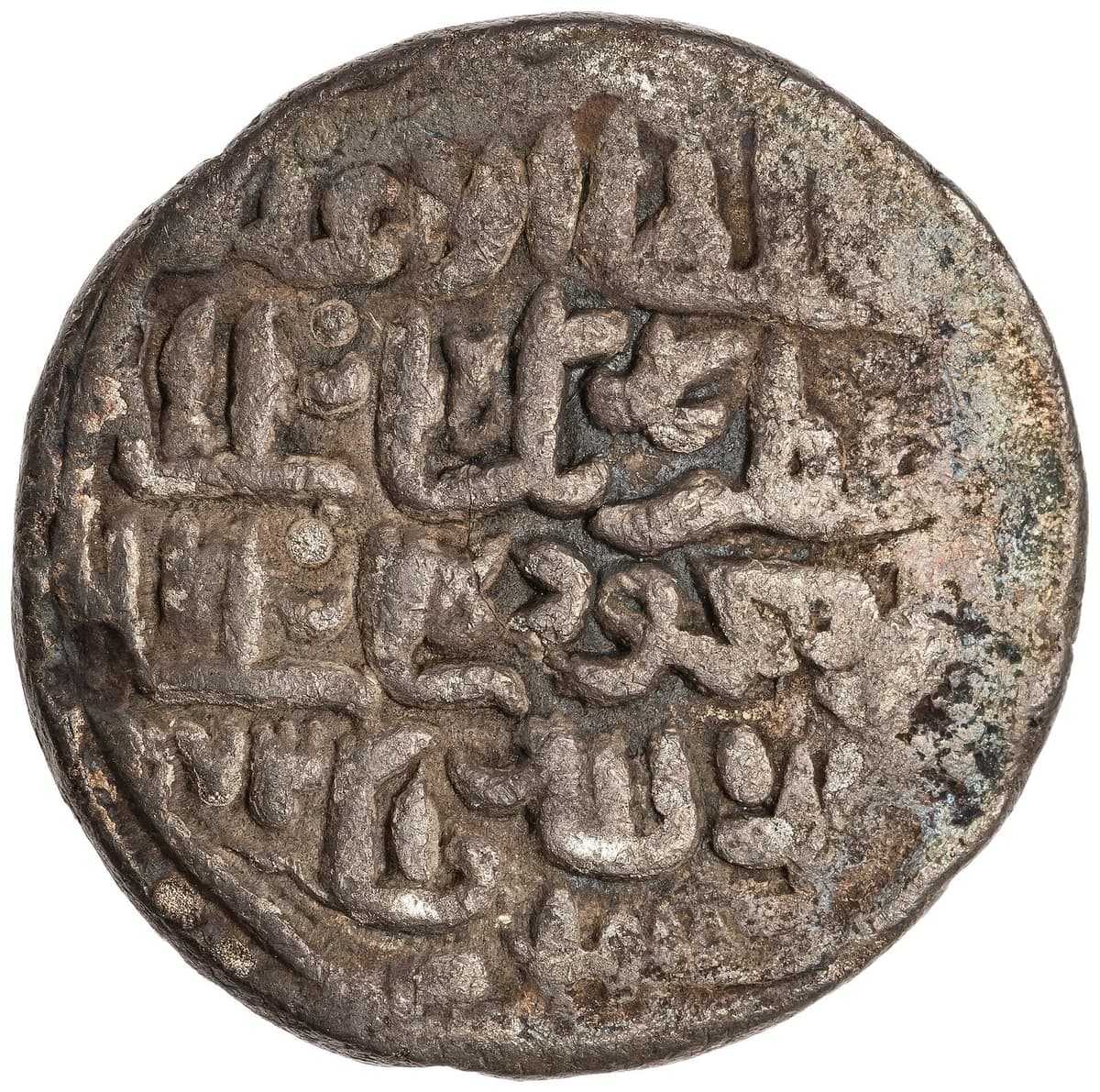
Silver tanka struck in his name, 873 AH (1468-69)Image: American Numismatic Society, Public domain, via Wikimedia Commons Ruknuddin Barbak Shah
Sultan of Bengal; capital Gaur 1459 to 1474
He had been governor of Satgaon, and as sultan he recruited Abyssinian (Habshi) slaves in large numbers.100
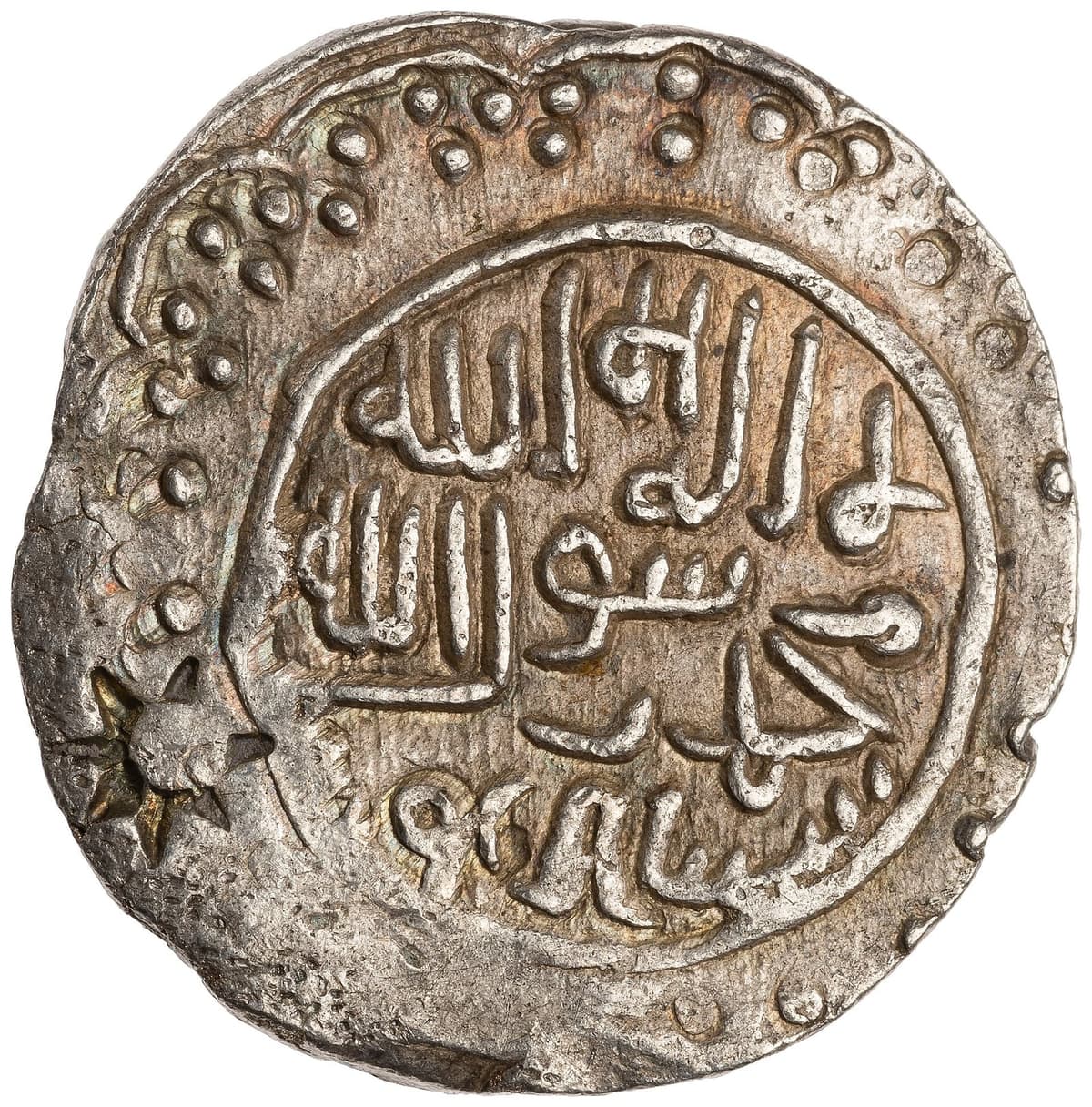
Silver tanka struck in his name, Shamsabad mint, 884 AH (1479-80)Image: American Numismatic Society, Public domain, via Wikimedia Commons Shamsuddin Yusuf Shah
Sultan of Bengal; capital Gaur 1474 to 1481
His titles included Khalifat Allah; several mosques were built at Gaur in his reign, and the poet Jaynuddin wrote Rasul Vijaya under his patronage.101
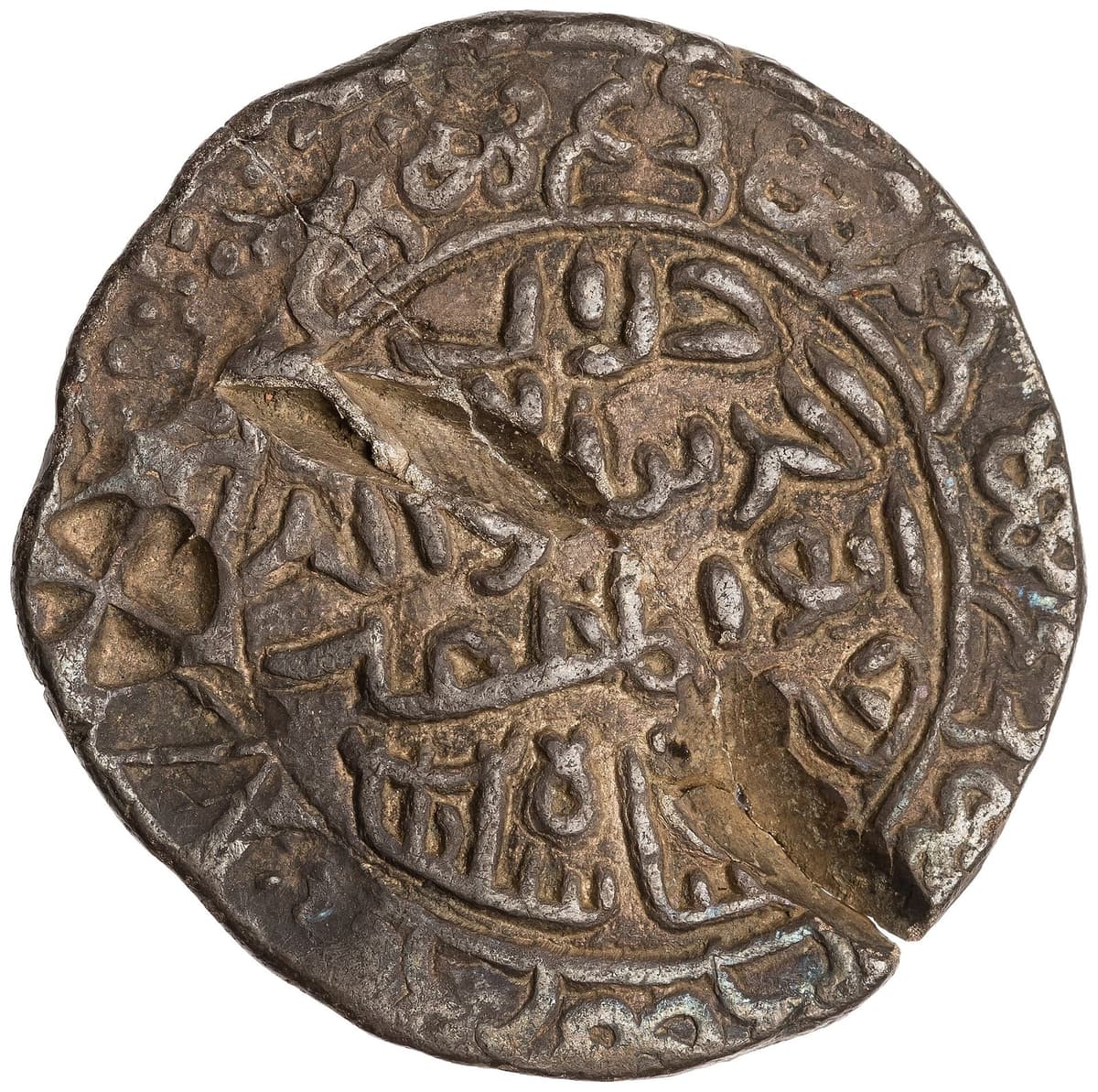
Silver tanka struck in his name, Fathabad mint, 886 AH (1481-82)Image: American Numismatic Society, Public domain, via Wikimedia Commons Jalaluddin Fath Shah
Sultan of Bengal; capital Gaur 1481 to 1487 (Banglapedia); 1481 to 1486 (Eaton)
He was murdered by the Abyssinian palace guard, which ended the Ilyas Shahi line; Banglapedia's articles name the killer as Shahzada or as "one of his slaves, named Barbak".102
The Habshi sultans, 1487 to 1493
Habshi rule lasted about six years, from 893 to 899 AH (1487 to 1493).103 How many Habshi rulers there were is disputed: Banglapedia counts four, while Eaton lists three, leaving out Nasiruddin Mahmud Shah II, whom Banglapedia's Coins article calls Qutbuddin Mahmud.104
Barbak Shah Shahzada
Habshi sultan; capital Gaur 1487 to 1488 (Banglapedia); 1486 (Eaton)
A Habshi eunuch, he murdered Fath Shah and took the throne.105
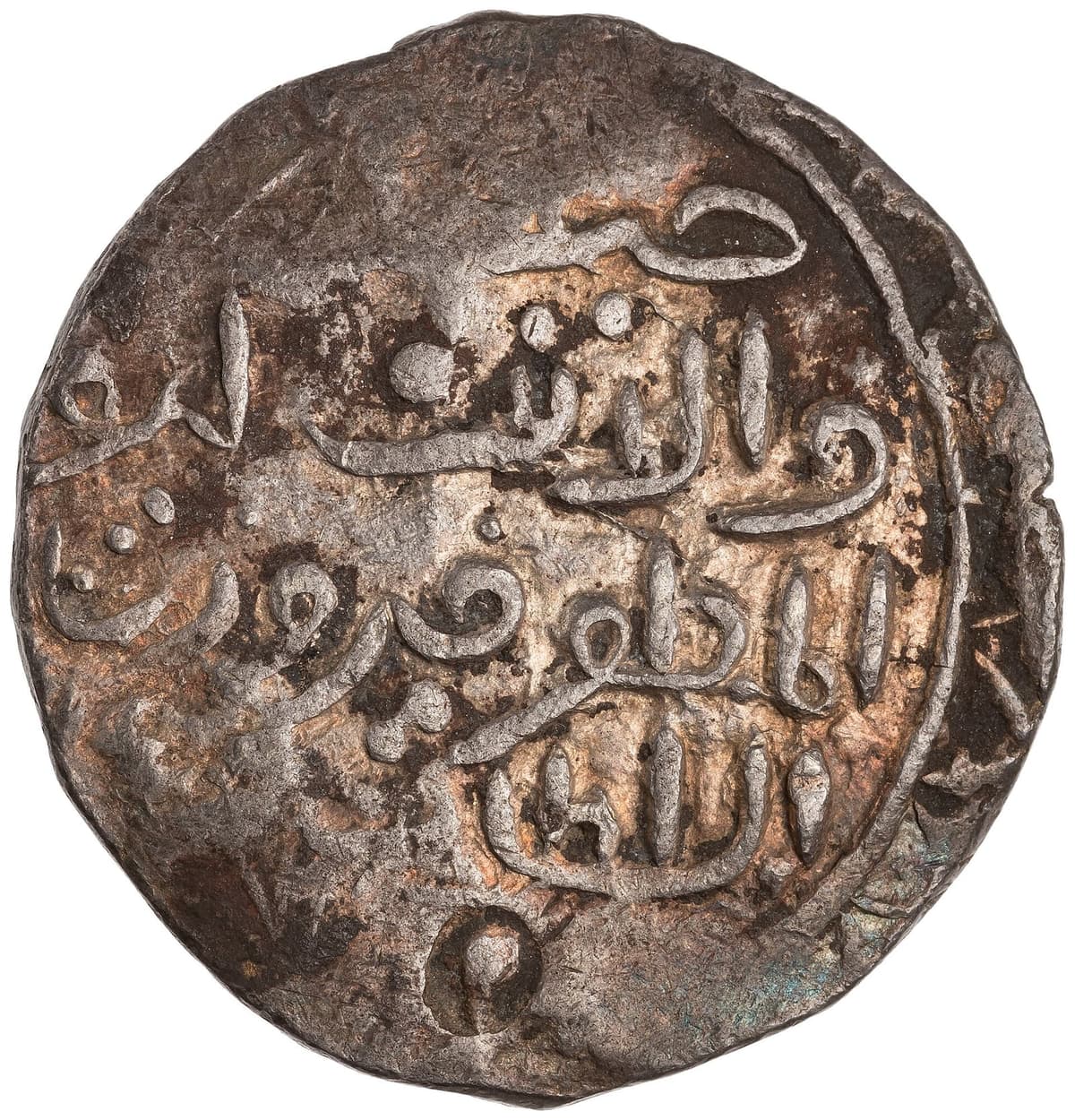
Silver tanka struck in his name, 893 AH (1487-88)Image: American Numismatic Society, Public domain, via Wikimedia Commons Saifuddin Firuz Shah
Habshi sultan; capital Gaur 1488 to 1490 (Banglapedia); 1486 to 1490 (Eaton)
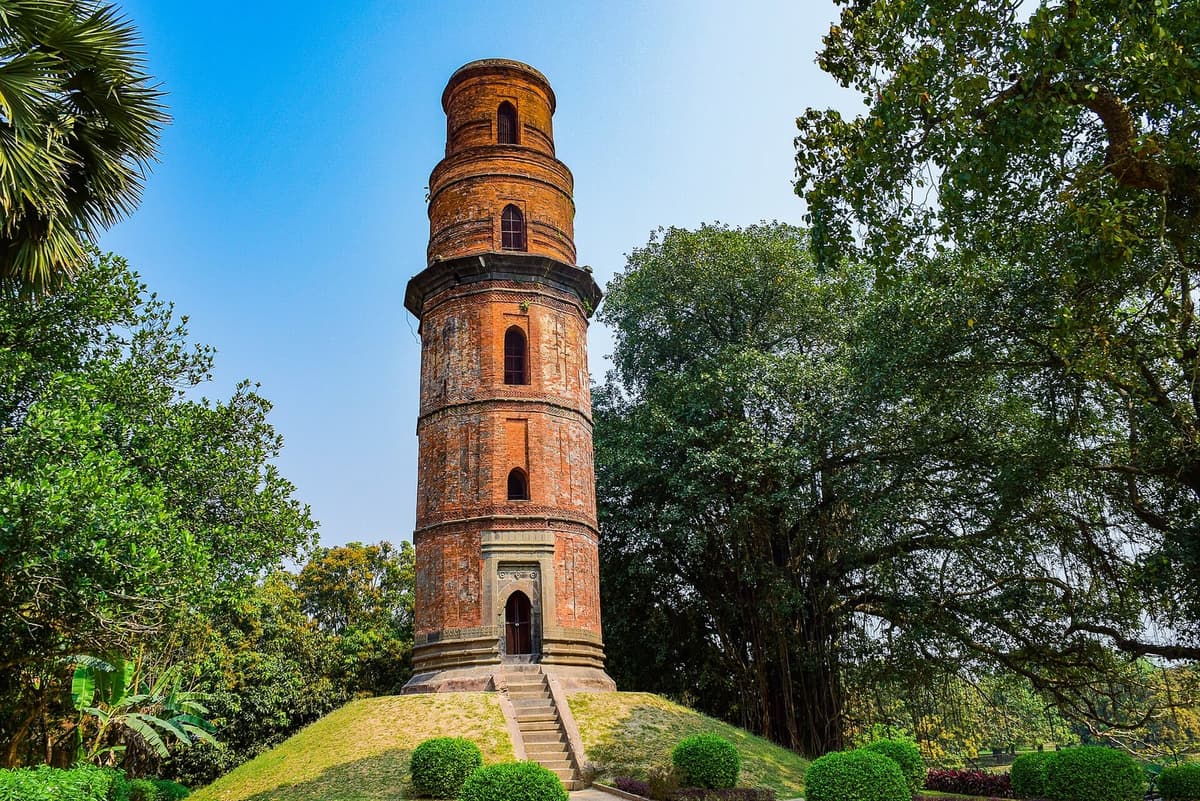
An inscription records that he built the Firuz Minar at Gaur, a tower about 26 metres high.106
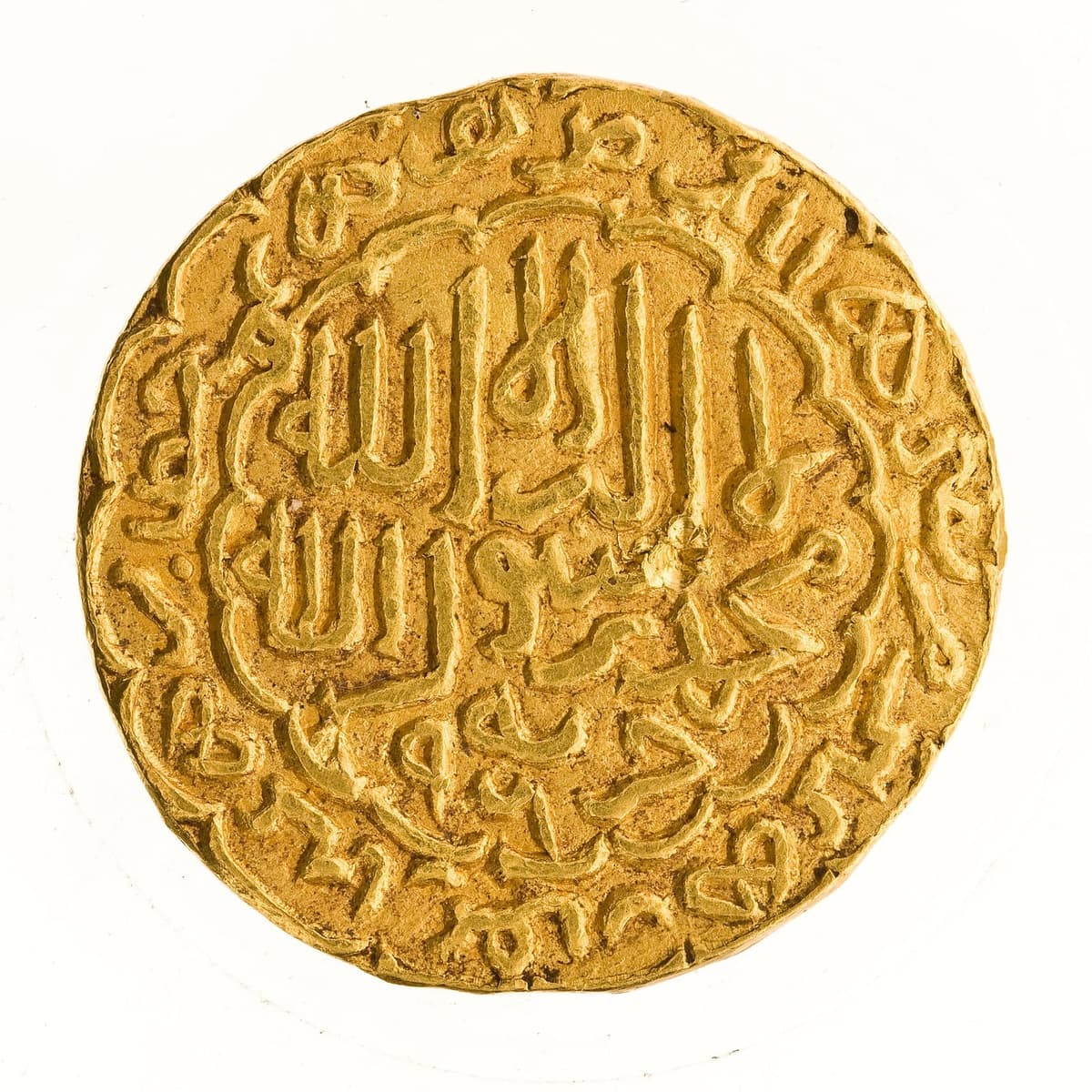
Gold tanka struck in his name, Khazna mint, 896 AH (1490-91)Image: American Numismatic Society, Public domain, via Wikimedia Commons Shamsuddin Muzaffar Shah
Habshi sultan; capital Gaur 1490 to 1493
He was killed in a revolt led by his minister Sayyid Husain, who became sultan as Alauddin Husain Shah.107
The Husain Shahi dynasty, 1493 to 1538
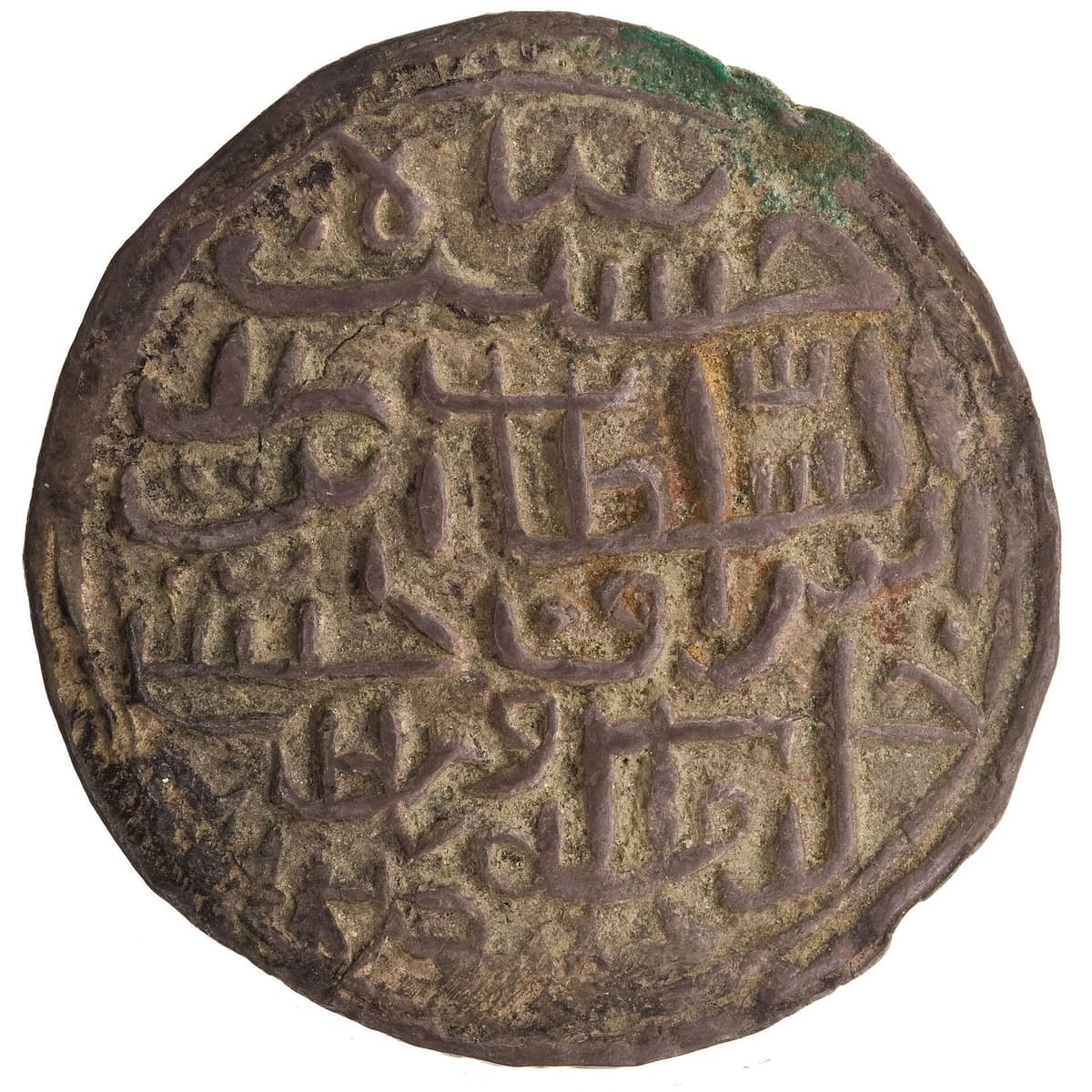
Silver tanka struck in his name, Husaynabad mint, 912 AH (1506-07)Image: American Numismatic Society, Public domain, via Wikimedia Commons Alauddin Husain Shah
Sultan of Bengal; capital Gaur, then Ekdala 1493 to 1519 (Eaton; Banglapedia, Coins); 1494 to 1519 (his Banglapedia article)
Formerly wazir of Muzaffar Shah, he was elected sultan by the leading nobles.109 His commemorative coins call him "conqueror of Kamrupa, Kamta, Jajnagar and Orissa", and he moved his capital from Gaur to Ekdala.110
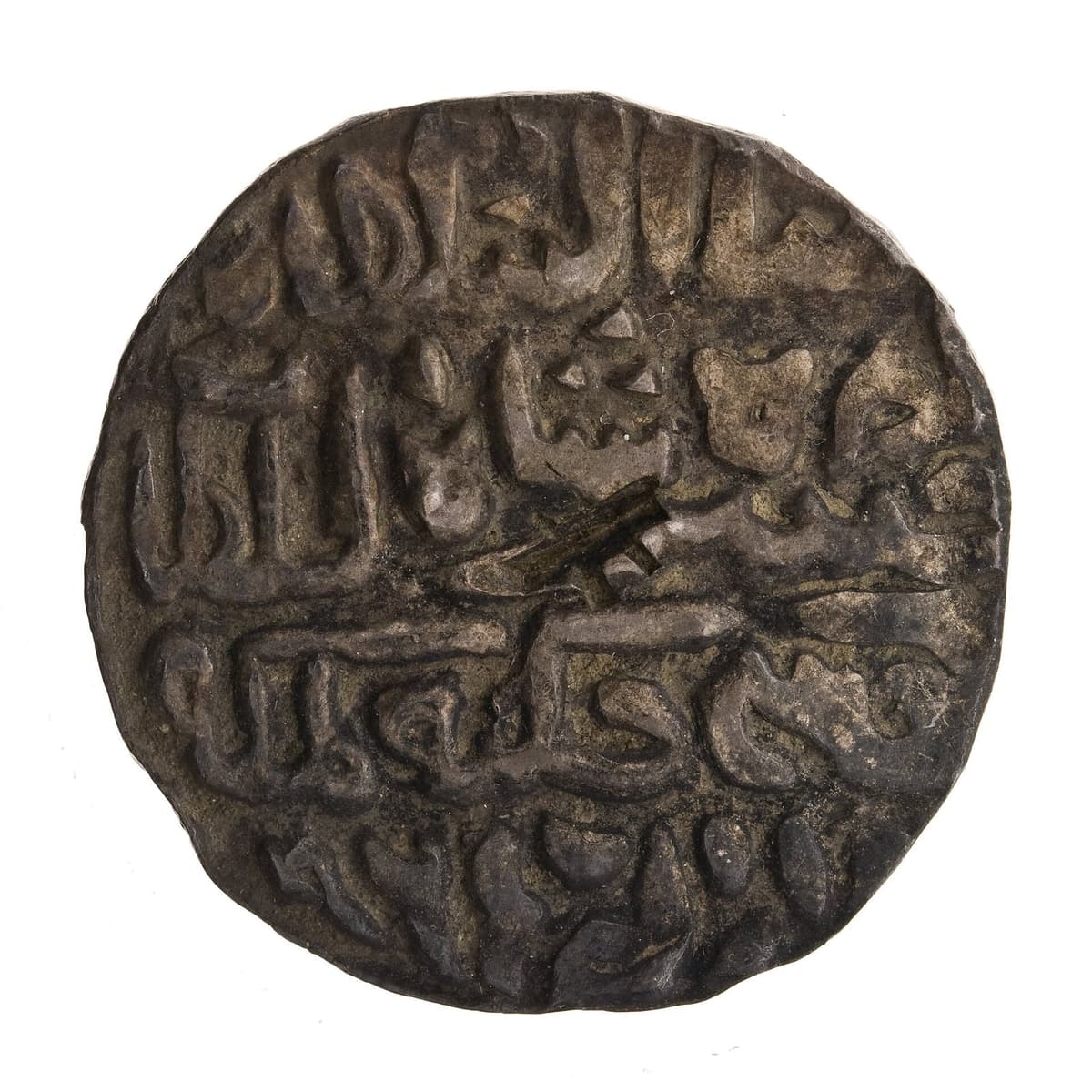
Silver tanka struck in his name, Fathabad mint, 925 AH (1519)Image: American Numismatic Society, Public domain, via Wikimedia Commons Nasiruddin Nusrat Shah
Sultan of Bengal; capital Gaur 1519 to 1532
Husain Shah's eldest son issued coins in his own name during his father's lifetime and made peace with Babur after the battle of the Ghogra.111 The Bara Sona Mosque at Gaur is traditionally ascribed to him, but a later-found inscription "appears to negate" that view.112
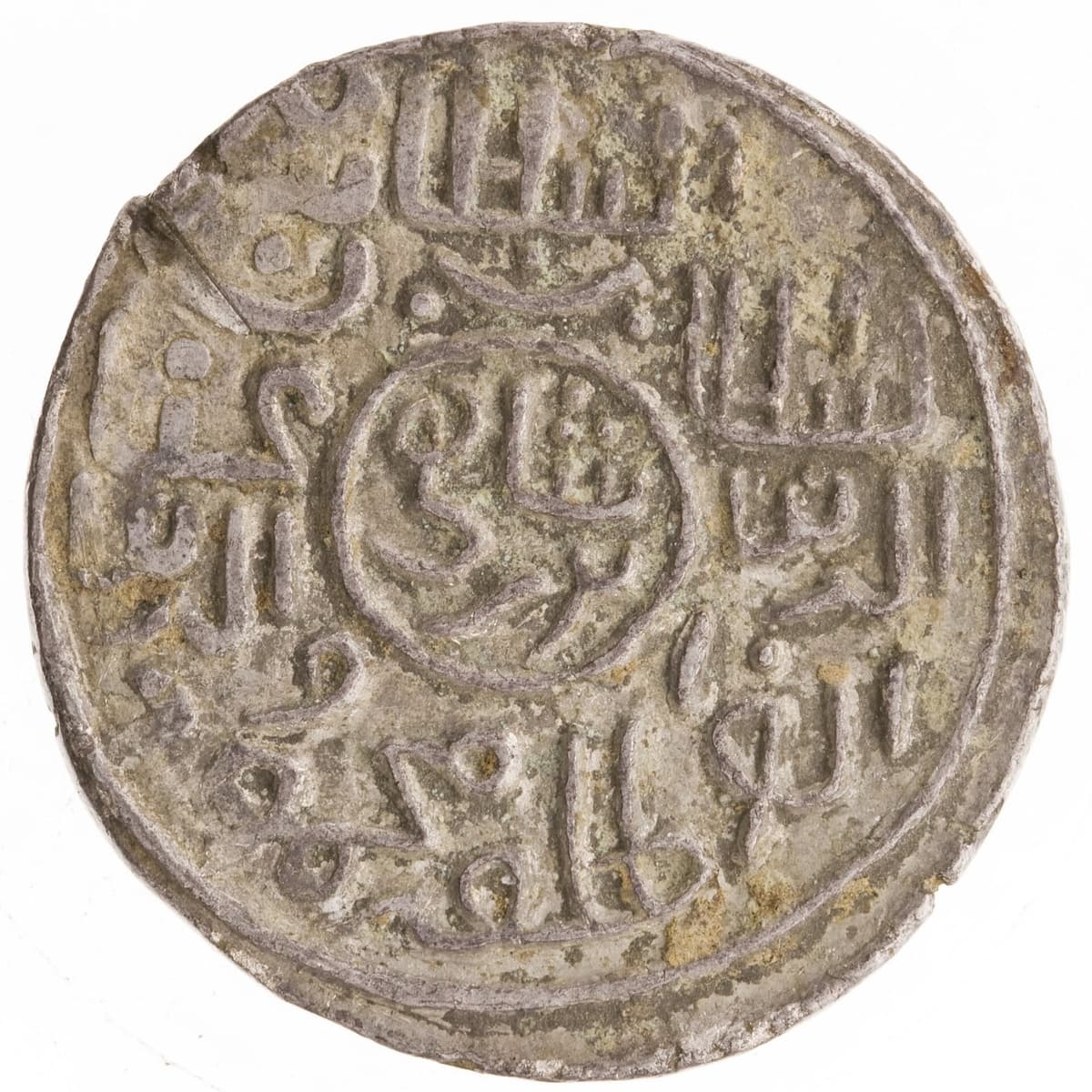
Silver tanka struck in his name, Khalifatabad mint, 943 AH (1536-37)Image: American Numismatic Society, Public domain, via Wikimedia Commons Ghiyasuddin Mahmud Shah
Last Husain Shahi sultan; capital Gaur 1532 to 1538 (Eaton; Banglapedia, Coins); 1533 to 1538 (his Banglapedia article)
He took the throne by killing his nephew Alauddin Firuz Shah, and was defeated by Sher Khan in 1538.113
Sur rule, 1538 to 1563
Sher Shah (Sher Khan Sur)
Afghan ruler of Bengal, later emperor at Delhi Bengal taken 1538 and again 1539; ruled to 1545 (Eaton)
He defeated Mahmud Shah in 1538 and, after beating Humayun at Chausa in 1539, took Bengal and made Khizr Khan its governor.114 He later split Bengal into units under separate muqtas, with Qazi Fadilat as superintendent.115
Ghiyasuddin Bahadur Shah Ghazi
Sultan of Bengal 1556 to 1560 (Eaton)
Son of Muhammad Shah Ghazi, he struck coins dated 963 to 968 AH at Hajipur and Satgaon and restored Devanagari legends on his coinage.118
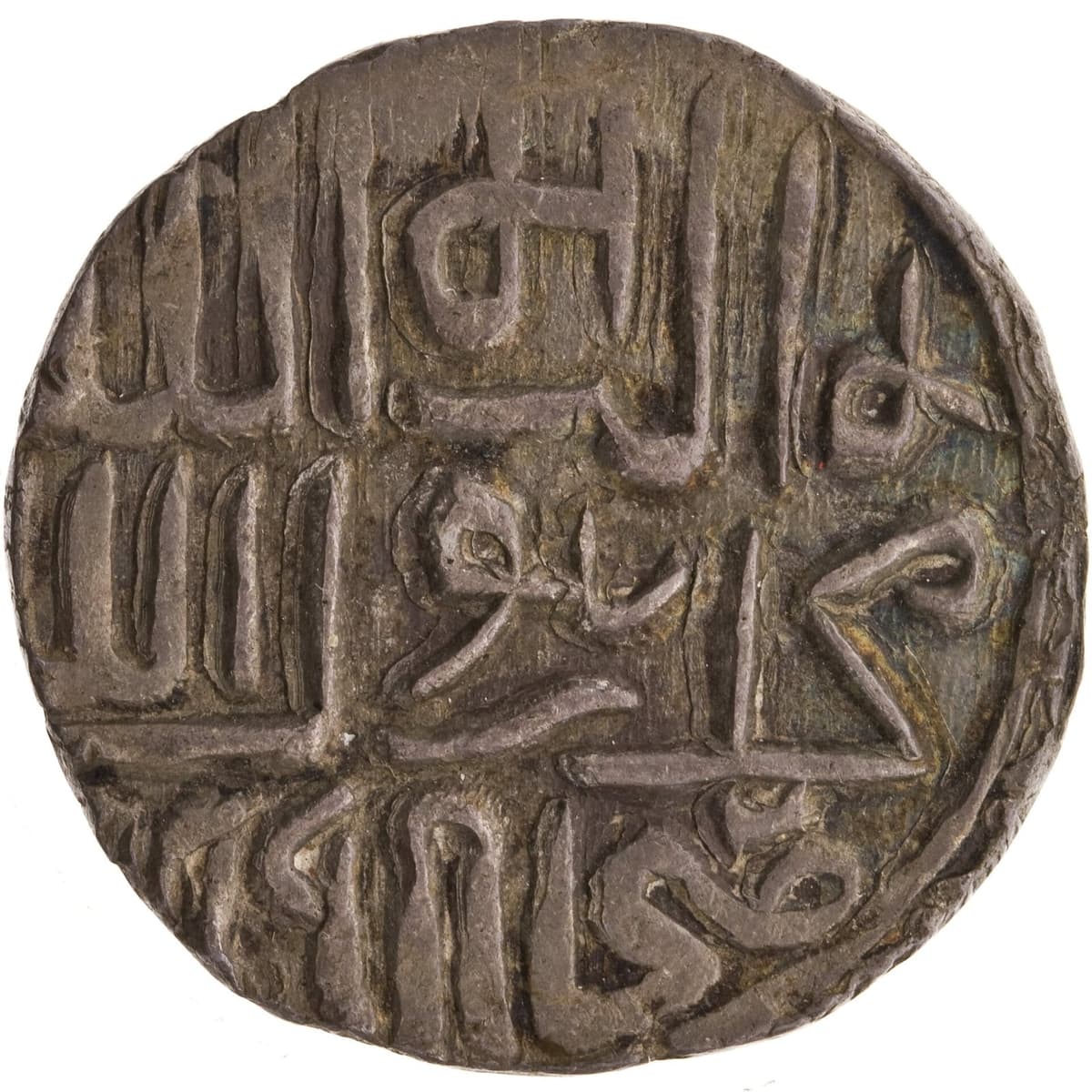
Silver tanka struck in his name, 1560 to 1563Image: American Numismatic Society, Public domain, via Wikimedia Commons Ghiyasuddin Jalal Shah Ghazi
Sultan of Bengal 1560 to 1563
Bahadur Shah's brother struck coins dated 968 to 971 AH at Hajipur and Satgaon; all the coins of this family are silver.119
The Karrani dynasty, 1563 to 1576
Taj Khan Karrani
Founder of Karrani rule; capital Gaur 1563 (Banglapedia); 1564 to 1565 (Eaton)
He founded Karrani rule in 1563 by capturing Gaur from "Ghiyasuddin III".120
Bayazid Karrani
Sultan; capital Tandah October 1572, a few months
He succeeded in October 1572, issued coins in his own name and was killed within months by his cousin Hansu.123
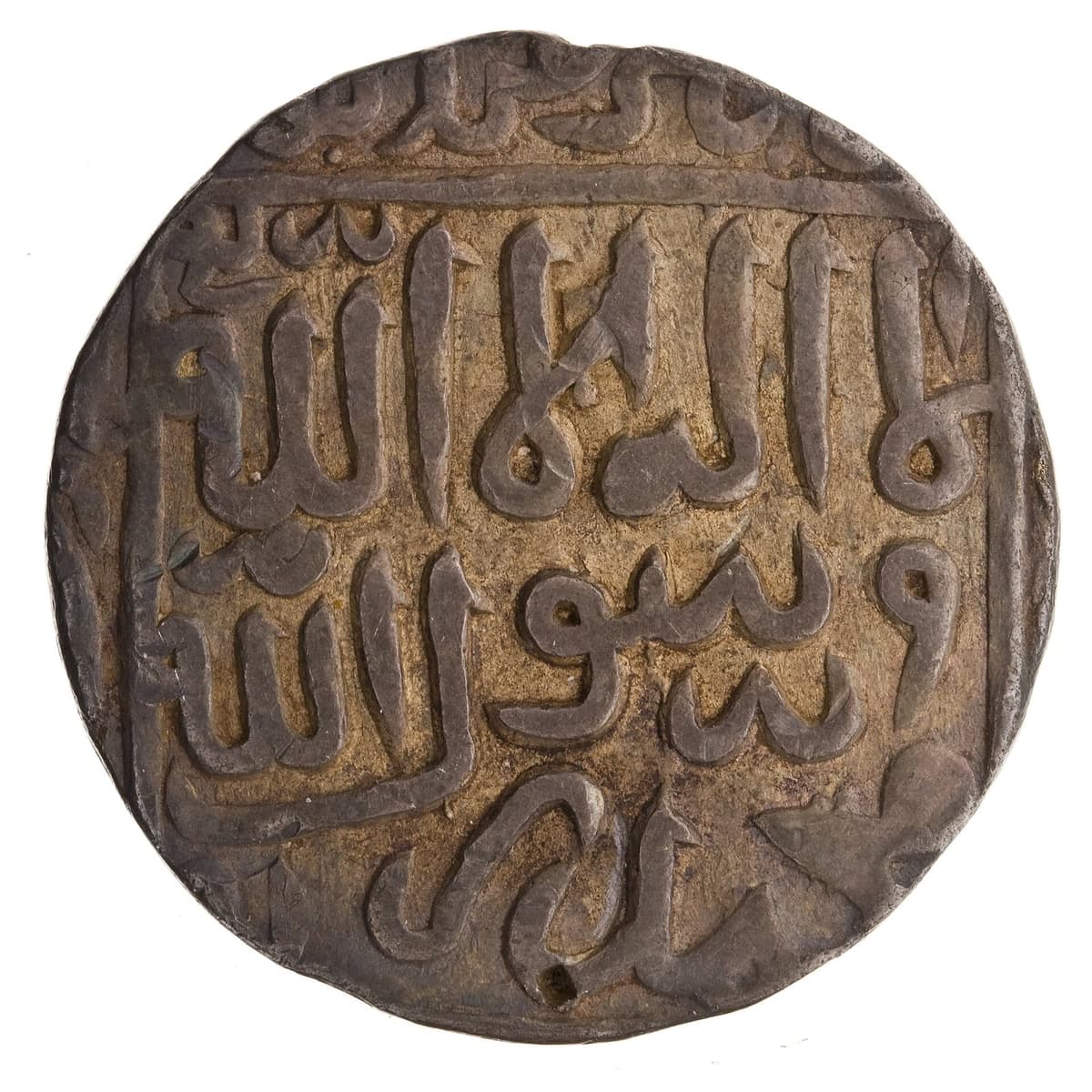
Silver tanka struck in his name, Tanda mint, 1572 to 1576Image: American Numismatic Society, Public domain, via Wikimedia Commons
| Ruler | Line | Reign (Banglapedia) | Reign (Eaton) | Capital |
|---|---|---|---|---|
| Fakhruddin Mubarak Shah | Sonargaon | 1338 to 1349 | 1338 to 1349 | Sonargaon |
| Ikhtiyaruddin Ghazi Shah | Sonargaon | 1349 to 1352 | 1349 to 1352 | Sonargaon |
| Alauddin Ali Shah (Ali Mubarak) | Lakhnauti | 1339 to 1342 | 1341 to 1342 | Lakhnauti |
| Shamsuddin Ilyas Shah | Ilyas Shahi | 1342 to 1358 | 1342 to 1357 | Lakhnauti, then Pandua (Firuzabad) |
| Sikandar Shah | Ilyas Shahi | 1358 to 1390 | 1357 to 1389 | Pandua |
| Ghiyasuddin Azam Shah | Ilyas Shahi | 1389 to 1410 (793 to 813 AH) | 1389 to 1410 | Pandua (Firuzabad) |
| Saifuddin Hamza Shah | Ilyas Shahi | 1410 to 1412 | 1410 to 1411 | Firuzabad (Pandua) |
| Muhammad Shah bin Hamza Shah | Ilyas Shahi | 814 AH (1412) | Not listed | "Somewhere in Bengal" |
| Shihabuddin Bayazid Shah | Ilyas Shahi | 1413 to 1414 (his article); 1411 or 1412 to 1414 (History article) | 1411 to 1414 | Firuzabad (Pandua) |
| Alauddin Firuz Shah I | Ilyas Shahi | 1414 to 1415 | 1414 | Coins from Muazzamabad and Satgaon only |
| Raja Ganesha (Danujamardanadeva) | House of Ganesha | 1414 to 1415; again 1416 or 1417 to 1418 | Not listed separately | Pandua |
| Jalaluddin Muhammad Shah (Jadu) | House of Ganesha | 1415 to 1416 and 1418 to 1433 | 1415 to 1432 | Pandua |
| Mahendra (Mahendradeva) | House of Ganesha | Very short, c. 1418 | Not listed | Not stated |
| Shamsuddin Ahmad Shah | House of Ganesha | 1433 to 1435 | 1432 to 1433 | Not stated |
| Nasir Khan | Usurper | A few days, 1435 | Not listed | Not stated |
| Nasiruddin Mahmud Shah I | Restored Ilyas Shahi | 1435 to 1459 | 1433 to 1459 | Pandua, then Gaur |
| Ruknuddin Barbak Shah | Restored Ilyas Shahi | 1459 to 1474 | 1459 to 1474 | Gaur |
| Shamsuddin Yusuf Shah | Restored Ilyas Shahi | 1474 to 1481 | 1474 to 1481 | Gaur |
| Sikandar Shah II | Restored Ilyas Shahi | 1481 (days to about two months) | 1481 | Gaur |
| Jalaluddin Fath Shah | Restored Ilyas Shahi | 1481 to 1487 (886 to 892 AH) | 1481 to 1486 | Gaur |
| Barbak Shah Shahzada | Habshi | 1487 to 1488 | 1486 | Gaur |
| Saifuddin Firuz Shah | Habshi | 1488 to 1490 | 1486 to 1490 | Gaur |
| Nasiruddin Mahmud Shah II (Qutbuddin Mahmud in the Coins article) | Habshi | 1490 | Not listed | Gaur |
| Shamsuddin Muzaffar Shah | Habshi | 1490 to 1493 | 1490 to 1493 | Gaur |
| Alauddin Husain Shah | Husain Shahi | 1494 to 1519 (his article); 1493 to 1519 (Coins) | 1493 to 1519 | Gaur, then Ekdala |
| Nasiruddin Nusrat Shah | Husain Shahi | 1519 to 1532 | 1519 to 1532 | Gaur |
| Alauddin Firuz Shah II | Husain Shahi | 1532 | 1532 | Gaur |
| Ghiyasuddin Mahmud Shah | Husain Shahi | 1533 to 1538 (his article); 1532 to 1538 (Coins) | 1532 to 1538 | Gaur |
| Humayun (Mughal emperor) | Brief occupation | Occupied Gaur briefly | 1538 to 1539 (in brackets) | Gaur |
| Sher Shah (Sher Khan Sur) | Sur | Bengal taken 1538; again after Chausa, 1539 | 1538; 1539 to 1545 | Gaur |
| Islam Shah | Sur | 1545 to 1553 | 1545 to 1553 | Bengal under governors |
| Shamsuddin Muhammad Shah Ghazi | Sur governors, independent | 1553 to 1555 | 1553 to 1555 | Not stated |
| Ghiyasuddin Bahadur Shah Ghazi | Sur governors, independent | Coins dated 963 to 968 AH | 1556 to 1560 | Probably Gaur |
| Ghiyasuddin Jalal Shah Ghazi | Sur governors, independent | 1560 to 1563 (coins 968 to 971 AH) | 1560 to 1563 | Not stated |
| "Ghiyasuddin III" | Sur governors, independent | To 1563 | 1563 to 1564 | Gaur |
| Taj Khan Karrani | Karrani | 1563 | 1564 to 1565 | Gaur |
| Sulaiman Karrani | Karrani | 1563 to 1572 | 1565 to 1572 | Tandah |
| Bayazid Karrani | Karrani | October 1572, a few months | 1572 | Tandah |
| Daud Khan Karrani | Karrani | 1573 to 1576 | 1572 to 1575 | Tandah |
Source: Banglapedia articles on each ruler, "History" and "Coins"; Richard M. Eaton, The Rise of Islam and the Bengal Frontier (1993), appendix 2.131 Sarkar's coin-based dates for the first Ilyas Shahis are Ilyas 743 to 758 AH, Sikandar 758 to c. 795 AH, Azam c. 795 to 818 AH (coins dated 795 to 813), Hamza 813 to 814, Bayazid c. 815 to 817 and Alauddin Firuz 817.132
The Mughal subahdars, 1575 to 1716
After Rajmahal, Bengal became a province (subah) of the Mughal empire, governed by an appointed official usually called the subahdar and addressed as nazim.133 The fuller story is in the chapter on Mughal Bengal. Banglapedia's chronology lists 39 appointments between 1575 and 1716, some of them acting and some held by men who never came to Bengal.134
Two patterns stand out. Bengal's subahdars stayed longer than most: they averaged more than six years in office, against generally under four in other provinces.135 And the capital kept moving. Man Singh moved it from Tanda to Rajmahal in 1595; Islam Khan took it to Dhaka, renamed Jahangirnagar, in 1610 (or 1608-09); Shah Shuja made Rajmahal the capital again in 1639; and Mir Jumla brought it back to Dhaka.136
Notable Mughal subahdars
Munim Khan (Khan-i-Khanan)
First Mughal subahdar; seat Tanda and Gaur 1575 (Banglapedia); 1574 to 1575 (Eaton)
Akbar's general in the war against Daud Karrani heads Banglapedia's chronology of Bengal subahdars.137
Islam Khan Chishti
Subahdar; capital Rajmahal, then Dhaka 1608 to 1613
A grandson of Shaikh Salim Chishti, he brought all of Bengal except Chittagong under Mughal control.140 He moved the capital to Dhaka, renamed Jahangirnagar, in 1610 according to Banglapedia's Dhaka article, or 1608-09 according to its Rajmahal article.141
Ibrahim Khan Fath-i-Jang
Subahdar; capital Dhaka 1617 to 1624
He was a brother of the Empress Nur Jahan.142
Qasim Khan Juyini
Subahdar; capital Dhaka 1628 to 1632
Banglapedia names the capture of Hughli from the Portuguese as the most notable event of his viceroyalty.143
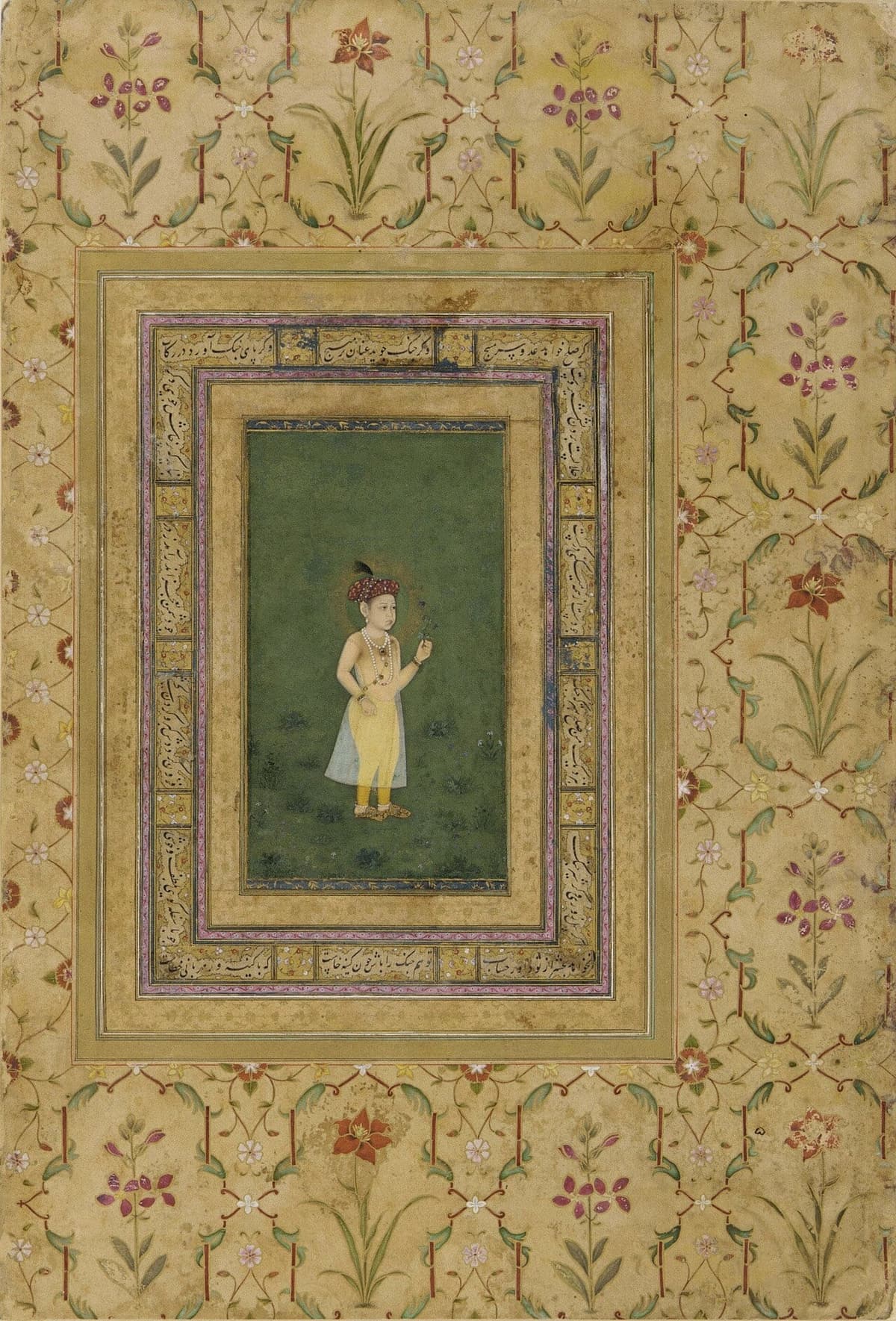
Portrait painted in his lifetime, about 1620, when he was a child; attributed to ManoharImage: Manohar (attributed), Public domain, via Wikimedia Commons Prince Shah Shuja
Subahdar; capital Dhaka, then Rajmahal 1639 to 1660
The second son of Shah Jahan, born on 23 June 1616, he governed Bengal for over twenty years; Rajmahal regained its status as capital in 1639, though his own Banglapedia article says the date of the move is unknown.144 He gave the Bara Katra in Dhaka, whose inscriptions date it to 1643-44 and 1645-46, to Mir Abul Qasim.145
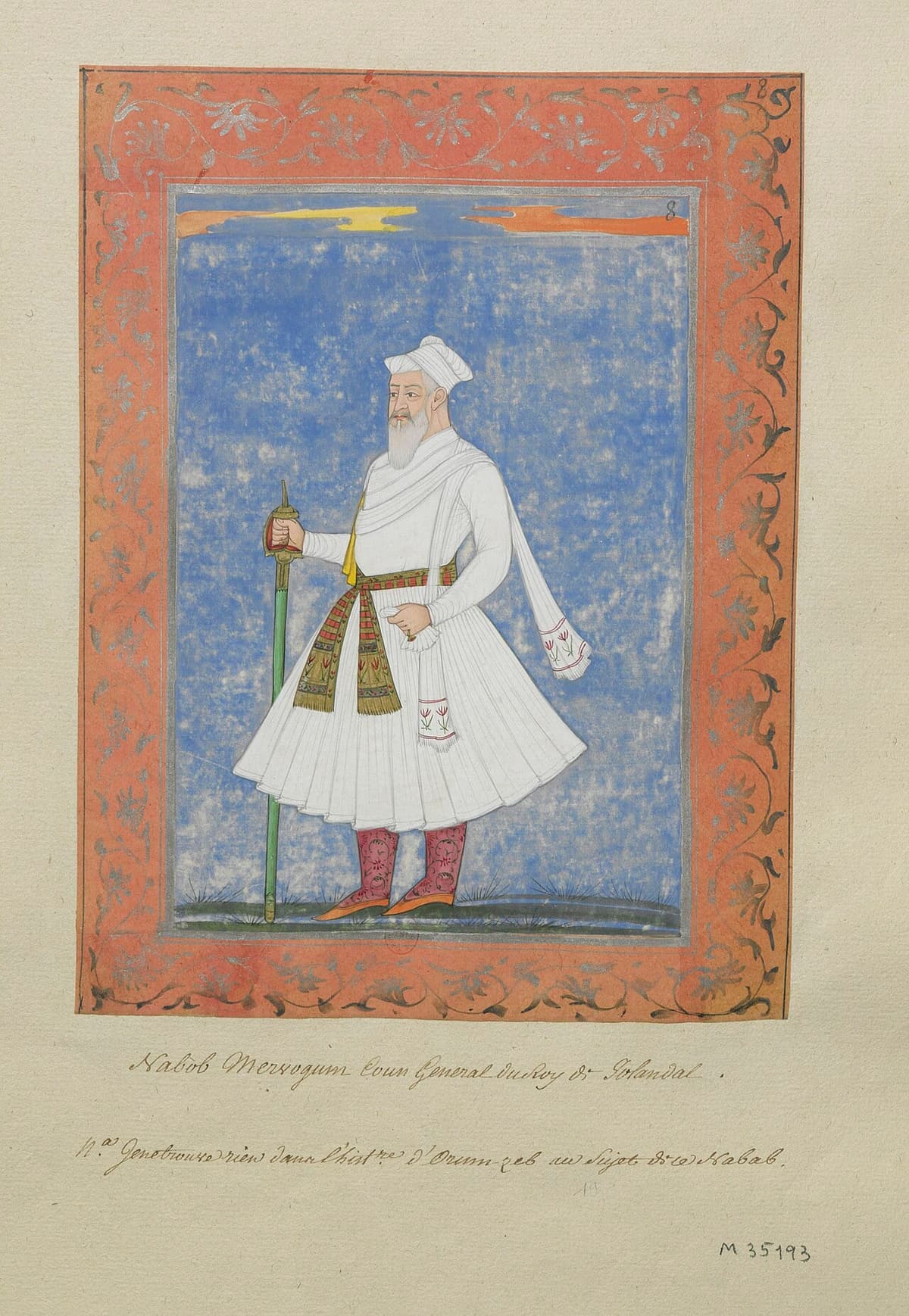
Portrait dated about 1690 in the library record, made after his death; not a likeness from lifeImage: Unknown artist, Public domain, via Wikimedia Commons Mir Jumla (Muazzam Khan)
Subahdar; capital Dhaka 1660 to 1663
Born about 1591 at Ardistan and formerly wazir of Golconda, he moved the capital back from Rajmahal to Dhaka.146
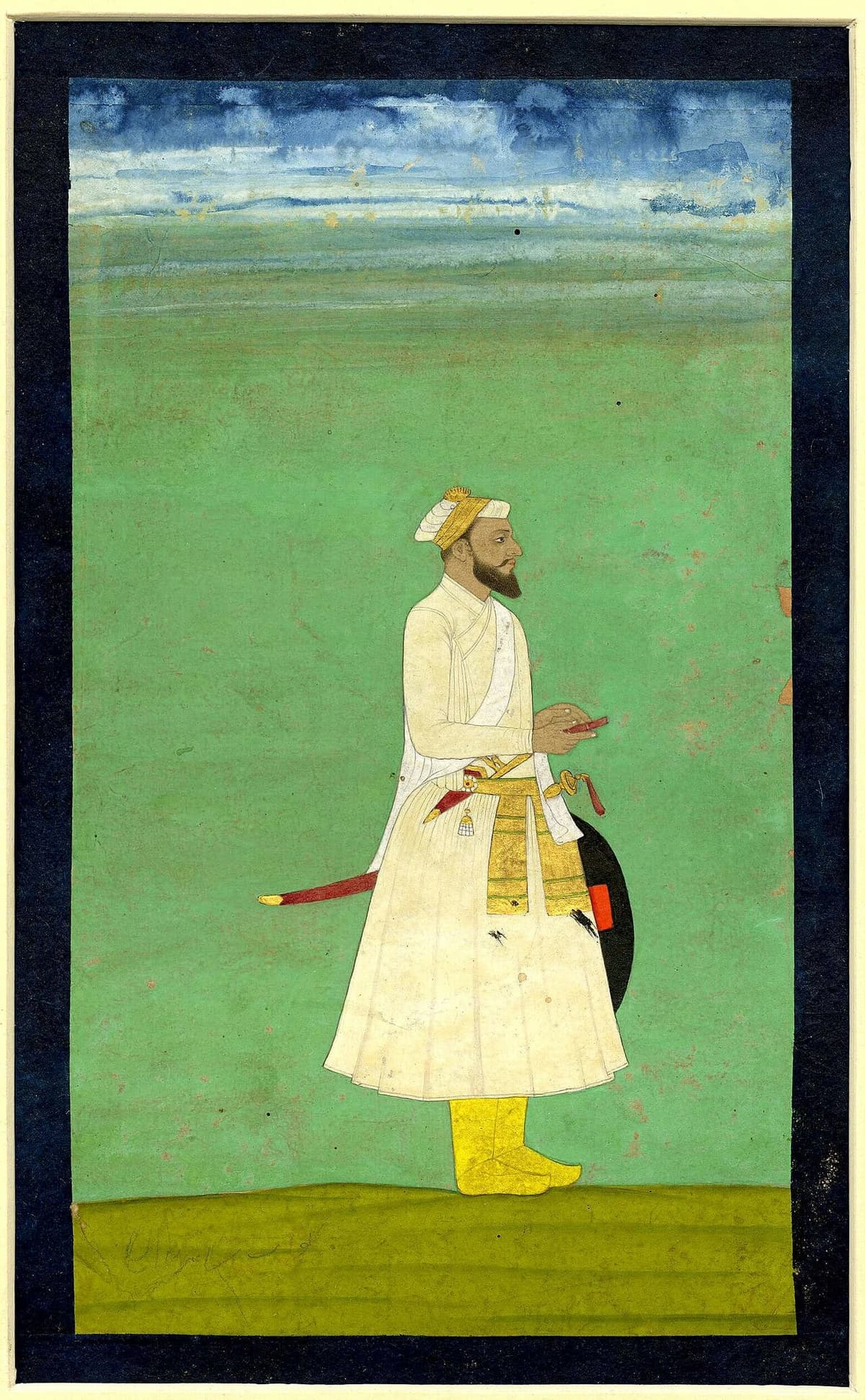
Album portrait of the mid-18th century, made long after his deathImage: Unknown artist (Mughal style), Public domain, via Wikimedia Commons Shaista Khan
Subahdar; capital Dhaka 1664 to 1678 and 1680 to 1688
Banglapedia calls his the longest tenure and says his "great fame" rests on the conquest of Chittagong.147
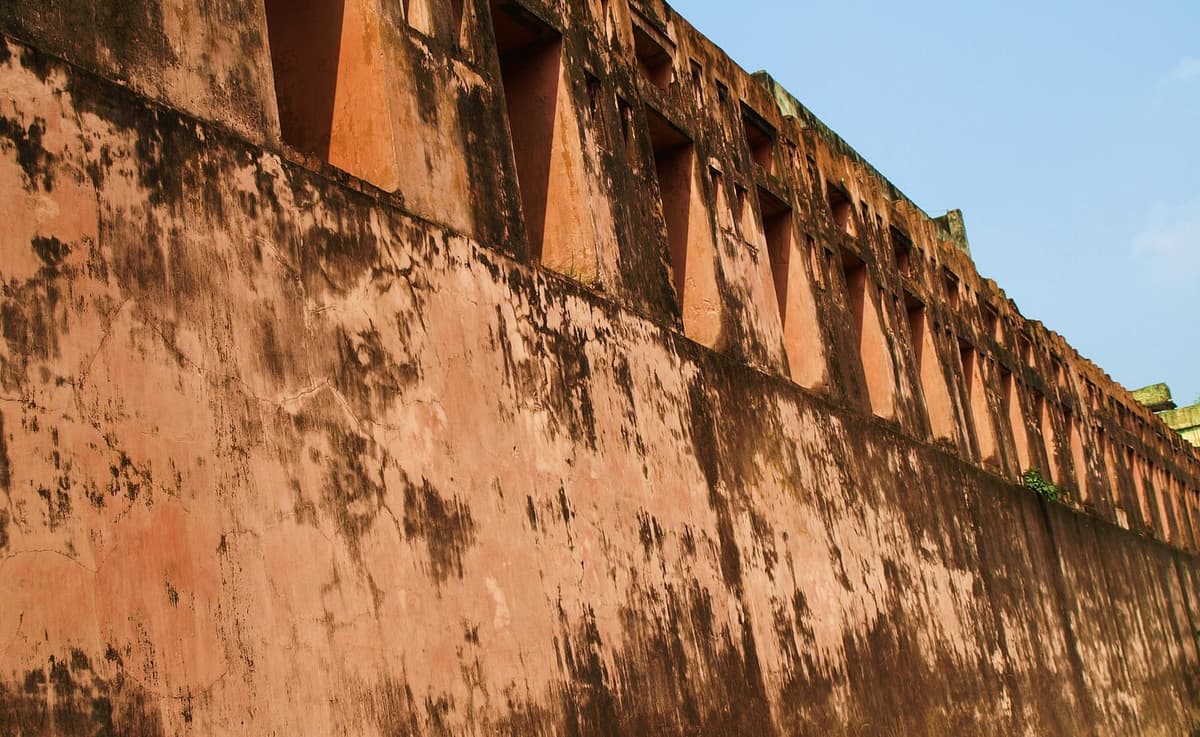
Lalbagh Fort, Dhaka, begun by him in 1678; modern photographImage: Shmunmun, CC BY-SA 3.0, via Wikimedia Commons Prince Muhammad Azam
Subahdar; capital Dhaka 1678 to 1679
He reached Dhaka on 20 July 1678 and began Lalbagh Fort, also called Fort Aurangabad, which was left incomplete.148
Azim-us-Shan (Prince Azimuddin)
Subahdar; office at Dhaka, then Patna 1697 to 1712, largely in absence
A grandson of Aurangzeb, he quarrelled with the diwan Murshid Quli Khan, moved his office to Patna in 1703 and governed Bengal largely in absence.149
| # | Subahdar (Banglapedia spelling) | Tenure (Banglapedia table) | Eaton | Seat of government |
|---|---|---|---|---|
| 1 | Khan-i-Khanan Munim Khan | 1575 | 1574 to 1575 | Tanda and Gaur |
| 2 | Khan-i-Jahan Hosen Quli Beg | 1576 (printed "1576-76") | 1575 to 1578 | Tanda |
| 3 | Ismail Quli (acting) | 1578 to 1579 | Not listed | Tanda |
| 4 | Muzaffar Khan Turbati | 1579 to 1580 | 1579 to 1580 | Tanda |
| 5 | Khan-i-Azam Mirza Aziz Kokah | 1583 | 1582 to 1583 | Tanda |
| 6 | Wazir Khan | 1583 | See row 10 | Tanda |
| 7 | Shahbaz Khan | 1583 to 1585 | 1583 to 1585 | Tanda |
| 8 | Sadiq Khan | 1585 to 1586 | 1585 to 1586 | Tanda |
| 9 | Shahbaz Khan (second term) | 1586 | Not listed | Tanda |
| 10 | Wazir Khan (second term) | 1586 to 1587 | 1586 to 1587 | Tanda |
| 11 | Syed Khan (Sa'id Khan) | 1587 to 1594 | 1587 to 1594 | Tanda |
| 12 | Raja Man Singh | 1594 to 1606 (three terms) | 1594 to 1606 | Tanda; Rajmahal from 7 November 1595 |
| 13 | Qutubuddin Khan Kokah | 1606 to 1607 | 1606 to 1607 | Rajmahal |
| 14 | Jahangir Quli Beg | 1607 to 1608 | 1607 to 1608 | Rajmahal |
| 15 | Islam Khan Chishti | 1608 to 1613 | 1608 to 1613 | Rajmahal; Dhaka from 1610 (or 1608-09) |
| 16 | Sheikh Hosang (acting) | 1613 to 1614 | Not listed | Dhaka |
| 17 | Qasim Khan Chishti | 1614 to 1617 | 1613 to 1617 | Dhaka |
| 18 | Ibrahim Khan Fath-i-Jang | 1617 to 1624 | 1617 to 1624 | Dhaka |
| 19 | Darab Khan | 1624 to 1625 (Bengal occupied by Shah Jahan) | Not listed | Dhaka |
| 20 | Mahabat Khan | 1625 to 1626 | 1625 to 1626 | Dhaka |
| 21 | Mukarram Khan Chishti | 1626 to 1627 | 1626 to 1627 | Dhaka |
| 22 | Fidai Khan (Mirza Hedayetullah) | 1627 to 1628 | 1627 to 1628 | Dhaka |
| 23 | Qasim Khan Juyini | 1628 to 1632 | 1628 to 1632 | Dhaka |
| 24 | Azam Khan Mir Muhammad Baqr | 1632 to 1635 | 1632 to 1635 | Dhaka |
| 25 | Islam Khan Mashhadi | 1635 to 1639 | 1635 to 1639 | Dhaka |
| 26 | Saif Khan (acting) | 1639 | Not listed | Dhaka |
| 27 | Prince Shah Shuja | 1639 to 1660 | 1639 to 1660 | Dhaka, then Rajmahal |
| 28 | Mir Jumla | 1660 to 1663 | 1660 to 1663 | Dhaka |
| 29 | Dilir Khan (acting) | 1663 | Not listed | Dhaka |
| 30 | Daud Khan (acting) | 1663 to 1664 | Not listed | Dhaka |
| 31 | Shaista Khan | 1664 to 1678 | 1664 to 1678 | Dhaka |
| 32 | Fidai Khan (Azam Khan Koka) | 1678 (died in office) | 1678 | Dhaka |
| 33 | Prince Muhammad Azam | 1678 to 1679 | 1678 to 1688 (as printed) | Dhaka |
| 34 | Shaista Khan (second term) | 1680 to 1688 | Not listed separately | Dhaka |
| 35 | Khan-i-Jahan Bahadur | 1688 to 1689 | 1688 to 1689 | Dhaka |
| 36 | Ibrahim Khan | 1689 to 1697 (his own article: 1689 to 1698) | 1689 to 1697 | Dhaka |
| 37 | Prince Azimuddin (Azim-us-Shan) | 1697 to 1712, mostly in absence | 1697 to 1712 | Dhaka; office at Patna from 1703 |
| 38 | Farkhunda Siyar (an infant, in absence) | 1713 | Not listed | Murshid Quli Khan as deputy |
| 39 | Mir Jumla alias Muzaffar Jang (in absence) | 1713 to 1716 | Not listed | Murshid Quli Khan as deputy |
Source: Sirajul Islam, "Subahdar", Banglapedia, table "Chronology of Bengal Subahdars (1575-1770 AD)"; Eaton (1993), appendix 2; Banglapedia articles on individual subahdars and on the capitals.150 Banglapedia notes that several subahdars appointed between 1704 and 1717 never came to Bengal and that the real ruler was Murshid Quli Khan.151
The nawabs of Murshidabad, 1716 to 1757
The rulers we call the nawabs of Bengal did not, officially, call themselves nawabs. Banglapedia notes that none of them from Murshid Quli Khan to Siraj ud-Daulah used the title officially, that it came into currency through the Europeans, and that Mir Jafar, in 1757, was the first to be installed with the title "Nawab".152 What made them different from the subahdars before them was that Murshid Quli Khan held the posts of subahdar and diwan together, the first person to do so, and that on his death the office passed to his son-in-law.153 Murshidabad was their capital for about seventy years, until the capital was moved to Calcutta in 1773.154
The nawabs to 1757
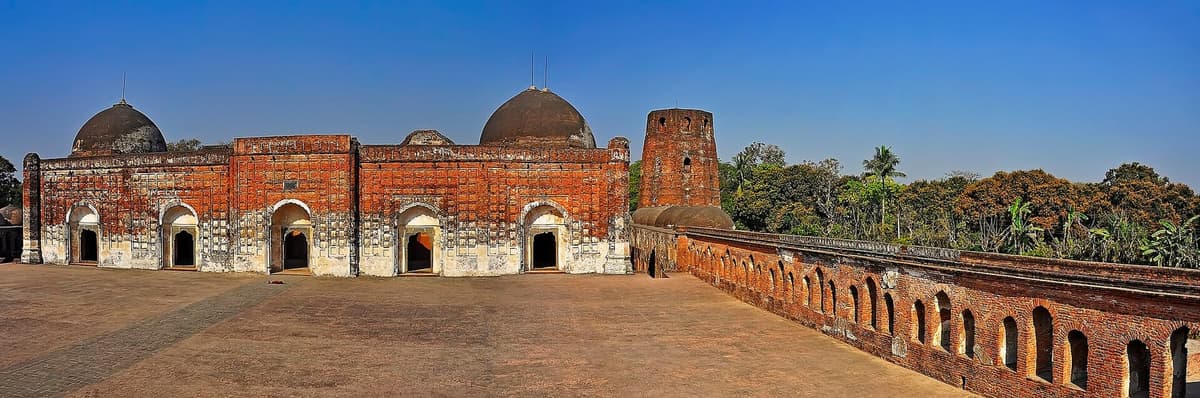
Courtyard of the Katra Mosque, Murshidabad, which he built; modern photographImage: Anjan Kumar Kundu, CC BY-SA 4.0, via Wikimedia Commons Murshid Quli Khan
Nazim of Bengal; capital Murshidabad Subahdar 1716 or 1717 to 30 June 1727
He came to Bengal as diwan in 1701, received the title Murshid Quli Khan on 23 December 1702 and was made subahdar in 1716 (some scholars say 1717).155 He built the Katra Mosque at Murshidabad, whose inscription is dated 1137 AH (1724-25), and is buried under its entrance steps.156
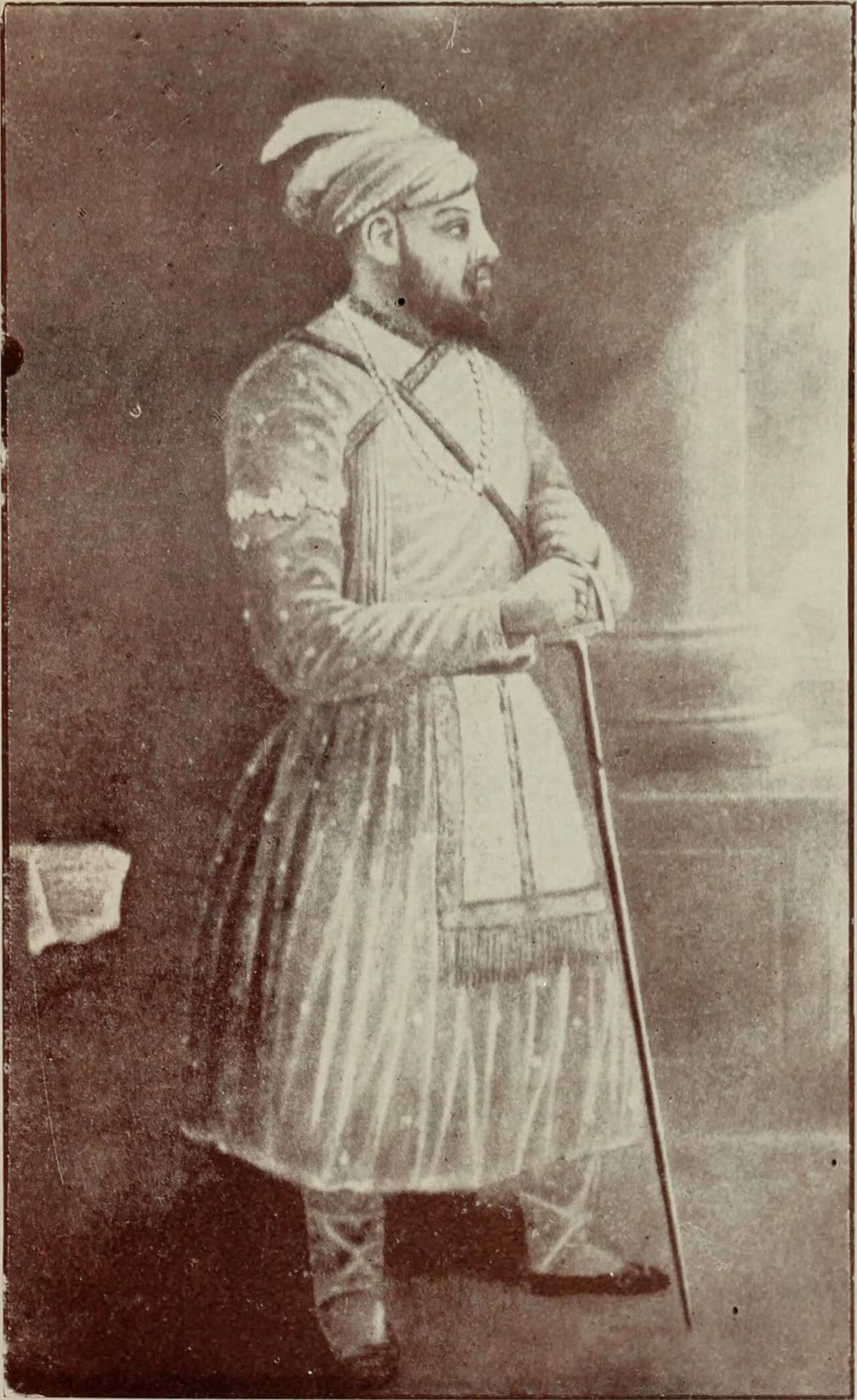
Portrait reproduced in a book of 1905; the date of the original painting is not knownImage: Unknown artist (reproduced in P. C. Majumdar, The Musnud of Murshidabad, 1905), CC0, via Wikimedia Commons Sarfaraz Khan
Nazim of Bengal; capital Murshidabad 1739 to 1740
He succeeded in 1739 with the title Alauddin Haidar Jang, and was killed by Alivardi Khan's forces at Giria on 10 April 1740.159
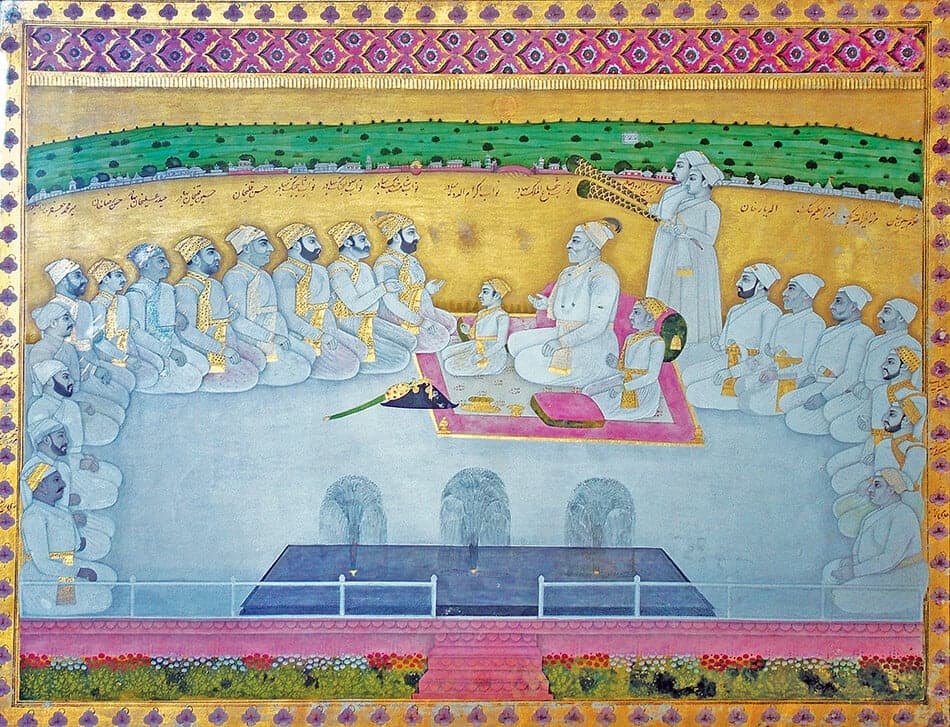
Painting of a durbar he held in 1748, made in his lifetime; reproduced from a bookImage: Unknown artist, Public domain, via Wikimedia Commons Alivardi Khan
Nawab of Bengal, Bihar and Orissa; capital Murshidabad 1740 to 1756
Born Mirza Muhammad Ali in 1676, he ruled after Giria; his reign was marked by annual Maratha raids.160 He died in April 1756, on the 9th according to his Banglapedia article and the 10th according to Siraj ud-Daulah's.161
Siraj ud-Daulah
Nawab; capital Murshidabad April 1756 to June 1757
Alivardi's grandson, born in 1733, was defeated at Palashi (Plassey) on 23 June 1757 and killed on the night before 3 July 1757.162
| Nawab | Reign | Other dates given | Capital |
|---|---|---|---|
| Murshid Quli Khan (Muhammad Hadi; Kartalab Khan; Jafar Khan) | 1716 or 1717 to 30 June 1727 | 1717 to 1727 (Banglapedia table); 1713 to 1727 (Eaton, counting his years as deputy) | Murshidabad |
| Shujauddin Muhammad Khan | 1727 to 1739 | 1729 to 1739 (Banglapedia, "Nawab") | Murshidabad |
| Sarfaraz Khan | 1739 to 1740 | Eaton prints 1729 to 1740 | Murshidabad |
| Alivardi Khan | 1740 to 1756 | Died 9 or 10 April 1756 | Murshidabad |
| Siraj ud-Daulah | April 1756 to June 1757 | Murshidabad |
Source: Banglapedia articles on each ruler, "Nawab" and "Subahdar"; Eaton (1993), appendix 2.163 When the capital moved to Murshidabad is itself disputed: Banglapedia's "Nawab" article says the diwan's office moved to Makhsusabad in 1702 and the town was renamed Murshidabad in 1704, while its articles on Murshid Quli Khan, Murshidabad and the Katra Mosque date the transfer of the capital to 1717.164
After Plassey, 1757 to 1770
Plassey did not end the nawabs, but it changed who chose them. The Calcutta Council had agreed a secret treaty with Mir Jafar on 1 May 1757, and in October 1760 the East India Company forced him to abdicate in favour of his son-in-law Mir Qasim, who was placed on the throne on 20 October 1760.165 Banglapedia's chronology continues to 1770; what happened to Bengal under Company rule is the subject of the chapter on colonial Bengal.166
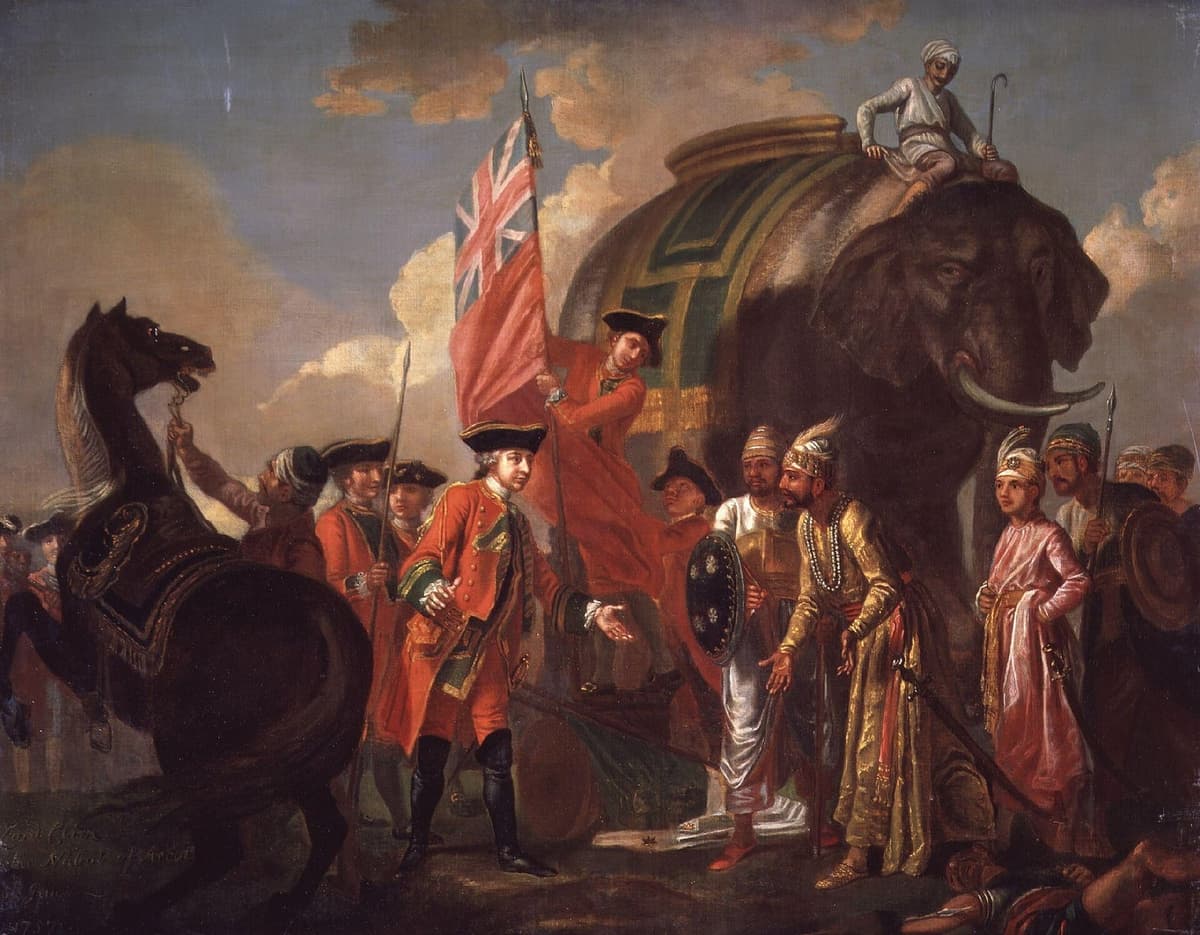
Nawabs installed by the Company
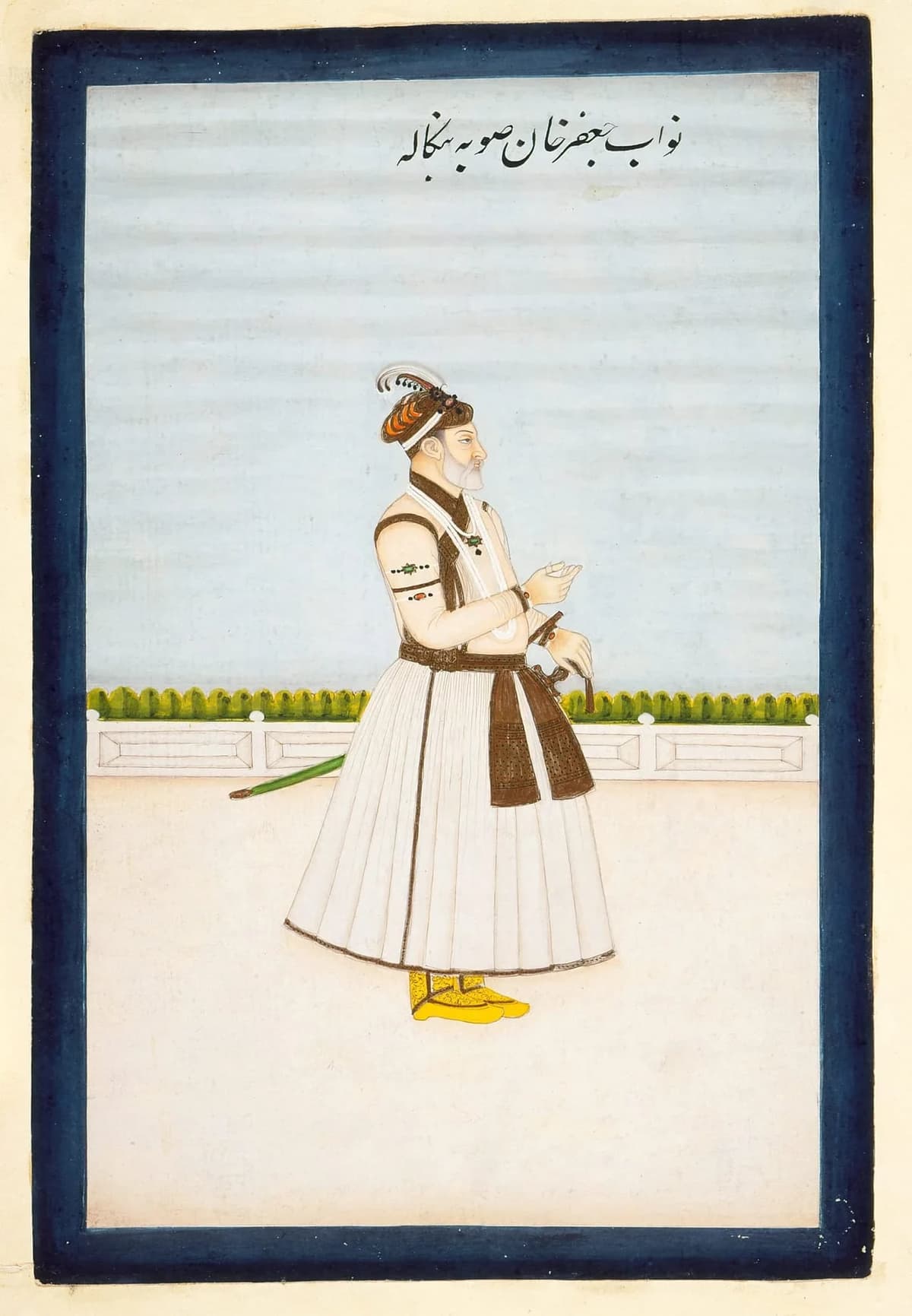
Portrait dated about 1760 to 1775 in the museum record; it may have been painted in his lifetime or shortly afterImage: Unknown artist, Public domain, via Wikimedia Commons 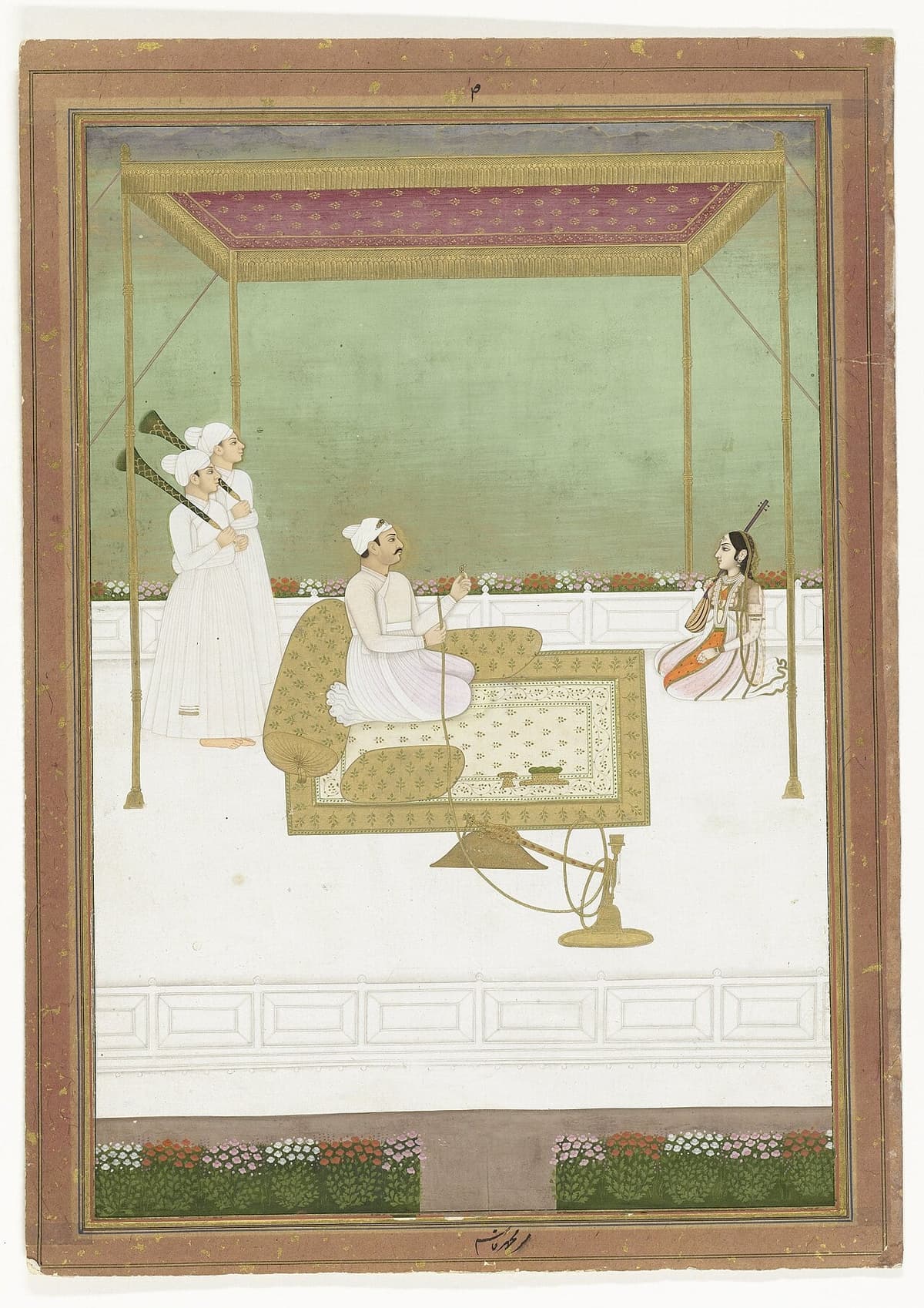
Portrait painted in his lifetime by a Murshidabad painter, about 1755 to 1765, inscribed "Muhammad Mir Qasim"Image: Anonymous Murshidabad painter, CC0, via Wikimedia Commons Mir Qasim Ali Khan
Nawab; capital Murshidabad 1760 to 1763
Mir Jafar's son-in-law was placed on the throne on 20 October 1760.169
| Nawab | Tenure |
|---|---|
| Mir Jafar Ali Khan | 1757 to 1760 |
| Mir Qasim | 1760 to 1763 |
| Mir Jafar (second term) | 1763 to 1765 |
| Nazimuddaula | 1765 to 1766 |
| Saifuddaula | 1766 to 1770 |
Source: Sirajul Islam, "Subahdar", Banglapedia, table "Chronology of Bengal Subahdars (1575-1770 AD)".170
British heads of Bengal, 1757 to 1947
The British heads of Bengal began as governors of Fort William, the East India Company's settlement at Calcutta, and their title changed with the Regulating Act of 1773 and the Charter Acts of 1833 and 1853. The Regulating Act of 1773 made the governor of Fort William "Governor General of the Presidency of Fort William in Bengal", with control over Madras and Bombay; the Charter Act of 1833 made the post Governor of Bengal and Governor General of India together.171 The Charter Act of 1853 relieved the Governor-General of the governorship of Bengal, and from 1 May 1854 the province had its own Lieutenant-Governor.172 After the reversal of the Partition in December 1911, Bengal became a Governor's province, and Lord Carmichael took office as its first Governor on 1 April 1912.173
Two portraits from the Company years
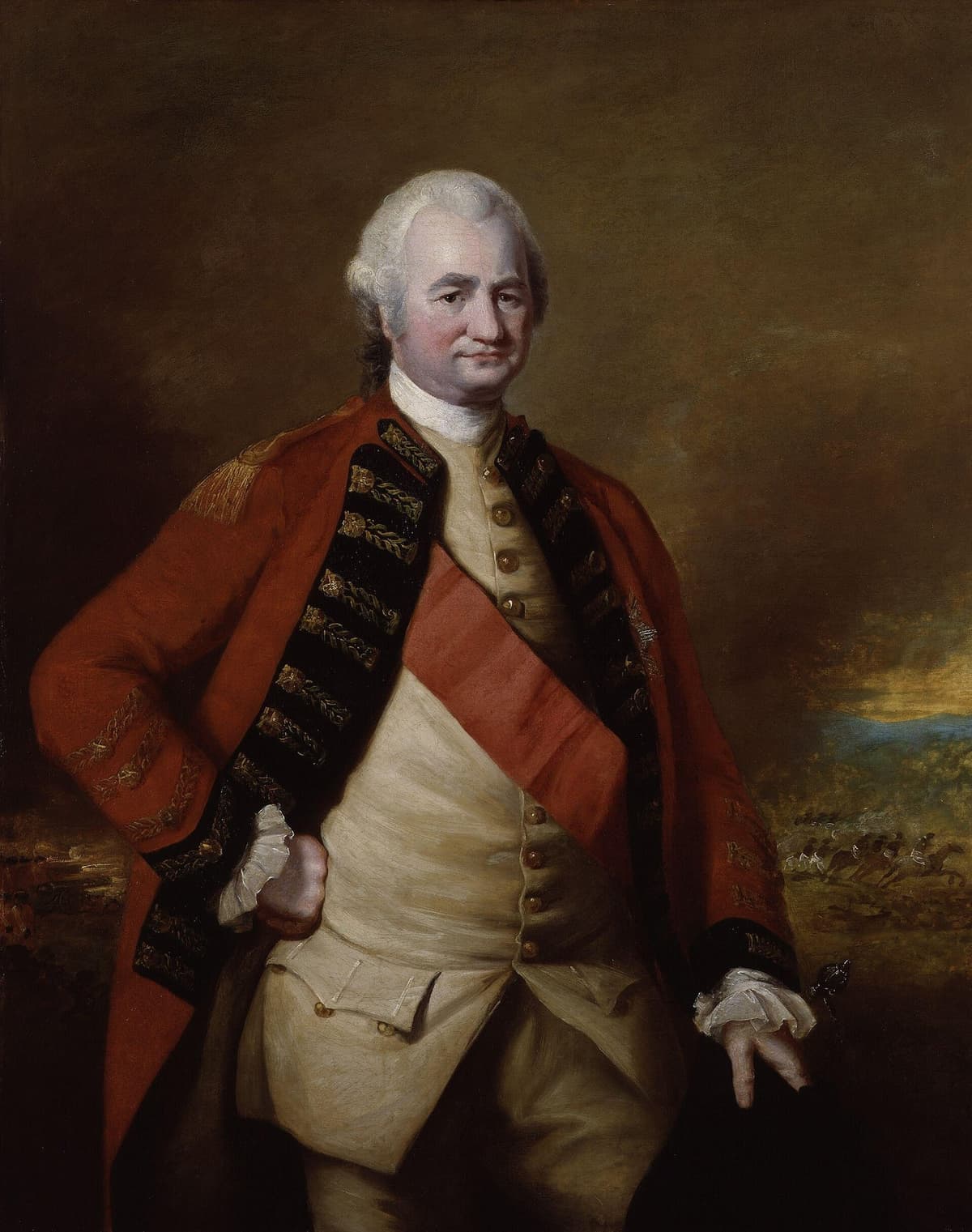
Oil portrait by Nathaniel Dance; the record gives no dateImage: Nathaniel Dance (later Sir Nathaniel Dance-Holland), Public domain, via Wikimedia Commons 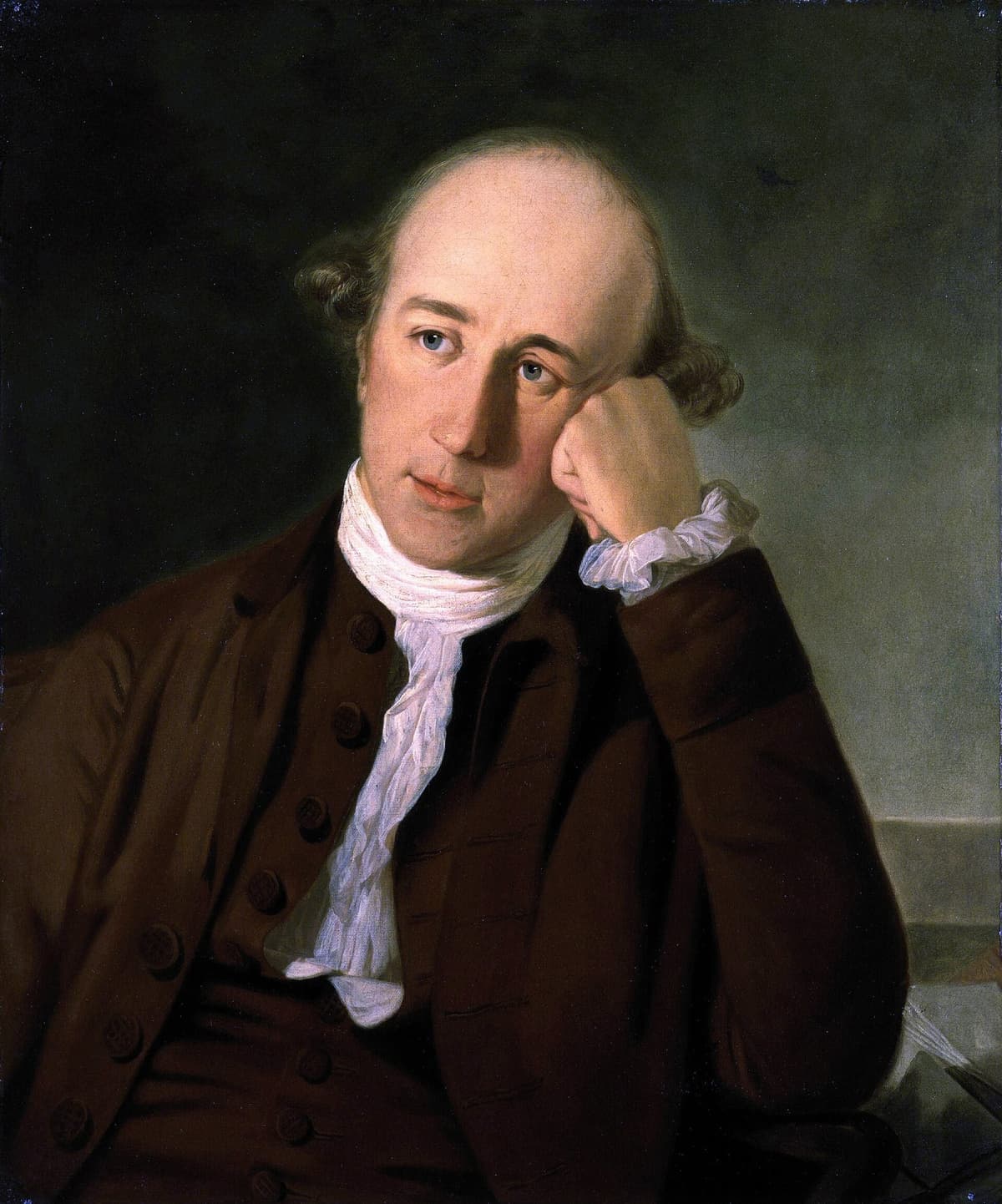
Portrait painted in his lifetime by Tilly Kettle, about 1772Image: Tilly Kettle, Public domain, via Wikimedia Commons Warren Hastings
Governor, then first Governor-General of Fort William in Bengal Governor 1772 to 1774; Governor-General 1774 to 1785
He became governor in 1772 and, under the Regulating Act, Governor-General from 1774 to 1785.176
| Office | Name | Dates |
|---|---|---|
| Governor of Fort William | Robert Clive | 1757 to 1760177 |
| Governor (acting) | John Zephaniah Holwell | 1760178 |
| Governor | Henry Vansittart | 27 July 1760 to 2 December 1764 (the same article says he resigned on 28 November 1764)179 |
| Governor | Robert Clive (second term) | May 1765 to 1767180 |
| Governor | Harry Verelst | 1767 to 1769181 |
| Governor | John Cartier | 1769 to 1772182 |
| Governor | Warren Hastings | 1772 to 1774183 |
| Governor-General of Fort William in Bengal | Warren Hastings | 1774 to 1785184 |
| Governor-General (interim) | Sir John Macpherson | 8 February 1785 to 12 September 1786185 |
| Governor-General | Lord Cornwallis | 12 September 1786 to 10 October 1793186 |
| Governor-General | Sir John Shore | 1793 to 1798187 |
| Governor-General | Lord Wellesley | 1798 to 1805; took charge 18 May 1798188 |
| Governor-General | Marquis Cornwallis (second term) | Took charge 30 July 1805189 |
| Governor-General (provisional) | Sir George Barlow | October 1805 to July 1807; took charge 10 October 1805190 |
| Governor-General | Lord Minto | 1807 to 1813; took charge 31 July 1807191 |
| Governor-General | Lord (Francis Rawdon) Hastings | 1813 to 1823; took charge 4 October 1813192 |
| Governor-General (acting) | John Adam | Took charge 13 January 1823193 |
| Governor-General | Lord Amherst | 1823 to 1828; took charge 1 August 1823194 |
| Governor-General (acting) | W. B. Bayley | 1828; the official list gives 4 July 1828195 |
| Governor-General | Lord William Bentinck | 1828 to 1835; the official list gives 4 March 1828, and 16 June 1834 under the new title196 |
| Governor of Bengal and Governor-General of India (acting) | Sir Charles Metcalfe | March 1835 to March 1836; took charge 20 March 1835197 |
| Governor of Bengal and Governor-General of India | Lord Auckland | 1836 to 1842; took charge 4 March 1836198 |
| Governor of Bengal and Governor-General of India | Lord Ellenborough | February 1842 to June 1844; took charge 28 February 1842199 |
| Governor of Bengal and Governor-General of India (acting) | W. W. Bird ("W.B. Bird" in the official list) | Took charge 15 June 1844200 |
| Governor of Bengal and Governor-General of India | Lord Hardinge | July 1844 to January 1848; took charge 23 July 1844201 |
| Governor of Bengal and Governor-General of India | Lord Dalhousie | Took charge 12 January 1848; Governor of Bengal until 1 May 1854202 |
| Lieutenant-Governor of Bengal | Frederick James Halliday | 1 May 1854203 |
| Lieutenant-Governor | Sir John Peter Grant | 1 May 1859204 |
| Lieutenant-Governor | Sir Cecil Beadon | 23 April 1862205 |
| Lieutenant-Governor | Sir William Grey | 23 April 1867206 |
| Lieutenant-Governor | Sir George Campbell | 1 March 1871207 |
| Lieutenant-Governor | Sir Richard Temple | 9 April 1874208 |
| Lieutenant-Governor | Sir Ashley Eden | 8 January 1877 to 1 May 1877 (as printed)209 |
| Lieutenant-Governor | Sir Steuart Colvin Bayley | 15 July 1879 to 1 December 1879 (as printed)210 |
| Lieutenant-Governor | Sir Augustus Rivers Thompson | 24 April 1882211 |
| Lieutenant-Governor | Horace Abel Cockerell (printed "Clckerell") | 11 August to 17 September 1885212 |
| Lieutenant-Governor | Sir Steuart Colvin Bayley | 2 April 1887213 |
| Lieutenant-Governor | Sir Charles Alfred Elliott | 17 December 1890214 |
| Lieutenant-Governor | Sir Antony Patrick MacDonnell | 30 May to 30 November 1893215 |
| Lieutenant-Governor | Sir Alexander Mackenzie | 18 December 1895 to 7 April 1898 (as printed)216 |
| Lieutenant-Governor | Sir Charles Cecil Stevens | 22 June to 21 December 1897217 |
| Lieutenant-Governor | Sir John Woodburn | 1898218 |
| Lieutenant-Governor (listed by Banglapedia) | Sir B. Fuller | 1905; after the 1905 Partition there were two Lieutenant-Governors, for Bengal and for Eastern Bengal and Assam219 |
| Lieutenant-Governor | Sir Andrew Fraser | 1906 (as printed)220 |
| Lieutenant-Governor | Sir Edward Baker | 1912 (as printed)221 |
| Governor of Bengal | Lord Carmichael of Skirling | 1 April 1912 (Banglapedia: 1912 to 1917)222 |
| Governor | Earl of Ronaldshay | 26 March 1917223 |
| Governor | Earl of Lytton | 28 March 1922; acting governors Sir John Kerr (1925) and Sir Hugh Stephenson (1926)224 |
| Governor | Sir Stanley Jackson | 28 March 1927; acting governor Stephenson (1930)225 |
| Governor | Sir John Anderson | 29 March 1932; acting governor Sir John Woodhead (1934)226 |
| Governor | Lord Brabourne | 27 November 1937; acting governors Sir Robert Neil Reid (1938, 1939) and Woodhead (1939)227 |
| Governor | Sir John Arthur Herbert | 18 November 1939; acting governor Sir Thomas George Rutherford (1943)228 |
| Governor | R. G. Casey | 22 January 1944; acting governor Sir Henry Twynam (1945). Banglapedia calls him "Governor-General of Bengal"229 |
| Governor | Sir Frederick John Burrows | 19 February 1946 to 14 August 1947, the last Governor of undivided Bengal230 |
Source: Banglapedia biographies and "Lieutenant Governor"; Lok Bhavan (Raj Bhavan), West Bengal, lists of past governors.231 Dates for the Governors-General are Banglapedia's terms, with the date of taking charge from the official list where it gives one; the official list has no rows for Hastings, Macpherson, Cornwallis's first term or Shore, and its dates for Bayley and Bentinck in 1828 may be transposed. Banglapedia's Lieutenant-Governor dates mix acting and substantive terms and are given here exactly as it prints them. The list of governors for 1764 to 1765 is left incomplete because no source consulted names the holder.232
Where did Bengal's rulers rule from?
The table below follows the seat of government from Shashanka to the Company. Several of the moves came with a new ruler: Pandua with Ilyas Shah, Tandah with the Karranis, Rajmahal with Man Singh, Murshidabad with Murshid Quli Khan and Calcutta with the Company.233
| Period | Capital | Years |
|---|---|---|
| Shashanka | Karnasuvarna | c. 600 to 625234 |
| Chandras, Varmans and Senas | Vikramapura | Early 10th to early 13th century235 |
| Later Palas | Ramavati | Ramapala to Madanapala236 |
| Lakshmanasena | Nadia | To 1204 or 1205237 |
| Early Muslim rulers | Lakhnauti | 1205 to 1342, with a break in 1206 to 1211238 |
| Fakhruddin Mubarak Shah | Sonargaon | 1338 to 1352239 |
| Ilyas Shahis | Pandua (Firuzabad) | 1342 to c. 1450 or 1457240 |
| Later sultans | Gaur, with Ekdala under Husain Shah | c. 1450s to 1565241 |
| Karranis | Tandah | 1565 to 1576242 |
| Mughal Bengal | Rajmahal (Akbarnagar) | 1595 to 1610243 |
| Mughal Bengal | Dhaka (Jahangirnagar) | 1610 to 1639244 |
| Shah Shuja | Rajmahal | 1639 to 1660245 |
| Mughal Bengal | Dhaka | 1660 to 1717246 |
| Nawabs | Murshidabad | 1717 to 1773247 |
| Company and Crown | Calcutta (Fort William) | From 1773248 |
Source: Banglapedia articles on each city.249
The sequence at a glance
- c. 600Shashanka in power in Gauda, with his capital at Karnasuvarna.250
- c. 750 or c. 756Accession of Gopala I, founder of the Pala dynasty (Majumdar; Banglapedia).251
- 1026Sarnath inscription of Mahipala I, the fixed point of Pala chronology.252
- c. 1097Vijayasena founds Sena rule (Banglapedia; Majumdar gives 1095 or c. 1125).253
- 1204 or early 1205Bakhtiyar Khalji takes Nadia; Lakshmanasena withdraws to Vikramapura.254
- 1338Fakhruddin Mubarak Shah independent at Sonargaon.255
- 1352Shamsuddin Ilyas Shah takes Sonargaon and unites Bengal.256
- 1538Sher Khan defeats Mahmud Shah, the last Husain Shahi sultan.257
- 12 July 1576Battle of Rajmahal; end of the independent sultanate.258
- 1610 (or 1608-09)Islam Khan moves the capital to Dhaka (Jahangirnagar).259
- 1716 or 1717Murshid Quli Khan made subahdar while remaining diwan.260
- 23 June 1757Battle of Palashi (Plassey).261
- 1773Capital moved from Murshidabad to Calcutta.262
- 1 April 1912Carmichael becomes the first Governor of Bengal.263
- 14 August 1947Burrows' governorship of undivided Bengal ends.264
Read the list from top to bottom and one pattern is hard to miss. The rulers before about 1600 are known mainly from objects, copper plates and coins, and almost every one of their dates is an estimate, with "c.", question marks and rival chronologies. The British governors who ruled from Fort William are known from official registers, and for most of them the list can give the day they took charge.265 In this interpretation, the precision of the record rises as Bengal's independence falls. The uncertain dates at the top of the list are not a weakness in the history; they are what is left of rulers whose own records were metal, stone and brick.
Further reading
- R. C. Majumdar, ed., The History of Bengal, vol. 1, Hindu Period (1943): the standard reconstruction of Pala and Sena chronology from inscriptions, with the tables used here.266
- Abdul Momin Chowdhury, Dynastic History of Bengal, c. 750-1200 A.D. (1967): the source of Banglapedia's Pala and Sena dates.267
- Jadunath Sarkar, ed., The History of Bengal, vol. 2, Muslim Period, 1200-1757 (1948): the political narrative of the sultans, subahdars and nawabs, with a coin-based chronology.268
- Abdul Karim, Corpus of the Muslim Coins of Bengal (down to A.D. 1538) (1960): the catalogue of sultanate coinage behind many reign dates.269
- Richard M. Eaton, The Rise of Islam and the Bengal Frontier, 1204-1760 (1993): argues for the gradual, frontier-driven Islamisation of eastern Bengal; its second appendix lists the principal Muslim rulers with dates.270
- Abdul Karim, Murshid Quli Khan and His Times (1963): a biography of the founder of the nawabi regime.271
Questions students and journalists ask
Who was the first independent king of Bengal?
The earliest king of Bengal whose reign can be roughly dated is Shashanka, king of Gauda. Banglapedia calls him the first important king of ancient Bengal and says he is generally believed to have ruled from about 600 to 625 CE. His capital was Karnasuvarna, in what is now Murshidabad district of West Bengal, and he issued his own gold and silver coins, which survive.
How long did the Pala dynasty rule Bengal?
About four centuries. The Palas ruled Bengal and Bihar from the middle of the 8th century to the middle of the 12th, through eighteen generations of kings. Their exact dates are estimates. Majumdar's 1943 chronology counts every reign from one fixed date, Mahipala I's Sarnath inscription of 1026, so Gopala's accession is put at about 750 by Majumdar and about 756 by Banglapedia.
Was Gopala elected king by the people?
Not clearly. The Khalimpur copper plate of his son Dharmapala says the prakritis made Gopala king to end a period of disorder called matsyanyayam. The word prakriti can mean the subjects or the principal officers of a state, and historians are not sure which is meant here. The popular idea that the people elected him is one interpretation of that word.
Who built the Paharpur (Somapura) Buddhist monastery?
Clay seals found at Paharpur name the monastery after the Pala king Dharmapala, and Banglapedia calls it his creation. Tibetan sources, including Taranatha, credit his son Devapala instead, and Banglapedia suggests Devapala may have completed it. The site, now in Naogaon district, Bangladesh, is a UNESCO World Heritage Site.
Who was the last Hindu king of Bengal?
It depends on what is counted. Lakshmanasena lost his capital at Nadia to Bakhtiyar Khalji in 1204 or early 1205, but his sons Vishvarupasena and Keshavasena ruled on for a short time from the Vikramapura area. Two centuries later Raja Ganesha, a Hindu landholder, took the throne at Pandua in 1414 and struck coins in Bengali script; his son Jadu converted to Islam and ruled as Jalaluddin Muhammad Shah.
Who founded the independent Bengal Sultanate?
Two answers are given. Fakhruddin Mubarak Shah founded the earliest independent sultanate in Bengal at Sonargaon in 1338. Shamsuddin Ilyas Shah, who took Lakhnauti in 1342 and Sonargaon in 1352, was the first to rule the whole of Bengal, and a Delhi chronicler called him Shah-i-Bangalah.
Who were the Habshi sultans of Bengal?
They were Abyssinian (Habshi) rulers who held Bengal from Gaur for about six years, from 1487 to 1493, after the palace guard murdered Sultan Jalaluddin Fath Shah. An earlier sultan, Ruknuddin Barbak Shah, had recruited Abyssinian slaves in large numbers. Their number is disputed: Banglapedia lists four rulers, Eaton three. Saifuddin Firuz Shah built the Firuz Minar at Gaur, and the last, Shamsuddin Muzaffar Shah, was overthrown by his minister, who became Alauddin Husain Shah.
When did Dhaka become the capital of Bengal?
Under the Mughal subahdar Islam Khan Chishti, who moved the capital from Rajmahal to Dhaka and renamed it Jahangirnagar. Banglapedia's Dhaka article dates the move to 1610 and its Rajmahal article to 1608-09. The capital went back to Rajmahal under Shah Shuja in 1639, returned to Dhaka under Mir Jumla, and moved to Murshidabad in 1717.
Who was the first Nawab of Bengal?
Murshid Quli Khan is usually called the first, because in 1716 or 1717 he became the first person to hold the posts of subahdar and diwan of Bengal together, and his son-in-law succeeded him. Strictly, though, none of the rulers from Murshid Quli Khan to Siraj ud-Daulah used the title officially; Banglapedia says Mir Jafar, in 1757, was the first installed as Nawab.
Who was the last independent Nawab of Bengal?
Siraj ud-Daulah, the grandson of Alivardi Khan, who ruled from April 1756. He was defeated at Palashi (Plassey) on 23 June 1757 and killed on the night before 3 July 1757. His successor Mir Jafar had agreed a secret treaty with the Company's Calcutta Council before the battle, and the Company later forced him to abdicate.
Notes
- P. K. Bhattacharyya, "Shashanka," Banglapedia: National Encyclopedia of Bangladesh, Dhaka: Asiatic Society of Bangladesh; online edition, accessed 22 November 2026, para. 1, https://en.banglapedia.org/index.php/Shashanka; Muhammad Ansar Ali, "Rajmahal, The battle of," Banglapedia: National Encyclopedia of Bangladesh, Dhaka: Asiatic Society of Bangladesh; online edition, accessed 22 November 2026, https://en.banglapedia.org/index.php/Rajmahal,_The_battle_of; Sushil Chaudhury and K. M. Mohsin, "Sirajuddaula," Banglapedia: National Encyclopedia of Bangladesh, Dhaka: Asiatic Society of Bangladesh; online edition, accessed 22 November 2026, https://en.banglapedia.org/index.php/Sirajuddaula; Lok Bhavan (Raj Bhavan), West Bengal, "Governors of Bengal from 1912," Past Governors, Kolkata: Government of West Bengal / National Informatics Centre, accessed 22 November 2026, https://rajbhavankolkata.gov.in/html/pastgov1912_new.html. ↩
- R. C. Majumdar, The History of Bengal, Vol. 1: Hindu Period, Edited by R. C. Majumdar. Ch. VI, "The Chronology of the Pala Kings", pp. 176-77; ch. VIII, App. I, "The Chronology of the Sena Kings", pp. 230-32. Digitised copy, Internet Archive (Dacca: University of Dacca, 1943), 176-77, https://archive.org/details/in.ernet.dli.2015.99743; Jadunath Sarkar, The History of Bengal, Vol. 2: Muslim Period, 1200-1757, Edited by Jadunath Sarkar. Ch. IV, "Chronology of the First Ilyas Shahi Sultans", pp. 116-17. Digitised copy, Internet Archive (Dacca: University of Dacca, 1948), 116-17, https://archive.org/details/history-of-bengal-2-ed.-jadunath-sarkar-1948; Ranabir Chakravarti and Md Rezaul Karim, "Coins," Banglapedia: National Encyclopedia of Bangladesh, Dhaka: Asiatic Society of Bangladesh; online edition, accessed 22 November 2026, https://en.banglapedia.org/index.php/Coins. ↩
- Bhattacharyya, "Shashanka", para. 1. ↩
- Majumdar, History of Bengal, vol. 1, 176-77. ↩
- A. M. Chowdhury, "Pala Dynasty," Banglapedia: National Encyclopedia of Bangladesh, Dhaka: Asiatic Society of Bangladesh; online edition, accessed 22 November 2026, para. 1, https://en.banglapedia.org/index.php/Pala_Dynasty. ↩
- A. B. M. Shamsuddin Ahmed, "Iliyas Shah," Banglapedia: National Encyclopedia of Bangladesh, Dhaka: Asiatic Society of Bangladesh; online edition, accessed 22 November 2026, paras 1-2, https://en.banglapedia.org/index.php/Iliyas_Shah. ↩
- Ali, "Rajmahal, The battle of". ↩
- Chaudhury and Mohsin, "Sirajuddaula". ↩
- Majumdar, History of Bengal, vol. 1, 176-77; Bhattacharyya, "Shashanka"; Chowdhury, "Pala Dynasty"; Ahmed, "Iliyas Shah"; Ali, "Rajmahal, The battle of"; Chaudhury and Mohsin, "Sirajuddaula". ↩
- Majumdar, History of Bengal, vol. 1, 176-77. ↩
- Sarkar, History of Bengal, vol. 2, 116-17; Chakravarti and Karim, "Coins". ↩
- Chakravarti and Karim, "Coins". ↩
- Chakravarti and Karim, "Coins". ↩
- Richard M. Eaton, The Rise of Islam and the Bengal Frontier, 1204-1760, Appendix 2, "Principal Muslim Rulers of Bengal". UC Press E-Books Collection (Berkeley: University of California Press, 1993), http://ark.cdlib.org/ark:/13030/ft067n99v9; Majumdar, History of Bengal, vol. 1; Sarkar, History of Bengal, vol. 2; Sirajul Islam, "Subahdar," Banglapedia: National Encyclopedia of Bangladesh, Including the table "Chronology of Bengal Subahdars (1575-1770 AD)". Dhaka: Asiatic Society of Bangladesh; online edition, accessed 22 November 2026, https://en.banglapedia.org/index.php/Subahdar. ↩
- Bhattacharyya, "Shashanka", para. 1. ↩
- Bhattacharyya, "Shashanka", para. 2; Suchandra Ghosh, "Karnasuvarna," Banglapedia: National Encyclopedia of Bangladesh, Dhaka: Asiatic Society of Bangladesh; online edition, accessed 22 November 2026, https://en.banglapedia.org/index.php/Karnasuvarna. ↩
- Bhattacharyya, "Shashanka", para. 1. ↩
- Chakravarti and Karim, "Coins". ↩
- Bhattacharyya, "Shashanka", paras 8-13. ↩
- Bhattacharyya, "Shashanka", para. 11. ↩
- A. M. Chowdhury, "Gopala," Banglapedia: National Encyclopedia of Bangladesh, Dhaka: Asiatic Society of Bangladesh; online edition, accessed 22 November 2026, para. 1, https://en.banglapedia.org/index.php/Gopala; Banglapedia, "History," Banglapedia: National Encyclopedia of Bangladesh, Multi-author survey (sections by A. M. Chowdhury, A. B. M. Shamsuddin Ahmed, Abdul Karim, Sirajul Islam and others). Dhaka: Asiatic Society of Bangladesh; online edition, accessed 22 November 2026, https://en.banglapedia.org/index.php/History. ↩
- Bhattacharyya, "Shashanka"; Ghosh, "Karnasuvarna"; Chakravarti and Karim, "Coins". ↩
- Chowdhury, "Pala Dynasty", para. 1. ↩
- A. M. Chowdhury, "Dharmapala," Banglapedia: National Encyclopedia of Bangladesh, Dhaka: Asiatic Society of Bangladesh; online edition, accessed 22 November 2026, https://en.banglapedia.org/index.php/Dharmapala; Majumdar, History of Bengal, vol. 1, 176-77. ↩
- A. M. Chowdhury, "Ramapala," Banglapedia: National Encyclopedia of Bangladesh, Dhaka: Asiatic Society of Bangladesh; online edition, accessed 22 November 2026, paras 2-3, https://en.banglapedia.org/index.php/Ramapala; Chowdhury, "Pala Dynasty". ↩
- Chowdhury, "Gopala", paras 2-3. ↩
- Chowdhury, "Gopala", paras 2-3. ↩
- Chowdhury, "Dharmapala", paras 3, 8. ↩
- A. M. Chowdhury, "Somapura Mahavihara," Banglapedia: National Encyclopedia of Bangladesh, Dhaka: Asiatic Society of Bangladesh; online edition, accessed 22 November 2026, https://en.banglapedia.org/index.php/Somapura_Mahavihara. ↩
- A. M. Chowdhury, "Devapala," Banglapedia: National Encyclopedia of Bangladesh, Dhaka: Asiatic Society of Bangladesh; online edition, accessed 22 November 2026, para. 3, https://en.banglapedia.org/index.php/Devapala. ↩
- Chowdhury, "Somapura Mahavihara". ↩
- Chowdhury, "Pala Dynasty", para. 4. ↩
- Majumdar, History of Bengal, vol. 1, 176-77. ↩
- Chowdhury, "Pala Dynasty", para. 4. ↩
- Majumdar, History of Bengal, vol. 1, 176-77. ↩
- A. M. Chowdhury, "Mahipala I," Banglapedia: National Encyclopedia of Bangladesh, Dhaka: Asiatic Society of Bangladesh; online edition, accessed 22 November 2026, paras 1, 6, https://en.banglapedia.org/index.php/Mahipala_I. ↩
- Chowdhury, "Mahipala I", para. 5; Majumdar, History of Bengal, vol. 1, 176-77. ↩
- Chowdhury, "Ramapala", paras 2-3; Chitta Ranjan Misra, "Vijayasena," Banglapedia: National Encyclopedia of Bangladesh, Dhaka: Asiatic Society of Bangladesh; online edition, accessed 22 November 2026, para. 1, https://en.banglapedia.org/index.php/Vijayasena. ↩
- Chowdhury, "Pala Dynasty"; Chowdhury, "Ramapala". ↩
- Chowdhury, "Pala Dynasty", para. 8. ↩
- Chowdhury, "Ramapala", paras 2-3. ↩
- Chowdhury, "Gopala", paras 2-3. ↩
- Bhattacharyya, "Shashanka", paras 8-13. ↩
- Chitta Ranjan Misra, "Vallalasena," Banglapedia: National Encyclopedia of Bangladesh, Dhaka: Asiatic Society of Bangladesh; online edition, accessed 22 November 2026, para. 3, https://en.banglapedia.org/index.php/Vallalasena. ↩
- Chakravarti and Karim, "Coins". ↩
- Majumdar, History of Bengal, vol. 1, 176-77. ↩
- Majumdar, History of Bengal, vol. 1, 176-77; Chowdhury, "Pala Dynasty"; Chowdhury, "Gopala"; Chowdhury, "Dharmapala"; Chowdhury, "Devapala"; Chowdhury, "Mahipala I"; Chowdhury, "Ramapala". ↩
- Chowdhury, "Pala Dynasty", para. 6. ↩
- A. M. Chowdhury, "Chandra Dynasty, The," Banglapedia: National Encyclopedia of Bangladesh, Dhaka: Asiatic Society of Bangladesh; online edition, accessed 22 November 2026, para. 1, https://en.banglapedia.org/index.php/Chandra_Dynasty,_The. ↩
- Chowdhury, "Chandra Dynasty, The", para. 2. ↩
- Chowdhury, "Chandra Dynasty, The", paras 2-3; A. M. Chowdhury, "Vikramapura," Banglapedia: National Encyclopedia of Bangladesh, Dhaka: Asiatic Society of Bangladesh; online edition, accessed 22 November 2026, https://en.banglapedia.org/index.php/Vikramapura. ↩
- Chowdhury, "Chandra Dynasty, The", para. 2; Aksadul Alam, "Trailokyachandra," Banglapedia: National Encyclopedia of Bangladesh, Dhaka: Asiatic Society of Bangladesh; online edition, accessed 22 November 2026, https://en.banglapedia.org/index.php/Trailokyachandra. ↩
- Chowdhury, "Chandra Dynasty, The"; Alam, "Trailokyachandra". ↩
- Chowdhury, "Chandra Dynasty, The", paras 2-3. ↩
- Chowdhury, "Vikramapura". ↩
- Chowdhury, "Chandra Dynasty, The". ↩
- Chowdhury, "Chandra Dynasty, The". ↩
- Chowdhury, "Mahipala I", para. 5. ↩
- Chowdhury, "Chandra Dynasty, The"; Aksadul Alam, "Govindachandra," Banglapedia: National Encyclopedia of Bangladesh, Dhaka: Asiatic Society of Bangladesh; online edition, accessed 22 November 2026, https://en.banglapedia.org/index.php/Govindachandra. ↩
- Chowdhury, "Chandra Dynasty, The"; Alam, "Trailokyachandra"; Alam, "Govindachandra"; Chowdhury, "Vikramapura". ↩
- A. M. Chowdhury, "Sena Dynasty," Banglapedia: National Encyclopedia of Bangladesh, Dhaka: Asiatic Society of Bangladesh; online edition, accessed 22 November 2026, paras 2-3, https://en.banglapedia.org/index.php/Sena_Dynasty. ↩
- Chowdhury, "Sena Dynasty", para. 1; Banglapedia, "History". ↩
- Chowdhury, "Sena Dynasty"; Banglapedia, "History"; Majumdar, History of Bengal, vol. 1, 230-32. ↩
- Chowdhury, "Vikramapura"; Md. Akhtaruzzaman, "Nadia," Banglapedia: National Encyclopedia of Bangladesh, Dhaka: Asiatic Society of Bangladesh; online edition, accessed 22 November 2026, https://en.banglapedia.org/index.php/Nadia. ↩
- Eaton, Rise of Islam and the Bengal Frontier. ↩
- Misra, "Vijayasena", para. 1. ↩
- Aksadul Alam, "Deopara Prashasti," Banglapedia: National Encyclopedia of Bangladesh, Dhaka: Asiatic Society of Bangladesh; online edition, accessed 22 November 2026, https://en.banglapedia.org/index.php/Deopara_Prashasti. ↩
- Misra, "Vallalasena", para. 3. ↩
- Chitta Ranjan Misra, "Laksmanasena," Banglapedia: National Encyclopedia of Bangladesh, Dhaka: Asiatic Society of Bangladesh; online edition, accessed 22 November 2026, para. 2, https://en.banglapedia.org/index.php/Laksmanasena. ↩
- Akhtaruzzaman, "Nadia"; Chowdhury, "Vikramapura". ↩
- Chowdhury, "Vikramapura"; Banglapedia, "History"; Majumdar, History of Bengal, vol. 1, 230-32. ↩
- Chowdhury, "Vikramapura"; Majumdar, History of Bengal, vol. 1, 230-32. ↩
- Majumdar, History of Bengal, vol. 1, 230-32; Chowdhury, "Vikramapura"; Chowdhury, "Sena Dynasty"; Misra, "Vijayasena"; Misra, "Vallalasena"; Misra, "Laksmanasena"; Akhtaruzzaman, "Nadia". ↩
- Md. Akhtaruzzaman, "Lakhnauti," Banglapedia: National Encyclopedia of Bangladesh, Dhaka: Asiatic Society of Bangladesh; online edition, accessed 22 November 2026, https://en.banglapedia.org/index.php/Lakhnauti. ↩
- A. B. M. Shamsuddin Ahmed, "Alauddin Ali Shah," Banglapedia: National Encyclopedia of Bangladesh, Dhaka: Asiatic Society of Bangladesh; online edition, accessed 22 November 2026, para. 3, https://en.banglapedia.org/index.php/Alauddin_Ali_Shah. ↩
- Ahmed, "Iliyas Shah", paras 1-2; Ali, "Rajmahal, The battle of". ↩
- Sarkar, History of Bengal, vol. 2, 116-17; Chakravarti and Karim, "Coins". ↩
- Muazzam Hussain Khan, "Fakhruddin Mubarak Shah," Banglapedia: National Encyclopedia of Bangladesh, Dhaka: Asiatic Society of Bangladesh; online edition, accessed 22 November 2026, paras 1-2, https://en.banglapedia.org/index.php/Fakhruddin_Mubarak_Shah. ↩
- Muazzam Hussain Khan, "Ikhtiyaruddin Ghazi Shah," Banglapedia: National Encyclopedia of Bangladesh, Dhaka: Asiatic Society of Bangladesh; online edition, accessed 22 November 2026, https://en.banglapedia.org/index.php/Ikhtiyaruddin_Ghazi_Shah. ↩
- Ahmed, "Alauddin Ali Shah", para. 2; Ahmed, "Iliyas Shah", paras 1-2. ↩
- Ahmed, "Iliyas Shah", paras 1-2; Md. Akhtaruzzaman, "Pandua," Banglapedia: National Encyclopedia of Bangladesh, Dhaka: Asiatic Society of Bangladesh; online edition, accessed 22 November 2026, https://en.banglapedia.org/index.php/Pandua; Akhtaruzzaman, "Lakhnauti". ↩
- Eaton, Rise of Islam and the Bengal Frontier, ch. 2. ↩
- M. A. Taher, "Sikandar Shah," Banglapedia: National Encyclopedia of Bangladesh, Dhaka: Asiatic Society of Bangladesh; online edition, accessed 22 November 2026, para. 2, https://en.banglapedia.org/index.php/Sikandar_Shah. ↩
- A. B. M. Husain, "Adina Mosque," Banglapedia: National Encyclopedia of Bangladesh, Dhaka: Asiatic Society of Bangladesh; online edition, accessed 22 November 2026, https://en.banglapedia.org/index.php/Adina_Mosque. ↩
- Sarkar, History of Bengal, vol. 2, 117-18. ↩
- M. A. Taher, "Saifuddin Hamza Shah," Banglapedia: National Encyclopedia of Bangladesh, Dhaka: Asiatic Society of Bangladesh; online edition, accessed 22 November 2026, https://en.banglapedia.org/index.php/Saifuddin_Hamza_Shah. ↩
- Taher, "Saifuddin Hamza Shah"; Eaton, Rise of Islam and the Bengal Frontier. ↩
- M. A. Taher, "Shihabuddin Bayazid Shah," Banglapedia: National Encyclopedia of Bangladesh, Dhaka: Asiatic Society of Bangladesh; online edition, accessed 22 November 2026, https://en.banglapedia.org/index.php/Shihabuddin_Bayazid_Shah. ↩
- Taher, "Shihabuddin Bayazid Shah"; Eaton, Rise of Islam and the Bengal Frontier. ↩
- Husain, "Adina Mosque". ↩
- Chakravarti and Karim, "Coins"; M. A. Taher, "Raja Ganesha," Banglapedia: National Encyclopedia of Bangladesh, Dhaka: Asiatic Society of Bangladesh; online edition, accessed 22 November 2026, https://en.banglapedia.org/index.php/Raja_Ganesha. ↩
- Taher, "Raja Ganesha", para. 2. ↩
- Chakravarti and Karim, "Coins". ↩
- M. A. Taher, "Jalaluddin Muhammad Shah," Banglapedia: National Encyclopedia of Bangladesh, Dhaka: Asiatic Society of Bangladesh; online edition, accessed 22 November 2026, para. 1, https://en.banglapedia.org/index.php/Jalaluddin_Muhammad_Shah; Banglapedia, "History"; Chakravarti and Karim, "Coins". ↩
- Chakravarti and Karim, "Coins". ↩
- M. A. Taher, "Shamsuddin Ahmad Shah," Banglapedia: National Encyclopedia of Bangladesh, Dhaka: Asiatic Society of Bangladesh; online edition, accessed 22 November 2026, https://en.banglapedia.org/index.php/Shamsuddin_Ahmad_Shah; Banglapedia, "History". ↩
- A. B. M. Husain, "Eklakhi Mausoleum," Banglapedia: National Encyclopedia of Bangladesh, Dhaka: Asiatic Society of Bangladesh; online edition, accessed 22 November 2026, https://en.banglapedia.org/index.php/Eklakhi_Mausoleum. ↩
- A. B. M. Shamsuddin Ahmed, "Nasiruddin Mahmud Shah," Banglapedia: National Encyclopedia of Bangladesh, Dhaka: Asiatic Society of Bangladesh; online edition, accessed 22 November 2026, para. 1, https://en.banglapedia.org/index.php/Nasiruddin_Mahmud_Shah. ↩
- Aniruddha Ray, "Gaur, City," Banglapedia: National Encyclopedia of Bangladesh, Dhaka: Asiatic Society of Bangladesh; online edition, accessed 22 November 2026, https://en.banglapedia.org/index.php/Gaur,_City. ↩
- A. B. M. Shamsuddin Ahmed, "Ruknuddin Barbak Shah," Banglapedia: National Encyclopedia of Bangladesh, Dhaka: Asiatic Society of Bangladesh; online edition, accessed 22 November 2026, https://en.banglapedia.org/index.php/Ruknuddin_Barbak_Shah; Banglapedia, "History". ↩
- A. B. M. Shamsuddin Ahmed, "Shamsuddin Yusuf Shah," Banglapedia: National Encyclopedia of Bangladesh, Dhaka: Asiatic Society of Bangladesh; online edition, accessed 22 November 2026, https://en.banglapedia.org/index.php/Shamsuddin_Yusuf_Shah. ↩
- A. B. M. Shamsuddin Ahmed, "Jalaluddin Fath Shah," Banglapedia: National Encyclopedia of Bangladesh, Dhaka: Asiatic Society of Bangladesh; online edition, accessed 22 November 2026, https://en.banglapedia.org/index.php/Jalaluddin_Fath_Shah; Banglapedia, "History". ↩
- Banglapedia, "History". ↩
- Banglapedia, "History"; Chakravarti and Karim, "Coins"; Eaton, Rise of Islam and the Bengal Frontier. ↩
- Banglapedia, "History"; Chakravarti and Karim, "Coins". ↩
- A. B. M. Husain, "Firuz Minar," Banglapedia: National Encyclopedia of Bangladesh, Dhaka: Asiatic Society of Bangladesh; online edition, accessed 22 November 2026, https://en.banglapedia.org/index.php/Firuz_Minar. ↩
- Banglapedia, "History"; A. M. Chowdhury, "Husain Shah," Banglapedia: National Encyclopedia of Bangladesh, Dhaka: Asiatic Society of Bangladesh; online edition, accessed 22 November 2026, https://en.banglapedia.org/index.php/Husain_Shah. ↩
- Husain, "Firuz Minar". ↩
- Chowdhury, "Husain Shah". ↩
- Chakravarti and Karim, "Coins"; A. B. M. Shamsuddin Ahmed, "Ekdala," Banglapedia: National Encyclopedia of Bangladesh, Dhaka: Asiatic Society of Bangladesh; online edition, accessed 22 November 2026, https://en.banglapedia.org/index.php/Ekdala. ↩
- A. M. Chowdhury, "Nusrat Shah," Banglapedia: National Encyclopedia of Bangladesh, Dhaka: Asiatic Society of Bangladesh; online edition, accessed 22 November 2026, https://en.banglapedia.org/index.php/Nusrat_Shah. ↩
- A. B. M. Husain, "Bara Sona Mosque," Banglapedia: National Encyclopedia of Bangladesh, Dhaka: Asiatic Society of Bangladesh; online edition, accessed 22 November 2026, https://en.banglapedia.org/index.php/Bara_Sona_Mosque. ↩
- A. B. M. Shamsuddin Ahmed, "Ghiyasuddin Mahmud Shah," Banglapedia: National Encyclopedia of Bangladesh, Dhaka: Asiatic Society of Bangladesh; online edition, accessed 22 November 2026, https://en.banglapedia.org/index.php/Ghiyasuddin_Mahmud_Shah; Muhammad Ansar Ali, "Sher Shah," Banglapedia: National Encyclopedia of Bangladesh, Dhaka: Asiatic Society of Bangladesh; online edition, accessed 22 November 2026, https://en.banglapedia.org/index.php/Sher_Shah. ↩
- Ali, "Sher Shah". ↩
- Banglapedia, "History". ↩
- Banglapedia, "History"; Chakravarti and Karim, "Coins". ↩
- Chakravarti and Karim, "Coins". ↩
- Chakravarti and Karim, "Coins". ↩
- Chakravarti and Karim, "Coins". ↩
- Banglapedia, "History"; A. B. M. Shamsuddin Ahmed, "Karrani Rule," Banglapedia: National Encyclopedia of Bangladesh, Dhaka: Asiatic Society of Bangladesh; online edition, accessed 22 November 2026, https://en.banglapedia.org/index.php/Karrani_Rule. ↩
- A. B. M. Shamsuddin Ahmed, "Sulaiman Karrani," Banglapedia: National Encyclopedia of Bangladesh, Dhaka: Asiatic Society of Bangladesh; online edition, accessed 22 November 2026, https://en.banglapedia.org/index.php/Sulaiman_Karrani; Md. Akhtaruzzaman, "Tandah," Banglapedia: National Encyclopedia of Bangladesh, Dhaka: Asiatic Society of Bangladesh; online edition, accessed 22 November 2026, https://en.banglapedia.org/index.php/Tandah. ↩
- Chakravarti and Karim, "Coins". ↩
- A. B. M. Shamsuddin Ahmed, "Bayazid Karrani," Banglapedia: National Encyclopedia of Bangladesh, Dhaka: Asiatic Society of Bangladesh; online edition, accessed 22 November 2026, https://en.banglapedia.org/index.php/Bayazid_Karrani. ↩
- Chakravarti and Karim, "Coins". ↩
- Ali, "Rajmahal, The battle of". ↩
- Khan, "Fakhruddin Mubarak Shah"; Ahmed, "Iliyas Shah". ↩
- Sarkar, History of Bengal, vol. 2, 116-17; Ahmed, "Iliyas Shah"; Taher, "Sikandar Shah". ↩
- Taher, "Jalaluddin Muhammad Shah"; Akhtaruzzaman, "Pandua"; Ray, "Gaur, City". ↩
- Banglapedia, "History"; Eaton, Rise of Islam and the Bengal Frontier. ↩
- Chakravarti and Karim, "Coins"; Ali, "Rajmahal, The battle of". ↩
- Eaton, Rise of Islam and the Bengal Frontier; Banglapedia, "History"; Chakravarti and Karim, "Coins"; Khan, "Fakhruddin Mubarak Shah"; Khan, "Ikhtiyaruddin Ghazi Shah"; Ahmed, "Alauddin Ali Shah"; Ahmed, "Iliyas Shah"; Taher, "Sikandar Shah"; A. B. M. Shamsuddin Ahmed, "Ghiyasuddin Azam Shah," Banglapedia: National Encyclopedia of Bangladesh, Dhaka: Asiatic Society of Bangladesh; online edition, accessed 22 November 2026, https://en.banglapedia.org/index.php/Ghiyasuddin_Azam_Shah; Taher, "Saifuddin Hamza Shah"; A. B. M. Shamsuddin Ahmed, "Muhammad Shah Bin Hamzah Shah," Banglapedia: National Encyclopedia of Bangladesh, Dhaka: Asiatic Society of Bangladesh; online edition, accessed 22 November 2026, https://en.banglapedia.org/index.php/Muhammad_Shah_Bin_Hamzah_Shah; Taher, "Shihabuddin Bayazid Shah"; M. A. Taher, "Alauddin Firuz Shah," Banglapedia: National Encyclopedia of Bangladesh, Dhaka: Asiatic Society of Bangladesh; online edition, accessed 22 November 2026, https://en.banglapedia.org/index.php/Alauddin_Firuz_Shah; Taher, "Raja Ganesha"; Taher, "Jalaluddin Muhammad Shah"; Taher, "Shamsuddin Ahmad Shah"; Ahmed, "Nasiruddin Mahmud Shah"; Ahmed, "Ruknuddin Barbak Shah"; Ahmed, "Shamsuddin Yusuf Shah"; A. B. M. Shamsuddin Ahmed, "Sikandar Shah II," Banglapedia: National Encyclopedia of Bangladesh, Dhaka: Asiatic Society of Bangladesh; online edition, accessed 22 November 2026, https://en.banglapedia.org/index.php/Sikandar_Shah_II; Ahmed, "Jalaluddin Fath Shah"; Chowdhury, "Husain Shah"; Chowdhury, "Nusrat Shah"; Ahmed, "Ghiyasuddin Mahmud Shah"; Ali, "Sher Shah"; Ahmed, "Karrani Rule"; Ahmed, "Sulaiman Karrani"; Ahmed, "Bayazid Karrani"; A. B. M. Shamsuddin Ahmed, "Daud Khan Karrani," Banglapedia: National Encyclopedia of Bangladesh, Dhaka: Asiatic Society of Bangladesh; online edition, accessed 22 November 2026, https://en.banglapedia.org/index.php/Daud_Khan_Karrani; Ali, "Rajmahal, The battle of"; Akhtaruzzaman, "Pandua"; Ray, "Gaur, City"; Ahmed, "Ekdala"; Akhtaruzzaman, "Tandah". ↩
- Sarkar, History of Bengal, vol. 2, 116-17. ↩
- Islam, "Subahdar", para. 1. ↩
- Islam, "Subahdar". ↩
- Islam, "Subahdar". ↩
- A. A. Sheikh Md Asrarul Hoque Chisti, "Mansingh, Raja," Banglapedia: National Encyclopedia of Bangladesh, Dhaka: Asiatic Society of Bangladesh; online edition, accessed 22 November 2026, https://en.banglapedia.org/index.php/Mansingh,_Raja; A. M. Chowdhury, "Dhaka," Banglapedia: National Encyclopedia of Bangladesh, Dhaka: Asiatic Society of Bangladesh; online edition, accessed 22 November 2026, https://en.banglapedia.org/index.php/Dhaka; Md. Akhtaruzzaman, "Rajmahal," Banglapedia: National Encyclopedia of Bangladesh, Dhaka: Asiatic Society of Bangladesh; online edition, accessed 22 November 2026, https://en.banglapedia.org/index.php/Rajmahal. ↩
- Islam, "Subahdar"; Eaton, Rise of Islam and the Bengal Frontier. ↩
- Chisti, "Mansingh, Raja". ↩
- Chisti, "Mansingh, Raja"; Akhtaruzzaman, "Rajmahal". ↩
- Abdul Karim, "Islam Khan Chisti," Banglapedia: National Encyclopedia of Bangladesh, Dhaka: Asiatic Society of Bangladesh; online edition, accessed 22 November 2026, https://en.banglapedia.org/index.php/Islam_Khan_Chisti. ↩
- Chowdhury, "Dhaka"; Akhtaruzzaman, "Rajmahal". ↩
- Muazzam Hussain Khan, "Ibrahim Khan Fath-i-Jang," Banglapedia: National Encyclopedia of Bangladesh, Dhaka: Asiatic Society of Bangladesh; online edition, accessed 22 November 2026, https://en.banglapedia.org/index.php/Ibrahim_Khan_Fath-i-Jang. ↩
- K. M. Karim, "Qasim Khan Jwini," Banglapedia: National Encyclopedia of Bangladesh, Dhaka: Asiatic Society of Bangladesh; online edition, accessed 22 November 2026, https://en.banglapedia.org/index.php/Qasim_Khan_Jwini. ↩
- Abdul Karim, "Shah Shuja," Banglapedia: National Encyclopedia of Bangladesh, Dhaka: Asiatic Society of Bangladesh; online edition, accessed 22 November 2026, https://en.banglapedia.org/index.php/Shah_Shuja; Akhtaruzzaman, "Rajmahal". ↩
- Ayesha Begum, "Bara Katra," Banglapedia: National Encyclopedia of Bangladesh, Dhaka: Asiatic Society of Bangladesh; online edition, accessed 22 November 2026, https://en.banglapedia.org/index.php/Bara_Katra. ↩
- Abdul Karim, "Mir Jumla," Banglapedia: National Encyclopedia of Bangladesh, Dhaka: Asiatic Society of Bangladesh; online edition, accessed 22 November 2026, https://en.banglapedia.org/index.php/Mir_Jumla; Akhtaruzzaman, "Rajmahal". ↩
- Abdul Karim, "Shaista Khan," Banglapedia: National Encyclopedia of Bangladesh, Dhaka: Asiatic Society of Bangladesh; online edition, accessed 22 November 2026, https://en.banglapedia.org/index.php/Shaista_Khan. ↩
- Abdul Karim, "Muhammad Azam, Prince," Banglapedia: National Encyclopedia of Bangladesh, Dhaka: Asiatic Society of Bangladesh; online edition, accessed 22 November 2026, https://en.banglapedia.org/index.php/Muhammad_Azam,_Prince; Habibur Rahman, "Lalbagh Fort," Banglapedia: National Encyclopedia of Bangladesh, Dhaka: Asiatic Society of Bangladesh; online edition, accessed 22 November 2026, https://en.banglapedia.org/index.php/Lalbagh_Fort. ↩
- Anjali Chatterjee, "Azim-us-Shan," Banglapedia: National Encyclopedia of Bangladesh, Dhaka: Asiatic Society of Bangladesh; online edition, accessed 22 November 2026, https://en.banglapedia.org/index.php/Azim-us-Shan; Sirajul Islam, "Nawab," Banglapedia: National Encyclopedia of Bangladesh, Dhaka: Asiatic Society of Bangladesh; online edition, accessed 22 November 2026, https://en.banglapedia.org/index.php/Nawab. ↩
- Islam, "Subahdar"; Eaton, Rise of Islam and the Bengal Frontier; Akhtaruzzaman, "Tandah"; Chisti, "Mansingh, Raja"; Karim, "Islam Khan Chisti"; Chowdhury, "Dhaka"; Akhtaruzzaman, "Rajmahal"; Karim, "Shah Shuja"; Karim, "Mir Jumla"; Karim, "Shaista Khan"; Chatterjee, "Azim-us-Shan"; K. M. Mohsin, "Murshidabad," Banglapedia: National Encyclopedia of Bangladesh, Dhaka: Asiatic Society of Bangladesh; online edition, accessed 22 November 2026, https://en.banglapedia.org/index.php/Murshidabad; K. M. Karim, "Qasim Khan Chisti," Banglapedia: National Encyclopedia of Bangladesh, Dhaka: Asiatic Society of Bangladesh; online edition, accessed 22 November 2026, https://en.banglapedia.org/index.php/Qasim_Khan_Chisti; Karim, "Muhammad Azam, Prince"; Khan, "Ibrahim Khan Fath-i-Jang"; Karim, "Qasim Khan Jwini"; K. M. Karim, "Islam Khan Mashhadi," Banglapedia: National Encyclopedia of Bangladesh, Dhaka: Asiatic Society of Bangladesh; online edition, accessed 22 November 2026, https://en.banglapedia.org/index.php/Islam_Khan_Mashhadi; Anjali Chatterjee, "Ibrahim Khan," Banglapedia: National Encyclopedia of Bangladesh, Dhaka: Asiatic Society of Bangladesh; online edition, accessed 22 November 2026, https://en.banglapedia.org/index.php/Ibrahim_Khan. ↩
- Islam, "Subahdar". ↩
- Islam, "Nawab", paras 6-8. ↩
- Islam, "Nawab", para. 4; K. M. Karim, "Shujauddin Muhammad Khan," Banglapedia: National Encyclopedia of Bangladesh, Dhaka: Asiatic Society of Bangladesh; online edition, accessed 22 November 2026, https://en.banglapedia.org/index.php/Shujauddin_Muhammad_Khan. ↩
- Mohsin, "Murshidabad". ↩
- Abdul Karim, "Murshid Quli Khan," Banglapedia: National Encyclopedia of Bangladesh, Dhaka: Asiatic Society of Bangladesh; online edition, accessed 22 November 2026, https://en.banglapedia.org/index.php/Murshid_Quli_Khan; Islam, "Nawab", para. 4. ↩
- Ayesha Begum, "Katra Mosque, Murshidabad," Banglapedia: National Encyclopedia of Bangladesh, Dhaka: Asiatic Society of Bangladesh; online edition, accessed 22 November 2026, https://en.banglapedia.org/index.php/Katra_Mosque,_Murshidabad. ↩
- Karim, "Shujauddin Muhammad Khan". ↩
- Islam, "Nawab". ↩
- K. M. Karim, "Sarfaraz Khan," Banglapedia: National Encyclopedia of Bangladesh, Dhaka: Asiatic Society of Bangladesh; online edition, accessed 22 November 2026, https://en.banglapedia.org/index.php/Sarfaraz_Khan; Mohammad Shah, "Alivardi Khan," Banglapedia: National Encyclopedia of Bangladesh, Dhaka: Asiatic Society of Bangladesh; online edition, accessed 22 November 2026, https://en.banglapedia.org/index.php/Alivardi_Khan. ↩
- Shah, "Alivardi Khan"; Banglapedia, "History". ↩
- Shah, "Alivardi Khan"; Chaudhury and Mohsin, "Sirajuddaula". ↩
- Chaudhury and Mohsin, "Sirajuddaula". ↩
- Eaton, Rise of Islam and the Bengal Frontier; Islam, "Subahdar"; Islam, "Nawab"; Karim, "Murshid Quli Khan"; Karim, "Shujauddin Muhammad Khan"; Karim, "Sarfaraz Khan"; Shah, "Alivardi Khan"; Chaudhury and Mohsin, "Sirajuddaula". ↩
- Islam, "Nawab"; Karim, "Murshid Quli Khan"; Mohsin, "Murshidabad"; Begum, "Katra Mosque, Murshidabad". ↩
- Mohammad Shah, "Mir Jafar Ali Khan," Banglapedia: National Encyclopedia of Bangladesh, Dhaka: Asiatic Society of Bangladesh; online edition, accessed 22 November 2026, https://en.banglapedia.org/index.php/Mir_Jafar_Ali_Khan; Mohammad Shah, "Mir Qasim," Banglapedia: National Encyclopedia of Bangladesh, Dhaka: Asiatic Society of Bangladesh; online edition, accessed 22 November 2026, https://en.banglapedia.org/index.php/Mir_Qasim. ↩
- Islam, "Subahdar". ↩
- Islam, "Nawab", paras 6-8. ↩
- Shah, "Mir Jafar Ali Khan"; Islam, "Subahdar". ↩
- Shah, "Mir Qasim"; Shah, "Mir Jafar Ali Khan". ↩
- Islam, "Subahdar". ↩
- Lok Bhavan (Raj Bhavan), West Bengal, "Governors General of Fort William (1774-1834)," Past Governors, Kolkata: Government of West Bengal / National Informatics Centre, accessed 22 November 2026, https://rajbhavankolkata.gov.in/html/pastgov1774.html; Lok Bhavan (Raj Bhavan), West Bengal, "Governors of the Presidency of Fort William and Governor Generals of India (1834-1854)," Past Governors, Kolkata: Government of West Bengal / National Informatics Centre, accessed 22 November 2026, https://rajbhavankolkata.gov.in/html/pastgov1834_1854_new.html. ↩
- Sirajul Islam, "Lieutenant Governor," Banglapedia: National Encyclopedia of Bangladesh, Dhaka: Asiatic Society of Bangladesh; online edition, accessed 22 November 2026, https://en.banglapedia.org/index.php/Lieutenant_Governor. ↩
- Islam, "Lieutenant Governor"; Lok Bhavan (Raj Bhavan), West Bengal, "Governors of Bengal from". ↩
- Sirajul Islam, "Clive, Robert," Banglapedia: National Encyclopedia of Bangladesh, Dhaka: Asiatic Society of Bangladesh; online edition, accessed 22 November 2026, https://en.banglapedia.org/index.php/Clive,_Robert. ↩
- Sirajul Islam, "Holwell, John Zepheniah," Banglapedia: National Encyclopedia of Bangladesh, Dhaka: Asiatic Society of Bangladesh; online edition, accessed 22 November 2026, https://en.banglapedia.org/index.php/Holwell,_John_Zepheniah; Islam, "Clive, Robert". ↩
- P. J. Marshall, "Hastings, Warren," Banglapedia: National Encyclopedia of Bangladesh, Dhaka: Asiatic Society of Bangladesh; online edition, accessed 22 November 2026, https://en.banglapedia.org/index.php/Hastings,_Warren; Lok Bhavan (Raj Bhavan), West Bengal, "Governors General of Fort". ↩
- Islam, "Clive, Robert". ↩
- Islam, "Holwell, John Zepheniah". ↩
- K. M. Mohsin, "Vansittart, Henry," Banglapedia: National Encyclopedia of Bangladesh, Dhaka: Asiatic Society of Bangladesh; online edition, accessed 22 November 2026, para. 1, https://en.banglapedia.org/index.php/Vansittart,_Henry. ↩
- Islam, "Clive, Robert"; Sirajul Islam, "Verelst, Harry," Banglapedia: National Encyclopedia of Bangladesh, Dhaka: Asiatic Society of Bangladesh; online edition, accessed 22 November 2026, https://en.banglapedia.org/index.php/Verelst,_Harry. ↩
- Islam, "Verelst, Harry". ↩
- Sirajul Islam, "Cartier, John," Banglapedia: National Encyclopedia of Bangladesh, Dhaka: Asiatic Society of Bangladesh; online edition, accessed 22 November 2026, https://en.banglapedia.org/index.php/Cartier,_John. ↩
- Marshall, "Hastings, Warren". ↩
- Marshall, "Hastings, Warren". ↩
- Sirajul Islam, "Macpherson, Sir John," Banglapedia: National Encyclopedia of Bangladesh, Dhaka: Asiatic Society of Bangladesh; online edition, accessed 22 November 2026, https://en.banglapedia.org/index.php/Macpherson,_Sir_John. ↩
- Sirajul Islam, "Cornwallis, Lord Charles," Banglapedia: National Encyclopedia of Bangladesh, Dhaka: Asiatic Society of Bangladesh; online edition, accessed 22 November 2026, https://en.banglapedia.org/index.php/Cornwallis,_Lord_Charles. ↩
- Sirajul Islam, "Shore, Sir John," Banglapedia: National Encyclopedia of Bangladesh, Dhaka: Asiatic Society of Bangladesh; online edition, accessed 22 November 2026, https://en.banglapedia.org/index.php/Shore,_Sir_John. ↩
- K. M. Mohsin, "Wellesley, Lord," Banglapedia: National Encyclopedia of Bangladesh, Dhaka: Asiatic Society of Bangladesh; online edition, accessed 22 November 2026, https://en.banglapedia.org/index.php/Wellesley,_Lord; Lok Bhavan (Raj Bhavan), West Bengal, "Governors General of Fort". ↩
- Lok Bhavan (Raj Bhavan), West Bengal, "Governors General of Fort". ↩
- Sirajul Islam, "Barlow, Sir George," Banglapedia: National Encyclopedia of Bangladesh, Dhaka: Asiatic Society of Bangladesh; online edition, accessed 22 November 2026, https://en.banglapedia.org/index.php/Barlow,_Sir_George; Lok Bhavan (Raj Bhavan), West Bengal, "Governors General of Fort". ↩
- K. M. Mohsin, "Minto, Lord," Banglapedia: National Encyclopedia of Bangladesh, Dhaka: Asiatic Society of Bangladesh; online edition, accessed 22 November 2026, https://en.banglapedia.org/index.php/Minto,_Lord1; Lok Bhavan (Raj Bhavan), West Bengal, "Governors General of Fort". ↩
- K. M. Mohsin, "Hastings, Lord," Banglapedia: National Encyclopedia of Bangladesh, Dhaka: Asiatic Society of Bangladesh; online edition, accessed 22 November 2026, https://en.banglapedia.org/index.php/Hastings,_Lord; Lok Bhavan (Raj Bhavan), West Bengal, "Governors General of Fort". ↩
- Lok Bhavan (Raj Bhavan), West Bengal, "Governors General of Fort". ↩
- K. M. Mohsin, "Amherst, Lord," Banglapedia: National Encyclopedia of Bangladesh, Dhaka: Asiatic Society of Bangladesh; online edition, accessed 22 November 2026, https://en.banglapedia.org/index.php/Amherst,_Lord; Lok Bhavan (Raj Bhavan), West Bengal, "Governors General of Fort". ↩
- Lok Bhavan (Raj Bhavan), West Bengal, "Governors General of Fort". ↩
- K. M. Mohsin, "Bentinck, Lord William," Banglapedia: National Encyclopedia of Bangladesh, Dhaka: Asiatic Society of Bangladesh; online edition, accessed 22 November 2026, https://en.banglapedia.org/index.php/Bentinck,_Lord_William; Lok Bhavan (Raj Bhavan), West Bengal, "Governors General of Fort"; Lok Bhavan (Raj Bhavan), West Bengal, "Governors of the Presidency". ↩
- K. M. Mohsin, "Metcalfe, Sir Charles T," Banglapedia: National Encyclopedia of Bangladesh, Dhaka: Asiatic Society of Bangladesh; online edition, accessed 22 November 2026, https://en.banglapedia.org/index.php/Metcalfe,_Sir_Charles_T; Lok Bhavan (Raj Bhavan), West Bengal, "Governors of the Presidency". ↩
- K. M. Mohsin, "Auckland, Lord," Banglapedia: National Encyclopedia of Bangladesh, Dhaka: Asiatic Society of Bangladesh; online edition, accessed 22 November 2026, https://en.banglapedia.org/index.php/Auckland,_Lord; Lok Bhavan (Raj Bhavan), West Bengal, "Governors of the Presidency". ↩
- Banglapedia, "Ellenborough, Lord," Banglapedia: National Encyclopedia of Bangladesh, Dhaka: Asiatic Society of Bangladesh; online edition, accessed 22 November 2026, https://en.banglapedia.org/index.php/Ellenborough,_Lord; Lok Bhavan (Raj Bhavan), West Bengal, "Governors of the Presidency". ↩
- Lok Bhavan (Raj Bhavan), West Bengal, "Governors of the Presidency". ↩
- K. M. Mohsin, "Hardinge, Lord," Banglapedia: National Encyclopedia of Bangladesh, Dhaka: Asiatic Society of Bangladesh; online edition, accessed 22 November 2026, https://en.banglapedia.org/index.php/Hardinge,_Lord; Lok Bhavan (Raj Bhavan), West Bengal, "Governors of the Presidency". ↩
- K. M. Mohsin, "Dalhousie, Lord," Banglapedia: National Encyclopedia of Bangladesh, Dhaka: Asiatic Society of Bangladesh; online edition, accessed 22 November 2026, https://en.banglapedia.org/index.php/Dalhousie,_Lord; Lok Bhavan (Raj Bhavan), West Bengal, "Governors of the Presidency"; Islam, "Lieutenant Governor". ↩
- Islam, "Lieutenant Governor". ↩
- Islam, "Lieutenant Governor". ↩
- Islam, "Lieutenant Governor". ↩
- Islam, "Lieutenant Governor". ↩
- Islam, "Lieutenant Governor". ↩
- Islam, "Lieutenant Governor". ↩
- Islam, "Lieutenant Governor". ↩
- Islam, "Lieutenant Governor". ↩
- Islam, "Lieutenant Governor". ↩
- Islam, "Lieutenant Governor". ↩
- Islam, "Lieutenant Governor". ↩
- Islam, "Lieutenant Governor". ↩
- Islam, "Lieutenant Governor". ↩
- Islam, "Lieutenant Governor". ↩
- Islam, "Lieutenant Governor". ↩
- Islam, "Lieutenant Governor". ↩
- Islam, "Lieutenant Governor". ↩
- Islam, "Lieutenant Governor". ↩
- Islam, "Lieutenant Governor". ↩
- Lok Bhavan (Raj Bhavan), West Bengal, "Governors of Bengal from"; Sirajul Islam, "Carmichael, Lord," Banglapedia: National Encyclopedia of Bangladesh, Dhaka: Asiatic Society of Bangladesh; online edition, accessed 22 November 2026, https://en.banglapedia.org/index.php/Carmichael,_Lord. ↩
- Lok Bhavan (Raj Bhavan), West Bengal, "Governors of Bengal from". ↩
- Lok Bhavan (Raj Bhavan), West Bengal, "Governors of Bengal from". ↩
- Lok Bhavan (Raj Bhavan), West Bengal, "Governors of Bengal from". ↩
- Lok Bhavan (Raj Bhavan), West Bengal, "Governors of Bengal from". ↩
- Lok Bhavan (Raj Bhavan), West Bengal, "Governors of Bengal from". ↩
- Lok Bhavan (Raj Bhavan), West Bengal, "Governors of Bengal from". ↩
- Lok Bhavan (Raj Bhavan), West Bengal, "Governors of Bengal from"; Nasrin Akhter, "Casey, Baron Richard," Banglapedia: National Encyclopedia of Bangladesh, Dhaka: Asiatic Society of Bangladesh; online edition, accessed 22 November 2026, https://en.banglapedia.org/index.php/Casey,_Baron_Richard. ↩
- Lok Bhavan (Raj Bhavan), West Bengal, "Governors of Bengal from". ↩
- Islam, "Clive, Robert"; Marshall, "Hastings, Warren"; Islam, "Lieutenant Governor"; Lok Bhavan (Raj Bhavan), West Bengal, "Governors General of Fort"; Lok Bhavan (Raj Bhavan), West Bengal, "Governors of the Presidency"; Lok Bhavan (Raj Bhavan), West Bengal, "Governors of Bengal from". ↩
- Lok Bhavan (Raj Bhavan), West Bengal, "Governors General of Fort"; Islam, "Lieutenant Governor". ↩
- Akhtaruzzaman, "Pandua"; Akhtaruzzaman, "Tandah"; Chisti, "Mansingh, Raja"; Mohsin, "Murshidabad". ↩
- Ghosh, "Karnasuvarna". ↩
- Chowdhury, "Vikramapura". ↩
- Chowdhury, "Ramapala". ↩
- Akhtaruzzaman, "Nadia". ↩
- Akhtaruzzaman, "Lakhnauti". ↩
- Muazzam Hussain Khan, "Sonargaon," Banglapedia: National Encyclopedia of Bangladesh, Dhaka: Asiatic Society of Bangladesh; online edition, accessed 22 November 2026, https://en.banglapedia.org/index.php/Sonargaon. ↩
- Akhtaruzzaman, "Pandua"; Ray, "Gaur, City". ↩
- Ray, "Gaur, City"; Ahmed, "Ekdala". ↩
- Akhtaruzzaman, "Tandah". ↩
- Akhtaruzzaman, "Rajmahal". ↩
- Chowdhury, "Dhaka"; Akhtaruzzaman, "Rajmahal". ↩
- Akhtaruzzaman, "Rajmahal". ↩
- Akhtaruzzaman, "Rajmahal"; Mohsin, "Murshidabad". ↩
- Mohsin, "Murshidabad". ↩
- Mohsin, "Murshidabad". ↩
- Ghosh, "Karnasuvarna"; Chowdhury, "Ramapala"; Chowdhury, "Vikramapura"; Akhtaruzzaman, "Nadia"; Akhtaruzzaman, "Pandua"; Ray, "Gaur, City"; Ahmed, "Ekdala"; Akhtaruzzaman, "Tandah"; Akhtaruzzaman, "Lakhnauti"; Khan, "Sonargaon"; Chowdhury, "Dhaka"; Akhtaruzzaman, "Rajmahal"; Mohsin, "Murshidabad". ↩
- Bhattacharyya, "Shashanka"; Ghosh, "Karnasuvarna". ↩
- Majumdar, History of Bengal, vol. 1, 176-77; Chowdhury, "Gopala". ↩
- Majumdar, History of Bengal, vol. 1, 176-77; Chowdhury, "Mahipala I". ↩
- Misra, "Vijayasena"; Majumdar, History of Bengal, vol. 1, 230-32. ↩
- Eaton, Rise of Islam and the Bengal Frontier; Akhtaruzzaman, "Nadia"; A. B. M. Shamsuddin Ahmed, "Bakhtiyar Khalji," Banglapedia: National Encyclopedia of Bangladesh, Dhaka: Asiatic Society of Bangladesh; online edition, accessed 22 November 2026, https://en.banglapedia.org/index.php/Bakhtiyar_Khalji. ↩
- Khan, "Fakhruddin Mubarak Shah". ↩
- Ahmed, "Iliyas Shah". ↩
- Ali, "Sher Shah". ↩
- Ali, "Rajmahal, The battle of". ↩
- Chowdhury, "Dhaka"; Akhtaruzzaman, "Rajmahal". ↩
- Islam, "Nawab". ↩
- Chaudhury and Mohsin, "Sirajuddaula". ↩
- Mohsin, "Murshidabad". ↩
- Islam, "Lieutenant Governor"; Lok Bhavan (Raj Bhavan), West Bengal, "Governors of Bengal from". ↩
- Lok Bhavan (Raj Bhavan), West Bengal, "Governors of Bengal from". ↩
- Majumdar, History of Bengal, vol. 1, 176-77; Chakravarti and Karim, "Coins"; Lok Bhavan (Raj Bhavan), West Bengal, "Governors General of Fort"; Lok Bhavan (Raj Bhavan), West Bengal, "Governors of Bengal from". ↩
- Majumdar, History of Bengal, vol. 1. ↩
- Abdul Momin Chowdhury, Dynastic History of Bengal, c. 750-1200 A.D. (Dacca: Asiatic Society of Pakistan, 1967). ↩
- Sarkar, History of Bengal, vol. 2. ↩
- Abdul Karim, Corpus of the Muslim Coins of Bengal (down to A.D. 1538) (Dacca: Asiatic Society of Pakistan, 1960). ↩
- Eaton, Rise of Islam and the Bengal Frontier. ↩
- Abdul Karim, Murshid Quli Khan and His Times (Dacca: Asiatic Society of Pakistan, 1963). ↩
Bibliography
- Ahmed, A. B. M. Shamsuddin. "Alauddin Ali Shah." Banglapedia: National Encyclopedia of Bangladesh. Dhaka: Asiatic Society of Bangladesh; online edition. Accessed 22 November 2026. https://en.banglapedia.org/index.php/Alauddin_Ali_Shah.
- Ahmed, A. B. M. Shamsuddin. "Bakhtiyar Khalji." Banglapedia: National Encyclopedia of Bangladesh. Dhaka: Asiatic Society of Bangladesh; online edition. Accessed 22 November 2026. https://en.banglapedia.org/index.php/Bakhtiyar_Khalji.
- Ahmed, A. B. M. Shamsuddin. "Bayazid Karrani." Banglapedia: National Encyclopedia of Bangladesh. Dhaka: Asiatic Society of Bangladesh; online edition. Accessed 22 November 2026. https://en.banglapedia.org/index.php/Bayazid_Karrani.
- Ahmed, A. B. M. Shamsuddin. "Daud Khan Karrani." Banglapedia: National Encyclopedia of Bangladesh. Dhaka: Asiatic Society of Bangladesh; online edition. Accessed 22 November 2026. https://en.banglapedia.org/index.php/Daud_Khan_Karrani.
- Ahmed, A. B. M. Shamsuddin. "Ekdala." Banglapedia: National Encyclopedia of Bangladesh. Dhaka: Asiatic Society of Bangladesh; online edition. Accessed 22 November 2026. https://en.banglapedia.org/index.php/Ekdala.
- Ahmed, A. B. M. Shamsuddin. "Ghiyasuddin Azam Shah." Banglapedia: National Encyclopedia of Bangladesh. Dhaka: Asiatic Society of Bangladesh; online edition. Accessed 22 November 2026. https://en.banglapedia.org/index.php/Ghiyasuddin_Azam_Shah.
- Ahmed, A. B. M. Shamsuddin. "Ghiyasuddin Mahmud Shah." Banglapedia: National Encyclopedia of Bangladesh. Dhaka: Asiatic Society of Bangladesh; online edition. Accessed 22 November 2026. https://en.banglapedia.org/index.php/Ghiyasuddin_Mahmud_Shah.
- Ahmed, A. B. M. Shamsuddin. "Iliyas Shah." Banglapedia: National Encyclopedia of Bangladesh. Dhaka: Asiatic Society of Bangladesh; online edition. Accessed 22 November 2026. https://en.banglapedia.org/index.php/Iliyas_Shah.
- Ahmed, A. B. M. Shamsuddin. "Jalaluddin Fath Shah." Banglapedia: National Encyclopedia of Bangladesh. Dhaka: Asiatic Society of Bangladesh; online edition. Accessed 22 November 2026. https://en.banglapedia.org/index.php/Jalaluddin_Fath_Shah.
- Ahmed, A. B. M. Shamsuddin. "Karrani Rule." Banglapedia: National Encyclopedia of Bangladesh. Dhaka: Asiatic Society of Bangladesh; online edition. Accessed 22 November 2026. https://en.banglapedia.org/index.php/Karrani_Rule.
- Ahmed, A. B. M. Shamsuddin. "Muhammad Shah Bin Hamzah Shah." Banglapedia: National Encyclopedia of Bangladesh. Dhaka: Asiatic Society of Bangladesh; online edition. Accessed 22 November 2026. https://en.banglapedia.org/index.php/Muhammad_Shah_Bin_Hamzah_Shah.
- Ahmed, A. B. M. Shamsuddin. "Nasiruddin Mahmud Shah." Banglapedia: National Encyclopedia of Bangladesh. Dhaka: Asiatic Society of Bangladesh; online edition. Accessed 22 November 2026. https://en.banglapedia.org/index.php/Nasiruddin_Mahmud_Shah.
- Ahmed, A. B. M. Shamsuddin. "Ruknuddin Barbak Shah." Banglapedia: National Encyclopedia of Bangladesh. Dhaka: Asiatic Society of Bangladesh; online edition. Accessed 22 November 2026. https://en.banglapedia.org/index.php/Ruknuddin_Barbak_Shah.
- Ahmed, A. B. M. Shamsuddin. "Shamsuddin Yusuf Shah." Banglapedia: National Encyclopedia of Bangladesh. Dhaka: Asiatic Society of Bangladesh; online edition. Accessed 22 November 2026. https://en.banglapedia.org/index.php/Shamsuddin_Yusuf_Shah.
- Ahmed, A. B. M. Shamsuddin. "Sikandar Shah II." Banglapedia: National Encyclopedia of Bangladesh. Dhaka: Asiatic Society of Bangladesh; online edition. Accessed 22 November 2026. https://en.banglapedia.org/index.php/Sikandar_Shah_II.
- Ahmed, A. B. M. Shamsuddin. "Sulaiman Karrani." Banglapedia: National Encyclopedia of Bangladesh. Dhaka: Asiatic Society of Bangladesh; online edition. Accessed 22 November 2026. https://en.banglapedia.org/index.php/Sulaiman_Karrani.
- Akhtaruzzaman, Md. "Lakhnauti." Banglapedia: National Encyclopedia of Bangladesh. Dhaka: Asiatic Society of Bangladesh; online edition. Accessed 22 November 2026. https://en.banglapedia.org/index.php/Lakhnauti.
- Akhtaruzzaman, Md. "Nadia." Banglapedia: National Encyclopedia of Bangladesh. Dhaka: Asiatic Society of Bangladesh; online edition. Accessed 22 November 2026. https://en.banglapedia.org/index.php/Nadia.
- Akhtaruzzaman, Md. "Pandua." Banglapedia: National Encyclopedia of Bangladesh. Dhaka: Asiatic Society of Bangladesh; online edition. Accessed 22 November 2026. https://en.banglapedia.org/index.php/Pandua.
- Akhtaruzzaman, Md. "Rajmahal." Banglapedia: National Encyclopedia of Bangladesh. Dhaka: Asiatic Society of Bangladesh; online edition. Accessed 22 November 2026. https://en.banglapedia.org/index.php/Rajmahal.
- Akhtaruzzaman, Md. "Tandah." Banglapedia: National Encyclopedia of Bangladesh. Dhaka: Asiatic Society of Bangladesh; online edition. Accessed 22 November 2026. https://en.banglapedia.org/index.php/Tandah.
- Akhter, Nasrin. "Casey, Baron Richard." Banglapedia: National Encyclopedia of Bangladesh. Dhaka: Asiatic Society of Bangladesh; online edition. Accessed 22 November 2026. https://en.banglapedia.org/index.php/Casey,_Baron_Richard.
- Alam, Aksadul. "Deopara Prashasti." Banglapedia: National Encyclopedia of Bangladesh. Dhaka: Asiatic Society of Bangladesh; online edition. Accessed 22 November 2026. https://en.banglapedia.org/index.php/Deopara_Prashasti.
- Alam, Aksadul. "Govindachandra." Banglapedia: National Encyclopedia of Bangladesh. Dhaka: Asiatic Society of Bangladesh; online edition. Accessed 22 November 2026. https://en.banglapedia.org/index.php/Govindachandra.
- Alam, Aksadul. "Trailokyachandra." Banglapedia: National Encyclopedia of Bangladesh. Dhaka: Asiatic Society of Bangladesh; online edition. Accessed 22 November 2026. https://en.banglapedia.org/index.php/Trailokyachandra.
- Ali, Muhammad Ansar. "Rajmahal, The battle of." Banglapedia: National Encyclopedia of Bangladesh. Dhaka: Asiatic Society of Bangladesh; online edition. Accessed 22 November 2026. https://en.banglapedia.org/index.php/Rajmahal,_The_battle_of.
- Ali, Muhammad Ansar. "Sher Shah." Banglapedia: National Encyclopedia of Bangladesh. Dhaka: Asiatic Society of Bangladesh; online edition. Accessed 22 November 2026. https://en.banglapedia.org/index.php/Sher_Shah.
- Banglapedia. "Ellenborough, Lord." Banglapedia: National Encyclopedia of Bangladesh. Dhaka: Asiatic Society of Bangladesh; online edition. Accessed 22 November 2026. https://en.banglapedia.org/index.php/Ellenborough,_Lord.
- Banglapedia. "History." Banglapedia: National Encyclopedia of Bangladesh. Multi-author survey (sections by A. M. Chowdhury, A. B. M. Shamsuddin Ahmed, Abdul Karim, Sirajul Islam and others). Dhaka: Asiatic Society of Bangladesh; online edition. Accessed 22 November 2026. https://en.banglapedia.org/index.php/History.
- Begum, Ayesha. "Bara Katra." Banglapedia: National Encyclopedia of Bangladesh. Dhaka: Asiatic Society of Bangladesh; online edition. Accessed 22 November 2026. https://en.banglapedia.org/index.php/Bara_Katra.
- Begum, Ayesha. "Katra Mosque, Murshidabad." Banglapedia: National Encyclopedia of Bangladesh. Dhaka: Asiatic Society of Bangladesh; online edition. Accessed 22 November 2026. https://en.banglapedia.org/index.php/Katra_Mosque,_Murshidabad.
- Bhattacharyya, P. K. "Shashanka." Banglapedia: National Encyclopedia of Bangladesh. Dhaka: Asiatic Society of Bangladesh; online edition. Accessed 22 November 2026. https://en.banglapedia.org/index.php/Shashanka.
- Chakravarti, Ranabir, and Md Rezaul Karim. "Coins." Banglapedia: National Encyclopedia of Bangladesh. Dhaka: Asiatic Society of Bangladesh; online edition. Accessed 22 November 2026. https://en.banglapedia.org/index.php/Coins.
- Chatterjee, Anjali. "Azim-us-Shan." Banglapedia: National Encyclopedia of Bangladesh. Dhaka: Asiatic Society of Bangladesh; online edition. Accessed 22 November 2026. https://en.banglapedia.org/index.php/Azim-us-Shan.
- Chatterjee, Anjali. "Ibrahim Khan." Banglapedia: National Encyclopedia of Bangladesh. Dhaka: Asiatic Society of Bangladesh; online edition. Accessed 22 November 2026. https://en.banglapedia.org/index.php/Ibrahim_Khan.
- Chaudhury, Sushil, and K. M. Mohsin. "Sirajuddaula." Banglapedia: National Encyclopedia of Bangladesh. Dhaka: Asiatic Society of Bangladesh; online edition. Accessed 22 November 2026. https://en.banglapedia.org/index.php/Sirajuddaula.
- Chisti, A. A. Sheikh Md Asrarul Hoque. "Mansingh, Raja." Banglapedia: National Encyclopedia of Bangladesh. Dhaka: Asiatic Society of Bangladesh; online edition. Accessed 22 November 2026. https://en.banglapedia.org/index.php/Mansingh,_Raja.
- Chowdhury, A. M. "Chandra Dynasty, The." Banglapedia: National Encyclopedia of Bangladesh. Dhaka: Asiatic Society of Bangladesh; online edition. Accessed 22 November 2026. https://en.banglapedia.org/index.php/Chandra_Dynasty,_The.
- Chowdhury, A. M. "Devapala." Banglapedia: National Encyclopedia of Bangladesh. Dhaka: Asiatic Society of Bangladesh; online edition. Accessed 22 November 2026. https://en.banglapedia.org/index.php/Devapala.
- Chowdhury, A. M. "Dhaka." Banglapedia: National Encyclopedia of Bangladesh. Dhaka: Asiatic Society of Bangladesh; online edition. Accessed 22 November 2026. https://en.banglapedia.org/index.php/Dhaka.
- Chowdhury, A. M. "Dharmapala." Banglapedia: National Encyclopedia of Bangladesh. Dhaka: Asiatic Society of Bangladesh; online edition. Accessed 22 November 2026. https://en.banglapedia.org/index.php/Dharmapala.
- Chowdhury, A. M. "Gopala." Banglapedia: National Encyclopedia of Bangladesh. Dhaka: Asiatic Society of Bangladesh; online edition. Accessed 22 November 2026. https://en.banglapedia.org/index.php/Gopala.
- Chowdhury, A. M. "Husain Shah." Banglapedia: National Encyclopedia of Bangladesh. Dhaka: Asiatic Society of Bangladesh; online edition. Accessed 22 November 2026. https://en.banglapedia.org/index.php/Husain_Shah.
- Chowdhury, A. M. "Mahipala I." Banglapedia: National Encyclopedia of Bangladesh. Dhaka: Asiatic Society of Bangladesh; online edition. Accessed 22 November 2026. https://en.banglapedia.org/index.php/Mahipala_I.
- Chowdhury, A. M. "Nusrat Shah." Banglapedia: National Encyclopedia of Bangladesh. Dhaka: Asiatic Society of Bangladesh; online edition. Accessed 22 November 2026. https://en.banglapedia.org/index.php/Nusrat_Shah.
- Chowdhury, A. M. "Pala Dynasty." Banglapedia: National Encyclopedia of Bangladesh. Dhaka: Asiatic Society of Bangladesh; online edition. Accessed 22 November 2026. https://en.banglapedia.org/index.php/Pala_Dynasty.
- Chowdhury, A. M. "Ramapala." Banglapedia: National Encyclopedia of Bangladesh. Dhaka: Asiatic Society of Bangladesh; online edition. Accessed 22 November 2026. https://en.banglapedia.org/index.php/Ramapala.
- Chowdhury, A. M. "Sena Dynasty." Banglapedia: National Encyclopedia of Bangladesh. Dhaka: Asiatic Society of Bangladesh; online edition. Accessed 22 November 2026. https://en.banglapedia.org/index.php/Sena_Dynasty.
- Chowdhury, A. M. "Somapura Mahavihara." Banglapedia: National Encyclopedia of Bangladesh. Dhaka: Asiatic Society of Bangladesh; online edition. Accessed 22 November 2026. https://en.banglapedia.org/index.php/Somapura_Mahavihara.
- Chowdhury, A. M. "Vikramapura." Banglapedia: National Encyclopedia of Bangladesh. Dhaka: Asiatic Society of Bangladesh; online edition. Accessed 22 November 2026. https://en.banglapedia.org/index.php/Vikramapura.
- Chowdhury, Abdul Momin. Dynastic History of Bengal, c. 750-1200 A.D. Dacca: Asiatic Society of Pakistan, 1967.
- Eaton, Richard M. The Rise of Islam and the Bengal Frontier, 1204-1760. Appendix 2, "Principal Muslim Rulers of Bengal". UC Press E-Books Collection. Berkeley: University of California Press, 1993. http://ark.cdlib.org/ark:/13030/ft067n99v9.
- Ghosh, Suchandra. "Karnasuvarna." Banglapedia: National Encyclopedia of Bangladesh. Dhaka: Asiatic Society of Bangladesh; online edition. Accessed 22 November 2026. https://en.banglapedia.org/index.php/Karnasuvarna.
- Husain, A. B. M. "Adina Mosque." Banglapedia: National Encyclopedia of Bangladesh. Dhaka: Asiatic Society of Bangladesh; online edition. Accessed 22 November 2026. https://en.banglapedia.org/index.php/Adina_Mosque.
- Husain, A. B. M. "Bara Sona Mosque." Banglapedia: National Encyclopedia of Bangladesh. Dhaka: Asiatic Society of Bangladesh; online edition. Accessed 22 November 2026. https://en.banglapedia.org/index.php/Bara_Sona_Mosque.
- Husain, A. B. M. "Eklakhi Mausoleum." Banglapedia: National Encyclopedia of Bangladesh. Dhaka: Asiatic Society of Bangladesh; online edition. Accessed 22 November 2026. https://en.banglapedia.org/index.php/Eklakhi_Mausoleum.
- Husain, A. B. M. "Firuz Minar." Banglapedia: National Encyclopedia of Bangladesh. Dhaka: Asiatic Society of Bangladesh; online edition. Accessed 22 November 2026. https://en.banglapedia.org/index.php/Firuz_Minar.
- Islam, Sirajul. "Barlow, Sir George." Banglapedia: National Encyclopedia of Bangladesh. Dhaka: Asiatic Society of Bangladesh; online edition. Accessed 22 November 2026. https://en.banglapedia.org/index.php/Barlow,_Sir_George.
- Islam, Sirajul. "Carmichael, Lord." Banglapedia: National Encyclopedia of Bangladesh. Dhaka: Asiatic Society of Bangladesh; online edition. Accessed 22 November 2026. https://en.banglapedia.org/index.php/Carmichael,_Lord.
- Islam, Sirajul. "Cartier, John." Banglapedia: National Encyclopedia of Bangladesh. Dhaka: Asiatic Society of Bangladesh; online edition. Accessed 22 November 2026. https://en.banglapedia.org/index.php/Cartier,_John.
- Islam, Sirajul. "Clive, Robert." Banglapedia: National Encyclopedia of Bangladesh. Dhaka: Asiatic Society of Bangladesh; online edition. Accessed 22 November 2026. https://en.banglapedia.org/index.php/Clive,_Robert.
- Islam, Sirajul. "Cornwallis, Lord Charles." Banglapedia: National Encyclopedia of Bangladesh. Dhaka: Asiatic Society of Bangladesh; online edition. Accessed 22 November 2026. https://en.banglapedia.org/index.php/Cornwallis,_Lord_Charles.
- Islam, Sirajul. "Holwell, John Zepheniah." Banglapedia: National Encyclopedia of Bangladesh. Dhaka: Asiatic Society of Bangladesh; online edition. Accessed 22 November 2026. https://en.banglapedia.org/index.php/Holwell,_John_Zepheniah.
- Islam, Sirajul. "Lieutenant Governor." Banglapedia: National Encyclopedia of Bangladesh. Dhaka: Asiatic Society of Bangladesh; online edition. Accessed 22 November 2026. https://en.banglapedia.org/index.php/Lieutenant_Governor.
- Islam, Sirajul. "Macpherson, Sir John." Banglapedia: National Encyclopedia of Bangladesh. Dhaka: Asiatic Society of Bangladesh; online edition. Accessed 22 November 2026. https://en.banglapedia.org/index.php/Macpherson,_Sir_John.
- Islam, Sirajul. "Nawab." Banglapedia: National Encyclopedia of Bangladesh. Dhaka: Asiatic Society of Bangladesh; online edition. Accessed 22 November 2026. https://en.banglapedia.org/index.php/Nawab.
- Islam, Sirajul. "Shore, Sir John." Banglapedia: National Encyclopedia of Bangladesh. Dhaka: Asiatic Society of Bangladesh; online edition. Accessed 22 November 2026. https://en.banglapedia.org/index.php/Shore,_Sir_John.
- Islam, Sirajul. "Subahdar." Banglapedia: National Encyclopedia of Bangladesh. Including the table "Chronology of Bengal Subahdars (1575-1770 AD)". Dhaka: Asiatic Society of Bangladesh; online edition. Accessed 22 November 2026. https://en.banglapedia.org/index.php/Subahdar.
- Islam, Sirajul. "Verelst, Harry." Banglapedia: National Encyclopedia of Bangladesh. Dhaka: Asiatic Society of Bangladesh; online edition. Accessed 22 November 2026. https://en.banglapedia.org/index.php/Verelst,_Harry.
- Karim, Abdul. "Islam Khan Chisti." Banglapedia: National Encyclopedia of Bangladesh. Dhaka: Asiatic Society of Bangladesh; online edition. Accessed 22 November 2026. https://en.banglapedia.org/index.php/Islam_Khan_Chisti.
- Karim, Abdul. "Mir Jumla." Banglapedia: National Encyclopedia of Bangladesh. Dhaka: Asiatic Society of Bangladesh; online edition. Accessed 22 November 2026. https://en.banglapedia.org/index.php/Mir_Jumla.
- Karim, Abdul. "Muhammad Azam, Prince." Banglapedia: National Encyclopedia of Bangladesh. Dhaka: Asiatic Society of Bangladesh; online edition. Accessed 22 November 2026. https://en.banglapedia.org/index.php/Muhammad_Azam,_Prince.
- Karim, Abdul. "Murshid Quli Khan." Banglapedia: National Encyclopedia of Bangladesh. Dhaka: Asiatic Society of Bangladesh; online edition. Accessed 22 November 2026. https://en.banglapedia.org/index.php/Murshid_Quli_Khan.
- Karim, Abdul. "Shah Shuja." Banglapedia: National Encyclopedia of Bangladesh. Dhaka: Asiatic Society of Bangladesh; online edition. Accessed 22 November 2026. https://en.banglapedia.org/index.php/Shah_Shuja.
- Karim, Abdul. "Shaista Khan." Banglapedia: National Encyclopedia of Bangladesh. Dhaka: Asiatic Society of Bangladesh; online edition. Accessed 22 November 2026. https://en.banglapedia.org/index.php/Shaista_Khan.
- Karim, Abdul. Corpus of the Muslim Coins of Bengal (down to A.D. 1538). Dacca: Asiatic Society of Pakistan, 1960.
- Karim, Abdul. Murshid Quli Khan and His Times. Dacca: Asiatic Society of Pakistan, 1963.
- Karim, K. M. "Islam Khan Mashhadi." Banglapedia: National Encyclopedia of Bangladesh. Dhaka: Asiatic Society of Bangladesh; online edition. Accessed 22 November 2026. https://en.banglapedia.org/index.php/Islam_Khan_Mashhadi.
- Karim, K. M. "Qasim Khan Chisti." Banglapedia: National Encyclopedia of Bangladesh. Dhaka: Asiatic Society of Bangladesh; online edition. Accessed 22 November 2026. https://en.banglapedia.org/index.php/Qasim_Khan_Chisti.
- Karim, K. M. "Qasim Khan Jwini." Banglapedia: National Encyclopedia of Bangladesh. Dhaka: Asiatic Society of Bangladesh; online edition. Accessed 22 November 2026. https://en.banglapedia.org/index.php/Qasim_Khan_Jwini.
- Karim, K. M. "Sarfaraz Khan." Banglapedia: National Encyclopedia of Bangladesh. Dhaka: Asiatic Society of Bangladesh; online edition. Accessed 22 November 2026. https://en.banglapedia.org/index.php/Sarfaraz_Khan.
- Karim, K. M. "Shujauddin Muhammad Khan." Banglapedia: National Encyclopedia of Bangladesh. Dhaka: Asiatic Society of Bangladesh; online edition. Accessed 22 November 2026. https://en.banglapedia.org/index.php/Shujauddin_Muhammad_Khan.
- Khan, Muazzam Hussain. "Fakhruddin Mubarak Shah." Banglapedia: National Encyclopedia of Bangladesh. Dhaka: Asiatic Society of Bangladesh; online edition. Accessed 22 November 2026. https://en.banglapedia.org/index.php/Fakhruddin_Mubarak_Shah.
- Khan, Muazzam Hussain. "Ibrahim Khan Fath-i-Jang." Banglapedia: National Encyclopedia of Bangladesh. Dhaka: Asiatic Society of Bangladesh; online edition. Accessed 22 November 2026. https://en.banglapedia.org/index.php/Ibrahim_Khan_Fath-i-Jang.
- Khan, Muazzam Hussain. "Ikhtiyaruddin Ghazi Shah." Banglapedia: National Encyclopedia of Bangladesh. Dhaka: Asiatic Society of Bangladesh; online edition. Accessed 22 November 2026. https://en.banglapedia.org/index.php/Ikhtiyaruddin_Ghazi_Shah.
- Khan, Muazzam Hussain. "Sonargaon." Banglapedia: National Encyclopedia of Bangladesh. Dhaka: Asiatic Society of Bangladesh; online edition. Accessed 22 November 2026. https://en.banglapedia.org/index.php/Sonargaon.
- Lok Bhavan (Raj Bhavan), West Bengal. "Governors General of Fort William (1774-1834)." Past Governors. Kolkata: Government of West Bengal / National Informatics Centre. Accessed 22 November 2026. https://rajbhavankolkata.gov.in/html/pastgov1774.html.
- Lok Bhavan (Raj Bhavan), West Bengal. "Governors of Bengal from 1912." Past Governors. Kolkata: Government of West Bengal / National Informatics Centre. Accessed 22 November 2026. https://rajbhavankolkata.gov.in/html/pastgov1912_new.html.
- Lok Bhavan (Raj Bhavan), West Bengal. "Governors of the Presidency of Fort William and Governor Generals of India (1834-1854)." Past Governors. Kolkata: Government of West Bengal / National Informatics Centre. Accessed 22 November 2026. https://rajbhavankolkata.gov.in/html/pastgov1834_1854_new.html.
- Majumdar, R. C. The History of Bengal, Vol. 1: Hindu Period. Edited by R. C. Majumdar. Ch. VI, "The Chronology of the Pala Kings", pp. 176-77; ch. VIII, App. I, "The Chronology of the Sena Kings", pp. 230-32. Digitised copy, Internet Archive. Dacca: University of Dacca, 1943. https://archive.org/details/in.ernet.dli.2015.99743.
- Marshall, P. J. "Hastings, Warren." Banglapedia: National Encyclopedia of Bangladesh. Dhaka: Asiatic Society of Bangladesh; online edition. Accessed 22 November 2026. https://en.banglapedia.org/index.php/Hastings,_Warren.
- Misra, Chitta Ranjan. "Laksmanasena." Banglapedia: National Encyclopedia of Bangladesh. Dhaka: Asiatic Society of Bangladesh; online edition. Accessed 22 November 2026. https://en.banglapedia.org/index.php/Laksmanasena.
- Misra, Chitta Ranjan. "Vallalasena." Banglapedia: National Encyclopedia of Bangladesh. Dhaka: Asiatic Society of Bangladesh; online edition. Accessed 22 November 2026. https://en.banglapedia.org/index.php/Vallalasena.
- Misra, Chitta Ranjan. "Vijayasena." Banglapedia: National Encyclopedia of Bangladesh. Dhaka: Asiatic Society of Bangladesh; online edition. Accessed 22 November 2026. https://en.banglapedia.org/index.php/Vijayasena.
- Mohsin, K. M. "Amherst, Lord." Banglapedia: National Encyclopedia of Bangladesh. Dhaka: Asiatic Society of Bangladesh; online edition. Accessed 22 November 2026. https://en.banglapedia.org/index.php/Amherst,_Lord.
- Mohsin, K. M. "Auckland, Lord." Banglapedia: National Encyclopedia of Bangladesh. Dhaka: Asiatic Society of Bangladesh; online edition. Accessed 22 November 2026. https://en.banglapedia.org/index.php/Auckland,_Lord.
- Mohsin, K. M. "Bentinck, Lord William." Banglapedia: National Encyclopedia of Bangladesh. Dhaka: Asiatic Society of Bangladesh; online edition. Accessed 22 November 2026. https://en.banglapedia.org/index.php/Bentinck,_Lord_William.
- Mohsin, K. M. "Dalhousie, Lord." Banglapedia: National Encyclopedia of Bangladesh. Dhaka: Asiatic Society of Bangladesh; online edition. Accessed 22 November 2026. https://en.banglapedia.org/index.php/Dalhousie,_Lord.
- Mohsin, K. M. "Hardinge, Lord." Banglapedia: National Encyclopedia of Bangladesh. Dhaka: Asiatic Society of Bangladesh; online edition. Accessed 22 November 2026. https://en.banglapedia.org/index.php/Hardinge,_Lord.
- Mohsin, K. M. "Hastings, Lord." Banglapedia: National Encyclopedia of Bangladesh. Dhaka: Asiatic Society of Bangladesh; online edition. Accessed 22 November 2026. https://en.banglapedia.org/index.php/Hastings,_Lord.
- Mohsin, K. M. "Metcalfe, Sir Charles T." Banglapedia: National Encyclopedia of Bangladesh. Dhaka: Asiatic Society of Bangladesh; online edition. Accessed 22 November 2026. https://en.banglapedia.org/index.php/Metcalfe,_Sir_Charles_T.
- Mohsin, K. M. "Minto, Lord." Banglapedia: National Encyclopedia of Bangladesh. Dhaka: Asiatic Society of Bangladesh; online edition. Accessed 22 November 2026. https://en.banglapedia.org/index.php/Minto,_Lord1.
- Mohsin, K. M. "Murshidabad." Banglapedia: National Encyclopedia of Bangladesh. Dhaka: Asiatic Society of Bangladesh; online edition. Accessed 22 November 2026. https://en.banglapedia.org/index.php/Murshidabad.
- Mohsin, K. M. "Vansittart, Henry." Banglapedia: National Encyclopedia of Bangladesh. Dhaka: Asiatic Society of Bangladesh; online edition. Accessed 22 November 2026. https://en.banglapedia.org/index.php/Vansittart,_Henry.
- Mohsin, K. M. "Wellesley, Lord." Banglapedia: National Encyclopedia of Bangladesh. Dhaka: Asiatic Society of Bangladesh; online edition. Accessed 22 November 2026. https://en.banglapedia.org/index.php/Wellesley,_Lord.
- Rahman, Habibur. "Lalbagh Fort." Banglapedia: National Encyclopedia of Bangladesh. Dhaka: Asiatic Society of Bangladesh; online edition. Accessed 22 November 2026. https://en.banglapedia.org/index.php/Lalbagh_Fort.
- Ray, Aniruddha. "Gaur, City." Banglapedia: National Encyclopedia of Bangladesh. Dhaka: Asiatic Society of Bangladesh; online edition. Accessed 22 November 2026. https://en.banglapedia.org/index.php/Gaur,_City.
- Sarkar, Jadunath. The History of Bengal, Vol. 2: Muslim Period, 1200-1757. Edited by Jadunath Sarkar. Ch. IV, "Chronology of the First Ilyas Shahi Sultans", pp. 116-17. Digitised copy, Internet Archive. Dacca: University of Dacca, 1948. https://archive.org/details/history-of-bengal-2-ed.-jadunath-sarkar-1948.
- Shah, Mohammad. "Alivardi Khan." Banglapedia: National Encyclopedia of Bangladesh. Dhaka: Asiatic Society of Bangladesh; online edition. Accessed 22 November 2026. https://en.banglapedia.org/index.php/Alivardi_Khan.
- Shah, Mohammad. "Mir Jafar Ali Khan." Banglapedia: National Encyclopedia of Bangladesh. Dhaka: Asiatic Society of Bangladesh; online edition. Accessed 22 November 2026. https://en.banglapedia.org/index.php/Mir_Jafar_Ali_Khan.
- Shah, Mohammad. "Mir Qasim." Banglapedia: National Encyclopedia of Bangladesh. Dhaka: Asiatic Society of Bangladesh; online edition. Accessed 22 November 2026. https://en.banglapedia.org/index.php/Mir_Qasim.
- Taher, M. A. "Alauddin Firuz Shah." Banglapedia: National Encyclopedia of Bangladesh. Dhaka: Asiatic Society of Bangladesh; online edition. Accessed 22 November 2026. https://en.banglapedia.org/index.php/Alauddin_Firuz_Shah.
- Taher, M. A. "Jalaluddin Muhammad Shah." Banglapedia: National Encyclopedia of Bangladesh. Dhaka: Asiatic Society of Bangladesh; online edition. Accessed 22 November 2026. https://en.banglapedia.org/index.php/Jalaluddin_Muhammad_Shah.
- Taher, M. A. "Raja Ganesha." Banglapedia: National Encyclopedia of Bangladesh. Dhaka: Asiatic Society of Bangladesh; online edition. Accessed 22 November 2026. https://en.banglapedia.org/index.php/Raja_Ganesha.
- Taher, M. A. "Saifuddin Hamza Shah." Banglapedia: National Encyclopedia of Bangladesh. Dhaka: Asiatic Society of Bangladesh; online edition. Accessed 22 November 2026. https://en.banglapedia.org/index.php/Saifuddin_Hamza_Shah.
- Taher, M. A. "Shamsuddin Ahmad Shah." Banglapedia: National Encyclopedia of Bangladesh. Dhaka: Asiatic Society of Bangladesh; online edition. Accessed 22 November 2026. https://en.banglapedia.org/index.php/Shamsuddin_Ahmad_Shah.
- Taher, M. A. "Shihabuddin Bayazid Shah." Banglapedia: National Encyclopedia of Bangladesh. Dhaka: Asiatic Society of Bangladesh; online edition. Accessed 22 November 2026. https://en.banglapedia.org/index.php/Shihabuddin_Bayazid_Shah.
- Taher, M. A. "Sikandar Shah." Banglapedia: National Encyclopedia of Bangladesh. Dhaka: Asiatic Society of Bangladesh; online edition. Accessed 22 November 2026. https://en.banglapedia.org/index.php/Sikandar_Shah.
How to cite this page
Free to quote and reuse under CC BY 4.0. Please credit Collective Studio and link to this page. Pick the style your course uses.
Chicago (notes and bibliography)
Rahman, AB. "Rulers of Bengal: Kings, Sultans and Nawabs Before 1947." Collective Studio, 22 November 2026. https://collectivestudioltd.com/research/bangladesh/rulers-of-bengal.
Harvard
Rahman, A.B. (2026) Rulers of Bengal: Kings, Sultans and Nawabs Before 1947. Collective Studio. Available at: https://collectivestudioltd.com/research/bangladesh/rulers-of-bengal (Accessed: [date you read it]).
APA 7th edition
Rahman, A. B. (2026, November 22). Rulers of Bengal: Kings, Sultans and Nawabs Before 1947. Collective Studio. https://collectivestudioltd.com/research/bangladesh/rulers-of-bengal
About the publisher
This guide is written and published by Collective Studio Ltd, a family-run clothing factory in Narayanganj, Bangladesh, as a free public resource about the country we come from. It is not a commercial project: nothing in the chapters promotes our business. Every statement of fact is footnoted to a published source, and where historians disagree, the guide shows each view with its source.