Bangladesh: Land, People and History · Chapter 3 of 16 · about 600 to 1204
Kingdoms of Bengal: Shashanka, the Pala Empire and the Sena Dynasty
Between about 600 and 1204, Bengal was ruled by kings of its own: Shashanka of Gauda in the early 7th century, the Pala dynasty for about four centuries from the middle of the 8th, the Chandra and Varman kings of the south-east, and finally the Senas.1 Most of what is known about them comes from land grants engraved on copper, a few stone inscriptions and later chronicles, so their reign dates differ by decades from one scholar to the next.2 The period ended when Muhammad Bakhtiyar Khalji took Lakshmana Sena's town of Nadia in 1204 (some scholars 1202 or early 1205), though Sena kings went on issuing land grants in eastern Bengal after it.3
- c. 750
- Gopala becomes the first Pala king, in the schemes of Majumdar and Sircar; Chowdhury prefers 7564
- Up to c. 50 years
- How far six published Pala chronologies differ for the early kings5
- 1026
- Date of Mahipala I's Sarnath inscription (VS 1083), the main fixed point of Pala chronology6
- 177
- Monks' cells around the courtyard of Somapura Mahavihara at Paharpur7
- 1985
- Year Paharpur was inscribed on the UNESCO World Heritage List8
- 1204
- Usual date of Bakhtiyar Khalji's capture of Nadia; some scholars give 1202 or early 12059
Sources: Majumdar (1943); Huntington (1984); Banglapedia; UNESCO; Eaton (1993); and the sources in the notes.10
A copper plate in a paddy field
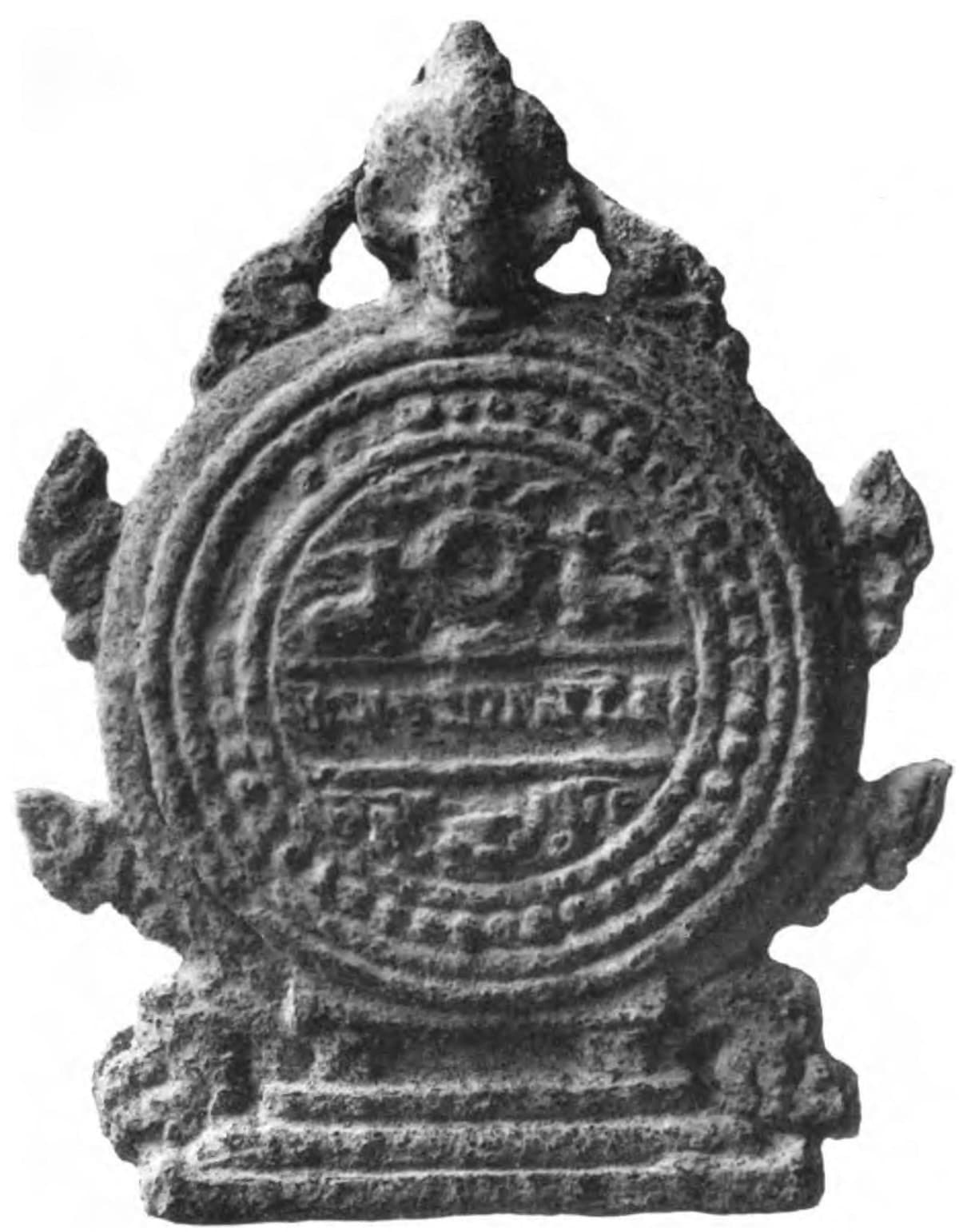
In November 1893 a Muslim cultivator ploughing a paddy field at Khalimpur, near Gaur in Maldah district, turned up a copper plate.11 It was a single sheet inscribed on both sides, in 33 and 29 lines, with a seal on top: a wheel between two deer, and the words Shriman Dharmapaladevah.12 The plate had been issued in the 32nd regnal year of Dharmapala, the second king of the Pala dynasty, and it gave four villages to a temple of the god Nunna-Narayana founded by a great vassal, the mahasamantadhipati Narayanavarman.13 The dutaka named in the grant was the crown prince (yuvaraja) Tribhuvanapala.14
Read slowly, this one record holds most of the problems of the period. A Buddhist king is endowing a temple of Vishnu.15 Its verse 12 claims that Dharmapala installed a king at Kanauj (Kanyakubja) with the approval of the Bhojas, Matsyas, Madras, Kurus, Yadus, Yavanas, Avantis, Gandharas and Kiras, peoples spread across northern India.16 The historian A. M. Chowdhury reads that list as a court poet's exaggeration.17 And when it describes how Dharmapala's father Gopala came to power, it uses the phrase that has named the century before the Palas ever since: matsyanyaya, the law of the fishes.18
That is the argument of this chapter. Bengal's early kings are known mainly through what they gave away and what their poets said about them, so their history has to be read as a set of claims, tested against each other wherever another source exists. Read that way, the evidence suggests kings whose real reach was smaller than their inscriptions boast, a religious world far more mixed than the labels "Buddhist Palas" and "Hindu Senas" imply, and an ending in 1204 that was slower and less tidy than the famous story of eighteen horsemen. The earlier kingdoms of Vanga, Pundra and Samatata are covered in Ancient Bengal.
How do historians date these kings?
Historians date the Pala kings by counting regnal years from a few fixed points, because no Pala king dated his own grants in an era.20 A grant gives only the year of the king's reign, and the historian has to work out when year one fell. Three inscriptions anchor the sequence: Mahipala I's Sarnath inscription, dated VS 1083 (1026 CE); Madanapala's Valgudar inscription, dated Saka 1083 (1161 CE), which falls in his 18th year; and Govindapala's Gaya inscription, dated VS 1232 (1175 CE).21
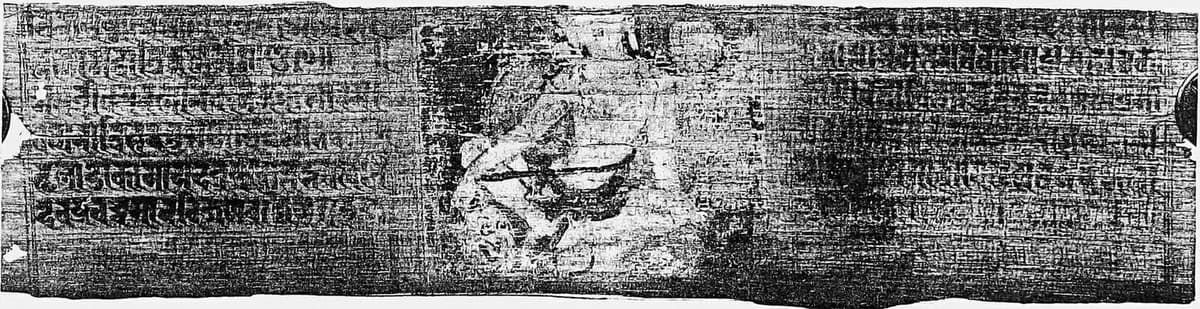
Everything else is fitted around them. Besides the copper plates there are stone inscriptions such as the Badal pillar and the Deopara prashasti, inscriptions on images, the colophons of manuscripts, the Sanskrit poem Ramacharitam, the Tibetan historian Taranatha (who finished his history in 1608) and, for 1204, the chronicle of Minhaj-i-Siraj, written about 1259 to 1260.22 The dynastic historian's usual standby is missing: neither the Palas nor the Senas are known to have minted coins, though their inscriptions use money terms such as purana, dharana and dramma.23
The result is that six published Pala chronologies, drawn up between 1928 and 1977, differ by up to about 50 years for the early kings.24 Susan Huntington, who set them side by side in 1984, called the two oldest "mostly outdated", because they were made before the Valgudar inscription was published in 1949-50, and adopted D. C. Sircar's dates "in general" as "the culmination of nearly a half century's work on eastern Indian epigraphy".25 This chapter does not pick one set as true. Where a date matters, it says whose it is.
Who was Shashanka?
Shashanka was king of Gauda in the early 7th century, and Banglapedia calls him "the first important king of ancient Bengal".27 He is "generally believed" to have ruled from about 600 to 625, according to Banglapedia's entry on him, while its entry on coins gives c. 600 to 637.28 R. C. Majumdar placed his death shortly before 637-38, because the Chinese pilgrim Xuanzang (Hiuen Tsang) reports that Shashanka held Magadha at the time of his death.29
His own records are few. Two inscriptions found in Midnapore are dated in his 8th and 10th regnal years, and a third, undated, comes from Egra near Kharagpur.30 A copper plate of his subordinate Madhavavarma of Ganjam is dated 619.31 His capital was Karnasuvarna, near Chiruti railway station and close to Rajbaridanga in Murshidabad district, West Bengal, the site of the Raktamrittika Mahavihara.32
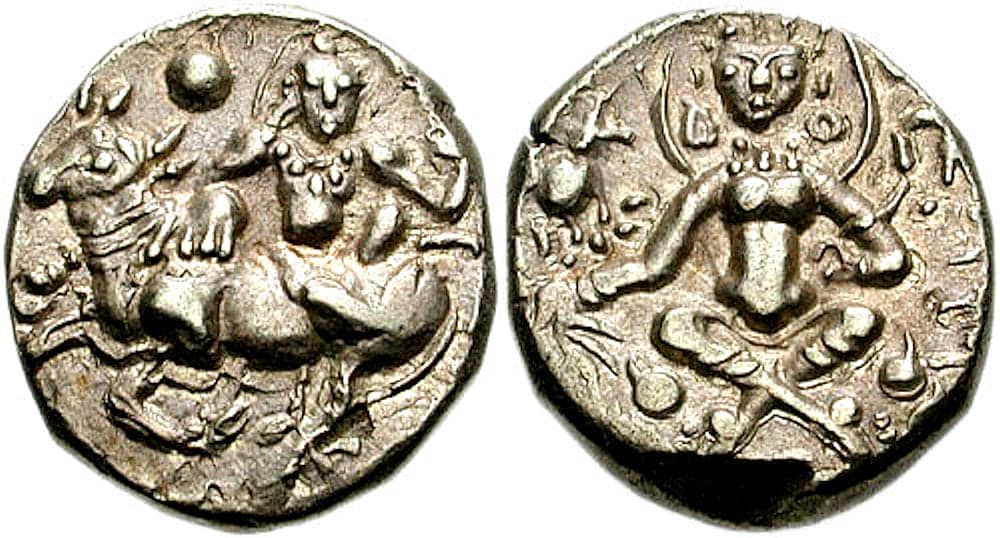
He also struck coins, in gold and silver.33 His gold coins for Gauda and Vanga were debased and struck on the suvarna standard, while a separate, purer series of about 90 grains circulated in Samatata in the south-east.34
Villain, or a king seen through his rival's eyes?
Shashanka's bad name comes almost entirely from the court of his rival, Harshavardhana of Thanesar and Kanauj.36 In 606 Harsha's elder brother Rajyavardhana was killed in an encounter with Shashanka.37 Harsha's court poet Bana, and Xuanzang, who was Harsha's guest, blame treachery by the king of Gauda.38 Harsha's own Banskhera plate is more guarded: it says only that his brother lost his life "in keeping with the truth" in the enemy's house, and does not name the enemy.39
Xuanzang also called Shashanka a persecutor of Buddhism. P. K. Bhattacharyya, writing in Banglapedia, argues that the charge is undercut by the flourishing state of Nalanda and of the monasteries in Shashanka's own kingdom, including the Raktamrittika Mahavihara near his capital.40 Another story, in the Aryamanjushrimulakalpa, has Harsha defeating him at Pundravardhana and gives him a reign of 17 years; no other contemporary source supports it.41 In this chapter's reading, the case against Shashanka is not proven, because the main witnesses against him were his rival's court poet and his rival's guest.
The south-east: Khadga and Deva kings
Other kings held the south-east. In the 7th and 8th centuries the Khadga dynasty ruled Vanga and Samatata; Banglapedia gives Khadgodyama c. 625 to 640, Jatakhadga c. 640 to 658, Devakhadga c. 658 to 673, Rajabhata c. 673 to 690 and Balabhata c. 690 to 705.42 Devakhadga's Ashrafpur plates were issued in his 13th regnal year, about 671.43 Later the Deva dynasty ruled Samatata from Devaparvata, at Mainamati near Comilla; its known kings are Shantideva, Viradeva, Anandadeva and Bhavadeva, and its copper plates are dated on the style of their script to the late 8th and early 9th century.44 Further south, around Chittagong, Harikela issued fine silver coins with a recumbent bull and the legend "Harikela" from the 7th century into the 12th or 13th.45
What was matsyanyaya?
Matsyanyaya (মাৎস্যন্যায়), "the law of the fishes", is the name given to the disorder in Bengal before the Palas: the big fish eating the small.46 It appears in Dharmapala's Khalimpur plate and in the 12th-century Ramacharitam.47 The term comes from Indian political theory. Kautilya's Arthashastra (1.4.13 to 14) uses it for what happens when punishment is in abeyance: "the strong will swallow the weak".48
Later writers fill in the picture. Taranatha, the 17th-century Tibetan historian, says that before the Palas "Ksatriyas, Brahmanas, merchants and townsmen all were kings in their own homes", and the Manjushrimulakalpa says that after Shashanka no king of Gauda would rule even a year.49 How long it lasted is uncertain; Chowdhury's Banglapedia entry on Gopala puts it at about a century from the middle of the 7th century.50
Notice who is describing the chaos. The Khalimpur plate was issued by Dharmapala, the son of the man who ended it.51 An age of anarchy makes an ideal backdrop for a founder. That does not mean the disorder was invented. It does suggest the word is a verdict, delivered by the winners.
Was Gopala elected by the people?
In Kielhorn's translation of the Khalimpur plate, Gopala was induced by the prakritis to take up sovereignty "to put an end to lawlessness and disorder".52 The popular claim that he was "elected by the people" rests on that one word.53 Chowdhury warns that prakriti can mean either "subjects" or "principal officers", so the election is uncertain; Gopala may have been a military adventurer who won support after early successes.54 No inscription of Gopala's own reign has been found.55 The plate names his father and grandfather, Vapyata and Dayitavishnu, and his queen, Deddadevi, daughter of the Bhadra king; their son was Dharmapala.56
Where the family came from is also unclear. The Ramacharitam calls Varendra, in north Bengal, the janakabhu (fatherland) of the Palas.57 Yet, as Richard Eaton points out, most Pala copper plates from about 750 to about 950 were issued from Magadha, in Bihar.58
The Pala empire at its height
The Palas ruled Bengal and Bihar for about four centuries from the middle of the 8th century, over eighteen generations of kings; Eaton dates the empire c. 750 to 1161.59 Dharmapala's ambition shows most clearly in the contest for Kanauj.60
That contest, usually called the tripartite struggle, set the Palas against the Gurjara-Pratiharas and the Rashtrakutas of the Deccan.61 About 790 Dharmapala lost to the Pratihara king Vatsaraja, and both were then defeated by the Rashtrakuta Dhruva; later the Pratihara Nagabhata II beat Dharmapala near Munger, before the Rashtrakuta Govinda III defeated Nagabhata and went back south in 801.62 Chowdhury's reading is that Dharmapala probably installed his protégé Chakrayudha at Kanauj for a short time, but never became undisputed ruler of northern India.63 The gap between that and the Khalimpur plate's roll call of submissive peoples is the gap between a battle record and a poem.
The Rashtrakuta king Govinda III reigned from 793 to 814, which puts Dharmapala on the throne at the start of the 9th century.64 Arab writers knew of the Pala king: Sulaiman (d. 851), Ibn Khurdadhbeh (d. 912) and Masudi (d. 956) mention the king of Bengal fighting the Rashtrakutas and Gurjaras, and the Persian Hudud al-Alam of 982-83 says Dharmapala, whom it calls "Dahum", had an army of 300,000.65 That figure is a claim from a distant geographer, not a count.
The Arab writers also saw what Pala Bengal sold. Eaton notes that in 851 Ibn Khurdadhbih wrote that he had seen cotton textiles from the Pala domains of unparalleled fineness.66 The later story of Bengal's fine cloth is told in Dhaka muslin and jamdani. Masudi records that in the "kingdom of Dharma" trade was carried on in cowries.67
Devapala's connections reached overseas. At the request of the Shailendra king Balaputradeva of Java and Sumatra, he granted five villages to support a monastery that Balaputradeva had built at Nalanda.68 After Devapala the record turns confused. Three names appear (Shurapala, Vigrahapala and Mahendrapala), which Chowdhury reads as a succession dispute, and all later Pala kings descend from Vakpala, Dharmapala's brother.69 Huntington, using the Mirzapur plate edited by Sircar in 1975, notes that Vigrahapala I and Shurapala I were cousins who either ruled at the same time or in quick succession; earlier writers had taken them for one man.70
Mahendrapala shows how much can still change. The Jagjivanpur copper plate, found in Malda district, West Bengal, showed him to be a Pala king, the son and successor of Devapala; the plate was issued in his 7th year, about 854, and records a monastery built by the general Vajradeva at Nandadirghika.71 He appears in none of the schemes in the table below.
| King | Majumdar 1943 (accession; highest year) | Majumdar 1971 (accession) | Chowdhury 1967 | Sircar 1975-76 | Sinha 1977 | Bhattacharyya 1930 | Banerji 1928 |
|---|---|---|---|---|---|---|---|
| Gopala I | 750 | 750 | 756 to 781 | 750 to 775 | 755 to 783 | 700 to 744 | 730 to 769 |
| Dharmapala | 770; 32 | 770 | 781 to 821 | 775 to 812 | 783 to 820 | 744 to 800 | 769 to 809 |
| Devapala | 810; 39 (or 35) | 810 | 821 to 861 | 812 to 850 | 820 to 860 | 800 to 839 | 809 to 849 |
| Shurapala I / Vigrahapala I | 850; 3 | 850 | 861 to 866 | Shurapala I 850 to 858; Vigrahapala I 858 to 860 | 860 to 865 | 839 to 845 | 849 to 852 |
| Narayanapala | 854; 54 | 854 | 866 to 920 | 860 to 917 | 865 to 920 | 845 to 899 | 852 to 907 |
| Rajyapala | 908; 32 | 908 | 920 to 952 | 917 to 952 | 920 to 952 | 899 to 923 | 907 to 931 |
| Gopala II | 940; 17 | 940 | 952 to 969 | 952 to 972 | 952 to 967 | 923 to 980 | 931 to 948 |
| Vigrahapala II | 960; 26 (?) | 960 | 969 to 995 | 972 to 977 | 967 to 980 | 980 to 988 | 948 to 974 |
| Mahipala I | 988; 48 | 988 | 995 to 1043 | 977 to 1027 | 980 to 1035 | 988 to 1036 | 974 to 1026 |
| Nayapala | 1038; 15 | 1038 | 1043 to 1058 | 1027 to 1043 | 1035 to 1050 | 1036 to 1050 | 1026 to 1041 |
| Vigrahapala III | 1055 | 1054 | 1058 to 1075 | 1043 to 1070 | 1050 to 1076 | 1050 to 1076 | 1041 to 1054 |
| Mahipala II | 1070 | 1072 | 1075 to 1080 | 1070 to 1071 | 1076 to 1078/9 (with Shurapala II) | 1076 to 1078 (with Shurapala II) | 1054 to 1056 |
| Shurapala II | 1075 | 1075 | 1080 to 1082 | 1071 to 1072 | With Mahipala II | With Mahipala II | 1056 to 1057 |
| Ramapala | 1077; 42 | 1077 (highest year 53) | 1082 to 1124 | 1072 to 1126 | 1078/9 to 1132 | 1078 to 1120 | 1057 to 1102 |
| Kumarapala | 1120 | 1130 | 1124 to 1129 | 1126 to 1128 | 1132 to 1136 | 1120 to 1132 | 1102 to 1103 |
| Gopala III | 1125; 14 (?) | 1140 | 1129 to 1143 | 1128 to 1143 | 1136 to 1144 | 1132 to 1134 | 1103 to 1104 |
| Madanapala | 1140; 14 | 1144 (highest year 18) | 1143 to 1162 (added by Huntington from Chowdhury's text) | 1143 to 1161 | 1144 to 1161/2 | 1134 to 1153 | 1104 to 1126 |
| Govindapala | 1155; 4 | 1158 | Not in the imperial line | 1161 to 1165 | 1162 to 1176, or 1158/9 to 1162 | 1153 to 1161 | 1161 to 1199 (after Palapala) |
| Palapala | Not listed | Not listed | Not in the imperial line | 1165 to 1199 | Not listed | Not listed | 1126 to 1161 |
Source: Majumdar, History of Bengal (1943). Majumdar, History of Ancient Bengal (1971); A. M. Chowdhury, Dynastic History of Bengal (1967); D. C. Sircar (1975-76); B. P. Sinha (1977); D. C. Bhattacharyya (1930); and R. D. Banerji (1928): all as tabulated by Huntington (1984). Chowdhury's 1967 book and Sircar's article were not consulted directly; Chowdhury's dates also appear in his Banglapedia entries.72
Read across any row and the problem is plain: Gopala's accession runs from 700 to 756, Mahipala I's from 974 to 995.73 The two oldest schemes, Banerji's and Bhattacharyya's, were made before the Valgudar inscription fixed Madanapala's 18th year at 1161, and their dates for the late kings stand furthest from the rest.74 Majumdar's own revision of 1971 moved his dates from Kumarapala onwards later, and gives Ramapala's highest known year as 53 and Madanapala's as 18.75 Newer finds have stretched some reigns: Rajyapala is now known to have ruled at least 37 years.76
Show the numbers
| Year | Highest known regnal year |
|---|---|
| Dharmapala | 32 |
| Devapala | 39 |
| Shurapala I / Vigrahapala I | 3 |
| Narayanapala | 54 |
| Rajyapala | 32 |
| Gopala II | 17 |
| Vigrahapala II | 26 |
| Mahipala I | 48 |
| Nayapala | 15 |
| Ramapala | 42 |
| Gopala III | 14 |
| Madanapala | 14 |
| Govindapala | 4 |
Source: Majumdar, History of Bengal (1943). Kings with no highest year in Majumdar's list are left out. Devapala's figure may be 35, and those for Vigrahapala II and Gopala III are queried by Majumdar. Later work gives Rajyapala at least 37 years, and Majumdar's 1971 revision gives Ramapala 53 and Madanapala 18.77
Decline, rebellion and recovery
By the mid-10th century the dynasty had lost ground in its own heartland. The Kamboja Gaudapatis, Rajyapala and his sons Narayanapala and Nayapala, held parts of western and northern Bengal; they are known from the Dinajpur pillar inscription and the Irda copper plate.78 Mahipala I is called the "second founder" of the dynasty, and his Belwa and Bangarh plates claim that he recovered his "paternal kingdom" (rajyam pitryam) from usurpers.79
His reign also brought an invasion from the far south. The Tirumalai inscription of the Chola king Rajendra records a campaign into Bengal between 1021 and 1024 that met Govindachandra in Vangaladesha and Mahipala in northern Radha.80 Mahipala left a deep mark on memory: towns and tanks such as Mahiganj, Mahipur, Mahisantosh and Mahipaladighi carry his name, and the saying Dhan bhante Mahipaler geet, songs of Mahipala while husking rice, is still current.81 Excavation shows that the temple and cells at Paharpur were renovated wholesale in his time.82
The next crisis came from inside. Under Mahipala II (c. 1075 to 1080 in Chowdhury's dates), a confederacy of samantas, the great vassals, defeated and killed the king, and the Kaivarta chief Divya, a royal officer, took Varendra.83 The Ramacharitam is the only full account of this "Varendra rebellion", and it calls the event dharmmaviplava.84 The older view saw a rising of the fishermen-caste Kaivartas against Buddhist rulers; Chowdhury argues instead that it was a revolt of feudal chiefs led by a royal officer, not a peasant rising.85 Varendra was ruled in turn by Divya, his brother Rudoka and Rudoka's son Bhima.86
A granite pillar may still mark Divya's moment. The Kaivarta Stambha, an octagonal column standing in the tank of Dibar Dighi in Patnitala upazila, Naogaon, is assumed to commemorate his victory; Buchanan-Hamilton measured it at 10.33 m in 1807-08 and Cunningham at 9.14 m in 1879-80.87
Ramapala won Varendra back with the help of 14 named samantas listed in the Ramacharitam, and founded a new capital, Ramavati.88 In his reign, Eaton notes, King Kyansittha of Pagan in Burma sent jewels by ship to restore the Buddhist shrines at Bodh Gaya.89 The Ramacharitam itself is a remarkable source. Its author, Sandhyakara Nandi, whose father Prajapati Nandi was Ramapala's minister of peace and war, wrote about 215 verses in shlesha, double meaning: read one way they tell the Ramayana, read the other the story of Ramapala.90 Haraprasad Shastri found the palm-leaf manuscript and published it in 1910.91
Madanapala was the last Pala king to rule in Bengal. He lost north Bengal to the Senas some time after his 8th regnal year, and no Pala record from Bengal is known after that year.92 Huntington adds a caution about the usual label for the era: "Pala-Sena" overstates the Senas, who held power for little more than a century, and the Chandras could as easily be given equal weight.93
Somapura Mahavihara: the monastery at Paharpur
Somapura Mahavihara, the ruins at Paharpur in Naogaon district, Bangladesh, is credited to Dharmapala, and UNESCO inscribed it on the World Heritage List in 1985 under criteria (i), (ii) and (vi).94 Clay seals from the ruins read "Shri-Somapure-Shri-Dharmapaladeva-Mahavihariyarya-bhiksu-sanghasya", the community of monks of Dharmapala's great monastery at Somapura.95 Tibetan sources, Taranatha among them, credit Devapala instead; Chowdhury suggests that Dharmapala began it and Devapala finished it.96 The village takes its name, "Paharpur", from the mound of ruins, about 24 m above the plain.97
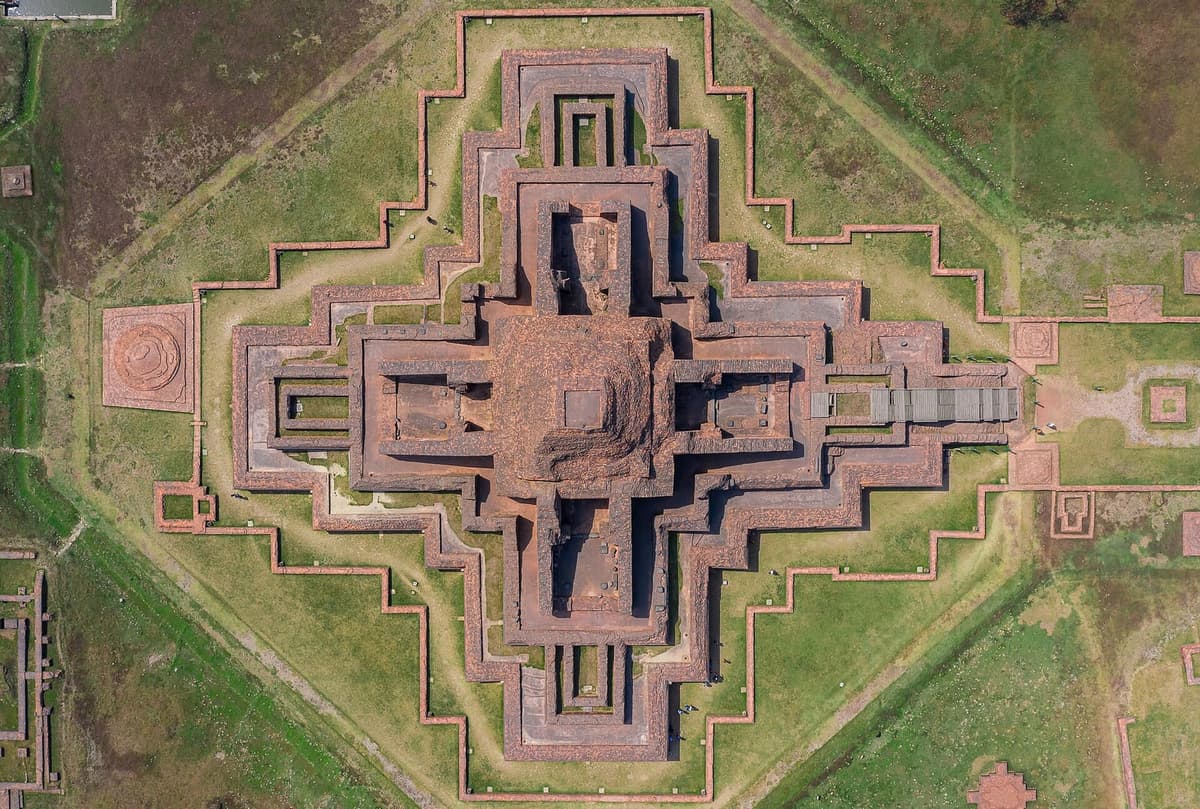
The plan is simple and enormous. A square of 274.15 m by 273.70 m holds 177 cells, 45 on the north side and 44 on each of the others, behind an enclosure wall about 5 m thick.99 In the middle rises the shrine, cruciform and built in three terraces; its remains still stand about 21 m high, which matches UNESCO's "about 70 feet".100 UNESCO describes it as "the second largest single Buddhist monastery on south of the Himalayas".101
UNESCO's case rests on influence as well as size. Its short description calls Somapura evidence of the rise of Mahayana Buddhism in Bengal from the 7th century and "a renowned intellectual centre until the 12th century", whose form influenced Buddhist architecture "as far away as Cambodia".102 Under criterion (ii) it names temples at Pagan in Myanmar and Loro Jonggrang and Candi Sewu in Java as profoundly influenced by the Paharpur form.103 Atish Dipankar stayed at Somapura and translated the Madhyamaka Ratnapradipa into Tibetan there; his teacher Ratnakarashanti was the senior monk of the vihara.104
The walls of the shrine are a gallery. The basement holds 63 stone reliefs, and all but one, a Buddhist Padmapani, show Brahmanical subjects, many of them scenes from the life of Krishna.105 More than 2,000 terracotta plaques remain on the temple walls, and about 800 loose ones are registered.106
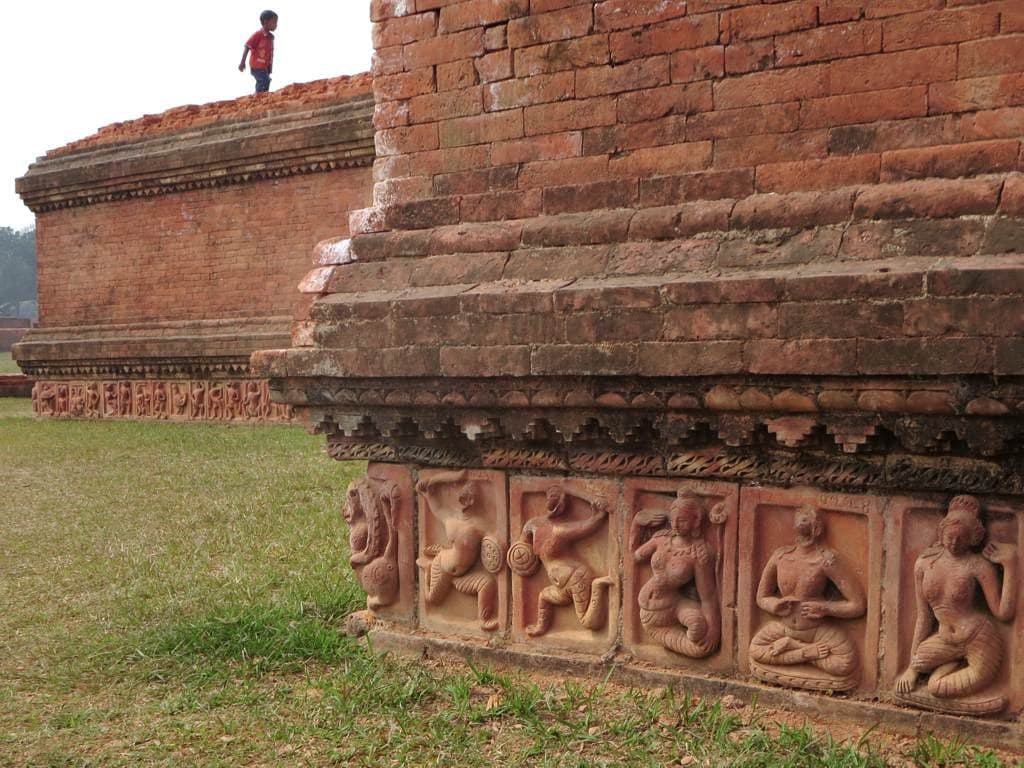
The site's history is longer than the Palas', and not always peaceful. A copper plate found in the monastery, dated Gupta Era 159 (479 CE), records a Brahman couple's purchase and gift of land for a Jaina vihara at Vatagohali headed by Guhanandin.108 The excavator K. N. Dikshit suspected an earlier Jaina establishment beneath the monastery; excavation after 1981 found an earlier phase, but the question is still open.109 An inscription of Vipulashrimitra found at Nalanda records that Somapura was burned in an attack by a Vangala army, possibly of the Varmans, in which the monk Karunashrimitra died; Vipulashrimitra later restored it and built a temple of Tara.110
Buchanan-Hamilton noticed the site between 1807 and 1812, and Cunningham visited in 1879.111 The Archaeological Survey of India protected it in 1919, and systematic excavation began in 1923 under the Survey, the Varendra Research Society and the University of Calcutta, led from 1926-27 mainly by Dikshit.112 Bangladesh's Department of Archaeology dug again in 1981 to 1985, 1988 to 1991 and, on a small scale, 2007-08, and a conservation project ran from 1987 to 2002.113 UNESCO itself records that rebuilt facing brickwork and salt-laden bricks used since the 1930s have compromised the site's authenticity, and that salt and plant growth threaten the plaques.114
Were the Pala kings Buddhist or Hindu?
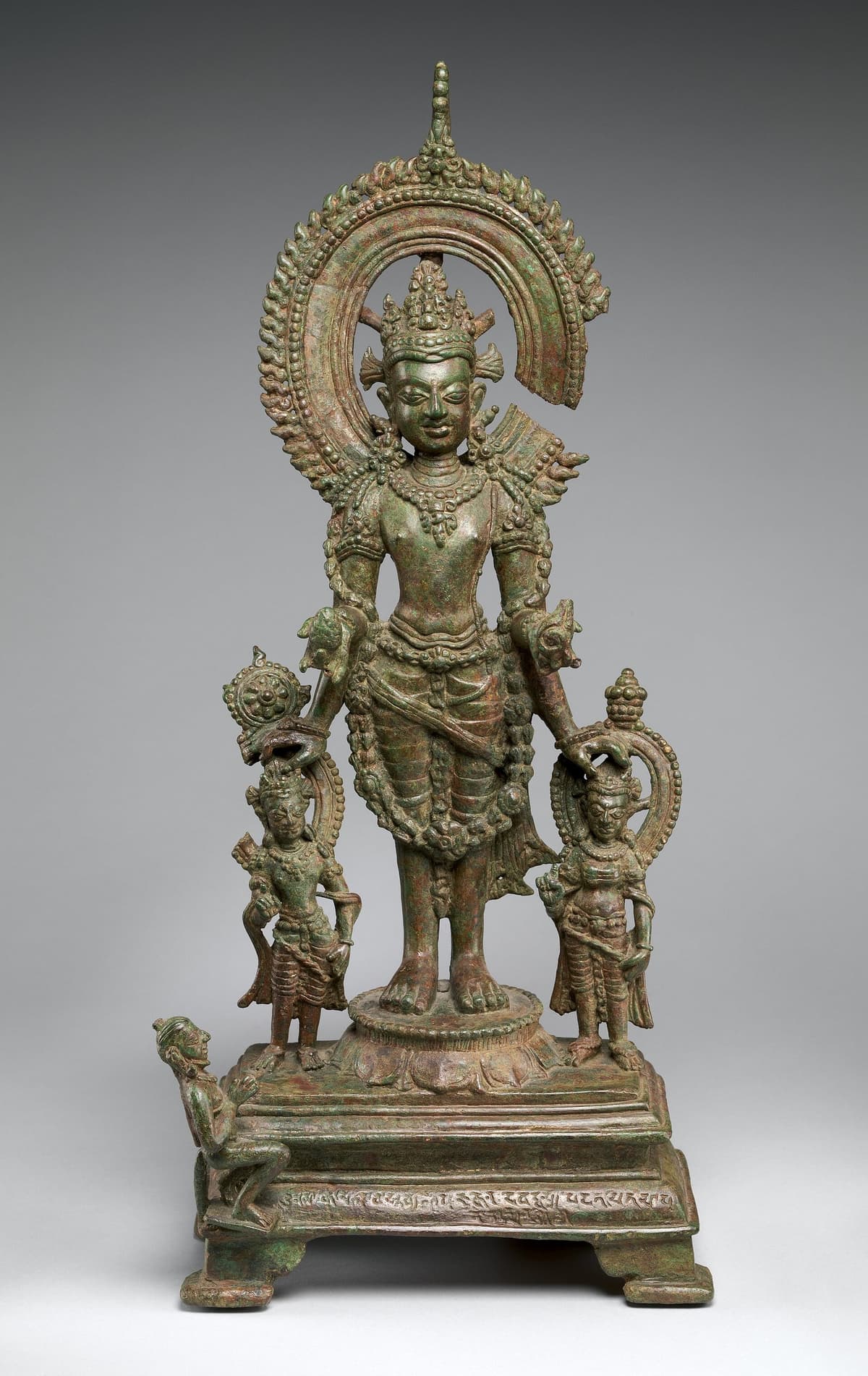
The Pala kings were Buddhists, but the evidence suggests they ruled, and paid for, a largely Brahmanical world. Except for one or two, all Pala copper plates record land grants to Hindu temples or to Brahmins.115 The Khalimpur plate is an example: a grant from a Buddhist king to a temple of Vishnu.116 Eaton, citing Huntington, writes that by the 11th century even the Palas were favouring the cults of Shiva and Vishnu, and that most of the art of the 11th- and 12th-century Pala kings is Brahmanical, with Vaishnava themes outnumbering others three to one.117 Even at Paharpur, a Buddhist monastery, the basement reliefs are almost all Brahmanical.118
The Buddhist side was real too. Dharmapala is credited with founding Vikramashila, at Antichak in Bhagalpur district, Bihar, as well as Somapura.119 On Banglapedia's count, about 400 paintings survive in 24 illustrated Pala-period manuscripts, among them copies of the Pancharaksha and the Ashtasahasrika Prajnaparamita, and Taranatha names Dhiman and his son Vitpala as master sculptors and painters under Dharmapala and Devapala.120 Atish Dipankar Srijnan, born at Vajrayogini in Vikramapura (now Munshiganj), probably c. 980 or 982-83, left for Tibet in 1040 and died there, in 1053 according to Banglapedia; his ashes were brought to Dhaka on 28 June 1978.121
One gap is striking. Huntington found no surviving building, sculpture or painting that an inscription shows was given by a Pala king himself.122 The kings' recorded gifts were land, and almost all of the grants that survive went to Hindu temples or Brahmins.123
The Chandras and Varmans of the south-east
While the Palas held the north and west, south-eastern Bengal had kings of its own. The Chandra dynasty ruled Vanga and Samatata for about 150 years from the early 10th century; Trailokyachandra was its first independent king, and under Shrichandra the capital moved to Vikramapura, in what is now Munshiganj district.125 Shrichandra's Paschimbhag copper plate, found in Moulvibazar district, records campaigns in Kamarupa and the settling of many Brahmins in Sylhet.126 Unlike the Palas, Eaton notes, the Chandras kept a silver coinage and were linked to Indian Ocean trade.127
Their dates are as unsettled as the Palas': Eaton gives the dynasty c. 825 to 1035, Banglapedia's entry on coins c. 900 to 1055.128
| King | Highest known regnal year | Chowdhury | Majumdar ("New Light") |
|---|---|---|---|
| Trailokyachandra | Not known | c. 900 to 930 | c. 875 to 905 |
| Shrichandra | 44 or 46 (Sircar doubted 44) | c. 930 to 975 | c. 905 to 955 |
| Kalyanachandra | 24 | c. 975 to 1000 | c. 955 to 985 |
| Ladahachandra | 18 | c. 1000 to 1020 | c. 985 to 1010 |
| Govindachandra | 23 | c. 1020 to 1045 (Huntington's table); c. 1020 to 1050 (Banglapedia) | c. 1010 to 1035 |
Source: Huntington (1984), table IX; Chowdhury, "Chandra Dynasty", Banglapedia.129
The Varmans followed. They claimed descent from the Yadavas of Simhapura in Kalinga, and Jatavarman rose to power between about 1050 and 1075, marrying Virashri, daughter of the Kalachuri king Karna.130 Four kings, Jatavarman, Harivarman, Samalavarman and Bhojavarman, ruled for about 60 to 70 years; a 46-year reign for Harivarman is inferred from a manuscript colophon, and Bhojavarman's Belava plate was issued at Vikramapura in his 5th year.131 Their connections ran far: a daughter of Samalavarman, Trailokyasundari, was probably married to the Sri Lankan king Vijayabahu I.132
The Sena dynasty
The Senas were newcomers from south India who went on to rule the whole of Bengal.133 They came from Karnata in south India, and the Deopara inscription calls them Brahma-Kshatriyas; Samantasena, the first member known to history, held no royal title.134 How they reached Bengal, as Pala officers or in the train of an invader from the Deccan, is unknown.135 Under the Senas, Banglapedia states, the whole of Bengal was brought under a single rule for the first time.136
Vijayasena built the kingdom. He may be the "Vijayaraja of Nidravali" among the 14 samantas who helped Ramapala, and his queen Vilasadevi was a Shura princess.137 The Deopara prashasti, found in 1865 near Godagari in Rajshahi and composed by the poet Umapatidhara, says he defeated Nanya, Vira, Raghava and Vardhana, made the king of Gauda flee, sent a fleet up the Ganges and built the temple of Pradyumneshvara.138 Like the Khalimpur plate, it is a victory poem, to be read with the same caution. Vijayasena issued his Barrackpur plate from Vikramapura, the Varman capital, which suggests he had ousted the Varmans by the mid-12th century.139 One Sena inscription, quoted by Eaton, praises him as "never tired of offering sacrifices".140
His successor Ballalasena is remembered as an author. He wrote the Danasagara and began the Adbhutasagara, which Lakshmanasena completed.141 Banglapedia dates them 1168 and 1169; Majumdar reads the Danasagara as Saka 1091 (1169) and the start of the Adbhutasagara as Saka 1089 or 1090 (1167 or 1168), depending on the manuscript.142 Popular tradition also credits him with introducing kulinism, but no Sena inscription mentions it; the kulaji texts that make the claim were written five or six centuries later.143
Lakshmanasena was the first Sena to take the title Gaudeshvara, lord of Gauda.144 He was a Vaishnava (Paramavaishnava), while his father and grandfather were Shaivas.145 His court was a literary one: Jayadeva, author of the Gitagovinda, Dhoyi, author of the Pavanaduta, Sharana, Umapatidhara and probably Govardhana; Halayudha Mishra was his chief minister, and Shridharadasa compiled the anthology Saduktikarnamrita.146 The Sena kings, then, were Brahmanical rulers, but they inherited a land where at least one great Buddhist monastery was still at work: UNESCO calls Somapura an intellectual centre until the 12th century, and Banglapedia says it was abandoned during the 13th.147
| King | Majumdar 1943 (accession; highest year) | Majumdar 1971 | Chowdhury 1967 | Eaton 1993 |
|---|---|---|---|---|
| Vijayasena | 1095 (or 1125); 62 (? or 32) | c. 1095 to 1158 | c. 1097 to 1160 | c. 1095 to 1158 |
| Ballalasena (Vallalasena) | 1158; 11 | c. 1158 to 1179 | c. 1160 to 1178 | Not given |
| Lakshmanasena | 1179; 27 | c. 1179 to 1207 | c. 1178 to 1206 | Not given |
| Vishvarupasena | 1206; 14 | Not given | c. 1206 to 1220 | Not given |
| Keshavasena | 1225; 3 | Not given | c. 1220 to 1223 | Not given |
| Whole dynasty | c. 1097 to 1225 (Banglapedia) | c. 1097 to 1223 |
Source: Majumdar, History of Bengal (1943), 231; Majumdar, History of Ancient Bengal (1971), contents; Chowdhury, as given by Huntington and in Banglapedia; Eaton (1993). The year of the Barrackpur plate reads 62 or 32; 62 is usually preferred.148
What happened at Nadia in 1204?
Nearly everything told about the fall of Nadia comes from one book, finished more than fifty years later.149 Minhaj-i-Siraj was in Bengal about 1242 to 1244, some forty years after the event, and collected accounts from Bakhtiyar's surviving companions; his Tabaqat-i-Nasiri is the only near-contemporary narrative.150 Muhammad Bakhtiyar Khalji, its central figure, came from Garamsir in northern Afghanistan and belonged to the Khalji tribe.151 According to Banglapedia he took Bihar in 1203 and destroyed the monastery of Odantapuri.152
Minhaj's story is vivid. After Bihar fell, Lakshmana Sena's counsellors urged him to leave; the next year Bakhtiyar appeared before Nudiah so fast that "no more than eighteen horsemen could keep up with him", was taken for a horse-dealer, and attacked the palace while the king sat at his meal.153 Minhaj adds that in Lakshmana Sena's country the cowrie was used in place of silver, and that the king's smallest gift was a lakh (100,000) of cowries.154 Bakhtiyar left Nudiah "in desolation" and made Lakhnauti his seat, where he instituted the khutba, coinage, mosques, colleges and Sufi lodges.155
When did Nadia fall?
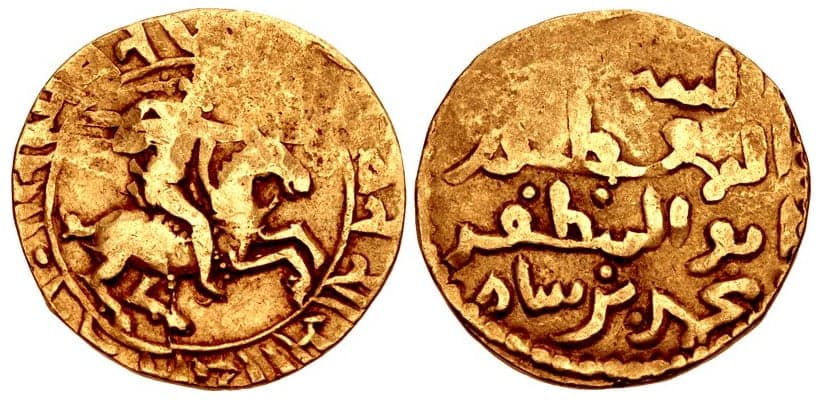
Nadia fell in 1204 on the dating of A. M. Chowdhury and Richard Eaton, though some scholars give 1202 or early 1205.157 Eaton's case rests on coins. He cites a silver coin of Ali Mardan that commemorates the conquest of Bengal in Ramazan AH 600 (May 1204), and Bakhtiyar's own gold coin of AH 601 (1204 to 1205).158 A. M. Chowdhury reached 1204 by another route: Bakhtiyar met Qutbuddin after Qutbuddin took Kalinjar in AH 599 (1203), and took Nadia the following year.159 Other dates have been proposed since 1813.160
| Date proposed | Scholar | Basis or note |
|---|---|---|
| 1194 (AH 590) | H. G. Raverty, 1881 | Argued that Bakhtiyar ruled twelve years before dying in AH 602. Chowdhury rejects it, because Bakhtiyar first presented himself to Qutbuddin at Delhi, which fell only in 1193.161 |
| 1199 to 1200 | R. D. Banerji | As reported by Chowdhury.162 |
| 1202 | N. K. Bhattasali | From the Parganati era.163 |
| c. 1202 | R. C. Majumdar, 1943 | "Some time about 1202", provisionally from the Sekashubhodaya (Saka 1124) and the Pag Sam Jon Zang.164 |
| 1202 to 1203 (AH 599) | Edward Thomas | Later revised.165 |
| 1203 to 1204 | Charles Stewart, 1813 | As reported by Chowdhury.166 |
| 1204 (AH 600) | A. M. Chowdhury, 1965 | Dated from Bakhtiyar's meeting with Qutbuddin after the fall of Kalinjar.167 |
| 1204 | Richard Eaton, 1993 | Ali Mardan's silver coin of Ramazan AH 600 (May 1204).168 |
| 1204 to 1205 | Banglapedia (several entries) | "1204" (Sena Dynasty); "end of 1204 or the beginning of 1205" (Nadia); "early 1205" (Bakhtiyar Khalji); 1205 (Laksmanasena; Lakhnauti).169 |
| 1207 | Wilford | As noted by Raverty.170 |
Source: Chowdhury (1965); Majumdar (1943); Raverty's translation of Minhaj (1881); Eaton (1993); Banglapedia.171
Did eighteen horsemen conquer Bengal?
No. Even Minhaj does not say so. He says only that eighteen riders kept pace with Bakhtiyar on the final dash, and that the main army followed.174 Eaton describes Bakhtiyar's band of about two hundred cavalry at Nudiya as an advance detachment of a main force of ten thousand.175 Nor, on the evidence, did the raid end Sena rule: Majumdar argues that Lakshmanasena and his sons went on issuing grants in east Bengal.176 Lakshmanasena's Bhowal plate, issued in his 27th year, grants land near Dhaka, which places him in south-eastern Bengal after Nadia fell, and the Saduktikarnamrita gives Saka 1127 (1205) as one of his regnal years, read as his 27th or 21st.177 His sons Vishvarupasena and Keshavasena ruled in Vikramapura and Vanga for about 25 years after him, although Sircar argued that the name Keshavasena is a misreading.178
Bakhtiyar did not last long. His expedition to Tibet set out from Devkot early in AH 602 (1206) and failed; he died at Devkot, and Minhaj says he was killed by Ali Mardan Khalji.179 Lakhnauti remained the Muslim capital, with a break from 1206 to 1211, until 1342.180 What came next is told in The Bengal Sultanate.
What the record adds up to
Six centuries of kingship in Bengal survive mostly as gifts of land and the poems written to announce them. Taken at their word, the inscriptions have the Palas making a king of Kanauj with the consent of peoples across northern India, and the Senas putting a string of rival kings to flight.184 Taken against each other, and against the battle records of their neighbours, the evidence suggests the Palas were more like a strong regional power in Bengal and Bihar that placed a protégé at Kanauj for a short time, and the Senas like the first dynasty to unite Bengal, for a little over a century.185 Their religion was mixed in exactly the way the copper plates show: Buddhist kings granting land to Brahmins, and a Buddhist monastery decorated with Krishna.186
The same caution applies to the ending. A raid by an advance party took a royal town, a conquest that coins struck by the conquerors in AH 600 and 601 (1204 and 1204 to 1205) commemorate.187 The Sena kings then carried on in the east for about another generation.188 The kingdoms of Bengal did not fall to eighteen horsemen in an afternoon.189 In this chapter's reading, they were worn back over decades, and much of the evidence for how it happened came out of the ground, as the Khalimpur plate did from a paddy field in 1893.190 A dynasty-by-dynasty list of these kings sits in Rulers of Bengal.
Timeline, 479 to 1206 CE
- 479 CECopper plate (Gupta Era 159) granting land to a Jaina vihara at Vatagohali, later found at Paharpur.191
- 606Rajyavardhana, Harsha's elder brother, is killed in an encounter with Shashanka.192
- 619Copper plate of Shashanka's subordinate Madhavavarma of Ganjam.193
- Shortly before 637-38Death of Shashanka, on Majumdar's reading of Xuanzang.194
- c. 650 to 750The matsyanyaya period, on Chowdhury's estimate of about a century from the middle of the 7th century.195
- c. 671Ashrafpur plates of the Khadga king Devakhadga, in his 13th year.196
- c. 750 or 756Gopala becomes king (750 for Majumdar and Sircar; 756 for Chowdhury).197
- c. 790Dharmapala defeated by the Pratihara Vatsaraja; both defeated by the Rashtrakuta Dhruva.198
- 801The Rashtrakuta Govinda III returns to the Deccan.199
- 851Ibn Khurdadhbih writes of the fine cotton textiles of the Pala domains (Eaton's date).200
- c. 854Jagjivanpur plate, in the 7th year of Mahendrapala.201
- 1021 to 1024Chola invasion of Bengal, recorded in the Tirumalai inscription.202
- 1026Sarnath inscription of Mahipala I (VS 1083).203
- 1040Atish Dipankar leaves for Tibet.204
- c. 1075 to 1080Mahipala II killed in the Varendra rebellion; Divya takes Varendra (Chowdhury's dates).205
- 1161Valgudar inscription (Saka 1083), in Madanapala's 18th year.206
- 1175Gaya inscription of Govindapala (VS 1232).207
- 1203Bakhtiyar takes Bihar and destroys Odantapuri (Banglapedia).208
- May 1204Silver coin of Ali Mardan commemorates the conquest of Bengal (Ramazan AH 600).209
- 1204Bakhtiyar captures Nadia (some scholars 1202 or early 1205).210
- 1204 to 1205Bakhtiyar's gold coin with the legend Gauda vijaye (AH 601).211
- 1205The Saduktikarnamrita is dated Saka 1127 in Lakshmanasena's reign.212
- 1206Bakhtiyar's Tibet expedition fails; he dies at Devkot (AH 602).213
Further reading
Start with the first volume of The History of Bengal, edited by R. C. Majumdar (1943), which set the chronology later work argues with.214 A. M. Chowdhury's Dynastic History of Bengal (c. 750-1200 A.D.) (thesis 1965, book 1967) revised it and dated Nadia to 1204.215 Susan Huntington's The "Pāla-Sena" Schools of Sculpture (1984) sets the Pala chronologies side by side.216 Richard Eaton's The Rise of Islam and the Bengal Frontier, 1204-1760 (1993) reads 1204 through coins as well as chronicles.217 Ryosuke Furui's Land and Society in Early South Asia (2020) uses the land grants to study rural society in eastern India from 400 to 1250.218 For the primary sources, see Kielhorn's edition of the Khalimpur plate and Raverty's translation of Minhaj.219
Questions students and journalists ask
Who was Shashanka, and was he the first king of Bengal?
Shashanka was king of Gauda in the early 7th century, with his capital at Karnasuvarna in today's Murshidabad district. Banglapedia calls him the first important king of ancient Bengal. His reign is usually dated from about 600 to somewhere between 625 and 637. Most of what is said against him, including treachery in the death of Harsha's brother and persecuting Buddhists, comes from Harsha's court poet Bana and from the Chinese pilgrim Xuanzang, who was Harsha's guest.
What does matsyanyaya mean?
Matsyanyaya means "the law of the fishes": the big fish eating the small. The term comes from Kautilya's Arthashastra, where it describes what happens when there is no punishment and the strong swallow the weak. Dharmapala's Khalimpur copper plate and the 12th-century Ramacharitam use it for the disorder in Bengal after Shashanka, which lasted roughly a century before Gopala founded the Pala dynasty.
Who founded the Pala dynasty, and was Gopala elected?
Gopala founded the Pala dynasty in about 750 (some scholars say 756). The Khalimpur plate says the prakritis made him king to end lawlessness, which is often read as an election by the people. But prakriti can mean either subjects or principal officers, so the election is uncertain. He may have been a military leader who won support after early successes. No inscription from his own reign has been found.
How long did the Pala dynasty rule Bengal?
About four centuries. The Palas ruled Bengal and Bihar from the middle of the 8th century; Richard Eaton dates the empire from about 750 to 1161. Madanapala lost north Bengal to the Senas some time after his 8th regnal year. Exact reign dates for each king differ between scholars by up to about 50 years for the early kings, because the kings dated their grants by regnal year, not by an era.
Who built Paharpur (Somapura Mahavihara), and why is it a World Heritage Site?
Clay seals from the site name the Pala king Dharmapala as founder, while Tibetan sources credit his successor Devapala; one view is that Dharmapala began it and Devapala finished it. UNESCO listed it in 1985. It calls it the second largest single Buddhist monastery south of the Himalayas, a renowned intellectual centre until the 12th century, and a design that influenced temples in Myanmar and Java.
Were the Palas Buddhist or Hindu?
The Pala kings were Buddhists who founded great monasteries such as Somapura and Vikramashila. Yet almost all their copper plates record grants of land to Hindu temples or Brahmins, and much of the art made under the later Pala kings shows Hindu gods, with Vaishnava themes most common. Even the reliefs at Paharpur are mostly Brahmanical. Their world was mixed rather than simply Buddhist.
Where did the Sena kings come from?
The Senas came from Karnata in south India. Their Deopara inscription calls them Brahma-Kshatriyas. How they reached Bengal is unknown: they may have come as officers serving the Palas or with an invader from the Deccan. Vijayasena, the first independent Sena king, issued a grant from the Varman capital of Vikramapura, and under the Senas the whole of Bengal came under a single ruler for the first time.
Did Bakhtiyar Khalji conquer Bengal with eighteen horsemen?
No. The only near-contemporary writer, Minhaj-i-Siraj, says only that eighteen riders kept up with Bakhtiyar on the final dash to Nadia, while his main army followed. Richard Eaton describes a band of about two hundred cavalry acting as the advance party of a force of ten thousand. The raid did not end Sena rule either: Lakshmana Sena and his sons went on ruling in eastern Bengal.
In what year did Bakhtiyar Khalji capture Nadia?
Later historians such as A. M. Chowdhury and Richard Eaton give 1204, though some scholars have argued for 1202 and some Banglapedia entries give early 1205. Other proposals range from 1194 to 1207. Eaton's case rests on coins: a silver coin of Ali Mardan commemorates the conquest in May 1204, and Bakhtiyar's own gold coin is dated AH 601, which is 1204 to 1205. Where Nadia was is also disputed.
Did Ballal Sen introduce kulinism?
Popular tradition says the Sena king Ballalasena introduced kulinism. But no Sena inscription mentions it. The kulaji genealogies that credit him were written five or six centuries after his reign, so the claim is not supported by evidence from his own time. He is better documented as the author of the Danasagara.
Notes
- P. K. Bhattacharyya, "Shashanka," Banglapedia: National Encyclopedia of Bangladesh, Dhaka: Asiatic Society of Bangladesh, accessed 22 November 2026, para. 1, https://en.banglapedia.org/index.php/Shashanka; A. M. Chowdhury, "Pala Dynasty," Banglapedia: National Encyclopedia of Bangladesh, Dhaka: Asiatic Society of Bangladesh, accessed 22 November 2026, para. 1, https://en.banglapedia.org/index.php/Pala_Dynasty; A. M. Chowdhury, "Chandra Dynasty, The," Banglapedia: National Encyclopedia of Bangladesh, Dhaka: Asiatic Society of Bangladesh, accessed 22 November 2026, paras. 1-2, https://en.banglapedia.org/index.php/Chandra_Dynasty,_The; A. M. Chowdhury, "Varman Dynasty," Banglapedia: National Encyclopedia of Bangladesh, Dhaka: Asiatic Society of Bangladesh, accessed 22 November 2026, paras. 1-3, https://en.banglapedia.org/index.php/Varman_Dynasty; A. M. Chowdhury, "Sena Dynasty," Banglapedia: National Encyclopedia of Bangladesh, Dhaka: Asiatic Society of Bangladesh, accessed 22 November 2026, para. 1, https://en.banglapedia.org/index.php/Sena_Dynasty. ↩
- Susan L. Huntington, The "Pāla-Sena" Schools of Sculpture, Studies in South Asian Culture 10 (Leiden: E. J. Brill, 1984), 30-37, https://archive.org/details/huntington-pala-sena-schools-of-sculpture. ↩
- Richard M. Eaton, The Rise of Islam and the Bengal Frontier, 1204-1760, UC Press E-Books Collection; no page numbers online, so notes cite chapter and note (Berkeley: University of California Press, 1993), ch. 2, http://ark.cdlib.org/ark:/13030/ft067n99v9; R. C. Majumdar, The History of Bengal. Vol. 1, Hindu Period, Edited volume. Reprint, Patna: N. V. Publications, 1971 (Dacca: University of Dacca, 1943), 223-24, https://archive.org/details/in.ernet.dli.2015.99743; ABM Shamsuddin Ahmed, "Bakhtiyar Khalji," Banglapedia: National Encyclopedia of Bangladesh, Dhaka: Asiatic Society of Bangladesh, accessed 22 November 2026, https://en.banglapedia.org/index.php/Bakhtiyar_Khalji. ↩
- Majumdar, History of Bengal, 176; Huntington, "Pāla-Sena" Schools, 35, 37. ↩
- Huntington, "Pāla-Sena" Schools, 32-37. ↩
- Huntington, "Pāla-Sena" Schools, 30; A. M. Chowdhury, "Mahipala I," Banglapedia: National Encyclopedia of Bangladesh, Dhaka: Asiatic Society of Bangladesh, accessed 22 November 2026, para. 4, https://en.banglapedia.org/index.php/Mahipala_I. ↩
- Md Shafiqul Alam, "Paharpur," Banglapedia: National Encyclopedia of Bangladesh, Dhaka: Asiatic Society of Bangladesh, accessed 22 November 2026, The monastery, https://en.banglapedia.org/index.php/Paharpur. ↩
- UNESCO World Heritage Centre, "Ruins of the Buddhist Vihara at Paharpur," World Heritage List, no. 322, Paris: UNESCO, accessed 22 November 2026, https://whc.unesco.org/en/list/322/. ↩
- Eaton, Rise of Islam, ch. 2; Majumdar, History of Bengal, 223; Ahmed, "Bakhtiyar Khalji". ↩
- Majumdar, History of Bengal; Huntington, "Pāla-Sena" Schools; UNESCO World Heritage Centre, "Ruins of the Buddhist Vihara"; Eaton, Rise of Islam. ↩
- F. Kielhorn, "Khalimpur Plate of Dharmapaladeva," Epigraphia Indica 4 (1896-97): 243, https://archive.org/details/EpigraphiaIndicaVol4. ↩
- Kielhorn, "Khalimpur Plate of Dharmapaladeva", 243. ↩
- A. M. Chowdhury, "Matsyanyayam," Banglapedia: National Encyclopedia of Bangladesh, Dhaka: Asiatic Society of Bangladesh, accessed 22 November 2026, para. 1, https://en.banglapedia.org/index.php/Matsyanyayam; Kielhorn, "Khalimpur Plate of Dharmapaladeva", 245. ↩
- Kielhorn, "Khalimpur Plate of Dharmapaladeva", 245. ↩
- Kielhorn, "Khalimpur Plate of Dharmapaladeva", 245. ↩
- Kielhorn, "Khalimpur Plate of Dharmapaladeva", 245; A. M. Chowdhury, "Dharmapala," Banglapedia: National Encyclopedia of Bangladesh, Dhaka: Asiatic Society of Bangladesh, accessed 22 November 2026, para. 3, https://en.banglapedia.org/index.php/Dharmapala. ↩
- Chowdhury, "Dharmapala", para. 4. ↩
- Chowdhury, "Matsyanyayam", para. 1. ↩
- Kielhorn, "Khalimpur Plate of Dharmapaladeva", 243; Chowdhury, "Matsyanyayam", para. 1. ↩
- Huntington, "Pāla-Sena" Schools, 30-31. ↩
- Huntington, "Pāla-Sena" Schools, 30-31. ↩
- Sharif Ahmed, "Inscriptions (Ancient)," Banglapedia: National Encyclopedia of Bangladesh, Dhaka: Asiatic Society of Bangladesh, accessed 22 November 2026, Pala section, https://en.banglapedia.org/index.php/Inscriptions; Aksadul Alam, "Deopara Prashasti," Banglapedia: National Encyclopedia of Bangladesh, Dhaka: Asiatic Society of Bangladesh, accessed 22 November 2026, https://en.banglapedia.org/index.php/Deopara_Prashasti; A. M. Chowdhury, "Ramacharitam, The," Banglapedia: National Encyclopedia of Bangladesh, Dhaka: Asiatic Society of Bangladesh, accessed 22 November 2026, para. 3, https://en.banglapedia.org/index.php/Ramacharitam,_The; Huntington, "Pāla-Sena" Schools, 31; Abdul Karim, "Tabaqat-i-Nasiri," Banglapedia: National Encyclopedia of Bangladesh, Dhaka: Asiatic Society of Bangladesh, accessed 22 November 2026, https://en.banglapedia.org/index.php/Tabaqat-i-Nasiri. ↩
- Ranabir Chakravarti, "Coins," Banglapedia: National Encyclopedia of Bangladesh, Ancient section. Dhaka: Asiatic Society of Bangladesh, accessed 22 November 2026, c. 750 to 1200, https://en.banglapedia.org/index.php/Coins. ↩
- Huntington, "Pāla-Sena" Schools, 32-37. ↩
- Huntington, "Pāla-Sena" Schools, 30, 33-34. ↩
- Huntington, "Pāla-Sena" Schools, 30-31. ↩
- Bhattacharyya, "Shashanka", para. 1. ↩
- Bhattacharyya, "Shashanka", para. 1; Chakravarti, "Coins", Post-Gupta coinage. ↩
- Majumdar, History of Bengal, 64-65. ↩
- Bhattacharyya, "Shashanka", para. 1. ↩
- Bhattacharyya, "Shashanka", para. 1. ↩
- Bhattacharyya, "Shashanka", para. 2. ↩
- Bhattacharyya, "Shashanka", para. 1. ↩
- Chakravarti, "Coins", Post-Gupta coinage. ↩
- Chakravarti, "Coins", Post-Gupta coinage. ↩
- Bhattacharyya, "Shashanka", paras. 5-6, 10. ↩
- Majumdar, History of Bengal, 62-65. ↩
- Bhattacharyya, "Shashanka", paras. 5-6. ↩
- Bhattacharyya, "Shashanka", paras. 5-6. ↩
- Bhattacharyya, "Shashanka", para. 10. ↩
- Bhattacharyya, "Shashanka", para. 8. ↩
- Krishnendu Ray, "Khadga Dynasty," Banglapedia: National Encyclopedia of Bangladesh, Dhaka: Asiatic Society of Bangladesh, accessed 22 November 2026, paras. 1-2, https://en.banglapedia.org/index.php/Khadga_Dynasty. ↩
- Ray, "Khadga Dynasty", paras. 1-2. ↩
- M. Harunur Rashid, "Deva Dynasty," Banglapedia: National Encyclopedia of Bangladesh, Dhaka: Asiatic Society of Bangladesh, accessed 22 November 2026, paras. 3-4, 7-8, https://en.banglapedia.org/index.php/Deva_Dynasty. ↩
- Chakravarti, "Coins". ↩
- Chowdhury, "Matsyanyayam", para. 1. ↩
- Chowdhury, "Matsyanyayam", para. 1. ↩
- Chowdhury, "Matsyanyayam", para. 2. ↩
- Chowdhury, "Matsyanyayam", paras. 3-4. ↩
- A. M. Chowdhury, "Gopala," Banglapedia: National Encyclopedia of Bangladesh, Dhaka: Asiatic Society of Bangladesh, accessed 22 November 2026, https://en.banglapedia.org/index.php/Gopala. ↩
- Kielhorn, "Khalimpur Plate of Dharmapaladeva", 245. ↩
- Kielhorn, "Khalimpur Plate of Dharmapaladeva", 245. ↩
- Chowdhury, "Gopala", para. 3. ↩
- Chowdhury, "Gopala", para. 3. ↩
- Ahmed, "Inscriptions (Ancient)", Pala section. ↩
- Kielhorn, "Khalimpur Plate of Dharmapaladeva", 245. ↩
- Chowdhury, "Gopala", para. 2. ↩
- Eaton, Rise of Islam, ch. 1, n. 29. ↩
- Chowdhury, "Pala Dynasty", para. 1; Eaton, Rise of Islam, ch. 1, text at n. 29. ↩
- Chowdhury, "Dharmapala", paras. 2-4. ↩
- Chowdhury, "Dharmapala", para. 2. ↩
- Chowdhury, "Dharmapala", paras. 2, 5. ↩
- Chowdhury, "Dharmapala", para. 4. ↩
- Majumdar, History of Bengal, 178; Huntington, "Pāla-Sena" Schools, 30. ↩
- Chowdhury, "Dharmapala", para. 8. ↩
- Eaton, Rise of Islam, ch. 1, text at nn. 30-32. ↩
- Eaton, Rise of Islam, ch. 1, n. 31. ↩
- A. M. Chowdhury, "Devapala," Banglapedia: National Encyclopedia of Bangladesh, Dhaka: Asiatic Society of Bangladesh, accessed 22 November 2026, para. 3, https://en.banglapedia.org/index.php/Devapala; Chowdhury, "Pala Dynasty", para. 13. ↩
- Chowdhury, "Pala Dynasty", paras. 4-5. ↩
- Huntington, "Pāla-Sena" Schools, 35. ↩
- Gautam Sengupta, "Jagjivanpur," Banglapedia: National Encyclopedia of Bangladesh, Dhaka: Asiatic Society of Bangladesh, accessed 22 November 2026, para. 3, https://en.banglapedia.org/index.php/Jagjivanpur. ↩
- Majumdar, History of Bengal, 176-77; R. C. Majumdar, History of Ancient Bengal (Calcutta: G. Bharadwaj, 1971), 161-62, https://archive.org/details/history-of-ancient-bengal-r.-c.-majumdar; Huntington, "Pāla-Sena" Schools, 32-37; Chowdhury, "Gopala"; Chowdhury, "Dharmapala"; Chowdhury, "Devapala". ↩
- Huntington, "Pāla-Sena" Schools, 32-37. ↩
- Huntington, "Pāla-Sena" Schools, 33-34. ↩
- Huntington, "Pāla-Sena" Schools, 32. ↩
- Huntington, "Pāla-Sena" Schools, 33-34. ↩
- Majumdar, History of Bengal, 176-77; Huntington, "Pāla-Sena" Schools, 32-34. ↩
- A. M. Chowdhury, "Kamboja Gaudapatis," Banglapedia: National Encyclopedia of Bangladesh, Dhaka: Asiatic Society of Bangladesh, accessed 22 November 2026, paras. 1, 3, https://en.banglapedia.org/index.php/Kamboja_Gaudapatis. ↩
- Chowdhury, "Mahipala I", paras. 1-2. ↩
- Chowdhury, "Mahipala I", para. 5; Chowdhury, "Chandra Dynasty, The", para. 4. ↩
- Chowdhury, "Mahipala I", para. 7. ↩
- Chowdhury, "Mahipala I", para. 7; A. M. Chowdhury, "Somapura Mahavihara," Banglapedia: National Encyclopedia of Bangladesh, Dhaka: Asiatic Society of Bangladesh, accessed 22 November 2026, para. 2, https://en.banglapedia.org/index.php/Somapura_Mahavihara. ↩
- A. M. Chowdhury, "Varendra Rebellion," Banglapedia: National Encyclopedia of Bangladesh, Dhaka: Asiatic Society of Bangladesh, accessed 22 November 2026, paras. 1, 4, https://en.banglapedia.org/index.php/Varendra_Rebellion. ↩
- Chowdhury, "Varendra Rebellion", paras. 1, 4, 7. ↩
- Chowdhury, "Varendra Rebellion", paras. 4, 7. ↩
- Chowdhury, "Varendra Rebellion", para. 8; A. M. Chowdhury, "Ramapala," Banglapedia: National Encyclopedia of Bangladesh, Dhaka: Asiatic Society of Bangladesh, accessed 22 November 2026, para. 3, https://en.banglapedia.org/index.php/Ramapala. ↩
- Kazi Mostafizur Rahman, "Dibar Dighi and Kaivarta Stambha," Banglapedia: National Encyclopedia of Bangladesh, Dhaka: Asiatic Society of Bangladesh, accessed 22 November 2026, https://en.banglapedia.org/index.php/Dibar_Dighi_and_Kaivarta_Stambha. ↩
- Chowdhury, "Ramapala", para. 3. ↩
- Eaton, Rise of Islam, ch. 1, n. 37. ↩
- Chowdhury, "Ramacharitam, The", paras. 2-3; Huntington, "Pāla-Sena" Schools, 32. ↩
- Chowdhury, "Ramacharitam, The", para. 7. ↩
- Chowdhury, "Pala Dynasty", para. 8; Chitta Ranjan Misra, "Vijayasena," Banglapedia: National Encyclopedia of Bangladesh, Dhaka: Asiatic Society of Bangladesh, accessed 22 November 2026, para. 4, https://en.banglapedia.org/index.php/Vijayasena. ↩
- Huntington, "Pāla-Sena" Schools, 73. ↩
- UNESCO World Heritage Centre, "Ruins of the Buddhist Vihara". ↩
- Chowdhury, "Somapura Mahavihara", para. 1. ↩
- Chowdhury, "Somapura Mahavihara", para. 1. ↩
- Alam, "Paharpur". ↩
- Alam, "Paharpur", The monastery. ↩
- Alam, "Paharpur", The monastery. ↩
- Alam, "Paharpur"; UNESCO World Heritage Centre, "Ruins of the Buddhist Vihara". ↩
- UNESCO World Heritage Centre, "Ruins of the Buddhist Vihara". ↩
- UNESCO World Heritage Centre, "Ruins of the Buddhist Vihara". ↩
- UNESCO World Heritage Centre, "Ruins of the Buddhist Vihara". ↩
- Chowdhury, "Somapura Mahavihara", para. 5. ↩
- Alam, "Paharpur", Stone sculptures. ↩
- Alam, "Paharpur", Terracotta plaques. ↩
- Alam, "Paharpur", Terracotta plaques. ↩
- Alam, "Paharpur", Inscriptions. ↩
- Alam, "Paharpur". ↩
- Chowdhury, "Somapura Mahavihara", para. 3. ↩
- Alam, "Paharpur", paras. 2-3. ↩
- Alam, "Paharpur", paras. 2-3. ↩
- Alam, "Paharpur", Post-Liberation excavations, Preservation. ↩
- UNESCO World Heritage Centre, "Ruins of the Buddhist Vihara", Authenticity, Integrity. ↩
- Chowdhury, "Pala Dynasty", para. 11. ↩
- Kielhorn, "Khalimpur Plate of Dharmapaladeva", 245. ↩
- Eaton, Rise of Islam, ch. 1, text at n. 40, and n. 40. ↩
- Alam, "Paharpur", Stone sculptures. ↩
- Chowdhury, "Dharmapala", para. 7; Eaton, Rise of Islam, ch. 1, text at n. 34. ↩
- Chowdhury, "Pala Dynasty", para. 15. ↩
- Kanailal Ray, "Dipankar Srijnan, Atish," Banglapedia: National Encyclopedia of Bangladesh, Dhaka: Asiatic Society of Bangladesh, accessed 22 November 2026, https://en.banglapedia.org/index.php/Dipankar_Srijnan,_Atish. ↩
- Huntington, "Pāla-Sena" Schools, 31, n. 27. ↩
- Chowdhury, "Pala Dynasty", para. 11. ↩
- Eaton, Rise of Islam, ch. 1, n. 40. ↩
- Chowdhury, "Chandra Dynasty, The", paras. 1-2; Ray, "Dipankar Srijnan, Atish". ↩
- Chowdhury, "Chandra Dynasty, The", para. 3. ↩
- Eaton, Rise of Islam, ch. 1, text at nn. 32-33. ↩
- Eaton, Rise of Islam, ch. 1; Chakravarti, "Coins". ↩
- Huntington, "Pāla-Sena" Schools, 62; Chowdhury, "Chandra Dynasty, The". ↩
- Chowdhury, "Varman Dynasty", paras. 1-3. ↩
- Chowdhury, "Varman Dynasty", paras. 4-7. ↩
- Chowdhury, "Varman Dynasty", para. 6. ↩
- Chowdhury, "Sena Dynasty", paras. 1-3. ↩
- Chowdhury, "Sena Dynasty", paras. 2-3, 5; Huntington, "Pāla-Sena" Schools, 74. ↩
- Chowdhury, "Sena Dynasty". ↩
- Chowdhury, "Sena Dynasty", para. 1. ↩
- Misra, "Vijayasena", paras. 1-2. ↩
- Alam, "Deopara Prashasti"; Misra, "Vijayasena", paras. 3, 5-6. ↩
- Chowdhury, "Sena Dynasty", para. 8; Misra, "Vijayasena", para. 7. ↩
- Eaton, Rise of Islam, ch. 2. ↩
- Chowdhury, "Sena Dynasty", para. 10. ↩
- Chowdhury, "Sena Dynasty", para. 10; Majumdar, History of Bengal, 230. ↩
- Chowdhury, "Sena Dynasty", para. 9. ↩
- Chitta Ranjan Misra, "Laksmanasena," Banglapedia: National Encyclopedia of Bangladesh, Dhaka: Asiatic Society of Bangladesh, accessed 22 November 2026, para. 2, https://en.banglapedia.org/index.php/Laksmanasena. ↩
- Misra, "Laksmanasena", para. 5. ↩
- Misra, "Laksmanasena", para. 4. ↩
- UNESCO World Heritage Centre, "Ruins of the Buddhist Vihara"; Chowdhury, "Somapura Mahavihara". ↩
- Majumdar, History of Bengal, 231; Majumdar, History of Ancient Bengal, contents; Huntington, "Pāla-Sena" Schools, 74-75; Chowdhury, "Sena Dynasty"; Eaton, Rise of Islam, ch. 1. ↩
- Karim, "Tabaqat-i-Nasiri"; Eaton, Rise of Islam, ch. 2, text at n. 10. ↩
- Karim, "Tabaqat-i-Nasiri", para. 4; Eaton, Rise of Islam, ch. 2, text at n. 10. ↩
- Ahmed, "Bakhtiyar Khalji", para. 1. ↩
- Ahmed, "Bakhtiyar Khalji". ↩
- Minhaj-i-Siraj, Tabakat-i-Nasiri: A General History of the Muhammadan Dynasties of Asia, Including Hindustan, Translated by H. G. Raverty. Vol. 1. Reprint, New Delhi: Oriental Books Reprint Corp., 1970 (Calcutta: Asiatic Society of Bengal, 1881), 556-57, https://archive.org/details/dli.bengal.10689.10018. ↩
- Minhaj-i-Siraj, Tabakat-i-Nasiri, 555-56. ↩
- Minhaj-i-Siraj, Tabakat-i-Nasiri, 559-60; Eaton, Rise of Islam, ch. 2. ↩
- Eaton, Rise of Islam, ch. 2, fig. 1. ↩
- Eaton, Rise of Islam, ch. 2; Abdul Momin Chowdhury, Dynastic History of Bengal (c. 750-1200 A.D.), PhD thesis, ProQuest 11010368. Published as a book by the Asiatic Society of Pakistan, Dacca, 1967 (London: School of Oriental and African Studies, University of London, 1965), https://archive.org/details/abdul-momin-chowdhury-dynastic-history-of-bengal-c-750-1200-a; Majumdar, History of Bengal, 223; Ahmed, "Bakhtiyar Khalji". ↩
- Eaton, Rise of Islam, ch. 2, figs. 1-2. ↩
- Chowdhury, Dynastic History of Bengal. ↩
- Chowdhury, Dynastic History of Bengal; Minhaj-i-Siraj, Tabakat-i-Nasiri, 558 n.. ↩
- Minhaj-i-Siraj, Tabakat-i-Nasiri, 558 n.; Chowdhury, Dynastic History of Bengal. ↩
- Chowdhury, Dynastic History of Bengal. ↩
- Chowdhury, Dynastic History of Bengal. ↩
- Majumdar, History of Bengal, 223, 246-47. ↩
- Chowdhury, Dynastic History of Bengal; Minhaj-i-Siraj, Tabakat-i-Nasiri, 558 n.. ↩
- Chowdhury, Dynastic History of Bengal. ↩
- Chowdhury, Dynastic History of Bengal. ↩
- Eaton, Rise of Islam, ch. 2, fig. 2. ↩
- Chowdhury, "Sena Dynasty"; Md. Akhtaruzzaman, "Nadia," Banglapedia: National Encyclopedia of Bangladesh, Dhaka: Asiatic Society of Bangladesh, accessed 22 November 2026, https://en.banglapedia.org/index.php/Nadia; Ahmed, "Bakhtiyar Khalji"; Misra, "Laksmanasena"; Md. Akhtaruzzaman, "Lakhnauti," Banglapedia: National Encyclopedia of Bangladesh, Dhaka: Asiatic Society of Bangladesh, accessed 22 November 2026, https://en.banglapedia.org/index.php/Lakhnauti. ↩
- Minhaj-i-Siraj, Tabakat-i-Nasiri, 559 n.. ↩
- Chowdhury, Dynastic History of Bengal; Majumdar, History of Bengal; Minhaj-i-Siraj, Tabakat-i-Nasiri; Eaton, Rise of Islam. ↩
- Akhtaruzzaman, "Nadia"; Minhaj-i-Siraj, Tabakat-i-Nasiri, 559 n.. ↩
- Eaton, Rise of Islam, introduction, n. 1. ↩
- Minhaj-i-Siraj, Tabakat-i-Nasiri, 557. ↩
- Eaton, Rise of Islam, ch. 2. ↩
- Majumdar, History of Bengal, 224. ↩
- Misra, "Laksmanasena", para. 8; Majumdar, History of Bengal, 232. ↩
- Chowdhury, "Sena Dynasty", para. 13; Huntington, "Pāla-Sena" Schools, 74. ↩
- Ahmed, "Bakhtiyar Khalji", paras. 5-6. ↩
- Akhtaruzzaman, "Lakhnauti", para. 2. ↩
- Minhaj-i-Siraj, Tabakat-i-Nasiri, 557; Eaton, Rise of Islam, ch. 2. ↩
- Minhaj-i-Siraj, Tabakat-i-Nasiri, 554-55; Majumdar, History of Bengal, 232. ↩
- Ahmed, "Bakhtiyar Khalji"; Eaton, Rise of Islam, introduction. ↩
- Kielhorn, "Khalimpur Plate of Dharmapaladeva", 245; Alam, "Deopara Prashasti"; Misra, "Vijayasena", paras. 3, 5-6. ↩
- Chowdhury, "Dharmapala", para. 4; Chowdhury, "Sena Dynasty", para. 1; Huntington, "Pāla-Sena" Schools, 73. ↩
- Chowdhury, "Pala Dynasty", para. 11; Alam, "Paharpur", Stone sculptures. ↩
- Eaton, Rise of Islam, ch. 2, figs. 1-2. ↩
- Majumdar, History of Bengal, 224; Chowdhury, "Sena Dynasty", para. 13. ↩
- Minhaj-i-Siraj, Tabakat-i-Nasiri, 557; Eaton, Rise of Islam, ch. 2. ↩
- Kielhorn, "Khalimpur Plate of Dharmapaladeva", 243. ↩
- Alam, "Paharpur", Inscriptions. ↩
- Majumdar, History of Bengal, 62-65. ↩
- Bhattacharyya, "Shashanka", para. 1. ↩
- Majumdar, History of Bengal, 64-65. ↩
- Chowdhury, "Gopala". ↩
- Ray, "Khadga Dynasty", paras. 1-2. ↩
- Majumdar, History of Bengal, 176; Huntington, "Pāla-Sena" Schools, 35, 37. ↩
- Chowdhury, "Dharmapala", paras. 2, 5. ↩
- Chowdhury, "Dharmapala", para. 5. ↩
- Eaton, Rise of Islam, ch. 1. ↩
- Sengupta, "Jagjivanpur", para. 3. ↩
- Chowdhury, "Mahipala I", para. 5; Chowdhury, "Chandra Dynasty, The", para. 4. ↩
- Huntington, "Pāla-Sena" Schools, 30. ↩
- Ray, "Dipankar Srijnan, Atish". ↩
- Chowdhury, "Varendra Rebellion", paras. 1, 4. ↩
- Huntington, "Pāla-Sena" Schools, 30. ↩
- Huntington, "Pāla-Sena" Schools, 30. ↩
- Ahmed, "Bakhtiyar Khalji". ↩
- Eaton, Rise of Islam, ch. 2, fig. 2. ↩
- Eaton, Rise of Islam, ch. 2; Majumdar, History of Bengal, 223; Ahmed, "Bakhtiyar Khalji". ↩
- Eaton, Rise of Islam, ch. 2, fig. 1. ↩
- Majumdar, History of Bengal, 232. ↩
- Ahmed, "Bakhtiyar Khalji", paras. 5-6. ↩
- Majumdar, History of Bengal. ↩
- Chowdhury, Dynastic History of Bengal. ↩
- Huntington, "Pāla-Sena" Schools, 30-37. ↩
- Eaton, Rise of Islam. ↩
- Ryosuke Furui, Land and Society in Early South Asia: Eastern India 400-1250 AD (London: Routledge, 2020), https://www.routledge.com/Land-and-Society-in-Early-South-Asia-Eastern-India-4001250-AD-1st/Furui/p/book/9781138498433. ↩
- Kielhorn, "Khalimpur Plate of Dharmapaladeva"; Minhaj-i-Siraj, Tabakat-i-Nasiri. ↩
Bibliography
- Ahmed, ABM Shamsuddin. "Bakhtiyar Khalji." Banglapedia: National Encyclopedia of Bangladesh. Dhaka: Asiatic Society of Bangladesh. Accessed 22 November 2026. https://en.banglapedia.org/index.php/Bakhtiyar_Khalji.
- Ahmed, Sharif. "Inscriptions (Ancient)." Banglapedia: National Encyclopedia of Bangladesh. Dhaka: Asiatic Society of Bangladesh. Accessed 22 November 2026. https://en.banglapedia.org/index.php/Inscriptions.
- Akhtaruzzaman, Md. "Lakhnauti." Banglapedia: National Encyclopedia of Bangladesh. Dhaka: Asiatic Society of Bangladesh. Accessed 22 November 2026. https://en.banglapedia.org/index.php/Lakhnauti.
- Akhtaruzzaman, Md. "Nadia." Banglapedia: National Encyclopedia of Bangladesh. Dhaka: Asiatic Society of Bangladesh. Accessed 22 November 2026. https://en.banglapedia.org/index.php/Nadia.
- Alam, Aksadul. "Deopara Prashasti." Banglapedia: National Encyclopedia of Bangladesh. Dhaka: Asiatic Society of Bangladesh. Accessed 22 November 2026. https://en.banglapedia.org/index.php/Deopara_Prashasti.
- Alam, Md Shafiqul. "Paharpur." Banglapedia: National Encyclopedia of Bangladesh. Dhaka: Asiatic Society of Bangladesh. Accessed 22 November 2026. https://en.banglapedia.org/index.php/Paharpur.
- Bhattacharyya, P. K. "Shashanka." Banglapedia: National Encyclopedia of Bangladesh. Dhaka: Asiatic Society of Bangladesh. Accessed 22 November 2026. https://en.banglapedia.org/index.php/Shashanka.
- Chakravarti, Ranabir. "Coins." Banglapedia: National Encyclopedia of Bangladesh. Ancient section. Dhaka: Asiatic Society of Bangladesh. Accessed 22 November 2026. https://en.banglapedia.org/index.php/Coins.
- Chowdhury, A. M. "Chandra Dynasty, The." Banglapedia: National Encyclopedia of Bangladesh. Dhaka: Asiatic Society of Bangladesh. Accessed 22 November 2026. https://en.banglapedia.org/index.php/Chandra_Dynasty,_The.
- Chowdhury, A. M. "Devapala." Banglapedia: National Encyclopedia of Bangladesh. Dhaka: Asiatic Society of Bangladesh. Accessed 22 November 2026. https://en.banglapedia.org/index.php/Devapala.
- Chowdhury, A. M. "Dharmapala." Banglapedia: National Encyclopedia of Bangladesh. Dhaka: Asiatic Society of Bangladesh. Accessed 22 November 2026. https://en.banglapedia.org/index.php/Dharmapala.
- Chowdhury, A. M. "Gopala." Banglapedia: National Encyclopedia of Bangladesh. Dhaka: Asiatic Society of Bangladesh. Accessed 22 November 2026. https://en.banglapedia.org/index.php/Gopala.
- Chowdhury, A. M. "Kamboja Gaudapatis." Banglapedia: National Encyclopedia of Bangladesh. Dhaka: Asiatic Society of Bangladesh. Accessed 22 November 2026. https://en.banglapedia.org/index.php/Kamboja_Gaudapatis.
- Chowdhury, A. M. "Mahipala I." Banglapedia: National Encyclopedia of Bangladesh. Dhaka: Asiatic Society of Bangladesh. Accessed 22 November 2026. https://en.banglapedia.org/index.php/Mahipala_I.
- Chowdhury, A. M. "Matsyanyayam." Banglapedia: National Encyclopedia of Bangladesh. Dhaka: Asiatic Society of Bangladesh. Accessed 22 November 2026. https://en.banglapedia.org/index.php/Matsyanyayam.
- Chowdhury, A. M. "Pala Dynasty." Banglapedia: National Encyclopedia of Bangladesh. Dhaka: Asiatic Society of Bangladesh. Accessed 22 November 2026. https://en.banglapedia.org/index.php/Pala_Dynasty.
- Chowdhury, A. M. "Ramacharitam, The." Banglapedia: National Encyclopedia of Bangladesh. Dhaka: Asiatic Society of Bangladesh. Accessed 22 November 2026. https://en.banglapedia.org/index.php/Ramacharitam,_The.
- Chowdhury, A. M. "Ramapala." Banglapedia: National Encyclopedia of Bangladesh. Dhaka: Asiatic Society of Bangladesh. Accessed 22 November 2026. https://en.banglapedia.org/index.php/Ramapala.
- Chowdhury, A. M. "Sena Dynasty." Banglapedia: National Encyclopedia of Bangladesh. Dhaka: Asiatic Society of Bangladesh. Accessed 22 November 2026. https://en.banglapedia.org/index.php/Sena_Dynasty.
- Chowdhury, A. M. "Somapura Mahavihara." Banglapedia: National Encyclopedia of Bangladesh. Dhaka: Asiatic Society of Bangladesh. Accessed 22 November 2026. https://en.banglapedia.org/index.php/Somapura_Mahavihara.
- Chowdhury, A. M. "Varendra Rebellion." Banglapedia: National Encyclopedia of Bangladesh. Dhaka: Asiatic Society of Bangladesh. Accessed 22 November 2026. https://en.banglapedia.org/index.php/Varendra_Rebellion.
- Chowdhury, A. M. "Varman Dynasty." Banglapedia: National Encyclopedia of Bangladesh. Dhaka: Asiatic Society of Bangladesh. Accessed 22 November 2026. https://en.banglapedia.org/index.php/Varman_Dynasty.
- Chowdhury, Abdul Momin. Dynastic History of Bengal (c. 750-1200 A.D.). PhD thesis, ProQuest 11010368. Published as a book by the Asiatic Society of Pakistan, Dacca, 1967. London: School of Oriental and African Studies, University of London, 1965. https://archive.org/details/abdul-momin-chowdhury-dynastic-history-of-bengal-c-750-1200-a.
- Eaton, Richard M. The Rise of Islam and the Bengal Frontier, 1204-1760. UC Press E-Books Collection; no page numbers online, so notes cite chapter and note. Berkeley: University of California Press, 1993. http://ark.cdlib.org/ark:/13030/ft067n99v9.
- Furui, Ryosuke. Land and Society in Early South Asia: Eastern India 400-1250 AD. London: Routledge, 2020. https://www.routledge.com/Land-and-Society-in-Early-South-Asia-Eastern-India-4001250-AD-1st/Furui/p/book/9781138498433.
- Huntington, Susan L. The "Pāla-Sena" Schools of Sculpture. Studies in South Asian Culture 10. Leiden: E. J. Brill, 1984. https://archive.org/details/huntington-pala-sena-schools-of-sculpture.
- Karim, Abdul. "Tabaqat-i-Nasiri." Banglapedia: National Encyclopedia of Bangladesh. Dhaka: Asiatic Society of Bangladesh. Accessed 22 November 2026. https://en.banglapedia.org/index.php/Tabaqat-i-Nasiri.
- Kielhorn, F. "Khalimpur Plate of Dharmapaladeva." Epigraphia Indica 4 (1896-97): 243-54. https://archive.org/details/EpigraphiaIndicaVol4.
- Majumdar, R. C. History of Ancient Bengal. Calcutta: G. Bharadwaj, 1971. https://archive.org/details/history-of-ancient-bengal-r.-c.-majumdar.
- Majumdar, R. C. The History of Bengal. Vol. 1, Hindu Period. Edited volume. Reprint, Patna: N. V. Publications, 1971. Dacca: University of Dacca, 1943. https://archive.org/details/in.ernet.dli.2015.99743.
- Minhaj-i-Siraj. Tabakat-i-Nasiri: A General History of the Muhammadan Dynasties of Asia, Including Hindustan. Translated by H. G. Raverty. Vol. 1. Reprint, New Delhi: Oriental Books Reprint Corp., 1970. Calcutta: Asiatic Society of Bengal, 1881. https://archive.org/details/dli.bengal.10689.10018.
- Misra, Chitta Ranjan. "Laksmanasena." Banglapedia: National Encyclopedia of Bangladesh. Dhaka: Asiatic Society of Bangladesh. Accessed 22 November 2026. https://en.banglapedia.org/index.php/Laksmanasena.
- Misra, Chitta Ranjan. "Vijayasena." Banglapedia: National Encyclopedia of Bangladesh. Dhaka: Asiatic Society of Bangladesh. Accessed 22 November 2026. https://en.banglapedia.org/index.php/Vijayasena.
- Rahman, Kazi Mostafizur. "Dibar Dighi and Kaivarta Stambha." Banglapedia: National Encyclopedia of Bangladesh. Dhaka: Asiatic Society of Bangladesh. Accessed 22 November 2026. https://en.banglapedia.org/index.php/Dibar_Dighi_and_Kaivarta_Stambha.
- Rashid, M. Harunur. "Deva Dynasty." Banglapedia: National Encyclopedia of Bangladesh. Dhaka: Asiatic Society of Bangladesh. Accessed 22 November 2026. https://en.banglapedia.org/index.php/Deva_Dynasty.
- Ray, Kanailal. "Dipankar Srijnan, Atish." Banglapedia: National Encyclopedia of Bangladesh. Dhaka: Asiatic Society of Bangladesh. Accessed 22 November 2026. https://en.banglapedia.org/index.php/Dipankar_Srijnan,_Atish.
- Ray, Krishnendu. "Khadga Dynasty." Banglapedia: National Encyclopedia of Bangladesh. Dhaka: Asiatic Society of Bangladesh. Accessed 22 November 2026. https://en.banglapedia.org/index.php/Khadga_Dynasty.
- Sengupta, Gautam. "Jagjivanpur." Banglapedia: National Encyclopedia of Bangladesh. Dhaka: Asiatic Society of Bangladesh. Accessed 22 November 2026. https://en.banglapedia.org/index.php/Jagjivanpur.
- UNESCO World Heritage Centre. "Ruins of the Buddhist Vihara at Paharpur." World Heritage List, no. 322. Paris: UNESCO. Accessed 22 November 2026. https://whc.unesco.org/en/list/322/.
How to cite this page
Free to quote and reuse under CC BY 4.0. Please credit Collective Studio and link to this page. Pick the style your course uses.
Chicago (notes and bibliography)
Rahman, AB. "Kingdoms of Bengal: Shashanka, the Pala Empire and the Sena Dynasty." Collective Studio, 22 November 2026. https://collectivestudioltd.com/research/bangladesh/kingdoms-of-bengal.
Harvard
Rahman, A.B. (2026) Kingdoms of Bengal: Shashanka, the Pala Empire and the Sena Dynasty. Collective Studio. Available at: https://collectivestudioltd.com/research/bangladesh/kingdoms-of-bengal (Accessed: [date you read it]).
APA 7th edition
Rahman, A. B. (2026, November 22). Kingdoms of Bengal: Shashanka, the Pala Empire and the Sena Dynasty. Collective Studio. https://collectivestudioltd.com/research/bangladesh/kingdoms-of-bengal
About the publisher
This guide is written and published by Collective Studio Ltd, a family-run clothing factory in Narayanganj, Bangladesh, as a free public resource about the country we come from. It is not a commercial project: nothing in the chapters promotes our business. Every statement of fact is footnoted to a published source, and where historians disagree, the guide shows each view with its source.