Clothing Manufacturers in Bali vs Bangladesh: An Honest Guide for Australian Brands
If you are searching for clothing manufacturers in Bali, you are probably an Australian label choosing where to make a first range. The short answer is this. Bali is the better choice for very small runs, for swimwear and resort wear, for hand finishes such as batik and tie-dye, and for founders who want to sit in the workshop: makers there publish minimums of 5 to 50 pieces per style and colour, and Denpasar is about six hours from the east coast. Bangladesh is the better choice for knitwear such as tees, hoodies, sweatshirts and joggers in runs of 150 pieces or more per style and colour, where the fabric is knitted for your order and the same style has to come out the same every time.
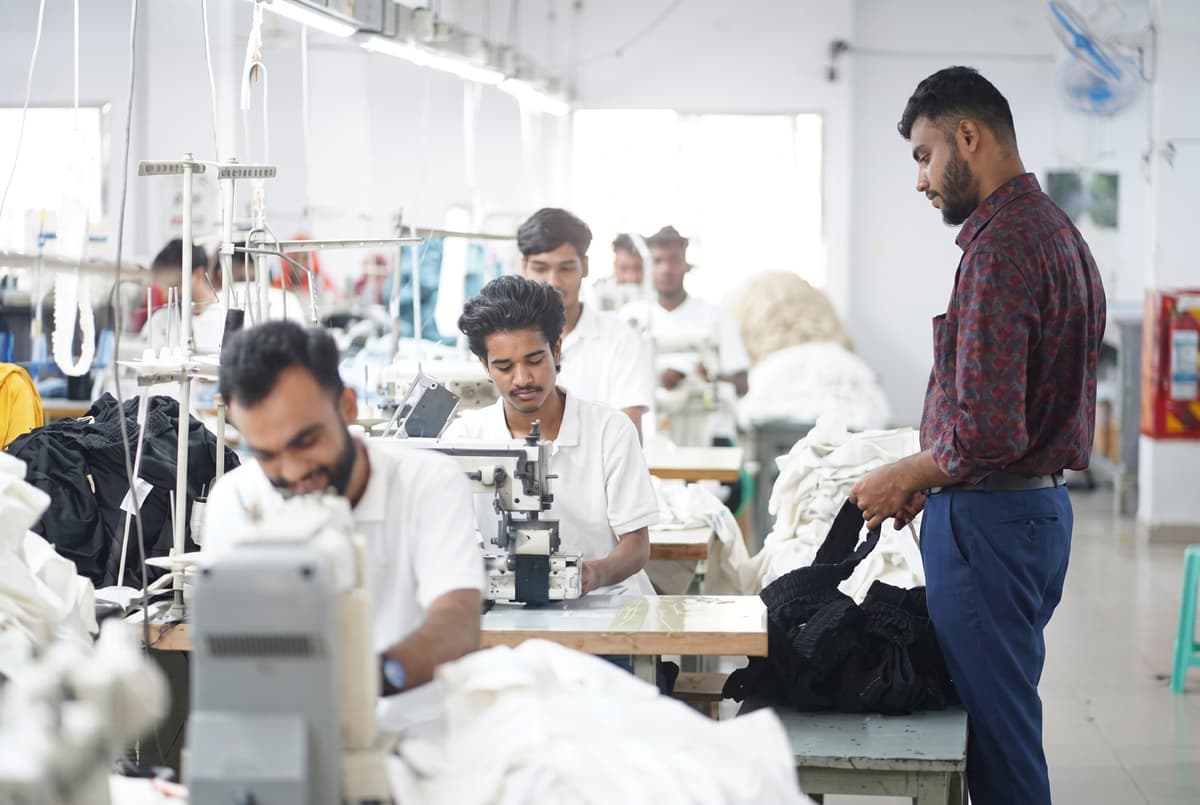
A disclosure before anything else: Collective Studio is a factory in Bangladesh. We are a family-run knitwear floor in Narayanganj, so we have an obvious interest in which way you go. This guide therefore does not rank Bali makers we cannot vouch for. It reports what five makers and one Australian agency publish about themselves, says plainly when Bali is the better choice, and compares the two on minimums, timing, duty and what each is built to make. It does not compare unit cost, which only two quotes on the same tech pack can settle. Every fact was checked on 11 November 2026 against the sources listed at the end.
The short version
- What Bali is: small workshops, mostly around Denpasar and Kerobokan, known for swimwear, resort wear and hand finishes. Indonesia's large garment factories are on Java, not Bali.
- Minimums: makers publish 5 to 50 pieces per style and colour, often with a floor of 100 to 250 pieces for the whole order.
- Timing: published bulk times run from about 2 to 8 weeks when the fabric is in stock, and up to about 90 days through one agency.
- Duty: Free into Australia for Indonesian-origin goods under IA-CEPA, with a certificate of origin. Bangladesh-origin clothing also enters Free. GST of 10% applies to both.
- Limits: fabric on the island is mostly brought from Java or imported, colour and sizing can vary between workshops, and capacity is small.
- From Bangladesh: 150 pieces per style and colour, and about 70 days from order to your door by air.
Bali is not the Indonesian garment industry
Indonesia is a large clothing exporter: about 8.7 billion US dollars in 2025 on the Ministry of Trade's figures, split almost evenly between knitted and woven garments. That industry is on Java. An International Labour Organization study found that four provinces, West Java, Central Java, Banten and Jakarta, held 95% of the country's large garment, textile and footwear factories. Bali is not among them. The whole of Bali's goods exports in 2025, every product together, came to about 565 million US dollars, with clothing the third largest item and Australia the third largest destination.
What Bali has instead is workshops. Trade sources describe most of them as small, with limited capacity, and known for resort wear, swimwear, activewear and custom pieces. An Australian sourcing agency that began there calls Bali the home of its lowest minimums and its artisan production: natural fibres, manual print and dye methods. Named Bali businesses list batik dyeing, tie-dye, hand painting, hand-block printing, embroidery and crochet among what they do in-house. If your range depends on a hand finish, this is the reason to look at Bali, and it is something a volume knitwear factory does not offer.
Minimums and lead times: what Bali makers publish
The table shows what five Bali makers and one Australian agency said on their own websites when they were read on 11 November 2026. None is ranked or recommended here; they are examples of what is published.
| Maker | What it makes | Published minimum | Published timing |
|---|---|---|---|
| Bali Swim | Swimwear | 20 per style and colour, and at least 100 pieces per order for ready designs, 250 for custom | 4 to 8 weeks |
| Swimwear Bali, Kerobokan | Swimwear | 40 per style for custom, 4 per size and colour | Bulk ready 3 to 5 weeks after deposit and approved specs |
| Bali Summer, Kerobokan | Swim, active and clothing | 20 pieces per style, colour and fabric, and 200 pieces per order | 4 to 8 weeks from receipt of the deposit |
| Megaya Bali, Denpasar | Swimwear | States no minimum garment quantity; custom prints need at least 20 metres of fabric | Depends on fabric stock |
| Dani Fashion Bali | Women's resort wear | 5 pieces per style, per colour | Around 2 weeks for one example order, when fabric is already available |
| Visionise, Newcastle NSW (agency with Bali partners) | Resort, swim and casual wear | From 25 pieces per style and colour | Samples 30 to 40 days; bulk around 90 days, subject to fabric |
These are the smallest published minimums of any place in our sourcing guides. Our own minimum is 150 pieces per style and colour, and we will not pretend otherwise: if your first run is 20 or 40 pieces per colour, a Bali workshop publishes that figure and we do not. The gap narrows once you count a whole order. Two of the makers above ask for 100 to 250 pieces across the order, and an agency there states a lowest total production order of 350 pieces.
Duty and GST into Australia: closer than most founders expect
Indonesian-made clothing enters Australia duty free. IA-CEPA, the Indonesia-Australia Comprehensive Economic Partnership Agreement, entered into force on 5 July 2020, and the Australian Border Force notice issued for it says all Indonesian originating goods, other than excise-equivalent goods, are entitled to a Free rate of customs duty. To claim it the goods must meet the agreement's origin rule, which for a cotton T-shirt is a change of tariff chapter or 40% qualifying value content, and for many other garments also requires that the piece is cut or knit to shape and assembled in Indonesia or Australia. You need a certificate of origin, except where the customs value is A$1,000 or less.
Bangladesh-made clothing enters Australia Free as well, at the least developed country rate. The Border Force's rules of origin guide sets two tests: the last process of manufacture must take place in Bangladesh, and the allowable factory cost must be at least 50% of the total factory cost. A manufacturer's declaration on the normal commercial invoice is the main proof. Bangladesh's graduation from the United Nations' list of least developed countries has just been put back: on 29 October 2026 the General Assembly extended its preparatory period, and graduation is now scheduled for 24 November 2029. The Australian government's country brief says products from Bangladesh will continue to enter duty-free and quota-free after that.
So duty does not decide between Bali and Bangladesh. Both arrive Free when the paperwork is right, and without it both pay Australia's general rate, which is 5% on cotton T-shirts, cotton jumpers and women's synthetic swimwear in the current Working Tariff. GST is 10% of the customs value plus any duty plus transport and insurance, whatever the origin, and a registered business can claim it back. Goods worth A$1,000 or less attract no duty or GST at the border, which matters for samples. Our guide to importing clothing into Australia works through the declaration step by step.
Getting it home
Bali is close, but freight is not instant. One Bali forwarder with Australian owners tells customers to allow 1 to 7 days for air freight, depending on the airline and schedule, plus 3 to 14 business days for clearance and delivery, and about 4 to 6 weeks on the water for sea freight, which is routed through Singapore. From our floor, air freight to Sydney, Melbourne or Brisbane takes about five to eight days door to door and sea freight about four to six weeks. The freight leg is similar. The difference is everything before it.
Bali and Bangladesh side by side
| Bali | Bangladesh, on our floor | |
|---|---|---|
| Published minimum | 5 to 50 pieces per style and colour; often 100 to 250 for the whole order | 150 per style and colour |
| What it is built to make | Swimwear, resort wear, small runs, hand finishes | Jersey and fleece knitwear: tees, hoodies, sweatshirts, joggers, polos, activewear |
| Fabric | Mostly brought from Java or imported; swim fabric often from Italy or the US | Knitted and dyed for your order at partner mills we specify and inspect |
| Sampling | 30 to 40 days through one agency | About 10 days |
| Bulk production | About 2 to 8 weeks with fabric in stock; around 90 days through one agency | 40 to 50 days after sample approval |
| Duty into Australia | Free under IA-CEPA with a certificate of origin | Free at the least developed country rate with a manufacturer's declaration |
| GST | 10% | 10% |
| Clock | Two hours behind Sydney, three in daylight saving | Four hours behind Sydney, five in daylight saving |
| Visiting | About six hours' flight from the east coast | A long-haul trip; live video from the floor and photos at every stage instead |
| Local contact | You, or an agent on the island | Janelle Rawlins in Noosa, Queensland, who coordinates our Australian orders |
When Bali is the better choice
- Your run is small. If you need 20 to 50 pieces per style and colour, Bali has makers who publish that and we start at 150.
- You make swimwear or resort wear in small runs. It is what the island's workshops specialise in, with imported swim fabrics on the shelf.
- A hand finish is the product. Batik, tie-dye, hand painting, block printing and crochet are done by named Bali businesses.
- You want to be in the room. A six-hour flight and a two-hour time difference make fittings and corrections in person realistic.
- You are still finding the range. Small runs let you test several styles before committing to volume in any of them.
When Bangladesh is the better choice
- You make knitwear. Tees, hoodies, sweatshirts and joggers are jersey and fleece garments, and they are what a knitwear floor is set up to cut and sew.
- A style has proved itself. Once you are ordering 150 pieces or more per style and colour, and reordering, repeatability matters more than flexibility.
- The fabric has to be specified. Weight, composition and shade are set for your order and knitted to it, instead of chosen from what is in stock.
- You sell through stockists. A shop that reorders expects the second delivery to match the first in colour and size.
- You want one quote to your door. We quote DDP to any Australian address, so freight, the customs entry and any duty are inside it.
Many Australian labels use both, in that order: a Bali workshop for the first small runs while the range is being found, and a knitwear factory once a tee or a hoodie has earned a larger order. On unit cost this guide says nothing, deliberately. Send the same tech pack to both, ask each for a landed quote to your door, and compare them on paper.
What to check before you order in Bali
Fabric first. A guest post by the co-founder of a Bali sourcing agency, published by an Australian business consultant, says the fabric at suppliers on the island is mostly made in Java or imported from India or China, and that the choice is limited compared with sourcing in those countries. The same post says the overall quality of making is very good. In practice, ask whether your fabric is in stock, where it comes from, and how long a reorder of the same cloth takes.
Consistency. One referral service says plainly that goods are made by Bali workshops, so colour and sizing vary, and one maker's terms of trade ask the client to accept a stated tolerance in colour and tone on printed goods. Neither is a fault in itself; both are things to agree in writing. Approve a physical sample, write the measurement tolerances into the order, and keep a piece from the first run to compare with the second.
Capacity and certificates. Small workshops have small output, so ask how many pieces a maker can finish in a month before you plan a wholesale season around it. The Australian agency quoted above says Balinese manufacturers are too small in scale to afford costly certifications, so if a certified supply chain matters to your customers, ask for a certificate number and check it. The ILO's Better Work programme, which monitors working conditions in more than 200 Indonesian factories, works on Java and does not mention Bali, so you are relying on your own visit.
Who you are dealing with. Many founders work through an agent who finds the workshop and the fabric. That can be worth it, but ask whether the company you are emailing owns the sewing floor, and ask to see it.
Holidays that stop production in 2027
Bali has more working days lost to ceremony than most production centres, and in 2027 two of the largest fall in the same week. Nyepi, the Balinese day of silence, is on Monday 8 March, and Idul Fitri is on 10 and 11 March, with collective leave days on 9, 12 and 15 March under the Indonesian government's holiday decree. Galungan falls on 13 January and again on 11 August, because it comes round every 210 days, and Kuningan follows ten days after each. Makers themselves say holidays slow production, so ask for the workshop's own closing dates when you place an order. Factories in Bangladesh close for the two Eid holidays, whose dates move each year; our guide to how long clothing manufacturing takes covers them.
Travel, clocks and the label
Bali is two hours behind Sydney, Melbourne and Brisbane, and three hours behind Sydney and Melbourne during daylight saving. Direct flights take about six to six and a half hours from the east coast. Smartraveller says Australians travelling for tourism, official government duties or business meetings can apply for a visa on arrival, valid for 30 days and extendable once, and that a visit for any other purpose needs a visa arranged before travel. If you plan to work in a factory, not just meet its owner, check which visa applies.
Wherever the garment is made, two Australian rules apply at the border and on the shelf. Clothing must carry care instructions under the mandatory care labelling standard, and imported clothing must carry a trade description in English naming the country where it was made. Ours read Made in Bangladesh; a Bali-made piece reads Made in Indonesia. Our guide to clothing labelling requirements by country sets out both.
Where we fit, and where we do not
We cut, sew, finish and inspect knitwear in our own building in Narayanganj: T-shirts, hoodies, sweatshirts, joggers, polos, activewear and swimwear. Our minimum is 150 pieces per style and colour. Organic cotton is available, made in our GOTS-certified facility (RSC 9687). We quote DDP to any Australian address. Janelle Rawlins, founder of Mindful Merch in Noosa, Queensland, coordinates Collective Studio orders for Australian brands, so the first conversation can happen in Australian business hours. Our page on manufacturing for Australian brands has the detail on duty, labels and fabric weights for the climate.
And where we are the wrong choice: runs under 150 pieces per style and colour, a range built on hand finishes, woven resort wear, or a product you need to fit in person every week. For those, Bali or a local maker will serve you better, and our guide to clothing manufacturers in Australia versus offshore shows where to find one at home. If you are not sure which side of the line you are on, send us your brief, say you are in Australia, and we will tell you straight.
What clients say
Collective Studio is up and coming. Very hard working people who want to please their customers and grow partnerships together. Homaira is very knowledgeable in the knit industry and always willing to learn more. We are looking to grow our business with them.
Collective Studios under the direction of Mr Jamish and his daughter Homaira represent the future of RTW production in Bangladesh. A thorough approach to detail governed by a genuine standard of quality. Masters of and partners in the process!
Frequently asked questions
What is the minimum order for clothing manufacturers in Bali?
Bali makers publish some of the smallest minimums anywhere: between 5 and 50 pieces per style and colour. When their websites were read on 11 November 2026, Dani Fashion Bali stated 5 pieces per style, per colour. Bali Swim and Bali Summer each stated 20 per style and colour. Swimwear Bali stated 40 per style for custom designs, with 4 per size and colour, and one Denpasar swimwear maker stated no minimum garment quantity at all. Read the whole page, though, because several add a floor for the order: Bali Swim stated 100 pieces per order for ready designs and 250 for custom, and Bali Summer 200 pieces per order. Custom prints and custom hardware carry their own minimums in metres or pieces. Treat every figure as a starting point and confirm it for your own garment and fabric before you plan a range around it. Ours, for comparison, is 150 per style and colour.
Do I pay import duty on clothing made in Bali?
Not if the goods qualify as Indonesian originating goods and you hold the proof. Under the Indonesia-Australia Comprehensive Economic Partnership Agreement, in force since 5 July 2020, Indonesian originating goods enter Australia at a Free rate of customs duty. A garment has to meet the agreement's origin rule, and for many clothing lines that includes being cut or knit to shape and assembled in Indonesia or Australia, which a garment cut and sewn in Bali can satisfy. You need a certificate of origin from the exporter, except where the customs value is A$1,000 or less. Without proof of origin, the general rate applies, which is 5% on most clothing lines in the current Working Tariff. GST is separate: 10% of the customs value plus any duty plus transport and insurance, on goods worth more than A$1,000. Ask your maker for the certificate of origin before the goods ship, not after.
How long does it take to manufacture clothing in Bali?
Published bulk times run from about two weeks to about three months, and the fabric decides where in that range you fall. Swimwear Bali states bulk orders are ready in 3 to 5 weeks after deposit and approved specs. Bali Swim and Bali Summer each state 4 to 8 weeks. Dani Fashion Bali gives around 2 weeks for one example order when the fabric is already available. An Australian agency with Bali partners is more cautious: samples in 30 to 40 days and bulk in around 90 days, subject to fabric. Fabric that has to be brought in adds time, and so do holidays: in 2027 Nyepi and Idul Fitri fall in the same week of March, and Galungan falls in January and August. Freight to Australia then takes days by air or about four to six weeks by sea. Ask each maker for dates in writing, and add slack.
Is Bali good for manufacturing clothing?
For the right product, yes. Bali suits small runs of swimwear, resort wear and pieces with hand finishes such as batik, tie-dye, hand painting or crochet, made in small workshops around Denpasar and Kerobokan. It is close to Australia, and makers publish minimums as low as 5 to 50 pieces per style and colour, which lets a new label test a range without a large order. Its limits come from the same smallness. Fabric on the island is mostly brought from Java or imported, so choice is narrower than in a mill country. Colour and sizing can vary between workshops and between runs. Output is small, and one agency says few makers hold certifications. That makes Bali a good place to start and a harder place to scale a knitwear basic such as a tee or a hoodie, where a stockist expects each delivery to match the last.
Bali or Bangladesh: which is better for an Australian clothing brand?
Each fits a different stage and a different product. Bali fits a label making 20 to 50 pieces per style and colour, swimwear or resort wear, hand finishes, or a first range that is still changing, with the founder able to fly up for fittings. Bangladesh fits knitwear such as tees, hoodies, sweatshirts and joggers once a style is ordered at 150 pieces or more per style and colour and reordered, because the fabric is knitted to a specification and the run is built to repeat. Duty does not separate them: Indonesian-origin clothing enters Australia Free under IA-CEPA and Bangladeshi-origin clothing enters Free at the least developed country rate, each with its own proof of origin, and GST of 10% applies to both. Timing differs. A first order with us takes about 70 days from order to your door by air. Many labels start in Bali and move their core knitwear later.
How do I find a clothing manufacturer in Bali?
There is no official directory, so most founders start online and finish in person. Search for makers by product, because Bali workshops specialise: swimwear, resort wear, activewear or hand-finished pieces. Read each maker's terms page, not just its home page, for the minimum per style and colour, any minimum for the whole order, the deposit terms and the stated tolerance on colour. Decide whether you want to deal with a workshop directly or through an agent, who finds the workshop and the fabric for you; if you use one, ask whether it owns the sewing floor. Shortlist three to five, then visit, which is the main advantage of making in Bali. See the workshop, handle the fabric that is in stock, and ask how many pieces it finishes in a month. Order samples from two makers before you commit. Check the visa you need if you plan to do more than attend meetings.
Where this applies
The manufacturing pages this guide relates to, if you are costing a real run.
Free tools & guides for this
Sources & further reading
- Indonesian Ministry of Trade (Satu Data Kemendag), using BPS data: non-oil exports by commodity, HS 61 and 62, 2025; read 11 November 2026
- ILO (2022): Employment, wages and productivity trends in the Asian garment sector (four Java provinces hold 95% of large factories)
- detikBali, 2 February 2026, reporting BPS Bali: Bali's goods exports in 2025
- World KNK, 16 April 2026: clothing manufacturers in Indonesia beyond Bali (a Java factory's view)
- Visionise (Newcastle NSW): clothing manufacturers, Bali minimums, timing and certifications; read 11 November 2026
- Pertamina SMEXPO: PT Asia Garment Internasional, Denpasar (batik dyeing, tie-dye, hand painting)
- Bali Resort Wear Wholesale: low-minimum makers in Bali, hand finishes, colour and sizing; read 11 November 2026
- Komang Darmiani, Bali: hand-made crochet
- Bali Swim: how it works, minimums and lead time; read 11 November 2026
- Swimwear Bali: minimums, bulk timing and imported fabrics; read 11 November 2026
- Bali Summer: terms of trade; read 11 November 2026
- Megaya Bali (Bali Swimwear & Bikini Manufacturer): minimums; read 11 November 2026
- Dani Fashion Bali: minimum and timing; read 11 November 2026
- Clothing Manufacturing Agent Bali: lowest total production order
- DFAT: Indonesia-Australia Comprehensive Economic Partnership Agreement (in force 5 July 2020); read 11 November 2026
- Australian Border Force: Australian Customs Notice No. 2020/27 (Free rate for Indonesian originating goods)
- DFAT: IA-CEPA product-specific rules of origin schedule
- DFAT: IA-CEPA Chapter 4, rules of origin (documentary evidence of origin)
- Australian Border Force: Preferential rules of origin guide (least developed countries, as at 29 August 2025)
- United Nations LDC Portal: Bangladesh graduation status (scheduled for 24 November 2029); read 11 November 2026
- DFAT: Bangladesh country brief (duty-free, quota-free access continues); read 11 November 2026
- Australian Border Force: Working Tariff, Schedule 3, Chapter 61 (operative 1 July 2026)
- Australian Border Force: GST and other taxes on imports (updated 20 October 2026)
- Australian Border Force: import declarations, goods worth A$1,000 or less (updated 23 September 2026)
- Jetfast Bali Cargo: shipping from Bali to Australia; read 11 November 2026
- Angela Henderson Consulting: Manufacturing in Bali 101, guest post by Cecile Schimmel of Ethical Sourcing Bali
- ILO-IFC Better Work Indonesia; read 11 November 2026
- Indonesian Coordinating Ministry for Human Development and Culture, 16 September 2026: national holidays and collective leave for 2027
- Kalenderlibur.id (updated 29 October 2026): Balinese calendar 2027, Galungan and Kuningan
- Remitly (updated 1 December 2025): flight times from Australia to Bali
- Smartraveller (updated 21 October 2026): Indonesia, visas and entry
- ACCC Product Safety Australia: care labelling for clothing and textiles mandatory standard
- Australian Border Force: Goods Compliance Update, Spring 2021 (trade descriptions on imported goods)
Cite this guide
For journalists, writers, researchers and students.
Quoting this guide? Please credit Collective Studio and link to this page.
Reference
Homaira Jashim, Collective Studio. "Clothing Manufacturers in Bali vs Bangladesh: An Honest Guide for Australian Brands." 11 November 2026. https://collectivestudioltd.com/journal/clothing-manufacturers-bali-vs-bangladesh
Writing about us? Our press kit has our facts, logos and photos, free to use with credit.
Have an idea? Let’s make it.
We manufacture from 150 pieces per style and colour, with organic cotton options from our GOTS-certified facility and photos at every stage. Send a sketch or a sentence — we’ll reply within one business day.