For New Zealand clothing brands · Duty-free since 2001 · From 150 pieces
Clothing Manufacturer for New Zealand Brands
Premium knitwear manufacturing for New Zealand brands — duty-free under New Zealand's own long-standing LDC preference scheme, low MOQ from 150 pieces, and DDP, so 15% GST and the goods levy sit inside one landed cost.
Most sourcing guides tell a New Zealand founder looking for a clothing manufacturer in New Zealand — or, more precisely, one that manufactures for New Zealand brands — to check Bangladesh's least-developed-country status the way a UK or EU buyer has to. Bangladesh has actually held duty-free access to New Zealand under the country's own Least Developed Country preference scheme since 1 July 2001 — one of the longer-standing schemes among the markets we ship to — so clothing made in Bangladesh currently enters New Zealand at 0% duty, not the standard rate.
Without that preference, the number is real and worth knowing: New Zealand's standard tariff on apparel runs up to 10%, and it's this fallback rate — not the current 0% — that a lot of generic sourcing content quietly assumes. Bangladesh is scheduled to graduate from LDC status on 24 November 2029; on 17 May 2026 New Zealand's non-resident High Commissioner to Bangladesh, David Pine, told Bangladesh's commerce minister that New Zealand attaches special importance to keeping that access undisrupted after graduation (The Financial Express, 18 May 2026). Unlike the UK's DCTS or the EU's transition arrangement, that is a stated intention reported in the press, not a codified scheme, so it is worth knowing plainly rather than assuming either way.
The timing has also changed: Bangladesh asked the UN in February 2026 to push graduation back; the UN Committee for Development Policy said an extension would be appropriate provided Bangladesh makes significant progress on domestic reforms during the extension, and in July 2026 the Economic and Social Council referred the request to the General Assembly. On 29 October 2026 the General Assembly granted it, so graduation is now scheduled for 24 November 2029. New Zealand has not yet published how its tariff will treat Bangladesh after that date: the duty-free rate comes from Bangladesh's listing in Schedule 2 of the Tariff (Less Developed Countries and Least Developed Countries) Order 2023, and we found no amending Order as of 5 November 2026. The section on 2026 and 2029 further down this page sets out what can be checked today, and we will update it when New Zealand publishes its post-graduation treatment.
GST still applies regardless of the duty question — New Zealand charges 15% on the customs value of imported goods plus any duty and the freight and insurance to New Zealand, collected by the New Zealand Customs Service at the border. On an order of 500 tees, that's 15% of the goods' customs value, plus 15% of the freight and insurance, and currently nothing in duty; since 1 April 2026 the entry also carries the High-Value Goods Import Levy. We ship DDP, so GST and the levy are inside your landed cost before you commit, from a genuine 150-piece minimum, with organic cotton made in our GOTS-certified facility (RSC 9687). If your business is GST-registered and wants to claim the import GST back, the goods need to be entered in its own name, so say so when you ask for a quote. If you're sourcing under a different arrangement (a distributor structure rather than direct import, for instance), tell us early — the GST treatment can differ and we'd rather confirm it than assume.
HWritten by Homaira Jashim, Co-Founder, Collective Studio · Published August 2026 · Last updated 5 November 2026
Duty-free since 2001 — not a new arrangement
Bangladesh has held 0% duty access to New Zealand under NZ's own LDC preference scheme since 1 July 2001. In May 2026 New Zealand's High Commissioner to Bangladesh said New Zealand wants that access kept undisrupted after the November 2029 graduation date; that is a stated intention, not yet a change to the tariff Order.
Low MOQ — from 150 pieces
Launch or test in the New Zealand market with 150 pieces per style, per colourway.
DDP: GST and the goods levy in one landed cost
GST on the customs value plus freight and insurance, and the goods levy on the entry, quoted inside one landed cost before you commit. No duty currently, no border surprise.
GOTS certification & quality
Organic cotton, made in our GOTS-certified facility (RSC 9687), checked against your approved sample before it ships.
Selling in New Zealand and Australia: duty, GST and labels on both sides
Last verified: 5 November 2026, against New Zealand Customs, Inland Revenue, the Commerce Commission, New Zealand Legislation and the Australian sources listed under Sources below.
A lot of New Zealand labels sell across the Tasman within a year or two of launching, and many are planning for it from the first order. The two markets treat clothing from Bangladesh in much the same way, which is the good news: both admit it duty-free under their schemes for least developed countries. The detail differs in four places, and each one is cheaper to handle at the factory than after the goods land.
Origin. Both countries want more than a sewing step. New Zealand's rule, in regulation 43A of the Customs and Excise Regulations 1996 and explained in Customs Fact Sheet 8, needs the last process of manufacture in Bangladesh and qualifying expenditure of at least 50% of the factory or works cost. Australia's, in the ABF's rules of origin guide, needs the last process in Bangladesh and allowable factory cost of at least 50%, with materials from developing countries that are not least developed capped at 25% of the total. A garment knitted, dyed, cut and sewn on our side meets both. Ask for the cost split in writing, because each country's broker will want it.
Shipping. New Zealand's preference carries a direct shipment condition: goods must reach New Zealand without entering the commerce of a country outside the least developed group, and Customs says goods that have cleared customs in a third country will usually be taken to have entered its commerce. So a carton cleared into a Sydney warehouse and later sent on to Auckland would no longer qualify for New Zealand's LLDC rate, and the normal 10% on knitted tees and sweatshirts could apply. Customs can grant an exemption on application, but the simpler answer is to split the order at our end: one set of cartons and documents consigned to New Zealand, one to Australia.
Tax at the border. New Zealand charges GST at 15% on the Customs value plus any duty and the shipping and insurance costs; Australia charges GST at 10% on the customs value plus transport, insurance and any duty (ATO). Both are claimable by a business registered in that country, which means a New Zealand company bringing stock into Australia needs to think about who the Australian importer is before the first Australian shipment, not after.
Labels. This is where trans-Tasman ranges most often go wrong. Australia's care standard accepts symbols alone; New Zealand's expects written instructions, with symbols as an accompaniment. New Zealand requires fibre content; the Australian care standard does not. Both require the country of origin, in English. One label with written care instructions, the care symbols, the fibre content and Made in Bangladesh satisfies both countries, and costs no more to sew than two. The full step-by-step for each side is in our guide to importing clothing into New Zealand and on our page for clothing manufacturing for Australian brands.
New Zealand
Australia
Duty on Bangladesh-made knit tops
Free at the LLDC rate; normal rate 10%
Free at the LDC rate
Origin test
Last process in Bangladesh; qualifying expenditure at least 50% of factory or works cost; direct shipment
Last process in Bangladesh; allowable factory cost at least 50%; non-LDC developing-country materials capped at 25%
Tax at the border
GST 15% on value, duty, shipping and insurance
GST 10% on value, transport, insurance and duty
Formal entry needed above
NZ$1,000 (import entry; client code required)
A$1,000 (full import declaration)
Care label
Written instructions in English; symbols may accompany them
Symbols, words or both
Fibre content
Required (AS/NZS 2622:1996)
Not required by the care standard; any claim must be accurate
Country of origin
Required, permanent, no letter under 1.5 mm
Required at import, in English, prominent and legible
Legal minimums verified 5 November 2026 against the sources listed below. Retailers often ask for more than the law does.
New Zealand labelling in practice
Last verified: 5 November 2026, against the regulations on legislation.govt.nz and the Commerce Commission's guidance.
In practice, a sewn label for a New Zealand cotton tee carries four things. Made in Bangladesh, on a permanent label that can be seen when the garment is examined. The fibre content, largest first, such as "95% cotton, 5% elastane" or "cotton, elastane"; the Commerce Commission says percentages may be included but the order is fixed. Written care instructions in English, such as the wash temperature, whether to tumble dry and any warning against treatment that would damage the garment, with the international symbols alongside if you want them. And, if the care instructions specify dry cleaning, the dry-cleaning symbol, which the Commission says is then compulsory. All lettering on the origin and fibre labels must be at least 1.5 mm high.
Three smaller points catch brands out. Each item of a set must carry its own care label, so a matching sweatshirt and jogger are labelled separately. Some items, such as gloves, hosiery and neckwear, may carry care instructions on a ticket or packaging instead of a permanent label, but a tee, hoodie or jogger may not. And a GOTS label is a certification mark, not a legal label: it sits beside the care and content label, never instead of it, and its wording is confirmed against our certificate RSC 9687 before it is printed.
Hang tags, packaging and your website are part of the picture too. Section 13 of the Fair Trading Act 1986 prohibits misleading representations about a garment's composition as well as its origin, so a product page that says "pure merino" or "100% organic cotton" has to match the sewn label. If you want to use New Zealand imagery, the Commission's guidance on Made in New Zealand claims is worth reading first: it says kiwis and the flag can imply New Zealand origin, and its suggested wording for clothing designed at home and made abroad is "Designed in NZ and manufactured in" the real country. For children's pyjamas and dressing gowns, the children's nightwear standard adds a fire hazard label at the inside back neck or the waistband.
Send us your label artwork with the tech pack and say which markets you sell in. We sew the labels to your artwork during construction, so the wording has to be final before bulk starts. The tech pack checklist has a section for it.
Timing a New Zealand drop around the southern seasons
Order dates are our illustration, counting back about 70 days by air. They are planning dates, not a promise for a specific order.
New Zealand's seasons run opposite to Europe's and North America's: summer is December to February and winter June to August, which is how Earth Sciences New Zealand, formerly NIWA, reports them. That matters more than it sounds. Most sourcing calendars online are written for northern-hemisphere brands, so a New Zealand founder who follows them orders a winter range when the shops at home are selling summer.
Work back from the date you want stock in hand, not from the launch date. From our floor, plan on about 70 days from order to your door by air: about 10 days of sampling, 40 to 50 days of production after you approve the sample, then freight. Sea freight lands later, so a sea order has to be placed earlier still. The table below counts back about 70 days from four typical in-stock dates.
Three habits help. Order your summer range first, because the weeks before Christmas are when summer ranges sell, and a late summer delivery has nowhere to go. Put repeat styles on sea freight once they are proven and keep air for launches and colours you are testing, because a reorder works from the pattern and sealed sample already on file. And order heavier winter pieces, such as fleece hoodies and joggers, at the same time as you sign off summer, because late February comes round quickly. Put your own dates into the launch date calculator to see the order-by date for your range.
Season
Stock on hand by
Place the order by, for air freight
Spring (September to November)
1 September
Late June
Summer (December to February)
1 November
Late August
Autumn (March to May)
1 March
Late December
Winter (June to August)
1 May
Late February
Counting back about 70 days by air. Add a margin for a second sample round and for your own photography and launch preparation.
A first order from New Zealand, step by step
Most New Zealand founders who contact us have not imported before. This is the order of events on a first run, with the New Zealand paperwork in the places where it actually comes up.
1. Brief and quote. Send the styles, colours, quantities and target date, with a tech pack if you have one. Our minimum is 150 pieces per style and per colour, so one tee in two colours is 300 pieces. We quote DDP to your New Zealand address. Tell us at this point whether your business is registered for GST, because it decides whose name should be on the import entry.
2. Client code. For commercial imports valued at NZ$1,000 or more, New Zealand Customs requires a client code. You can apply on form NZCS 224, emailed with photo ID and evidence of your entity name, or a customs broker can apply for you. Do this while samples are being made, not when the goods are on the water.
3. Sampling. About 10 days on our floor, then the sample travels to you by courier. A courier parcel of samples worth NZ$1,000 or less is below the line at which Customs collects GST and duty, unless it is part of a larger consignment, though the low-value goods levy still applies to it.
4. Labels and sign-off. Approve the sample, and approve the label wording at the same time: written care instructions, fibre content and Made in Bangladesh. If you sell organic, approve the GOTS label wording too.
5. Production. 40 to 50 days after you approve the sample. Before the goods leave, we send the commercial invoice, the packing list and the origin evidence your entry needs.
6. Clearance and delivery. The entry claims the LLDC rate, GST and the High-Value Goods Import Levy are paid, and the goods are delivered to your door: about 70 days from order to your door by air. Count the cartons against the packing list before you sign, and open a few to check sizes and colours.
7. After delivery. If the GST was paid in your name, Inland Revenue says it goes in the credit adjustments box of your GST return. Keep the origin documents with the order: New Zealand importers must hold them for seven years. Each step is set out in more detail in our guide to importing clothing into New Zealand.
What changed in 2026, and what may change in 2029
Last verified: 5 November 2026. We will update this section when New Zealand publishes its post-graduation tariff treatment.
April 2026: entry fees became levies. Until 31 March 2026 a commercial import entry carried the Import Entry Transaction Fee and the Biosecurity System Entry Levy. From 1 April 2026 Customs and the Ministry for Primary Industries replaced their goods fees with levies charged per consignment. A wholesale order valued over NZ$1,000 now carries the High-Value Goods Import Levy on its entry, with separate air and sea rates and a Customs part and an MPI part, both collected by Customs; consignments of NZ$1,000 or less carry the Low-Value Goods Import Levy. The current amounts are on the Customs goods levies page. On our DDP orders they are inside the price.
November 2029: Bangladesh graduates. The UN has scheduled Bangladesh's graduation from the least developed country list for 24 November 2029. New Zealand's preference for Bangladesh comes from its listing in Schedule 2 of the Tariff (Less Developed Countries and Least Developed Countries) Order 2023, so the question is whether, and when, that listing changes. Two things can be checked today. When New Zealand revised the lists in 2023, it moved five countries from the least developed list to the less developed list, and already-graduated countries such as Samoa and Vanuatu sit in Schedule 1. And the October 2026 tariff shows no less developed country rate on cotton T-shirts or sweatshirts, so a move to Schedule 1 on the same pattern would put those lines at the normal 10%.
On the other side of the ledger, New Zealand's non-resident High Commissioner to Bangladesh, David Pine, told Bangladesh's commerce minister on 17 May 2026 that New Zealand attaches special importance to keeping Bangladesh's existing duty-free and preferential access undisrupted after graduation (The Financial Express, 18 May 2026). That is a stated intention reported in the press, not an Order, and we found no amending Order as of 5 November 2026.
What we suggest: plan on Free for every shipment that lands before graduation, and ask your broker to confirm the rate on the entry for anything landing after it. If you are building a five-year plan, run your margins once at the normal 10% as well, so that a change would be an inconvenience rather than a surprise. The same question for the UK, the EU, Canada and Australia is answered market by market in our LDC graduation guide.
Clothing manufacturing for New Zealand brands, made by people on our own floor
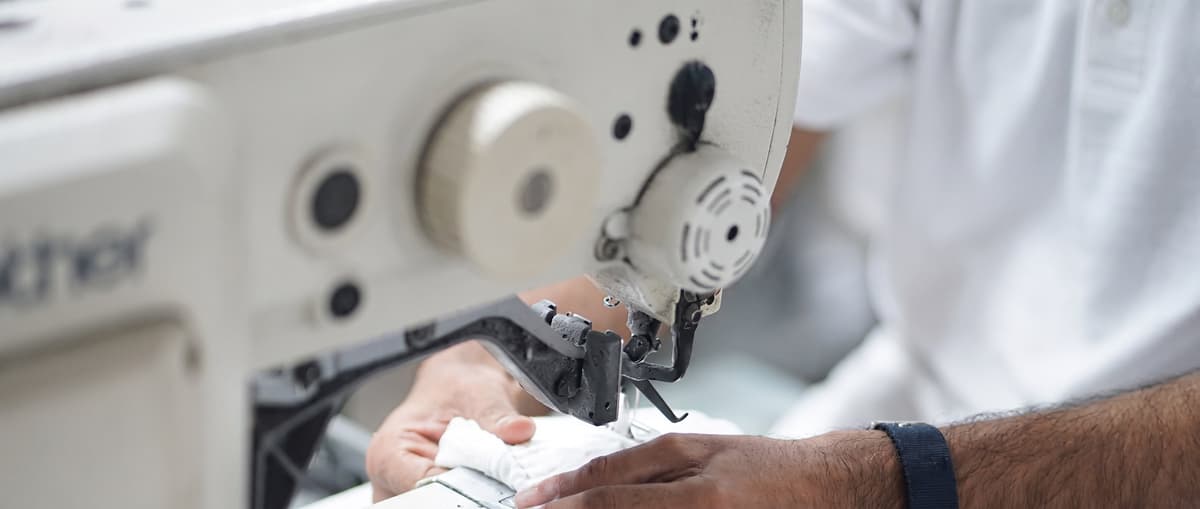
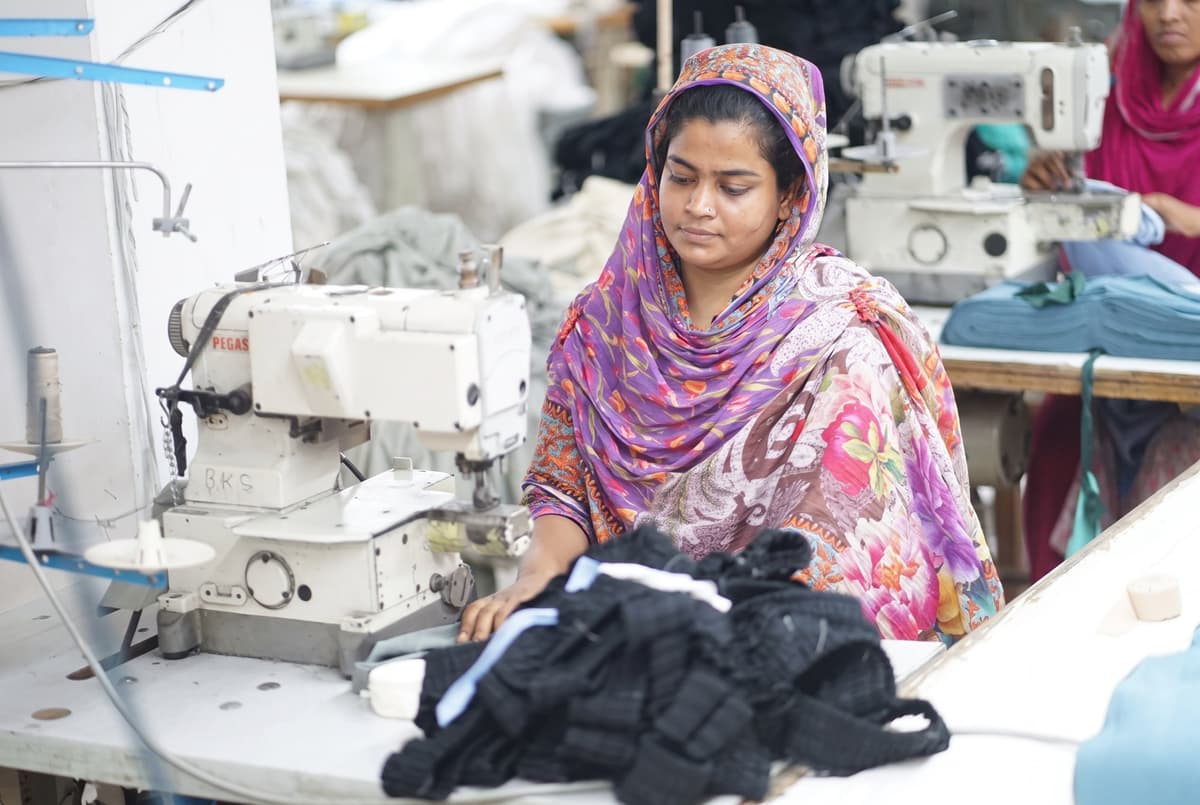
Production in Narayanganj — the same floor your New Zealand order is cut and sewn on.
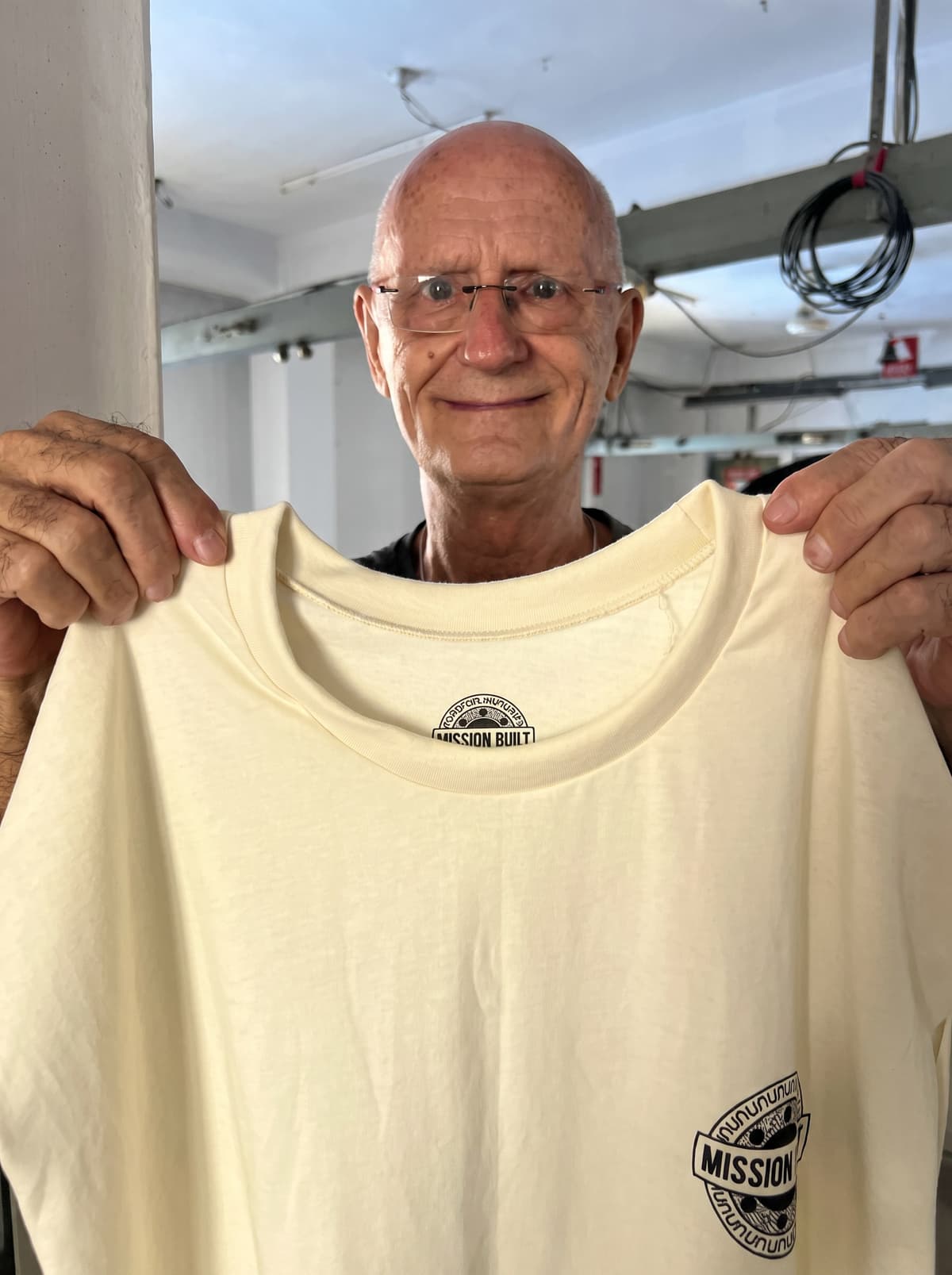
Walter, QC lead, checking finished pieces against your approved sample before DDP shipping.
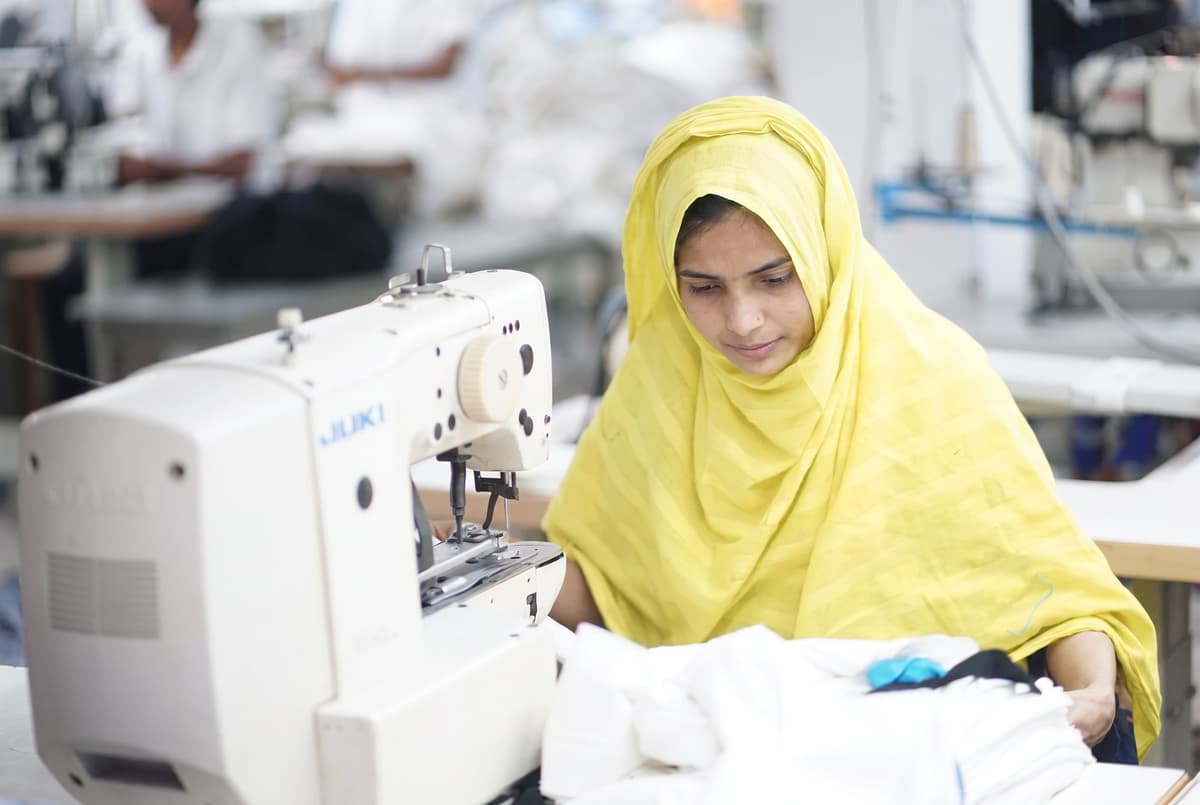
Rashida sewing — real production, not a trading company reselling someone else's.
Inside the factory, and the people who run it
Co-founder Homaira Jashim walks our floor in Narayanganj, Bangladesh: the line your order is cut and sewn on before it ships DDP to New Zealand.Finished tees folded and bagged on our floor, inspected and packed here before they ship. Video page: Folding and bagging finished garments
What clients say
Nice supplier that is looking to develop new buyers and products.
Wonderful people to work with — very professional and knowledgeable, also accommodating to the needs of their customers.
Ian SteinerFriendly Line Ltd, United KingdomLinkedIn ↗
Collective Studio is up and coming. Very hard working people who want to please their customers and grow partnerships together. Homaira is very knowledgeable in the knit industry and always willing to learn more. We are looking to grow our business with them.
Clothing manufacturing for New Zealand brands — specs at a glance
Products
Tees, hoodies, joggers, activewear, loungewear
Minimum order
150 pcs per style, per colour
NZ import duty
Free (0%) currently at the LLDC rate, under NZ's own scheme since 1 Jul 2001; the normal rate of up to 10% would apply if not extended post-graduation
NZ GST
15%, charged at the border on the customs value plus any duty, freight and insurance
Worked example
500 tees: no duty at the LLDC rate, GST at 15% of the customs value plus freight and insurance, and the High-Value Goods Import Levy on the entry, at current rates
Shipping terms
DDP: GST, the goods levy and freight inside one landed cost
Certification
Organic cotton from our GOTS-certified facility (RSC 9687)
Delivery
About 70 days from order to your door by air: 40–50 days production after sample approval, plus freight
Questions about clothing manufacturing for New Zealand brands, answered
Do you manufacture clothing in New Zealand, or just ship there?
We ship there: your clothing is made in Bangladesh and sent to New Zealand, because we do not run a New Zealand workroom. Our factory is at Plot-A-132, Road No. 02, BSCIC Industrial Area, Panchabati, Narayanganj 1420, Bangladesh: your pieces are cut, sewn and checked there, then travel DDP to your door. If your brand needs production inside New Zealand itself, whether for a Made in New Zealand label or to visit the workroom between runs, a local maker will serve you better, and we would rather say so plainly. Where we fit is a New Zealand brand that wants knitwear made to its own pattern from 150 pieces per style and colour, currently free of import duty under New Zealand's LDC scheme, with one landed price. Walter Meyer, who has spent 38 years in quality control, compares finished pieces with your approved sample before any carton is packed for New Zealand. We reply within one business day.
Do I pay import duty on clothing from Bangladesh to New Zealand?
Currently, no. Bangladesh has held duty-free access to New Zealand under the country's own Least Developed Country preference scheme since 1 July 2001, so apparel enters at 0% duty rather than New Zealand's standard rate, which runs up to 10%. When New Zealand opened that access in 2001 it removed all tariffs on imports from least developed countries, so tees, hoodies, joggers and activewear were covered rather than a chosen few. The preference is not automatic, though: it is claimed on the import entry with a certificate of origin, a declaration of origin or other evidence that the goods meet New Zealand's rules of origin. That's a New Zealand-specific arrangement, separate from what the EU, UK or Canada offer. Zero duty does not remove New Zealand's 15% GST, and our DDP quote already carries it, so the figure you approve is the landed figure. If your classification is unusual, confirm the current rate for your specific HS code with New Zealand Customs.
What happens to this duty-free access when Bangladesh graduates from LDC status?
Nothing has changed yet, so plan on Free until graduation and confirm the rate after it. Bangladesh's duty-free rate comes from its listing in Schedule 2 of New Zealand's Tariff (Less Developed Countries and Least Developed Countries) Order 2023. The date is now fixed: after Bangladesh asked for more time, the UN General Assembly agreed on 29 October 2026, and graduation is scheduled for 24 November 2029. On 17 May 2026 New Zealand's non-resident High Commissioner to Bangladesh, David Pine, told Bangladesh's commerce minister that New Zealand attaches special importance to keeping that access undisrupted after graduation, as The Financial Express reported. That is a stated intention, not an amending Order, and we found none as of 5 November 2026. Countries that graduated earlier sit in Schedule 1, and the October 2026 tariff has no less developed country rate on cotton tees or sweatshirts, so run your margins once at the normal 10% as well.
How much GST will I pay on clothing imported into New Zealand?
15%, and it is charged on more than the price of the garments. New Zealand Customs calculates GST on the customs value, plus any duty, plus the shipping and insurance costs of getting the goods to New Zealand (read 27 Sep 2026). On 500 tees, GST is 15% of the goods' value, plus 15% of whatever the freight and insurance come to. Because we ship DDP, that GST sits inside the price we quote for your New Zealand delivery, and clearance is ours to arrange rather than a bill waiting for you at the border. Since 1 April 2026 each consignment also carries a goods levy: the High-Value Goods Import Levy over NZ$1,000, which covers a wholesale order, or the Low-Value Goods Import Levy on smaller ones. If your business is GST-registered and wants to claim the import GST back, the goods need to be entered in its own name, so say so when you ask for a quote.
Can a small New Zealand brand order just 150 pieces?
Yes: a New Zealand label can start with 150 pieces of one style in one colour, which is our floor for every style and every colour we make. Colour is where small runs get expensive. A single colourway of 450 tees is cut from one fabric and dye lot, whereas 150 each in three colours means three lots, each priced on its own, so a first New Zealand drop usually works better deep in one colour than spread thin across several. A sensible first order is three to five hundred pieces across two or three styles. With duty currently at zero, your landed figure is the manufacturing price, freight, 15% GST and, since 1 April 2026, the High-Value Goods Import Levy on any run valued over NZ$1,000; the Low-Value Goods Import Levy covers smaller consignments. Try your own style and colour split in our MOQ calculator to see how the per-colour minimum shapes the run before you brief us.
Can you make custom t-shirts and hoodies for a New Zealand brand?
Yes: we cut and sew T-shirts and hoodies for New Zealand labels, made to your pattern in our Narayanganj factory from 150 pieces per style and colour, alongside sweatshirts, joggers, activewear and loungewear. Organic cotton ranges are available, made in our GOTS-certified facility (RSC 9687), with the scope certificate on request. The New Zealand detail is the labelling. The Commerce Commission requires new clothing to carry a permanent country of origin label in English, with no letter under 1.5 mm high, plus a fibre content label listing each fibre from the largest share to the smallest, and a care label to AS/NZS 1957 (read 27 Sep 2026). A garment from our floor must name Bangladesh as its country of origin, never New Zealand. We sew your brand, care and origin labels to your artwork. Fits, fabric weights and print options for each are set out on our private-label T-shirt and custom hoodie pages.
How long does delivery to New Zealand take?
Sampling takes about ten days, bulk production forty to fifty days once the pre-production sample is approved, then freight on top. Sea freight takes about four to six weeks door to door, depending on the destination port (Auckland or Tauranga are the common entry points), and suits a style once it is proven. Sea shipments leave from Chattogram. Air freight adds about seven to ten days door to door and suits a launch date or a first order where speed matters more than cost. We ship DDP either way, so GST and clearance at the border are handled on our side, and you receive one landed cost and one delivery. Tell us the final address, a third-party warehouse or your own studio, and whether a style is a launch piece or a reorder, and we price both freight modes so you can choose before the goods leave. From order to your door, plan on about 70 days by air.
Can I clear stock into Australia and then send it on to New Zealand duty-free?
Usually not, so ship each country its own cartons. New Zealand's duty-free rate for least developed countries comes with a direct shipment condition: the goods must reach New Zealand without entering the commerce of a country outside that group. New Zealand Customs says goods that have cleared customs in a third country will usually be taken to have entered its commerce, so stock cleared into an Australian warehouse and later sent across the Tasman would lose the LLDC rate. Knitted cotton T-shirts and sweatshirts would then face New Zealand's normal rate of 10%. Customs can grant an exemption from the direct shipment rule on application, but it is not something to plan a range around. The straightforward answer is to split the order at our end, with separate cartons, invoices and origin documents consigned to each country. Passing through a transhipment port on the way is allowed, provided the goods are not cleared there.
Are care symbols enough on a New Zealand care label?
No, New Zealand care labels need written instructions; the symbols are optional extras. The Consumer Information Standards (Care Labelling) Regulations 2000 adopt AS/NZS 1957:1998, and the Commerce Commission says care labels must be legible and in English and can use internationally recognised symbols to accompany the written instructions. Where dry cleaning is specified, the dry-cleaning symbol must be included. This is the main difference from Australia, whose 2023 care labelling standard lets a garment comply with symbols alone, so a symbols-only label made for the Australian market is not enough on its own in New Zealand. A label with written instructions and the symbols side by side works in both. New Zealand also requires fibre content and country of origin on new clothing, so put all of it on one sewn label: written care, symbols, fibres from the largest to the smallest, and Made in Bangladesh. We sew it to your artwork.
What does New Zealand charge on an import besides GST?
Mainly a goods levy, plus your broker's fee if you clear the goods yourself. Since 1 April 2026, New Zealand Customs and the Ministry for Primary Industries recover their border costs through goods management levies, which replaced the earlier Import Entry Transaction Fee and Biosecurity System Entry Levy. A consignment valued over NZ$1,000, which covers any production order, carries the High-Value Goods Import Levy on its import entry, with separate rates for air and sea and a Customs part and an MPI part, both collected by Customs. Smaller consignments, such as a courier of samples, carry the Low-Value Goods Import Levy instead. The levies attract GST, and MPI can charge an hourly rate for some biosecurity services. Duty on clothing from Bangladesh is normally zero. On our DDP orders the levy and the clearance sit inside the price; on FOB they appear on your broker's invoice.
Sources & further reading
Trade and regulatory details on this page last verified 19 September 2026. Tariff and compliance terms change — ask us to confirm the current position for your order.
Whether it’s a large bulk or wholesale run or your first batch of 150, send a sketch, a reference, or a sentence. We’ll reply within one business day with fabric options and an indicative price.