Clothing Manufacturers in Canada vs Offshore: An Honest Guide for Canadian Brands
If you are searching for clothing manufacturers in Canada, you are really choosing between two kinds of supplier: a Canadian maker, such as a sample room, a cut-make-trim (CMT) contractor or a small factory in Montreal, Toronto or Vancouver, and an offshore factory that ships to you. The short answer is this. Make in Canada when your runs are below about 150 pieces per style, when you need samples in days and fittings in person, or when a genuine "Made in Canada" claim is part of the brand. Make offshore when you are producing in bulk, reordering the same styles, making knitwear such as tees, hoodies and fleece, and want the duty-free access Canada gives to least developed countries like Bangladesh.
A disclosure before anything else: Collective Studio is an offshore factory. We are a family-run knitwear floor in Narayanganj, Bangladesh, so we have an obvious interest in which way you go. That is why this guide does not rank Canadian makers we have never visited. It points you to the directories where they can be found and checked, says plainly when a Canadian maker is the better choice, and sets out the rules on both sides: what a Made in Canada claim needs, and what importing involves. Every rule here was checked on 5 November 2026 against the Canadian government sources listed at the end.
The short version
- To find a Canadian maker, start with the Canadian Apparel Federation's Canadian Apparel Directory and mmode's directory of Quebec fashion and clothing subcontractors.
- A Canadian maker wins for very small runs, fast sampling, fittings in person and a lawful Made in Canada claim. Under the Competition Bureau's guidelines that claim needs the last substantial transformation in Canada, at least 51% of total direct costs incurred here and a qualifying statement.
- Offshore wins for bulk, reorders, specialist knitwear and landed cost. Knitted cotton tees and sweatshirts carry 18% MFN duty, but clothing cut and sewn in Bangladesh enters free under the Least Developed Country Tariff (LDCT) with the right certificate of origin.
- Importing means 5% GST at the border (recoverable if you are registered), a CBSA account in the CARM Client Portal, a bilingual fibre-content label with your name and address or a CA identification number, and a country-of-origin marking.
- Timing: from a Bangladeshi factory, plan on about 70 days from order to your door by air, and about a month more by sea.
Canadian maker vs offshore factory
Where the sewing happens changes how minimums work, how fast you can iterate, what the label can say and what you pay at the border.
| Canadian maker | Offshore factory (for example Bangladesh) | |
|---|---|---|
| MOQ logic | Often flexible. Many sample rooms and CMT contractors take small runs, and mmode's Quebec directory lets you filter for subcontractors with no minimum. | Set by fabric. Knit fabric is knitted and dyed in lots, so minimums are per style and per colour. Ours is 150 pieces per style and colour. |
| Sampling speed | Fast. You can visit for a fitting and see a revised sample within days. | Slower. About 10 days for a first sample on our floor, plus courier time, and fittings happen on video or by post. |
| Cost structure | Canadian labour and overheads are paid on every piece, so the cost of each piece stays high even as quantity grows. | Lower labour and overhead per piece, but freight, customs clearance and GST timing have to be added to compare like with like. |
| "Made in Canada" claim | Possible when the last substantial transformation happens here and at least 51% of total direct costs are Canadian, with a qualifying statement such as "Made in Canada with imported parts". | Not available. The garment is marked with its true country of origin, such as Made in Bangladesh. |
| Duty | None on the garment, because it is not imported. | From Bangladesh: Free under the LDCT when the origin rule is met. Without a preference: 18% MFN on knitted cotton tees and sweatshirts. |
| Best for | Development, runs under about 150, made-to-order and brands built on Canadian manufacture. | Bulk and repeat orders of knitwear, organic cotton basics, heavyweight fleece, and brands growing past the first run. |
How to find a clothing manufacturer in Canada
A list of "the 10 best clothing manufacturers in Canada" written by someone who has never stood in those workrooms tells you little. These directories are better starting points, because each says who it lists and how a business gets on it. We read both on 5 November 2026.
- Canadian Apparel Directory, run by the Canadian Apparel Federation. The federation is the national association of Canada's apparel industry, based in Ottawa. Its directory covers apparel designers, manufacturers, contractors and importers, plus textile and trim suppliers and services such as customs brokers and testing bodies, and you can filter it by province and by category, including activewear, children's apparel, outerwear and uniforms. It listed about 90 organisations when we checked. Listings are free for members and open to non-members for a fee, so treat a listing as a lead to check, not a recommendation.
- mmode fashion and clothing subcontracting directory, for Quebec. mmode is the Montreal fashion cluster, a non-profit that works for the growth and competitiveness of the Quebec fashion industry. Its subcontracting directory listed 48 businesses when we checked: clothing manufacturers, sewing workshops, knitting, cutting and finishing services, and print and embroidery studios. The filters are the useful part. You can sort by service, product, equipment, administrative region and production capacity, from "no minimum" up to 2,000 units and more. For small-run production in Quebec, start here.
Two more Quebec organisations are worth knowing about. The Quebec government's fashion industry profile names Vêtement Québec, which brings together leaders of apparel companies, and Vestechpro, a college technology transfer centre attached to Cégep Marie-Victorin that serves the apparel sector.
Expect the directories to be short, because the industry is made of small businesses. Innovation, Science and Economic Development Canada's Canadian Industry Statistics count 1,056 clothing manufacturing establishments with employees in Canada in 2025: 455 in Quebec, 350 in Ontario and 141 in British Columbia. Of those, 599 have one to four employees and only 15 have 100 or more. That is the shape to plan around: workrooms rather than large factories, mostly in Quebec and Ontario, many of them able to take a run of a few dozen pieces and few of them set up for tens of thousands.
How to vet a Canadian maker
Whichever directory you use, the questions are the ones you would ask any factory, plus two that are specific to Canada.
- What do you sew every week? A contractor that lives on woven dresses or outerwear is not the place for a fleece hoodie. Ask to see work like yours on the machines.
- What is your minimum per style and per colour? Small-run makers often quote per order or per style, so make sure you know how colours count.
- Who buys the fabric? Many Canadian contractors work CMT, which means you source the fabric and trims yourself. That is a project of its own, and it is also where imported content enters the cost test for a Made in Canada claim.
- What does sampling include? Pattern, grading, a first sample and a revised one are separate pieces of work. Get each one listed.
- Whose name goes on the label? The Textile Labelling Act label must carry the dealer's name and postal address or a CA identification number. If you hold a CA number, the maker sews it in; if not, your name and address go on the label.
- Can I visit? Standing at the cutting table is the great advantage of a local maker. Use it before you pay a deposit.
Our guide to how to find a clothing manufacturer has the full vetting checklist and a first email you can copy, and it works for a workroom in Montreal as well as a factory in Bangladesh.
When a Canadian maker is the better choice
We would rather you chose the right supplier than chose us for the wrong job. These are the situations where a Canadian maker usually wins.
- Very small runs. Below about 150 pieces per style and colour, an offshore knit factory either cannot help or prices the run as a series of set-ups. A Canadian CMT contractor can often sew 30 or 50 pieces from fabric you supply, and mmode's directory has a no-minimum filter for exactly this. If your first drop is that size, start local and move offshore once a style proves itself.
- Fast sampling and fittings. Developing a new block or a fitted style can take several rounds. Doing those rounds across town in days is a real advantage over sending samples by courier. Some brands sample in Canada and produce offshore, which works well if the local sample and pattern travel with a complete tech pack.
- A genuine Made in Canada claim. If Canadian manufacture is central to the brand, only a Canadian maker can give it to you, and the next section sets out what the claim needs.
- Small, frequent restocks. If you reorder a few dozen pieces at a time as they sell, a maker a short drive away suits that rhythm better than a production cycle measured in months.
What "Made in Canada" and "Product of Canada" actually require
Origin claims on clothing sold in Canada are policed by the Competition Bureau, under the Competition Act and the Textile Labelling Act. Neither law makes you say where a garment was made (imported apparel has a separate customs marking rule, covered below), but if you make a Canadian claim it must not be false or misleading. The Bureau's guidelines on "Product of Canada" and "Made in Canada" claims, dated 7 March 2025, say when it will generally not challenge one.
- Product of Canada: the last substantial transformation of the goods happened in Canada, and all or virtually all, meaning at least 98%, of the total direct costs of producing them were incurred in Canada.
- Made in Canada: the last substantial transformation happened in Canada, at least 51% of total direct costs were incurred in Canada, and the claim carries a qualifying statement, such as "Made in Canada with imported parts" or "Made in Canada with domestic and imported parts".
- A more specific claim: if neither test is met, you can still say accurately what was done here. The Bureau's own example is "Sewn in Canada with imported fabric", and a claim such as "Designed in Canada" is acceptable when it is true and describes that process rather than the garment's manufacture. On a textile label, a claim like that must also name the country of origin.
Substantial transformation means a fundamental change in form, appearance or nature, so that the goods after the change are new and different from the goods before it. For clothing, the harder question is usually the cost test. The direct costs the Bureau counts are materials and the labour that goes into production, while general overhead is usually left out. So a tee cut and sewn in Toronto from expensive imported fabric can fail the 51% test even though every seam is Canadian. Ask your maker for a cost breakdown before you print the claim, and keep it on file.
Pictures count as well as words. The guidelines say symbols such as the Canadian flag or a maple leaf can be as forceful as a written Made in Canada claim, so a maple leaf on the swing tag of an imported hoodie is a claim. The Bureau has acted on clothing before. In April 2016 it went to the Competition Tribunal over Moose Knuckles parkas marketed as Made in Canada which, it alleged, were mostly manufactured in Vietnam and elsewhere in Asia, with only finishing touches such as trim, zippers and snaps added in Canada. In December 2016 the company agreed to make it clearer that certain parkas are made with Canadian and imported components.
For imported clothing the rule runs the other way. CBSA Memorandum D11-3-1 requires apparel made substantially of textile fibres to be marked with its country of origin, in English or French, legibly and sufficiently permanently, and accepts that marking on the textile label. Under the Textile Labelling and Advertising Regulations, a label that says an article or its fabric is imported must also name the country. A garment sewn on our floor reads Made in Bangladesh / Fabriqué au Bangladesh. Anything your marketing says about Canadian design has to be true, and must not suggest the garment was made here.
When an offshore factory is the better choice
- Cost structure at volume. In cut-and-sew, labour and overheads are paid on every piece, and they are where Canadian and offshore costs differ most. Freight, clearance and GST timing narrow the gap, so compare landed cost, not the factory figure. Our guide to how minimums change cost explains what moves the number.
- Bulk and reorders. Once a style sells, you want the same pattern, sealed sample and floor for the next 500 or 5,000 pieces. Large knit floors are built for exactly that, and Canadian capacity at that scale is thin.
- Knit specialisation and winter weights. A specialist knit floor sews jersey tees, French terry and fleece sweats, rib, piqué polos and interlock all day. For a Canadian winter that means brushed fleece around 380 to 450 GSM, which our page for Canadian brands recommends over the 240 GSM weights many catalogues default to.
- Duty-free access. The MFN rate on knitted cotton T-shirts and sweatshirts is 18% in chapter 61 of the 2026 Customs Tariff. From a least developed country such as Bangladesh it is Free under the LDCT. Our duty guide compares Canada with the other main markets.
Canada's origin rule for apparel is also one of the simplest. Since 1 January 2025, under CBSA Customs Notice 24-41, the cutting and sewing of fabric in a least developed country confers origin on the garment, regardless of where the yarn and fabric came from. CBSA Memorandum D11-4-4, dated 25 June 2026, describes apparel that is cut, or knit to shape, and sewn or otherwise assembled in that country, with no value-content test for those garments. The proof is form BSF255, the certificate of origin for textile and apparel goods from a least developed country, completed by the exporter in the country where the goods were finished, and the goods must be shipped directly to Canada; transhipment is allowed if the paperwork shows the route. We cut and sew on our own floor and issue the certificate with every shipment. Our page on clothing manufacturing for Canadian brands sets this out with the sources.
How to choose an offshore factory
Searches for overseas clothing manufacturers return factories, agents, buying houses and marketplaces that look alike online. Three checks separate them.
Own floor or agent. An agent can be useful, but you should know whether the business you pay owns the floor that sews your order. Ask for a live video call during a working shift and steer the camera yourself: the cutting table, a sewing line with work like yours on it, the packing area, and the sign and address plate on the building. Then match that address to the quote and to the BSF255, because the certificate has to come from the exporter in the country where the garments were finished. Our guide to the difference between a buying house and a factory explains what each is good for.
A certificate you can check. A logo proves nothing; a certificate number does. If you want organic cotton, ask for the GOTS certificate number and look it up in the free GOTS certified suppliers database, then ask whose certificate it is: the factory's or a mill's. Our guide to what GOTS certification means explains the scope certificate and the transaction certificate, which is the document that lets you make an organic claim on your own label.
Audits, stated plainly. Ask which social audits a factory holds and ask to see the reports. Our own answer: we offer organic cotton, made in our GOTS-certified facility (RSC 9687), with the scope certificate on request, and we are members of BKMEA and the Narayanganj Chamber of Commerce and Industry. We do not hold amfori BSCI, SMETA, WRAP or Fair Trade. If a retailer you supply requires one of those audits, tell us at the start.
Then test the supplier's Canadian knowledge. Ask what duty applies to your goods, whether they will issue form BSF255, and for a DDP quote to your address. Our guide to importing clothing into Canada ends with five questions that show in minutes whether a factory has really shipped here. For an offshore shortlist to put through these checks, our comparison of low-MOQ clothing manufacturers sets published minimums and certificates side by side, ours included.
The Canadian import checklist
If you go offshore, these are the rules that decide what lands, what it costs at the border and whether it can be sold. Our import guide walks through each step with the HS codes; this is the short form.
| Item | What the rule says | What to do |
|---|---|---|
| Duty from Bangladesh | Free under the LDCT for apparel cut, or knit to shape, and sewn in Bangladesh and shipped directly. MFN on knitted cotton tees and sweatshirts: 18%. | Ask the factory for a sample BSF255 before you order. |
| Proof of origin | Form BSF255, completed by the exporter in the least developed country where the goods were finished. The importer declares it holds the form when claiming the LDCT. | Keep a copy with each entry for CBSA's record-keeping period. |
| GST | Collected at import on the value of the goods, including any duty. The rate is 5%, and a registered importer claims it back as an input tax credit. | Register for GST/HST and confirm who is importer of record on the quote. |
| HST | The provincial part of the HST is not payable at the border on commercial goods, though a registrant may have to self-assess it in some cases. You charge GST or HST when you sell, for example 13% HST in Ontario. | Ask your accountant how it applies in your province before the first shipment. |
| CARM | Since 21 October 2024, CARM has been CBSA's official system for accounting for goods and paying duties. Since 20 May 2025, an importer that wants release before payment must post its own financial security in the CARM Client Portal; a broker's security no longer counts. | Register in the CARM Client Portal, or buy DDP and confirm the importer of record already has an account. |
| Fibre label | Fibre names and percentages in English and French, plus the dealer's name and postal address or a CA identification number, on a label that lasts 10 washes. | Apply for a CA identification number if you are eligible, and send the bilingual artwork with the tech pack. |
| Country of origin | Apparel must be marked with its country of origin, in English or French, legibly and sufficiently permanently. CBSA accepts the marking on the fibre label. | Approve a Made in Bangladesh / Fabriqué au Bangladesh line before production. |
| Incoterms | Under DDP the factory's forwarder delivers, clears and pays any duty; under FOB you appoint your own forwarder and broker. | Ask for a DDP quote and run it through the landed cost calculator. |
A CA identification number is worth having if you plan more than one range. Any Canadian business that manufactures, processes, finishes, imports or sells textile products can apply, and once you hold one it replaces your name and address on every label. Children's clothing has extra rules on sleepwear flammability and drawstrings, set out in our guide to children’s clothing safety rules, and our labelling guide compares Canada's label with the US, UK, EU and Australian versions.
What changes after LDC graduation in 2029
Bangladesh is scheduled to graduate from the UN's list of least developed countries on 24 November 2029, after the UN General Assembly extended its preparatory period on 29 October 2026. Canada's position is announced policy rather than law. The GPT and LDCT programmes are renewed in legislation to 31 December 2034, and Finance Canada says it is Canada's intent to give a graduating country an additional three-year period to retain full LDCT benefits, with eligibility still at the Governor-in-Council's discretion. If that policy is applied, duty stays at 0% until around late 2032. After that, most apparel lines pay the MFN rate unless the General Preferential Tariff Plus (GPTP), which Finance Canada lists as not yet in force, covers them. Under DDP, whatever the rate is on your shipping date sits inside the quote, and our page for Canadian brands keeps the verified position current.
Timing for a Canadian season
Offshore production runs on the factory's calendar, not the season's. On our floor the sequence is about 10 days of sampling, then 40 to 50 days of production after sample approval, then freight. Air freight to Toronto, Montreal or Vancouver takes about 6 to 8 days door to door, and sea freight, routed through Vancouver for the west and Montreal for the east, adds about a month. Put together, plan on about 70 days from order to your door by air. These are planning figures, not a promise for a particular order: the real dates depend on how quickly samples are approved, holiday closures and the sailing.
| Stock needed in your warehouse by | Typical range | Place the order by air no later than about | Place the order by sea no later than about |
|---|---|---|---|
| Early February | Spring | Late November | Late October |
| Early April | Spring and summer | Late January | Late December |
| Early August | Fall and winter | Late May | Late April |
| Early October | Winter and holiday | Late July | Late June |
Factories in Bangladesh close for Eid, whose dates move each year; our guide to how long clothing manufacturing takes covers this. Fleece is the category Canadian brands most often order late, so start the winter range earlier than feels necessary, and plan for air freight from the start if a launch date is fixed. The launch date calculator works the dates back from your on-sale day.
Where we fit, and where we don't
We make cut-and-sew knitwear for Canadian brands in our own building in Narayanganj: tees, polos, hoodies, sweatshirts and joggers, including heavyweight fleece for winter. Fabric is knitted and dyed at partner mills we specify and inspect, and screen printing, embroidery and other finishing are done to your artwork. Our minimum is 150 pieces per style and colour. We quote DDP to any Canadian address, so freight, the CBSA entry and any duty sit inside one landed price, and the bilingual fibre label and the origin marking are sewn in before anything ships.
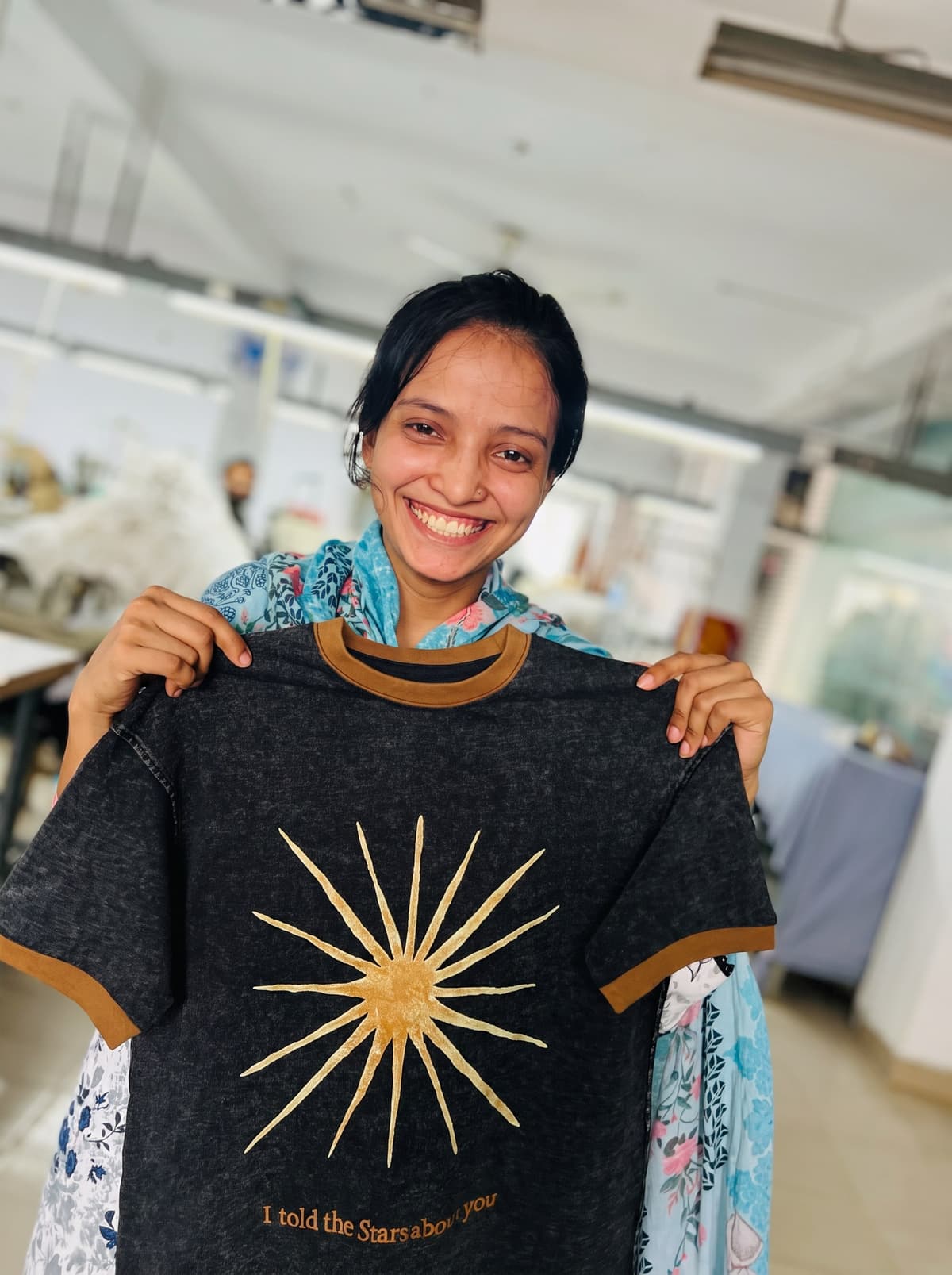
We hold calls in our evening, which is your morning, and reply within one business day. Our page for Canadian brands is also available in French. And where we are the wrong choice: runs under 150 pieces, a range that has to carry a Made in Canada or Product of Canada claim, denim or tailoring, or a range you need to fit in person every week. For those, start with the directories above. If you are not sure which side of the line you are on, send us the brief anyway and we will tell you straight.
Frequently asked questions
How do I find a clothing manufacturer in Canada?
Start with directories that say who they list and why. The Canadian Apparel Federation runs the Canadian Apparel Directory, which covers designers, manufacturers, contractors and suppliers and can be filtered by province and category. In Quebec, the Montreal fashion cluster mmode keeps a subcontracting directory of sewing workshops, cutting, knitting and finishing services, with a filter for makers that have no minimum. In Ontario and British Columbia, search by city and product together, such as "jersey sewing contractor Toronto", and ask brands you admire who makes for them. Shortlist three to five makers who already sew garments like yours, then ask each for their minimum per style and colour, what sampling includes and who buys the fabric. Visit the workroom before you pay a deposit, because standing at the cutting table is the main advantage of making locally. Approve a physical sample before you commit to a production run, whichever maker you choose.
Is it cheaper to manufacture clothing in Canada or overseas?
Overseas is usually cheaper per piece at production quantities, but compare the landed cost, not the factory figure. In cut-and-sew, labour and overheads are paid on every garment, and that is where Canadian and Asian costs differ most. An offshore quote then needs freight, customs clearance and GST timing added before it can be compared with a local one. GST is recoverable if your business is registered, and clothing cut and sewn in Bangladesh enters Canada duty-free under the Least Developed Country Tariff, so for a registered importer the border adds little beyond freight and brokerage. A Canadian maker can still be the better choice for very small runs, because an offshore knit factory has a minimum and set-up costs that are spread over few pieces. A DDP quote from the factory and a landed cost calculator let you compare both routes on the same basis.
What does Made in Canada mean on clothing?
It means the garment was last substantially transformed in Canada and at least 51% of its total direct costs were incurred here, with a qualifying statement. That is the test in the Competition Bureau's guidelines on Product of Canada and Made in Canada claims, dated 7 March 2025. The qualifying statement reads, for example, "Made in Canada with imported parts". Product of Canada is stricter: the last substantial transformation in Canada and at least 98% of total direct costs Canadian. If a garment meets neither test, you can still make an accurate, specific claim, and the Bureau's own example is "Sewn in Canada with imported fabric". Direct costs mean materials and production labour, so expensive imported fabric can push a locally sewn tee below 51%. A maple leaf on the tag can count as a claim too. Clothing made abroad is marked with its true country of origin.
Is there duty on clothing imported into Canada from Bangladesh?
No, provided the origin rule is met. Clothing from Bangladesh enters at the Least Developed Country Tariff rate, which is Free, while the MFN rate on knitted cotton T-shirts and sweatshirts is 18% in the 2026 Customs Tariff. Since 1 January 2025, CBSA Customs Notice 24-41 lets the cutting and sewing of fabric in a least developed country confer origin, regardless of where the yarn and fabric came from. CBSA Memorandum D11-4-4 describes it as apparel cut, or knit to shape, and sewn or otherwise assembled in that country. The proof is form BSF255, completed by the exporter in the country where the goods were finished, and the goods must be shipped directly to Canada. Ask the factory for a sample BSF255 before you place the order. Under DDP terms the factory's forwarder handles the claim, and any duty that does apply sits inside the quoted price.
Do I pay GST or HST on clothing imported into Canada?
You pay GST at the border, and HST usually comes into play when you sell. The GST is collected at importation on the value of the goods, including any duty, at 5%. The Canada Revenue Agency says the provincial part of the HST is not payable when you import commercial goods, although a registrant may have to self-assess it in some cases. If your business is registered for GST/HST, you claim the GST paid at the border back as an input tax credit, so it affects cash flow between paying it and filing your return rather than your unit cost. When you sell, you charge GST or HST at the rate for the place of supply, for example 13% HST in Ontario. Provincial sales tax rules vary, so ask your accountant how they apply in your province before the first shipment arrives.
What labels does clothing need to be sold in Canada?
Clothing sold in Canada needs a fibre-content label in English and French. Under the Textile Labelling Act and its Regulations, enforced by the Competition Bureau, the label gives the generic name and percentage of each fibre making up 5% or more of the garment, plus the dealer's name and postal address or a CA identification number. On clothing the label has to stay attached and legible through 10 washes. Any Canadian business that manufactures, processes, finishes, imports or sells textile products can apply for a CA number, which then replaces the name and address. Imported apparel must also be marked with its country of origin, in English or French, under CBSA Memorandum D11-3-1, and CBSA accepts the marking on the same label. Care instructions are voluntary under the textile regulations, but most retailers ask for them. Children's sleepwear and drawstrings have extra safety rules.
What is CARM and do I need it to import clothing?
CARM is the system CBSA uses to assess and collect duties and taxes on commercial imports, and as the importer you need to be set up in it. It became CBSA's official system for accounting for goods and paying duties on 21 October 2024. A business importing commercial goods registers in the CARM Client Portal with its business number and an import program account. Since 20 May 2025, an importer that wants its goods released before duties and taxes are paid must post its own financial security in the portal, because a customs broker's security can no longer be used for that. If you buy DDP, the factory's forwarder clears the goods, but you should still ask who is named as importer of record and confirm that party has a CARM account. A licensed customs broker can file entries for you once your own account is in place.
Will clothing from Bangladesh stay duty-free in Canada after 2029?
Probably for about three more years, but that rests on stated policy rather than law. Bangladesh is scheduled to graduate from the UN list of least developed countries on 24 November 2029, after the UN General Assembly extended its preparatory period on 29 October 2026. Canada's GPT and LDCT programmes are renewed in legislation to 31 December 2034, and Finance Canada says it is Canada's intent to give a graduating country an additional three years of full LDCT benefits, with eligibility at the Governor-in-Council's discretion. If that policy is applied, duty stays at 0% until around late 2032. After that, most apparel lines would pay the MFN rate, 18% on knitted cotton tees and sweatshirts today, unless the planned GPTP tier covers them. Confirm the position with your broker before each shipment, and if you buy DDP, whatever rate applies is inside the quote.
What is the minimum order for a Canadian brand working with Collective Studio?
Our minimum is 150 pieces per style and per colour. That is set by the fabric rather than the sewing machine, because knit fabric is knitted and dyed in lots, and around 150 pieces is where a colour stops being a sample and becomes a production run. A first Canadian order can be one style in one colour, and three colours of the same style count as three runs of 150. Below that, a Canadian CMT contractor is usually the better choice, and the mmode directory in Quebec lets you filter for subcontractors with no minimum. We cut and sew on our own floor in Narayanganj and ship DDP to your Canadian address, with the bilingual fibre label and origin marking sewn in. Plan on about 70 days from order to your door by air, with air freight taking about 6 to 8 days and sea about a month more.
Where this applies
The manufacturing pages this guide relates to, if you are costing a real run.
Free tools & guides for this
Sources & further reading
- Canadian Apparel Federation — Canadian Apparel Directory (filter by province and category; about 90 listings; read 5 November 2026)
- Canadian Apparel Federation — home page (national association of Canada's apparel industry, Ottawa)
- mmode, the Montreal fashion cluster — Fashion and clothing subcontracting directory, Quebec (48 businesses; capacity filter from no minimum to 2,000+ units; read 5 November 2026)
- Gouvernement du Québec — Portrait de l'industrie de la mode (mmode, Vestechpro, Vêtement Québec; updated 2 June 2026)
- Innovation, Science and Economic Development Canada — Canadian Industry Statistics, NAICS 315 Clothing manufacturing, establishments by province and size (2025)
- Competition Bureau — "Product of Canada" and "Made in Canada" Claims (guidelines dated 7 March 2025)
- Competition Bureau — Bureau takes action against Moose Knuckles for alleged false or misleading "Made in Canada" claims (27 April 2016)
- Competition Bureau — Competition Bureau resolves Made in Canada advertising concerns with Moose Knuckles (7 December 2016)
- Competition Bureau — Textile labelling requirements in a nutshell (bilingual fibre content; name and address or CA number; 10 washes)
- Competition Bureau — CA Identification Number (eligibility and application)
- Justice Laws — Textile Labelling Act, R.S.C. 1985, c. T-10 (s. 5, false or misleading representations; current to 19 October 2026)
- Justice Laws — Textile Labelling and Advertising Regulations, C.R.C., c. 1551 (ss. 11 and 12; current to 19 October 2026)
- CBSA — Memorandum D11-3-1, Marking of Imported Goods (apparel country-of-origin marking)
- CBSA — Customs Notice 24-41 (apparel rules of origin harmonised from 1 January 2025)
- CBSA — Memorandum D11-4-4, Rules of Origin for GPT and LDCT goods (BSF255; direct shipment; dated 25 June 2026)
- CBSA — Customs Tariff 2026, Chapter 61 (6109.10.00 and 6110.20.00: MFN 18%, LDCT Free)
- CBSA — Customs Notice 24-27, CARM October Implementation (system of record from 21 October 2024; own security from 20 May 2025)
- Canada Revenue Agency — GST/HST on imports and exports (provincial part of HST not payable on commercial imports; input tax credits)
- Canada Revenue Agency — Charge and collect the tax: which rate to charge (GST 5%; Ontario HST 13%)
- Finance Canada — Canada's unilateral tariff preference programs for imports from developing countries (LDCT to 31 December 2034; three-year post-graduation intent)
- United Nations LDC Portal — Bangladesh graduation status (graduation scheduled 24 November 2029)
Cite this guide
For journalists, writers, researchers and students.
Quoting this guide? Please credit Collective Studio and link to this page.
Reference
Homaira Jashim, Collective Studio. "Clothing Manufacturers in Canada vs Offshore: An Honest Guide for Canadian Brands." 5 November 2026. https://collectivestudioltd.com/journal/clothing-manufacturers-canada-local-vs-offshore
Writing about us? Our press kit has our facts, logos and photos, free to use with credit.
Have an idea? Let’s make it.
We manufacture from 150 pieces per style and colour, with organic cotton options from our GOTS-certified facility and photos at every stage. Send a sketch or a sentence — we’ll reply within one business day.
Related guides
Care Labels and Wash Symbols: What a Clothing Brand Must Put on the Label
Read the guide →
Dye Lots: Why Your Reorder Does Not Match, and What to Do About It
Read the guide →