How Much Fabric Does a T-Shirt Take? Consumption, GSM and What It Does to Your Price
A medium adult t-shirt in mid-weight cotton jersey uses somewhere around four hundred to five hundred grams of fabric once cutting waste is counted, which is why fabric is usually the largest single line in the price of a knit garment. This guide shows the formula factories use to reach that number, works an example you can copy, and explains the three things that move it: weight, size mix and marker efficiency.
The short answer, by garment
| Garment | Typical fabric | Rough consumption per piece, size M | What moves it most |
|---|---|---|---|
| T-shirt | Single jersey, 160–200 GSM | About 0.40–0.55 kg | Weight and body length |
| Polo shirt | Piqué, 180–220 GSM | About 0.50–0.65 kg | Collar and placket |
| Sweatshirt | French terry or fleece, 280–400 GSM | About 0.80–1.10 kg | Weight, by a long way |
| Pullover hoodie | Fleece, 300–400 GSM | About 1.00–1.40 kg | Hood and pouch pocket |
| Joggers | French terry or fleece, 280–400 GSM | About 0.70–1.00 kg | Weight and inseam |
| Sweat shorts | French terry or fleece, 280–400 GSM | About 0.40–0.60 kg | Inseam |
The formula factories actually use
Consumption for a simple knit garment is estimated from the pattern's own dimensions before a marker exists. The standard shape of the calculation is this: take the body length plus the sleeve length plus an allowance for seams and shrinkage, multiply by the chest width plus an allowance, double it because a garment has a front and a back, multiply by the fabric weight in grams per square metre, and divide by ten thousand to convert square centimetres to square metres.
Written out: ((body length + sleeve length + allowance) × (chest width + allowance) × 2 × GSM) ÷ 10,000 = grams per garment. Then add a wastage percentage, normally somewhere between five and fifteen per cent depending on how well the pieces nest, to get the figure your factory books fabric against.
A worked example you can copy
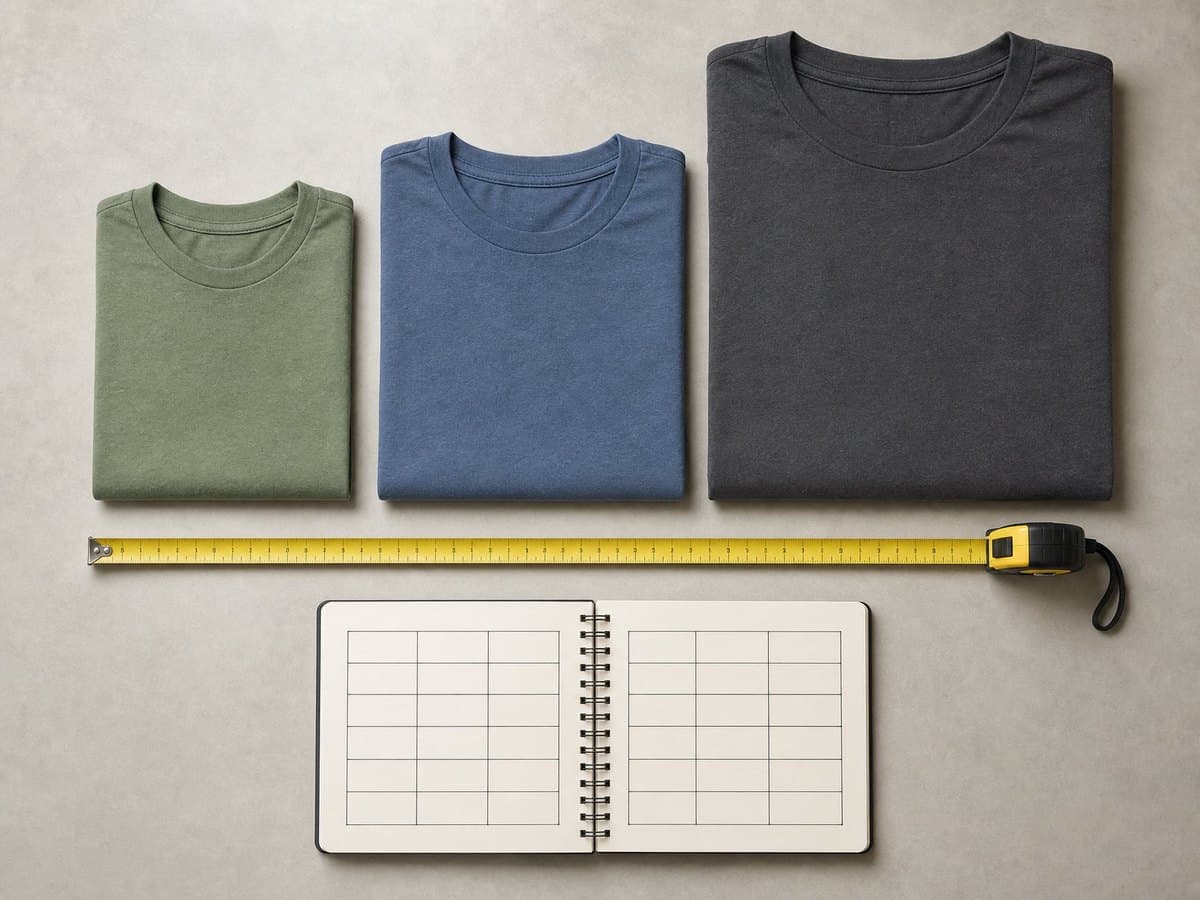
Take a medium t-shirt with a body length of 71 cm, a sleeve length of 21 cm, a chest width of 52 cm measured flat, an allowance of 12 cm across both dimensions, and a fabric weight of 180 GSM.
- Length input: 71 + 21 + 12 = 104 cm
- Width input: 52 + 12 = 64 cm
- Area: 104 × 64 × 2 = 13,312 square centimetres
- Weight: 13,312 × 180 ÷ 10,000 = about 240 grams of cloth in the garment
- Add 10% wastage: about 264 grams booked per piece
That number is lower than the four hundred to five hundred grams in the table above, and the gap is the point of this section. The formula gives you the cloth in the garment. What a factory books includes cutting waste, end-of-roll loss, shade-band rejects and the fact that real markers are never perfectly efficient. Ask which figure you are being quoted on, because the two can differ by a third.
Why fabric weight dominates everything else
Cloth is bought by the kilo. Move a t-shirt from 160 GSM to 200 GSM and you have added a quarter to the largest line in its cost without changing a single seam. That is the whole reason a heavyweight tee and a standard tee are different products commercially rather than just different in feel, and it is why the weight you specify deserves more thought than the colour. Our GSM to ounces converter translates the numbers if you think in imperial.
Weight also compounds. A 400 GSM fleece hoodie carries not just more cloth per square metre but more square metres, because a hood and a pouch pocket are extra panels. That is why the hoodie row in the table above is three times the tee row.
Size mix: the number nobody plans for
Consumption in the table is quoted for a medium because it is the midpoint, but you do not order mediums. A run weighted towards large and extra large consumes meaningfully more cloth than the same quantity weighted towards small and medium, and a factory books fabric against your actual ratio, not against an average garment.
If you have sales history, give it. If you do not, a conventional starting ratio for adult knitwear is roughly one small, two medium, two large and one extra large in every six, adjusted for who you actually sell to. Getting this wrong does not usually cost money on the first order; it costs money on the reorder, when you discover which sizes sold out in a fortnight.
Marker efficiency, and what a good one looks like
Before cutting, the pattern pieces are nested together across the fabric width in a layout called a marker. Its efficiency is the percentage of cloth that ends up inside a pattern piece rather than in the bin. For simple knit shapes a marker in the high seventies to high eighties is normal; below that, something is wrong with either the nesting or the fabric width.
Two practical consequences. Fabric width is worth specifying, because a pattern that nests badly at one width can nest well at another. And a style with awkward shapes, deep curves or one-directional fabric will always consume more than a rectangle-heavy style, which is one of the quieter reasons a simple design costs less to make.
How this shows up in your quote
Consumption multiplied by the fabric price per kilo gives the fabric cost per garment, and that plus trims, cutting, sewing minutes, finishing, packing and the factory's margin gives the unit price. Our guide to what it costs to manufacture clothing opens the whole structure, and how to read a garment quote explains why two quotes are not comparable until you know the Incoterm.
Frequently asked questions
How much fabric is needed to make one t-shirt?
A medium adult t-shirt in mid-weight cotton jersey normally works out somewhere around four hundred to five hundred grams of booked fabric once cutting waste is counted, though the cloth actually inside the finished garment is less than that. The gap between the two numbers is cutting waste, end-of-roll loss and the fact that no marker nests perfectly. Heavier fabric moves the figure straight away: the same pattern at 200 GSM instead of 160 uses a quarter more cloth. Ask your factory which of the two numbers your quote is based on, because they can differ by about a third and only one of them is what you are paying for. For comparison, a medium sweatshirt in 320 GSM fleece runs closer to a kilo, which is why fabric weight is the first number to fix in any costing.
How do you calculate fabric consumption for a garment?
The standard estimate takes the pattern's own dimensions before a marker exists. Add the body length, the sleeve length and an allowance for seams and shrinkage; multiply by the chest width plus an allowance; double it, because a garment has a front and a back; multiply by the fabric weight in grams per square metre; then divide by ten thousand to convert to square metres. That gives grams of cloth in the garment. Add a wastage percentage, usually between five and fifteen per cent depending on how well the pieces nest, and you have the figure a factory books fabric against. Your real number comes from the marker once the pattern exists. Write down the allowance you assumed alongside the result, because two estimates that look far apart often differ only in that single figure.
Why does heavier fabric cost so much more?
Because cloth is bought by the kilo and it is normally the largest single line in a knit garment's cost. Moving a t-shirt from 160 GSM to 200 GSM adds roughly a quarter to that line without changing a single seam, which is why a heavyweight tee and a standard tee are different products commercially rather than simply different in feel. Weight also compounds on bigger garments: a 400 GSM hoodie carries more grams per square metre and more square metres, because a hood and a pouch pocket are additional panels. That is why a hoodie can consume roughly three times what a tee does. It is also why a heavyweight range needs a higher retail price rather than a thinner margin, and why that decision belongs at design stage rather than at costing.
What is marker efficiency and what is a good figure?
A marker is the layout that nests every pattern piece across the fabric width before cutting, and its efficiency is the percentage of cloth that ends up inside a pattern piece rather than as waste. For simple knit shapes, somewhere in the high seventies to high eighties is normal, and anything much below that suggests a problem with the nesting or with the fabric width being used. Two things follow. Fabric width is worth specifying, because a pattern that nests badly at one width may nest well at another. And styles with deep curves or one-directional fabric will always consume more than rectangle-heavy ones. Any factory running a proper cutting room can tell you both figures, and a reluctance to share them is itself informative.
Does my size ratio change how much fabric I need?
Yes, and it is the number most first-time brands never plan. Consumption figures are normally quoted for a medium because it sits at the midpoint, but nobody orders only mediums. A run weighted towards large and extra large consumes meaningfully more cloth than the same quantity weighted towards small and medium, and your factory books fabric against your actual ratio rather than an average garment. If you have sales history, share it. If you do not, a conventional adult knitwear starting point is about one small, two medium, two large and one extra large in every six, adjusted for who you actually sell to. Tell us the ratio at enquiry stage rather than after the pattern is graded, because fabric is booked against it and changing it later means rebooking cloth.
Can you tell me the exact consumption for my style?
Yes, once a pattern exists. Until then any figure is an estimate, including the ones in this guide, because consumption depends on your specific pattern, your fabric width, your size ratio and the marker our cutting room produces. What we can do at enquiry stage is give you a planning range for the garment type and weight you have in mind, and then replace it with the real number when the pattern is made. We would rather quote you a range and then a fact than a single confident figure that changes later, because the fabric line is where a quote moves most. Send a reference garment if you have one, since measuring an existing piece is far more reliable than describing it, and it settles fabric weight and yarn at the same time.
Where this applies
The manufacturing pages this guide relates to, if you are costing a real run.
Free tools & guides for this
Have an idea? Let’s make it.
We manufacture from 100 pieces per style, with GOTS-certified organic options and photos at every stage. Send a sketch or a sentence — we’ll reply within a day.