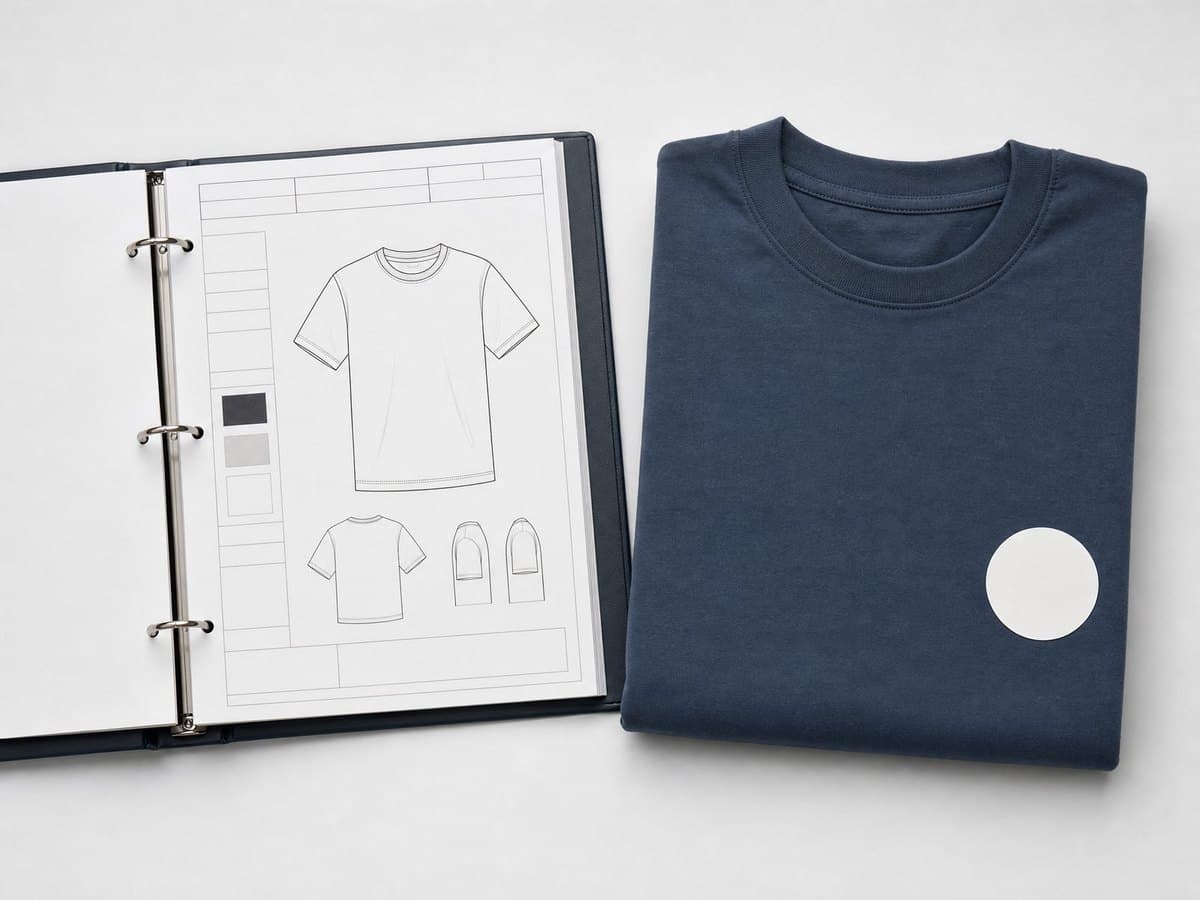
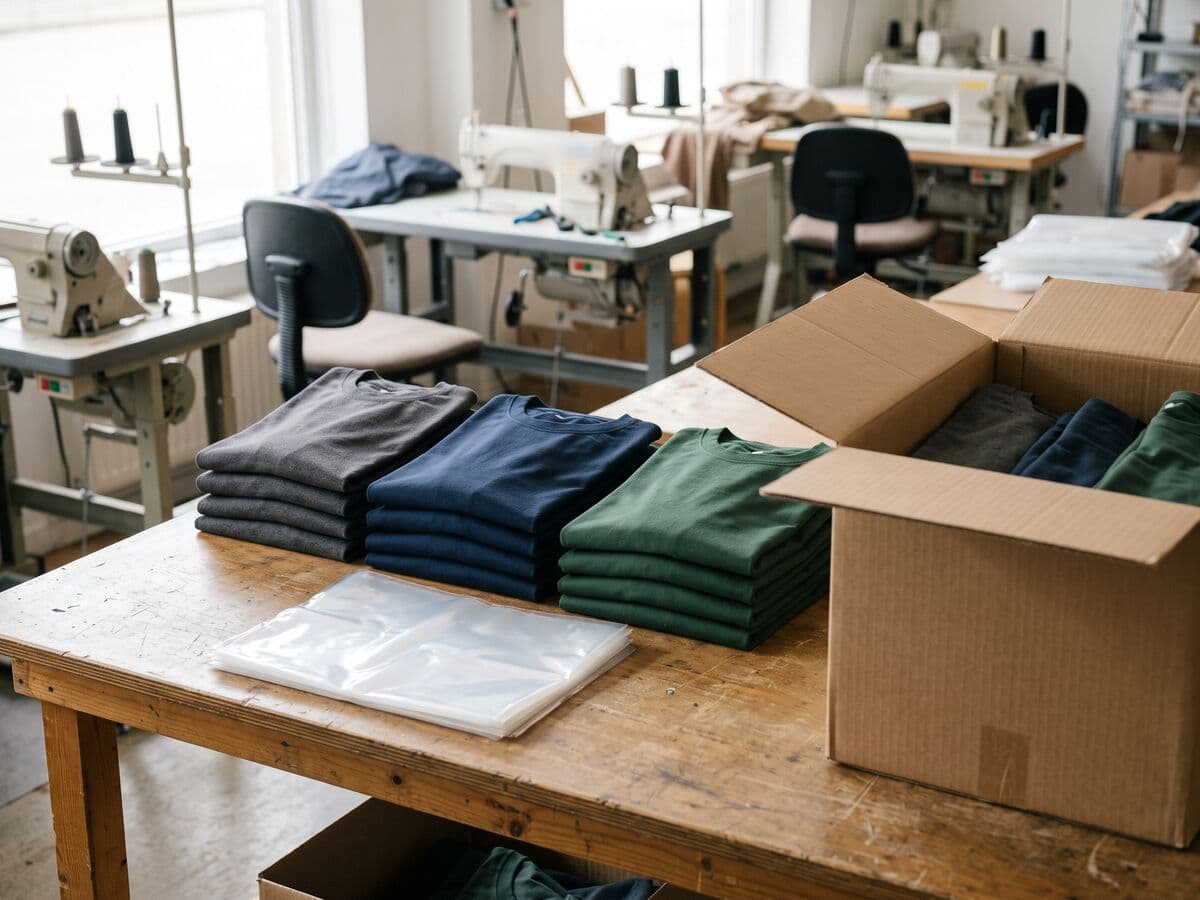
Clothing Manufacturers in Turkey vs Bangladesh: An Honest Guide for European Brands
If you are searching for clothing manufacturers in Turkey, you are probably a European or UK brand that wants a factory within a truck's reach. The short answer is this. Turkey is the better choice when speed decides the order: several Istanbul makers publish bulk lead times of three to six weeks, a truck reaches the Netherlands in about a week, and clothing enters the EU without duty. It is also the better choice for denim and for knitted sweaters. Bangladesh is the better choice when you make jersey and fleece knitwear such as tees, hoodies and joggers in runs of 150 pieces or more, plan a season ahead, reorder the same styles, or sell into Australia.
A disclosure before anything else: Collective Studio is a factory in Bangladesh. We are a family-run knitwear floor in Narayanganj, so we have an obvious interest in which way you go. This guide therefore does not rank Turkish makers we cannot vouch for. It reports what four of them publish about themselves, points you to the lists and trade fairs where others can be found, says plainly when Turkey is the better choice, and compares the two countries on distance, minimums, timing and duty. It does not compare unit cost, which only two quotes on the same tech pack can settle. Every fact was checked on 11 November 2026 against the sources listed at the end.
The short version
- Size: Turkey was the world's seventh largest clothing exporter in 2024 and is the EU's third largest outside supplier, behind China and Bangladesh.
- Where: Istanbul is the sourcing hub. Production has spread to cities such as Izmir, Bursa, Denizli, Gaziantep and Tekirdağ.
- Minimums: four Istanbul makers publish between 100 and 300 pieces per style. One sourcing agency puts basic knits at 300 to 800 per colour and style.
- Timing: published bulk lead times run from 3 to 6 weeks after the sample is confirmed. Road freight to the Netherlands takes about 2 to 8 working days.
- Duty: none into the EU with an A.TR movement certificate. 0% into the UK when the garment meets the origin rule. 5% is Australia's general rate on a cotton T-shirt.
- From Bangladesh: 0% into the EU and the UK and Free into Australia when the garment is cut and sewn there, and about 70 days from order to your door by air.
How big Turkey's clothing industry is, and where it sits
Turkey exported about 16.8 billion US dollars of clothing in 2025, according to the annual report of IHKIB, the Istanbul Apparel Exporters' Association. On the same report's figures it was the seventh largest clothing exporter in the world in 2024, with a 3.2% share, and the third largest outside supplier to the EU on Eurostat data, behind China and Bangladesh. About 60% of its clothing exports go to the EU, and its five largest markets are Germany, the Netherlands, Spain, the United Kingdom and France. A little over half of what it exports is knitted.
Istanbul is where a buyer starts. Turkey's Ministry of Trade describes the city as a global sourcing hub that attracts international buying offices and trading houses, and says most companies have moved their production to inner provinces, naming Izmir, Bursa, Ankara, Denizli, Gaziantep, Kayseri, Tekirdağ, Adıyaman, Kahramanmaraş and Adana as the major cities for textile and clothing production. Denizli is the best known of these for one product: the chairman of its exporters' association says about 90% of the country's towels, bathrobes and bedding are made there.
What Turkish factories are good at
Cotton, and speed. The Ministry of Trade says about 80% of the clothing Turkey exports is cotton, that T-shirts and pullovers are the most important knitted exports, and that the country is the world's second largest maker of hosiery. Turkey is also the world's seventh largest textile exporter, so yarn, fabric, dyeing and trims are available at home. That depth is what makes the short lead times in the next section possible, and it helps a garment meet the UK origin rule explained below.
Certification is widely available. Turkey holds 11.7% of the world's 17,800 GOTS-certified facilities, the third largest share, in the standard's 2025 annual report. Bangladesh holds 9.3% and Portugal 4.8%. What a certificate covers depends on the scope of the individual facility, so ask for the certificate number and check it. Two things Turkey makes that we do not are worth naming: denim, and flat-knitted sweaters and cardigans. Both appear in the table below.
Minimums and lead times: what Turkish makers publish
The table shows what four Istanbul makers say on their own pages or supplier profiles, read on 11 November 2026. None of them is ranked or recommended here; they are examples of what is published.
| Maker | What it makes | Published minimum | Published timing |
|---|---|---|---|
| Kozanteks Textile, Istanbul | Knit and woven garments | Typically from 200 to 300 pieces | 4 to 6 weeks from confirmation of the sample |
| Kuzgunlar Textile, Istanbul | Denim | 100 to 150 pieces per style | Samples in 7 to 10 days; bulk in 3 to 5 weeks |
| Nisra Textile, Istanbul | Knitted sweaters and cardigans | 100 pieces per design and up | Not stated |
| MPY Textile, Istanbul | T-shirts, hoodies and other garments | Orders from 300 to 30,000 pieces | Fitting sample 2 to 3 weeks; pre-production sample 2 to 3 weeks |
An agency's view is higher. Deepwear, which sources in Turkey for brands, gives indicative ranges of 300 to 800 pieces per colour and style for basic knits and 200 to 500 for fashion knits. Read together, small Istanbul makers publish minimums of 100 to 300 pieces and larger producers start above that. Our own minimum is 150 pieces per style and colour, so the minimum is not what separates the two countries. Time is.
Getting it to you: road, sea and air
The forwarder DSV gives road transit times between Turkey and the Netherlands of usually 4 to 8 working days for a full truck and 2 to 6 working days for groupage, with daily departures. To the UK, the forwarder Denholm Good gives sea freight at around 8 to 9 days port to port and 14 to 16 days door to door. By air, one forwarder estimates about 2 business days from Istanbul to Frankfurt and 2 to 3 to London. Add a published bulk lead time of three to six weeks, and a Turkish order can be on a European shelf in the time a Bangladeshi order spends in production.
Three borders: the EU, the UK and Australia
Into the EU. Turkey and the EU have had a customs union since 31 December 1995, covering industrial goods, which includes clothing. In practice the Turkish exporter obtains an A.TR movement certificate from Turkish customs, and with it no import duty is paid. The Dutch government's business portal explains that the certificate confirms the goods are in free circulation: either made in Turkey, or brought into Turkey from another country and cleared there. Import VAT is still due in the country of arrival. Have your customs broker confirm the paperwork for your own shipment.
Into the UK. The UK and Turkey have their own trade agreement, and the UK Trade Tariff shows a cotton T-shirt from Turkey at 0%, against a standard rate of 12%. The 0% rate applies only to goods that meet the agreement's origin rule, which for garments sewn from knitted fabric is “knitting or crocheting combined with making-up including cutting of fabric”: both steps must take place in Turkey, and materials from the EU can be counted. Because Turkey knits its own fabric, many garments qualify, but a garment sewn in Turkey from fabric knitted in Asia does not. The claim rests on a declaration of origin issued by the exporter. Import VAT at 20% is due as well.
Into Australia. There is no free trade agreement to rely on. Australia's general rate on a cotton T-shirt or a cotton sweatshirt is 5%. Turkey appears on Australia's list of developing countries, but we could not confirm a lower rate for clothing, so treat 5% as the working figure and ask your broker.
The same three borders from Bangladesh
Bangladesh-made clothing enters the EU at 0% under the Everything But Arms arrangement, and Regulation (EU) 2026/1395 keeps that treatment for three years after a country leaves the United Nations' list of least developed countries. For Bangladesh that date moved recently: on 29 October 2026 the UN General Assembly extended its preparatory period, and graduation is now scheduled for 24 November 2029. It enters the UK at 0% under the Developing Countries Trading Scheme, where the origin rule for a garment sewn from knitted fabric is simply manufacture from fabric. It enters Australia at the least developed country rate, which is Free, when the last process of manufacture happens in Bangladesh and the allowable factory cost reaches at least 50%.
So for an EU brand, duty does not separate the two countries: both arrive at 0%. For a UK brand both can arrive at 0%, with a stricter fabric rule on the Turkish side. For an Australian brand, Bangladesh arrives Free and Turkey at the general rate. Our guide to duty on clothing from Bangladesh by country sets out each rule with its source. What Bangladesh cannot match is the calendar. A first order with us takes about 70 days from order to your door by air: about 10 days of sampling, 40 to 50 days of production after you approve the sample, then air freight of about five to eight days. Sea freight adds about a month.
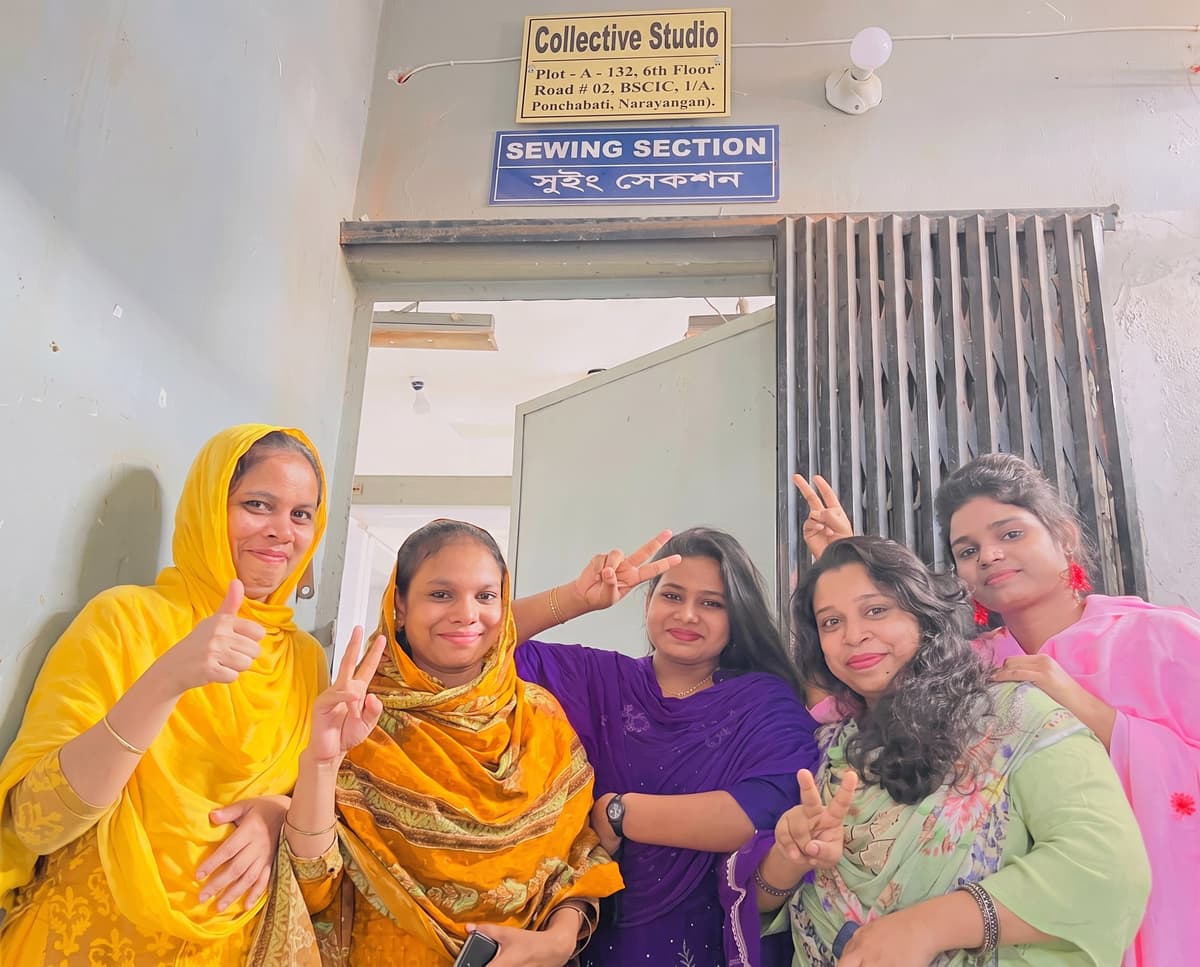
Turkey and Bangladesh side by side
| Turkey | Bangladesh, on our floor | |
|---|---|---|
| Published minimum | 100 to 300 pieces per style at small Istanbul makers; 300 to 800 for basic knits, per one agency | 150 per style and colour |
| Sampling | 7 to 10 days at one maker; 2 to 3 weeks per sample at another | About 10 days |
| Bulk production | 3 to 6 weeks, as published | 40 to 50 days after sample approval |
| Transit to the Netherlands | About 2 to 8 working days by road | About 5 to 8 days by air; about a month more by sea |
| Duty into the EU | None with an A.TR certificate | 0% under Everything But Arms |
| Duty into the UK | 0% if knitted and made up in Turkey; otherwise 12% on a cotton T-shirt | 0% under the Developing Countries Trading Scheme |
| Duty into Australia | 5% general rate on a cotton T-shirt | Free at the least developed country rate |
| What it is known for | Cotton jersey, denim, knitted sweaters, hosiery, home textiles | Jersey and fleece knitwear in volume |
| Clock | Two hours ahead of Amsterdam in winter, one in summer | Five hours ahead of Amsterdam in winter, four in summer |
| Origin label | Made in Türkiye | Made in Bangladesh |
When Turkey is the better choice
- You need stock in weeks. A published bulk lead time of three to six weeks and a week on the road is a calendar no factory in South Asia can offer.
- You restock during the season. Short runs repeated quickly suit a nearby factory better than one planned 70 days ahead.
- You make denim or knitted sweaters. Turkey has specialist makers for both. Ours is a jersey and fleece floor.
- You want to visit often. Istanbul is a short flight from most of Europe, and British and most EU passport holders can visit without a visa for up to 90 days.
- You want trims, fabric and sewing in one country. Turkey's textile industry sits beside its clothing industry.
When Bangladesh is the better choice
- You make tees, hoodies, sweatshirts or joggers in runs of 150 pieces or more per style and colour, and you expect to reorder the styles that sell.
- You plan a season ahead. About 70 days by air suits a calendar that is set in advance.
- You sell in Australia. Bangladeshi origin enters Free when the origin rule is met.
- You are a UK brand using fabric knitted outside Turkey and the EU. The Bangladeshi rule asks only that the garment is made from fabric there.
- You want one quote to your door. We quote DDP, so freight, clearance and any duty are inside it.
On unit cost this guide says nothing, deliberately. Send the same tech pack to a Turkish maker and to us, ask each for a landed quote to your door, and compare the two on paper. One practical point applies to Turkey in particular: annual consumer inflation there was 29.77% in October 2026, so ask how long a quote stays valid.
What to check: subcontracting and labour
Turkey's clothing industry has a well-documented problem below its first tier, and a fair guide has to say so. The Ethical Trading Initiative estimates that about one million people work informally in Turkey's apparel, textile and leather industries, an increasing number of them Syrian refugees. The Clean Clothes Campaign reported in 2022 that, according to official sources, informal employment in the garment sector was approaching 50%. The Fair Labor Association describes the lower tiers of these supply chains as difficult to see into, with high risks of child labour.
The industry has acted on it. Work permits for Syrian refugees were introduced in January 2016. The Ethical Trading Initiative, with the exporters' association ITKIB and the UN refugee agency, has trained 178 suppliers on employing refugees lawfully. The International Labour Organization and IHKIB signed a cooperation protocol in 2018, and the Fair Labor Association ran a project on the lower tiers from 2019 to 2022 with the Turkish labour ministry and five global brands. None of this is a reason to avoid Turkey. It is a reason to ask one question of every maker: which building sews my order, and may I see it? Bangladesh's garment industry has its own hard history on safety and wages, and the same question applies to us. Our answer is that your order is cut, sewn, finished and inspected in our own building, and you can watch it on live video.
The industry is also under commercial pressure. Clothing exports have fallen three years running, from 21.2 billion US dollars in 2022 to 16.8 billion in 2025, and the manufacturers' association TGSD says 10,624 workplaces have closed since December 2022. For a buyer that cuts both ways: capacity is easier to find, and it is worth asking how long a maker has traded.
How to find and check a Turkish maker
Start with the associations. TGSD, the Turkish Clothing Manufacturers' Association, publishes its member list, naming each member and their company. IHKIB is the Istanbul exporters' association for clothing, and TİM, the Turkish Exporters Assembly, lists the regional exporters' associations for the Aegean, Bursa, Denizli, Adana and Gaziantep. Then go to a fair. IFCO, the Istanbul Fashion Connection, runs from 3 to 6 February 2027 at the Istanbul Expo Center, and Texhibition Istanbul, for fabric, yarn and trims, runs from 3 to 5 March 2027 at the same venue.
Then check what you are told. Ask whether the company owns the sewing floor or places your order with one, and ask to see that floor. Ask where the fabric is knitted, if you sell in the UK. Ask for the number of any certificate and look it up. Ask how long the quote is valid. And ask about the two religious holidays, when production stops: in 2027 Ramazan Bayramı falls on 9 to 11 March and Kurban Bayramı on 16 to 19 May, each with a half day before it.
Clocks, travel and the working day
Turkey has kept the same clock all year since 2016, three hours ahead of Greenwich. That puts it two hours ahead of Amsterdam, Berlin and Paris in winter and one hour ahead in summer, so the working days overlap almost fully. The UK government says a British citizen can visit Turkey without a visa for up to 90 days in any 180-day period, for business or tourism, and Turkey's foreign ministry lists the same exemption for German, Dutch, French, Spanish and most other EU passports. Check your own passport's rule before you book. Bangladesh is five hours ahead of Amsterdam in winter and four in summer. We also keep an office in Amsterdam, so a European brand has a contact in its own time zone.
Where we fit, and where we do not
We cut, sew, finish and inspect knitwear in our own building in Narayanganj: T-shirts, hoodies, sweatshirts, joggers, polos and activewear. Fabric is knitted and dyed at partner mills we specify and inspect. Our minimum is 150 pieces per style and colour. Organic cotton is available, made in our GOTS-certified facility (RSC 9687). We quote DDP to any address in the EU, the UK or Australia. Our pages for European brands, Dutch brands and UK brands work through the duty and VAT for each market.
And where we are the wrong choice: an order that has to be on the shelf next month, a range you restock every few weeks, denim, knitted sweaters, tailoring, or runs under 150 pieces per style and colour. For those, start with the associations and fairs above. If you are not sure which side of the line you are on, send us your brief and we will tell you straight. If Portugal is also on your shortlist, our guide to clothing manufacturers in Portugal makes the same comparison there, and Bangladesh vs China vs Vietnam covers the Asian options.
What clients say
I have had a very good experience with this company. They are very friendly, professional, and provide fast service. They speak fluent English, which makes communication very easy. The quality of their manufacturing is excellent. I have no doubt in recommending this company to anyone looking for a reliable manufacturing partner in Bangladesh.
Wonderful people to work with — very professional and knowledgeable, also accommodating to the needs of their customers.
Frequently asked questions
Is Turkey good for clothing manufacturing?
Yes, for the right order. Turkey was the seventh largest clothing exporter in the world in 2024 and is the EU's third largest outside supplier, behind China and Bangladesh. Its strengths are cotton clothing, which is about 80% of what it exports, a textile industry that supplies yarn, fabric and trims at home, and speed: several Istanbul makers publish bulk lead times of three to six weeks, and a truck reaches the Netherlands in about a week. It is strongest when a European brand needs stock quickly, restocks during the season, or makes denim or knitted sweaters. It is a weaker fit when an order is planned months ahead and can travel further, or when the buyer is in Australia, where Turkish clothing pays the general rate of duty. The main thing to check is who sews the order, because credible bodies report widespread informal subcontracting below the first tier.
What is the minimum order quantity for clothing manufacturers in Turkey?
Published minimums at small Istanbul makers run from about 100 to 300 pieces per style. When we read their own pages and supplier profiles on 11 November 2026, Kuzgunlar Textile, a denim maker, stated 100 to 150 pieces per style. Nisra Textile, which knits sweaters and cardigans, stated that it accepts orders of 100 pieces per design and up. Kozanteks Textile stated that its minimum typically starts from 200 to 300 pieces, and MPY Textile described orders ranging from 300 to 30,000 pieces. A sourcing agency, Deepwear, gives higher indicative ranges for the wider industry: 300 to 800 pieces per colour and style for basic knits and 200 to 500 for fashion knits. Check whether a figure is per style or per colour, because the two are not the same order. For comparison, our own minimum is 150 pieces per style and per colour, so two colours of one style is 300 pieces.
Do I pay import duty on clothing from Turkey?
In the EU, no, when the goods travel with an A.TR movement certificate. Turkey and the EU have a customs union covering industrial goods, and the certificate, which the Turkish exporter obtains from Turkish customs, confirms the goods are in free circulation. Import VAT is still due in the country of arrival. In the UK, the tariff is 0% under the UK and Turkey trade agreement when the garment meets the origin rule, which for a garment sewn from knitted fabric means the fabric was knitted and the garment made up in Turkey, with EU materials allowed to count. Otherwise the standard rate applies, which is 12% on a cotton T-shirt, and import VAT at 20% is due either way. In Australia there is no trade agreement to rely on, and the general rate on a cotton T-shirt is 5%. Confirm the rate for your own commodity code before you order.
How long does clothing production take in Turkey?
On published figures, bulk production takes three to six weeks after the sample is confirmed, which is fast by any standard. Kozanteks Textile states lead times of four to six weeks from confirmation of the sample. Kuzgunlar Textile states samples in 7 to 10 days and bulk production in three to five weeks. MPY Textile states two to three weeks for a fitting sample and the same again for a pre-production sample. Transport is short as well: one forwarder gives 4 to 8 working days by full truck to the Netherlands and 2 to 6 for groupage, and another gives 14 to 16 days door to door by sea to the UK. Plan around the two religious holidays, when factories stop: in 2027 they fall on 9 to 11 March and 16 to 19 May. For comparison, a first order with us takes about 70 days from order to your door by air.
How do I find a clothing manufacturer in Turkey?
Start with the trade bodies, then go and look. TGSD, the Turkish Clothing Manufacturers' Association, publishes its member list with the company of each member. IHKIB is the exporters' association for clothing in Istanbul, and the Turkish Exporters Assembly lists the regional associations for the Aegean, Bursa, Denizli, Adana and Gaziantep. The quickest way to meet many makers at once is a fair: IFCO, the Istanbul Fashion Connection, runs from 3 to 6 February 2027 at the Istanbul Expo Center, and Texhibition Istanbul, for fabric and trims, from 3 to 5 March 2027. Shortlist three to five makers that already produce garments like yours. Ask each for its minimum per style and per colour, its sampling and bulk times, where the fabric is knitted, and which building sews the order. Then visit that building before you pay a deposit, because being able to visit is a main reason to make in Turkey.
Turkey or Bangladesh: which is better for a clothing brand?
Neither is better in general; each fits a different order. Turkey fits a European brand that needs stock in weeks, restocks during the season, makes denim or knitted sweaters, or wants to visit the factory often. Bangladesh fits a brand making jersey and fleece knitwear in runs of 150 pieces or more per style and colour, reordering proven styles and planning a season ahead, because a first order takes about 70 days from order to door by air. Duty rarely decides it in Europe: both countries can reach the EU and the UK at 0%, although the UK rule is stricter about where Turkish fabric is knitted. In Australia it does decide it, because Bangladeshi origin enters Free and Turkish origin pays the general rate. Many brands use both: a nearby maker for fast, short runs and an offshore factory for the core styles that are planned in advance.
Are clothing factories in Turkey ethical?
Many are, and the risk sits in a specific place: informal subcontracting below the factory you deal with. The Ethical Trading Initiative estimates about one million people work informally in Turkey's apparel, textile and leather industries, and the Clean Clothes Campaign reported in 2022 that informal employment in the garment sector was approaching 50% on official figures. Reports since 2015 have also described refugees and children working without permits. The industry and labour bodies have responded with work permits for Syrian refugees from 2016, supplier training, and projects led by the International Labour Organization and the Fair Labor Association. As a buyer, you manage the risk by knowing exactly where your order is sewn. Ask each maker to name the building, visit it, and write into the order that work may not be passed to another workshop without your consent. Ask the same of any factory in any country, including ours.
Where this applies
The manufacturing pages this guide relates to, if you are costing a real run.
Free tools & guides for this
Sources & further reading
- IHKIB: General Outlook to Türkiye's Apparel Export, 2025 Annual (exports, world and EU rank, markets)
- Republic of Türkiye, Ministry of Trade: Clothing industry report (production cities, cotton share, hosiery, textiles)
- Textilegence, 5 January 2026: Denizli and towels, bathrobes and bedding
- Global Standard (GOTS): Annual Report 2025, share of certified facilities by country
- Kozanteks Textile: FAQ, minimum and lead time; read 11 November 2026
- Kuzgunlar Textile: minimum, sampling and bulk times; read 11 November 2026
- IFCO exhibitor profile: Nisra Textile; read 11 November 2026
- Wonnda supplier profile: MPY Textile; read 11 November 2026
- Deepwear: sourcing in Turkey, indicative minimums; read 11 November 2026
- DSV Netherlands: road transit times between Turkey and the Netherlands; read 11 November 2026
- Denholm Good Logistics (updated 15 May 2026): shipping between Turkey and the UK
- iContainers: air freight from Turkey, typical transit times; read 11 November 2026
- European Commission, DG Trade: EU trade relations with Türkiye (customs union)
- Business.gov.nl (Dutch government): A.TR certificate for Türkiye; read 11 November 2026
- UK Department for International Trade, January 2021: Continuing the United Kingdom's trade relationship with the Republic of Turkey
- UK Trade Tariff: commodity 6109 10 00 10 from Turkey, 0% preference, 12% third country duty, rule of origin; read 11 November 2026
- GOV.UK: summary of the UK-Turkey trade agreement (declaration on origin)
- Federal Register of Legislation: Customs Tariff Regulations 2004 (developing countries list)
- Australian Border Force: Working Tariff, Schedule 3, Chapter 61 (operative 1 July 2026)
- Access2Markets: Everything But Arms
- EUR-Lex: Regulation (EU) 2026/1395
- United Nations LDC Portal: Bangladesh graduation status (scheduled for 24 November 2029); read 11 November 2026
- GOV.UK: preference tiers under the Developing Countries Trading Scheme
- Federal Register of Legislation: Customs Tariff Act 1995
- Ethical Trading Initiative: Syrian refugees working in Turkey's garment sector
- Clean Clothes Campaign, 2022: Out of sight, informal employment
- Fair Labor Association: Beyond Tier One project, Türkiye (2019 to 2022)
- Business & Human Rights Resource Centre: Syrian refugees in the Turkish garment industry
- Kohan Textile Journal, 16 May 2018: ILO and IHKIB cooperation protocol
- Alomaliye, 3 November 2026, reproducing the Turkish Statistical Institute bulletin: annual consumer inflation 29.77% in October 2026
- Timeturk, 22 October 2026: TGSD president on workplace closures since December 2022
- TGSD (Turkish Clothing Manufacturers' Association): members; read 11 November 2026
- Türkiye Exporters Assembly (TİM): exporters' associations; read 11 November 2026
- IFCO Istanbul Fashion Connection: 3 to 6 February 2027; read 11 November 2026
- Texhibition Istanbul: 3 to 5 March 2027; read 11 November 2026
- Presidency of Religious Affairs (Diyanet): official holidays 2027
- GOV.UK foreign travel advice: Turkey, entry requirements
- Republic of Türkiye, Ministry of Foreign Affairs: visa information for foreigners
Cite this guide
For journalists, writers, researchers and students.
Quoting this guide? Please credit Collective Studio and link to this page.
Reference
Homaira Jashim, Collective Studio. "Clothing Manufacturers in Turkey vs Bangladesh: An Honest Guide for European Brands." 11 November 2026. https://collectivestudioltd.com/journal/clothing-manufacturers-turkey-vs-bangladesh
Writing about us? Our press kit has our facts, logos and photos, free to use with credit.
Have an idea? Let’s make it.
We manufacture from 150 pieces per style and colour, with organic cotton options from our GOTS-certified facility and photos at every stage. Send a sketch or a sentence — we’ll reply within one business day.