The Nordic floor, now for Finland
The same production, fabrics and paperwork set out on our Swedish, Danish and Norwegian pages, with Finland's own VAT and bilingual label.
Premium knitwear manufacturing for Finnish brands — duty-free under Everything But Arms, Finland's 25.5% import VAT inside one landed price, labels in Finnish and Swedish, and the same floor our Swedish, Danish and Norwegian pages describe.
Collective Studio cuts and sews knitwear for Finnish brands on its own floor in Narayanganj, Bangladesh: 150 pieces is the minimum for each style in each colour, production runs 40–50 days after sample approval with freight on top, and the goods arrive DDP through Helsinki, duty-free under Everything But Arms, with Finland's 25.5% import VAT already in the quote. About 70 days from order to your door by air. Fibre labels carry Finnish and Swedish, and GOTS certificate RSC 9687 backs the GPSR file on organic orders.
Or message the factory directly: WhatsApp +880 1980 055026 · hello@collectivestudioltd.com · Homaira replies within one business day.
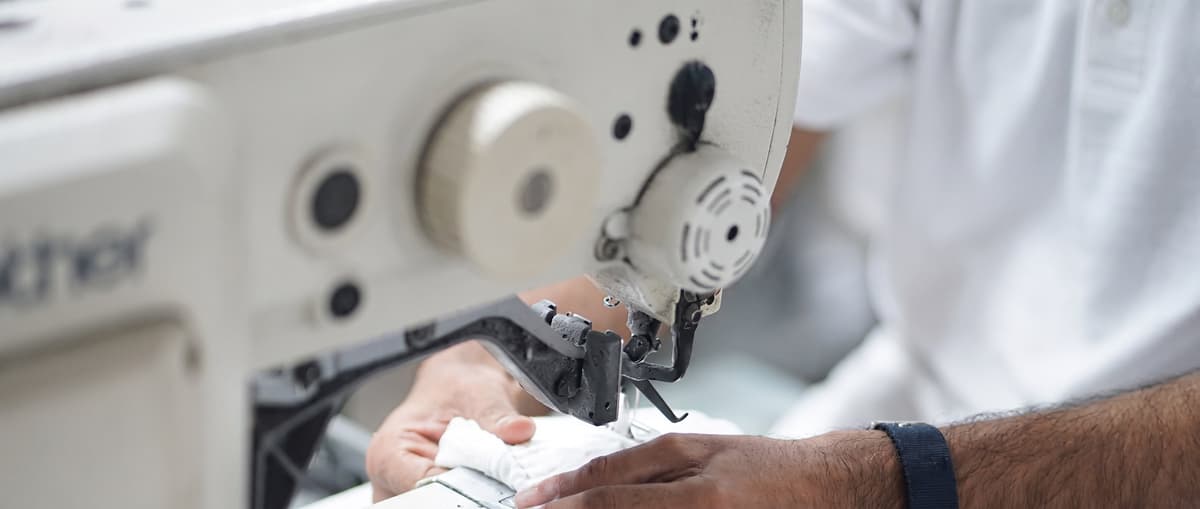
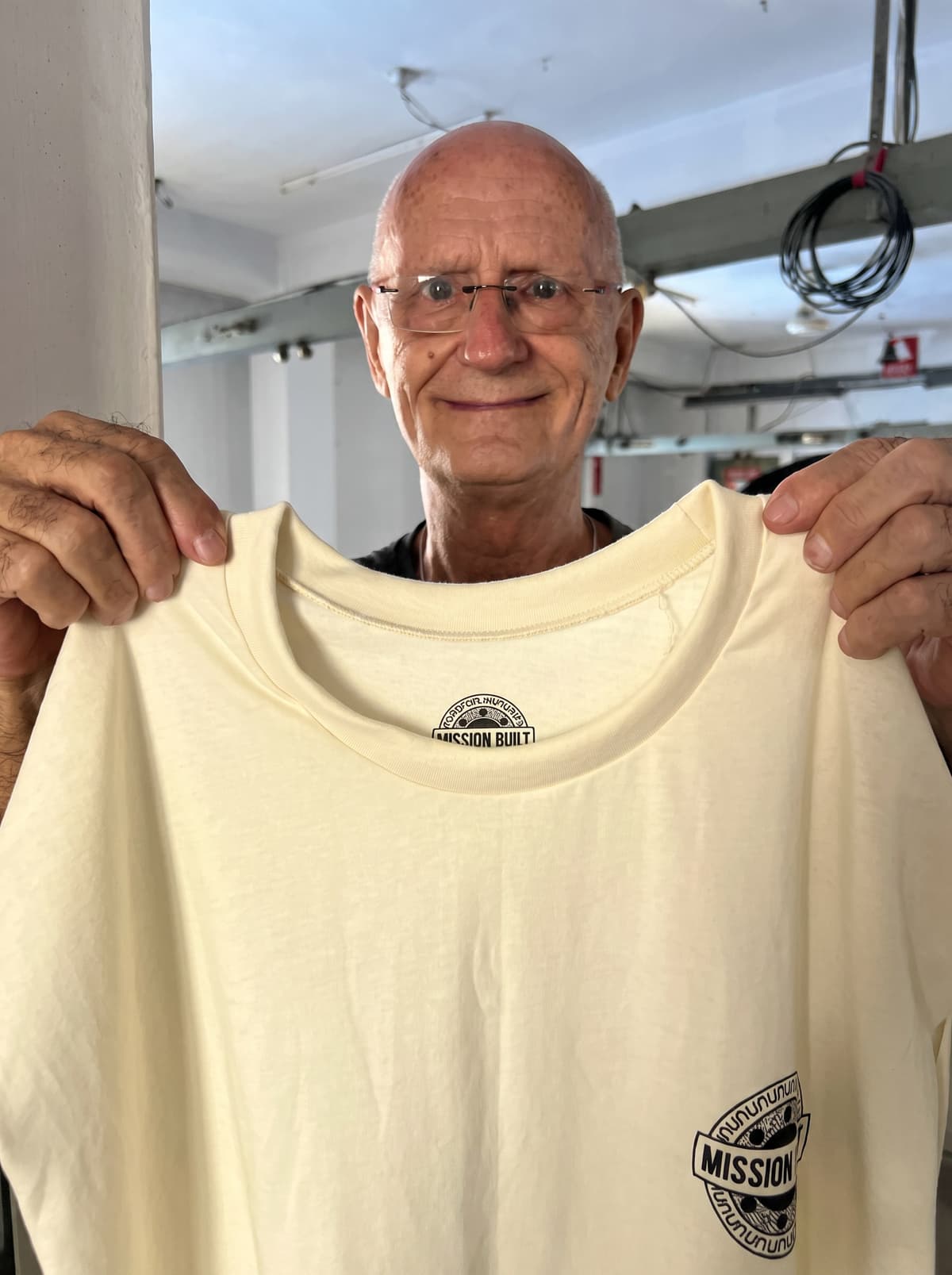
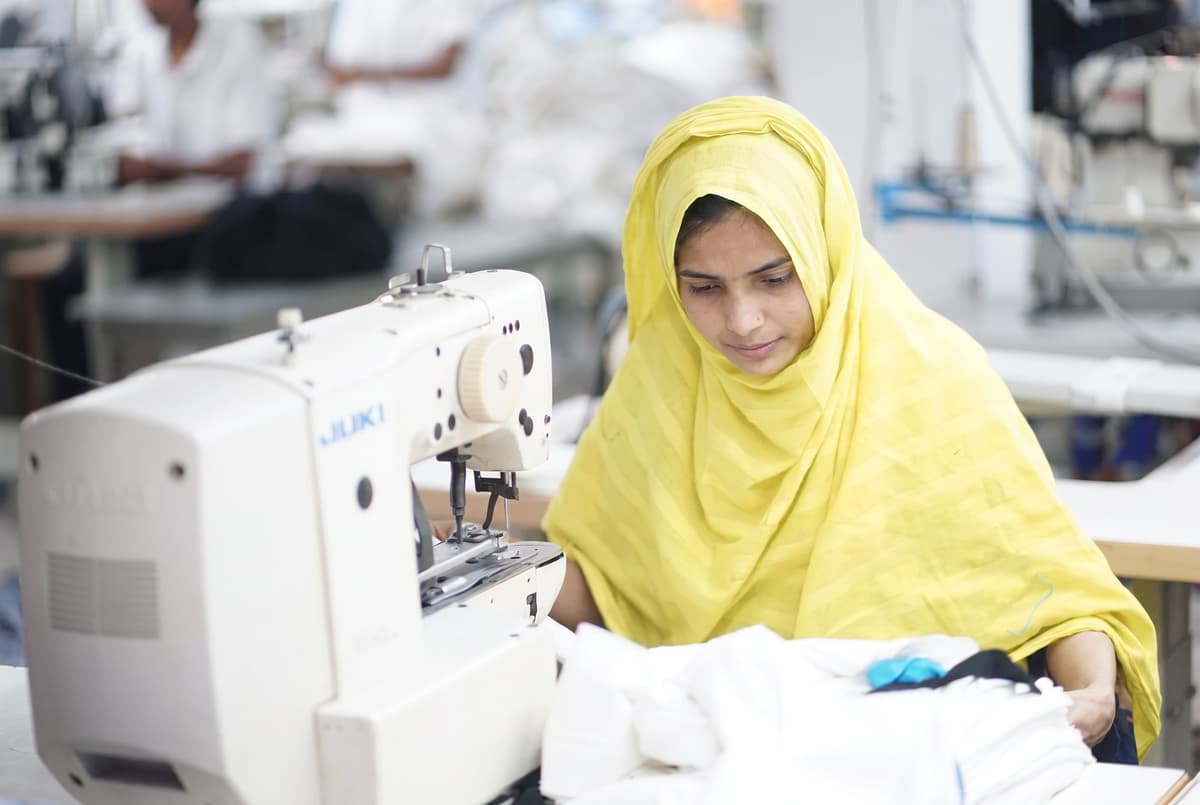
Made by our own team in Narayanganj. See the floor ↓Client reviews on Google ↗GOTS certificate RSC 9687 →
We are a clothing manufacturer for Finnish brands, and a factory rather than an agent: our own cut-and-sew floor in Narayanganj, Bangladesh, run by the family that founded it, with a brand office in Amsterdam. Tees, polos, hoodies, sweatshirts, joggers, shorts, activewear and loungewear start at 150 pieces per style and colour. Our Swedish, Danish and Norwegian pages cover the neighbouring markets; Finland gets the same floor and fabrics, plus a VAT rate and a label rule of its own.
In figures: duty is zero, because Bangladesh-made apparel enters the EU under Everything But Arms, and VAT is 25.5%, Finland's general rate since 1 September 2024, levied at import on the customs value plus any duty and the transport and insurance to the first destination in Finland; the Tax Administration lists clothes and footwear among its examples at that rate. Because we ship DDP, the figure is in the price you approve rather than a later assessment, and a VAT-registered importer normally recovers it on the periodic return. Decide with your accountant how you want the import VAT handled and tell us before the entry is filed.
That rate is the second highest of the markets on this site, after Hungary's 27%, which changes nothing about the duty and everything about cash flow: on a US$3,000 order the VAT line is US$765, recoverable but real. It is the same 25.5% a Finnish-made garment carries at the till, so it does not tilt the comparison between us and a domestic workshop; it just needs to be in the plan, and the landed-cost calculator puts it there.
Labelling: Finland has two official languages, Finnish and Swedish, and the Commission's guidance is to translate the label into all the official national languages where the product is made available, so fibre labels for Finland are in Finnish and Swedish. We sew the bilingual label to your artwork, with Swedish already covering a Stockholm range. As importer, your Finnish company is also the EU-based operator under the General Product Safety Regulation, so its name and addresses go on the product or packaging.
Helsinki's Vuosaari harbour is where most sea freight for Finland lands, with HaminaKotka as the alternative and Helsinki-Vantaa for air cargo. Containers from Chattogram usually change ships at a North Sea or German hub on the way to the Baltic, so the transit for your port is a quoted figure rather than a printed one. On our side the clock is fixed: about 10 days to a sample, then 40–50 days of production once you approve it, then the voyage; the launch-date calculator works back from your on-sale date.
Every style can be made in organic cotton under our GOTS certification (RSC 9687). Denim, jackets and woven shirts are not sewn here; our sister buying house sources them on a separate order. If your vaatevalmistaja search keeps turning up agents, three requests separate them from factories: a street address, BKMEA membership, and a live video call from the floor during a shift. Ours is Plot-A-132, Road No. 02, BSCIC Industrial Area, Panchabati, Narayanganj 1420.
| Bangladesh (our floor) | China | Vietnam | Turkey | Portugal | |
|---|---|---|---|---|---|
| Duty into Finland | 0% under Everything But Arms (single transformation); the preference survives LDC graduation by three years (verified 21 Sep 2026); 25.5% Finnish VAT still due | No preference: the EU's standard duty for the code, then Finnish VAT | EU–Vietnam agreement rates, only where its fabric-origin rules are met | Customs union: goods in free circulation cross duty-free | Made inside the EU: no customs entry and no import VAT at a border |
| Sea route to Finland | Via Suez, usually transshipped at a North Sea hub to Helsinki Vuosaari or HaminaKotka; we quote the transit for your port | Also via Suez, with a comparable leg to the Baltic | Via Suez, much like China | Road or short-sea through Europe; days, not weeks | By road across the EU in days |
| What it does best for a Finnish range | Cotton knit basics from 150 pieces, organic cotton under our GOTS certification, the bilingual label sewn in | Range of fabrics, trims and technical builds | Big woven, outerwear and performance programmes | Fast turnaround, denim and knit at a mid-range price | A made-in-EU label on small runs, at the top unit cost |
| Pick it if | You want Finnish-Swedish labelled knitwear from 150 pieces, duty-free, with the GPSR file built as we sew | Your design needs materials a knit floor cannot source | You are placing large woven or technical orders | You need stock in weeks and can pay more per piece | Made in Europe is the point and price comes second |
The same production, fabrics and paperwork set out on our Swedish, Danish and Norwegian pages, with Finland's own VAT and bilingual label.
Finland's general rate since 1 September 2024 applies at import to the customs value plus duty and onward transport; we fold it into the DDP price and you recover it on your return.
Bilingual fibre labels as standard, sewn to your artwork; the Swedish already covers a Stockholm range.
One style in one colour is a complete Finnish order at 150 pieces; organic cotton under our GOTS certification (RSC 9687) is available at the same minimum.
VAT rate re-checked on 14 October 2026 against Vero and the Commission's rates table; origin rules as verified on 21 September 2026. Sources below.
Two lines decide a Finnish landed cost, and only one of them is Finnish. Duty is set in Brussels: knitwear cut and sewn on our floor is Bangladeshi under the single-transformation rule and enters at 0% under Everything But Arms, a preference Regulation (EU) 2026/1395 keeps for three years after Bangladesh leaves LDC status. VAT is set in Helsinki: the Finnish Tax Administration puts the general rate at 25.5% from 1 September 2024 and names clothes and footwear among the goods taxed at it, and the Commission's rates table still showed 25.5% for Finland when we read it on 14 October 2026.
Worked through for 500 tees at a US$6.00 customs value (freight and insurance to the EU border included), the goods are worth US$3,000, the duty line is zero and the VAT line is US$765 before the onward leg into Finland joins the base. It sits inside our DDP price. Whether it then goes on your own return to Vero or is collected by Finnish Customs at clearance depends on whose name is on the declaration, which the questions below explain.
The importer of record also needs an EORI number. The Commission's summary of national EORI procedures names Tulli's Customs Authorisation Centre as the Finnish issuing office, with applications made through Finnish Customs' online services and usually processed within one working day, so a first-time importer can sort it out in the week the sample is approved. Have your broker confirm the commodity code for each style before you price the range; the landed-cost calculator runs the arithmetic.
Tukes guidance and the Finnish waste decree read on 14 October 2026; EU texts as verified on 21 September 2026. Sources below.
Language is the part of a Finnish label most often got wrong. Tukes, the Finnish Safety and Chemicals Agency, states that mandatory information on textiles sold to consumers must be given in both Finnish and Swedish, so the fibre composition required by Regulation (EU) No 1007/2011, generic fibre names with percentages in descending order on a durable label, appears twice on every garment we make for Finland. That matches the Commission's Your Europe guidance to translate the label into every official language where the product is sold. We sew the bilingual label to your artwork; origin is optional under the regulation, but if you print it, it says Bangladesh.
Under the General Product Safety Regulation (EU) 2023/988, applying since 13 December 2024, a Finnish company importing from us is the EU-established operator: its name and postal and electronic address go on the garment or packaging, and it holds a risk analysis and technical documentation for ten years. On an organic order, GOTS certificate RSC 9687 carries the fibre, chemistry and traceability evidence in that file. The two knitwear risks we document are azo dyes, which REACH Annex XVII entry 43 restricts above 30 mg/kg of listed amines in skin-contact textiles, and cords and drawstrings on children's clothing under EN 14682; the GPSR guide walks through the file.
At end of life, Finland already makes municipalities do part of the work: section 55 of the Government Decree on Waste (978/2021) required them to arrange regional reception of textile waste by 1 January 2023. Producer responsibility for clothing is the next step. The revised Waste Framework Directive entered into force on 16 October 2025 and gives every member state 30 months to set up an EPR scheme in which textile and footwear producers pay a fee for each product they place on the market, so a Finnish brand should plan for a national scheme, with registration and per-product fees, by April 2028; the fibre composition of each style is on the spec sheet we send. The apparel Digital Product Passport comes later, through ESPR rules the Commission plans to adopt in late 2027.
Our quote is DDP, delivered duty paid, to the Finnish address you name: sea or air freight, the customs entry at Helsinki or HaminaKotka, the 25.5% import VAT and the last-mile delivery, with the commercial invoice, packing list and statement on origin in your inbox before the goods leave Chattogram. Baltic-bound containers normally change ships at a North Sea hub, which is why the transit for your port comes with the quote rather than from a table; air cargo into Helsinki-Vantaa takes days.
Bangladesh runs on UTC+6 all year, four hours ahead of Helsinki in winter and three in summer. The floor works Saturday to Thursday, 09:00 to 17:00, so its day ends at 13:00 Helsinki time in winter and 14:00 in summer, and our Amsterdam office, an hour behind you, takes sample and paperwork questions for the rest of the afternoon, in English.
Graduation status read on the UN LDC portal on 14 October 2026; the EU preference rule as verified on 21 September 2026. Sources below.
The one date that could move the duty line on a Finnish order is 24 November 2029, when Bangladesh is scheduled to leave the UN's Least Developed Country list. Bangladesh asked for more time in February 2026; the Committee for Development Policy found an extension appropriate provided domestic reforms make significant progress, and on 21 July ECOSOC recommended that the General Assembly decide before 24 November. On 29 October 2026 the General Assembly granted it, moving graduation back three years (UN LDC portal).
For a Finnish range the window is wide: Regulation (EU) 2026/1395 keeps Everything But Arms for three years after graduation, so duty-free entry covers Finnish seasons up to about late November 2032, and the 25.5% VAT is untouched. What comes after depends on whether Bangladesh qualifies for GSP+, which nobody can answer yet; our LDC graduation guide lays out the scenarios, and each Finnish quote states the position on the day it is written.
Search for a clothing manufacturer in Finland and most of what comes back is directories and a few local workshops, because most clothing sold in Finland is made abroad. Finland's import figures in UN Comtrade show where it comes from. In 2025 China supplied 30.0% of Finland's clothing imports by value and Bangladesh 14.4%, the second-largest origin. In knitted clothing, HS chapter 61, which covers the knitted tees, sweatshirts and joggers we make, Bangladesh's share was 18.2%, against 10.5% in woven clothing, chapter 62. The table gives the eleven largest origins in 2025, with 2024 alongside.
Making clothing from start to finish in Finland is the exception. Yle reported in May 2016 that only a few companies still do it: the decline began in the mid-1990s, when Swedish and Danish chains gained market share, and price wars led almost all Finnish clothing brands to move their sewing abroad. The domestic makers that remain are easiest to find through Finnish Textile & Fashion, the industry association with more than 200 member companies, whose directory can be searched by name or location and filtered by category, such as clothing and accessories or protective clothing and workwear. If one of them can sew your range at the volume you need, that is a sound choice. If you need cotton knitwear from 150 pieces per style and colour, with the Finnish-Swedish label sewn in, that is the work our floor does.
| Origin | Knitted clothing (HS 61), 2025 | Woven clothing (HS 62), 2025 | All clothing (HS 61 and 62), 2025 | All clothing (HS 61 and 62), 2024 |
|---|---|---|---|---|
| China | 28.7% | 31.3% | 30.0% | 30.9% |
| Bangladesh | 18.2% | 10.5% | 14.4% | 14.7% |
| Sweden (EU) | 7.5% | 5.4% | 6.5% | 5.4% |
| Turkey | 7.6% | 4.7% | 6.1% | 7.1% |
| Vietnam | 3.0% | 5.1% | 4.1% | 4.0% |
| Germany (EU) | 3.1% | 3.4% | 3.2% | 3.4% |
| India | 2.7% | 3.4% | 3.0% | 3.5% |
| Italy (EU) | 2.5% | 3.0% | 2.7% | 2.8% |
| Denmark (EU) | 2.7% | 2.4% | 2.5% | 2.0% |
| Pakistan | 2.3% | 2.5% | 2.4% | 2.2% |
| Cambodia | 3.0% | 1.7% | 2.4% | 2.5% |
Wonderful people to work with — very professional and knowledgeable, also accommodating to the needs of their customers.
I have had a very good experience with this company. They are very friendly, professional, and provide fast service. They speak fluent English, which makes communication very easy. The quality of their manufacturing is excellent. I have no doubt in recommending this company to anyone looking for a reliable manufacturing partner in Bangladesh.
Collective Studios under the direction of Mr Jamish and his daughter Homaira represent the future of RTW production in Bangladesh. A thorough approach to detail governed by a genuine standard of quality. Masters of and partners in the process!
Best supplier! On time, reliable and perfect craft.
No: knitwear cut and sewn on our floor in Narayanganj enters Finland at 0% duty under Everything But Arms, because Finland applies the EU's common tariff and cutting and sewing in Bangladesh meets the single-transformation origin rule. The preference is not automatic; it has to be claimed on the Finnish import entry, and we confirm the origin documents for your order. Zero duty is not zero tax: Finland's 25.5% import VAT applies to every origin, and your broker should confirm the commodity code for each style. On the longer view, Bangladesh's LDC graduation is now set for 24 November 2029, after the UN General Assembly granted an extension on 29 October 2026. Regulation (EU) 2026/1395 keeps the preference for three years after graduation, so a Finnish order stays duty-free to about the end of 2032. Our LDC graduation guide covers what may follow.
Finnish import VAT on clothing is 25.5%, the general rate since 1 September 2024, and the Finnish Tax Administration (Vero) lists clothes and footwear at that rate on its VAT rates page. At import it is charged on the customs value plus any duty and the transport and insurance costs to the first place of destination in Finland, so the onward leg from a North Sea transshipment hub to Helsinki counts as well. With duty at zero, a consignment with a US$3,000 customs value carries US$765 of VAT before those onward costs. Who accounts for it follows the name on the import declaration. If your company is the importer on the entry and is on the Finnish VAT register, you report the import VAT on your own return to Vero; if the importer is not registered, Finnish Customs levies it at clearance. Agree the route with your accountant, and tell us before we file the Finnish entry.
Yes: Tukes, the Finnish Safety and Chemicals Agency, states on its textiles page that mandatory information on textiles sold to consumers in Finland must be given in both Finnish and Swedish, so every garment we make for the Finnish market carries a bilingual label as standard. What the label says comes from Regulation (EU) No 1007/2011: each fibre by its generic name, not a trade name or abbreviation, with percentages in descending order of weight. Tukes does check. In an EU surveillance project it reported on 29 June 2026, 37% of 132 products had fibre labels that did not match the materials; of the 12 bought in Finland, one contained an undeclared fibre, and the other Finnish faults concerned terminology or language, such as missing Finnish or Swedish text. Take the composition from the fabric specification you approve, not from memory.
Yes: 150 pieces per style and per colour, so one hoodie in black is a complete Finnish order and the same hoodie in black and grey is two runs of 150. For a Finnish launch that size works because one bilingual Finnish-Swedish label and one product-safety file cover the whole run, and both carry into reorders; each shipment still gets its own customs entry. Keep the colour count low: each extra colour is its own dye lot and is priced as one, so a deep run in one colour beats three shallow ones. Plan the cash side as well. Depending on who is importer on the entry, Finland's 25.5% import VAT is either inside our DDP price or on your own VAT return, which on a small first run is a real sum, so ask your accountant which route suits you. Model the styles and colours in our MOQ calculator.
Start with whose name goes on the Finnish import declaration, because that decides the rest. If it is your company, Finnish Customs requires your EORI number on the declaration, FI followed by your Business ID, and rejects declarations without it; any representative named on the entry needs one too. That name also decides the VAT route: if your company is the importer and VAT-registered, the import VAT goes on your return to Vero; otherwise Customs levies it at clearance. Our DDP quote covers the freight, the customs entry at Helsinki Vuosaari or HaminaKotka and delivery to your Finnish address, and we agree the VAT route with you before the entry is filed. One Finnish detail to raise early: Åland sits behind a tax border with mainland Finland, so goods crossing it need their own declaration. If your stock is there, tell us.
A Finnish company importing garments from us is that person: since 13 December 2024 the General Product Safety Regulation (EU) 2023/988 requires an EU-established responsible economic operator for clothing sold to consumers, and on a Finnish import that operator is you. The role carries a file, not just a name. It needs a risk analysis, technical documentation kept for ten years, and the manufacturer's name with postal and electronic addresses on the product or its packaging. If it is an organic order, our GOTS certification under RSC 9687 backs the fibre, chemistry and traceability evidence in the file, and we send the scope certificate on request. Two rules usually sit inside a knitwear risk analysis: REACH Annex XVII entry 43 bans azo dyes that release listed aromatic amines above 30 mg/kg in textiles worn against the skin, and EN 14682 governs cords and drawstrings on children's clothing.
Make it in Finland if 'made in Finland' is the reason people buy from you; look abroad if you need cotton knitwear from 150 pieces per style and colour, delivered duty-free. We are a Bangladeshi factory, not a Finnish one, so we cannot give you a domestic origin label. What we can compare plainly is the tax. A Finnish-made garment and one from our floor both carry 25.5% VAT at the till, and ours enters duty-free, so tax does not decide it. Making in Europe, Portugal for example, means no import entry and road freight, at the highest unit cost in our own comparison table. Making with us means a customs entry and usually a sea leg transshipped at a North Sea hub (or air freight into Helsinki-Vantaa), in exchange for knit basics at low minimums. If a vaatevalmistaja search turns up mostly agents, ask each one to name the factory that will sew your order and show it on a live call.
Two numbers and one customs decision change; the factory, fabrics and label do not. Finland's import VAT is 25.5% and Sweden's is 25%, and a Finnish range clears at Helsinki or HaminaKotka while a Swedish one clears at Gothenburg, each as its own customs entry. The label is where Finland makes life easier: because Finnish consumer information must be in Finnish and Swedish, the bilingual label we sew for Finland already carries the Swedish text a Stockholm range needs, so one label run serves both markets. For the stock there are two practical routes. We ship two DDP consignments, one to each warehouse, or you clear everything in one country and move goods across within the single market, where no second import entry arises, though moving your own stock across may need a VAT registration there; ask your accountant. Give us your warehouse addresses with the brief. Our Swedish page covers Sweden's producer-responsibility rules.
About ten days for sampling, forty to fifty days for production once the pre-production sample is signed off, then transit. Sea freight to Helsinki or HaminaKotka usually transships at a North Sea hub, so we confirm the figure for your port with the quote; air freight into Helsinki-Vantaa is measured in days. For a Finnish launch, plan from the date the range has to be in your warehouse, not from the day you order. Tell us which port suits your warehouse and the transit for that port comes with the quote, so the plan rests on a stated figure. The launch-date calculator counts back from your on-sale date. If the pre-production sample needs a revision, the plan moves with it, so check that sample against your tech pack before you sign it off; the points of measure in our tech pack template are the ones to check. Bangladesh is three to four hours ahead of Finland, and our Amsterdam office, one hour behind you, covers samples and paperwork. From order to your door, plan on about 70 days by air.
The Key Flag, no; the Design from Finland mark, possibly. Both are granted by the Association for Finnish Work (Suomalainen Työ). Its Key Flag page says a product carrying the symbol is always made in Finland, with at least half of its content produced domestically, and a garment cut and sewn on our floor in Narayanganj meets neither test. Design from Finland is about where the design happens: it is for companies headquartered in Finland that have invested in professional, user-oriented design, and holders must be transparent about the production chain and country of origin of their products. Its page does not ask for production in Finland, so a range designed in Helsinki and sewn by us may qualify, but confirm with the association before you print the mark. Either way, the origin on your customs paperwork, and on your label if you print one, stays Bangladesh, and we give you our factory name and street address to publish.
Yes, in cut-and-sew knitwear. We work knits up to about 500 GSM, so a Finnish winter drop can be built from brushed-back fleece, which is warmer and softer, or French terry, which is looped on the inside and lighter in feel; most premium joggers sit at 320 to 400 GSM. Each style in each colour is a run of 150 pieces, and organic cotton, made in our GOTS-certified facility (RSC 9687), is available at the same minimum. The fleece is knitted and dyed at partner mills we specify and inspect; we cut, sew, finish, check and pack it. What we do not sew here is wovens and outerwear: denim, jackets and woven shirts go through our sister buying house on a separate order, and flat-knit sweaters are made only on a limited basis through vetted partner units, quoted separately. Put the target GSM on your tech pack; the fabric and GSM guide shows what each weight feels like.
Trade and regulatory details on this page last verified 21 September 2026. Tariff and compliance terms change — ask us to confirm the current position for your order.
Whether it’s a large bulk or wholesale run or your first batch of 150, send a sketch, a reference, or a sentence. We’ll reply within one business day with fabric options and an indicative price.
Or message the factory directly: WhatsApp +880 1980 055026 · hello@collectivestudioltd.com · Homaira replies within one business day.