The 21% rate, not the old 19%
Romania's standard VAT rose to 21% on 1 August 2025 under Law 141/2025. We quote the current rate inside one DDP landed price.
Premium knitwear manufacturing for Romanian brands — duty-free under Everything But Arms, the 21% import VAT that replaced 19% in August 2025 inside one landed price, labels in Romanian, and the Black Sea route through Constanța.
Collective Studio cuts and sews knitwear for Romanian labels in Narayanganj, Bangladesh, from 150 pieces per style and colour, shipped DDP through Constanța after 40–50 days' production plus freight. About 70 days from order to your door by air. Duty is 0% under Everything But Arms, the 21% VAT that replaced 19% in August 2025 is inside the quote, labels are in Romanian under Ordinance 21/1992, and the road leg from the port is declared in RO e-Transport.
Or message the factory directly: WhatsApp +880 1980 055026 · hello@collectivestudioltd.com · Homaira replies within one business day.
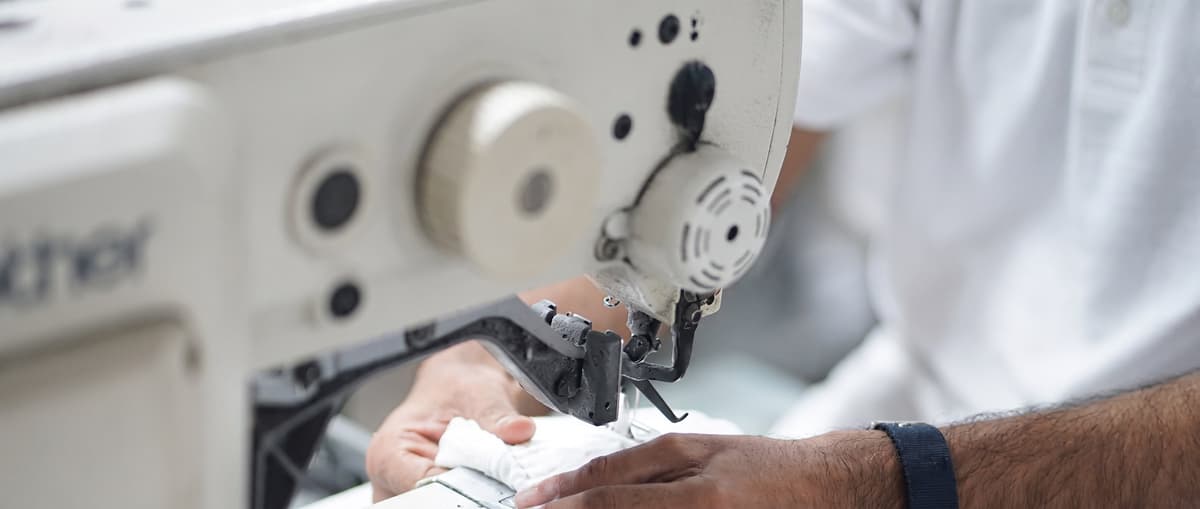
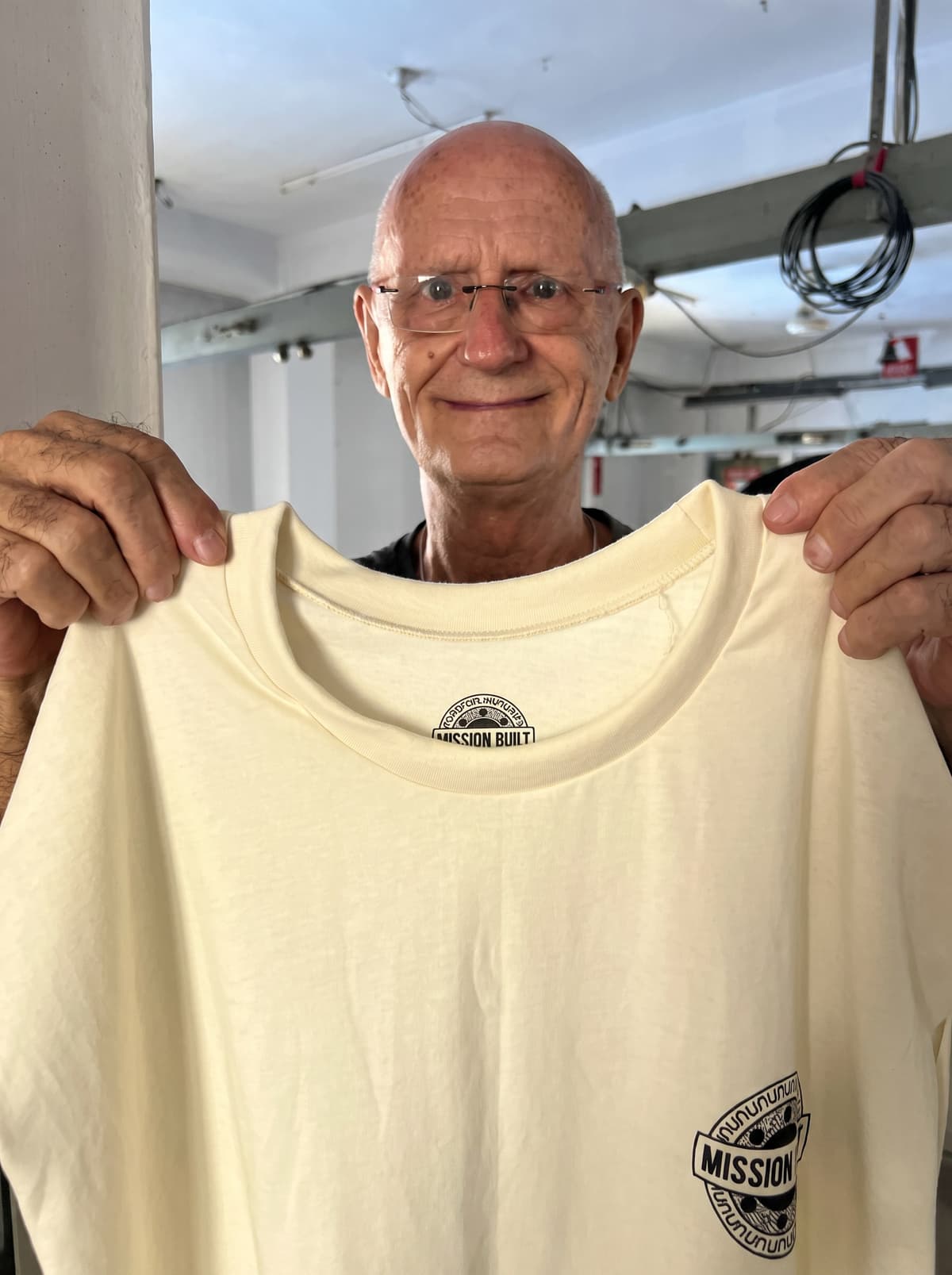
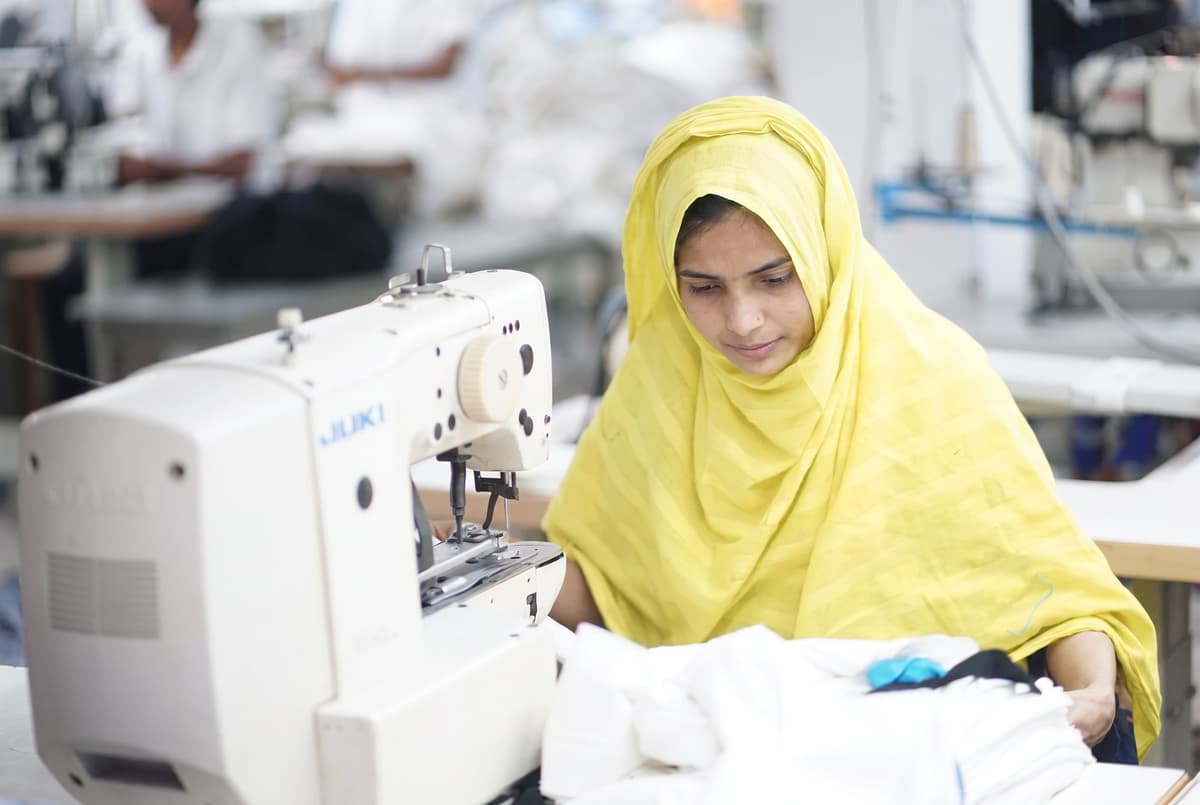
Made by our own team in Narayanganj. See the floor ↓Client reviews on Google ↗GOTS certificate RSC 9687 →
In short: Romania has 6,461 clothing manufacturers employing 67,681 people (Eurostat, 2024), about ten people per firm. For a first knitwear run, we cut and sew from 150 pieces per style and colour in Narayanganj, ship DDP through Constanța at 0% duty and put the 21% import VAT inside your quote.
We are a clothing manufacturer for Romanian brands, sewing on our own family-run knitwear floor in Narayanganj, Bangladesh, with a brand office in Amsterdam: t-shirts, polos, hoodies, sweatshirts, joggers, shorts, activewear and loungewear from 150 pieces per style and colour. Romania has real garment factories of its own, most of them working as subcontractors for western European labels at quantities a new brand cannot meet, which is why founders here often look abroad for their first few hundred pieces.
The numbers, and one of them changed recently: Bangladesh-made apparel enters the EU duty-free under Everything But Arms, and Romania charges import VAT at a standard rate of 21%, which replaced the old 19% on 1 August 2025 under Law 141/2025, with a single reduced rate of 11%. If a supplier is still quoting you 19%, their figures are out of date. We ship DDP, so the VAT sits inside the price you approve, and a VAT-registered importer recovers it on the periodic return.
Constanța is the natural entry and an underused advantage: it is the largest port on the Black Sea, reached through Suez and the Bosphorus without a western European transshipment, and it sits a few hours by road from Bucharest. Otopeni handles air freight in days. We confirm the transit for your sailing with the quote rather than print a figure, because schedules and the Red Sea routing both move.
Labelling: fibre composition follows the EU regulation, and Romanian law is explicit about the language. Article 20 of the consumer-protection ordinance says the information must be written in Romanian, regardless of the product's country of origin. We sew Romanian labels to your artwork, adding Hungarian, Bulgarian or English if you sell across the borders. The General Product Safety Regulation adds the manufacturer's name and addresses on the product or packaging and an EU-established responsible operator, which a Romanian company importing from us is.
Organic cotton is available under our GOTS certification, RSC 9687, with a transaction certificate for your order. Denim, jackets and woven shirts are not made on our floor; our sister buying house in the same industrial area sources them as a separate order. Allow about 10 days for sampling and 40–50 days of production after sample approval, then the sailing; the launch-date calculator counts back from your on-sale date.
If your search for a producător de îmbrăcăminte abroad keeps finding agents, use the same test we suggest everywhere: a street address, BKMEA membership and a video call from the factory floor while a shift is running. Ours is Plot-A-132, Road No. 02, BSCIC Industrial Area, Panchabati, Narayanganj 1420.
| Bangladesh (our floor) | China | Vietnam | Turkey | Romania (local factory) | |
|---|---|---|---|---|---|
| Duty into Romania | Nil under Everything But Arms (single transformation), with three years' transition after LDC graduation (checked 14 Oct 2026); 21% VAT on every import | Standard EU duty for the code, with no preference | Lower duty under the EU–Vietnam agreement where its fabric-origin rules are satisfied | Nil duty in free circulation, through the customs union | Domestic purchase: no customs entry, no import VAT, domestic VAT instead |
| Route to Romania | Via Suez and the Bosphorus to Constanța, the largest Black Sea port, without a western European transshipment; a few hours by road to Bucharest | Suez and the Bosphorus too; a comparable voyage | The same Suez–Bosphorus route | By road, in days | Within Romania, by road |
| Strengths | Cotton tees, hoodies and joggers from 150 a colour, organic cotton under GOTS certificate RSC 9687, landed cost | Widest fabric and trim sourcing, technical construction | Woven, outerwear and sportswear at high volume | Short lead times, denim and knit, mid-range prices | Woven capacity and subcontract volumes for western European labels |
| Choose it when | Your first run is a few hundred knit pieces, duty-free, with the GPSR file assembled as they are made | You need materials a knitwear floor cannot get | The order is a big woven or performance programme | You need goods in weeks and accept a higher unit cost | Your quantity fits a subcontract line, or the range is mostly woven |
Romania's standard VAT rose to 21% on 1 August 2025 under Law 141/2025. We quote the current rate inside one DDP landed price.
The largest Black Sea port, reached through Suez and the Bosphorus, a few hours from Bucharest by road.
Article 20 of Ordinance 21/1992 requires the information in Romanian whatever the country of origin; we sew that to your artwork.
Romanian factories quote at export volumes; our floor starts at 150 pieces of one style in one colour, made to your pattern.
Re-checked on 14 October 2026 against ANAF, EUR-Lex and the UN LDC portal; links under Sources below.
Duty is set for the whole Union, so a Romanian entry follows the common rule: our cut-and-sew work in Narayanganj gives the garments Bangladeshi origin under the single-transformation test of Everything But Arms, and they clear at 0%. Regulation (EU) 2026/1395 of 17 June 2026 keeps Bangladesh on the EBA list and allows a three-year transition after graduation. VAT is where Romania changed: ANAF’s guidance on the rates sets out that from 1 August 2025, under Law 141/2025, there is one reduced rate of 11% and a standard rate of 21% for operations that are neither exempt nor reduced, and clothing is not on the reduced list. The Commission's rates table, checked 13 July 2026, shows the same 21%.
Put into numbers: 500 tees at US$6.00, a customs value already carrying freight and insurance to the EU border, come to US$3,000. Duty is nil and VAT is US$630, plus 21% of the onward transport to the first place of destination in Romania, all inside our DDP price; a VAT-registered importer reclaims it on its periodic return.
Ask your comisionar vamal to confirm the commodity code for each style before you price the range; we put the duty position for your order in writing, and the landed-cost calculator works it through at any quantity.
Re-checked on 14 October 2026 against the Portal Legislativ, AGERPRES and EUR-Lex; links under Sources below.
Label content comes from Regulation (EU) No 1007/2011, every fibre by generic name and percentage, largest first, on a durable label, and its Article 16(3) lets each member state require its own language, which the Commission's Your Europe guidance reads as every official language where the garment is sold. Romania leaves no room for doubt: Article 20 of Ordinance 21/1992 on consumer protection requires the information in Romanian whatever the country of origin, so "100% bumbac" rather than "100% cotton". The consumer-protection authority enforces it. Origin itself is optional on the label, but the customs entry names Bangladesh and anything printed must match.
Product safety follows the General Product Safety Regulation (EU) 2023/988, applying since 13 December 2024. A Romanian company importing from us is the EU-established operator, keeps the technical documentation for ten years and, under its own brand, is also the manufacturer whose name and postal and electronic address go on the garment or packaging; because Ordinance 21/1992 governs the language, the safety wording for Romania is in Romanian too. For organic pieces, GOTS certificate RSC 9687 supplies the file's fibre, chemistry and traceability evidence. REACH entry 43 caps azo dyes releasing listed amines at 30 mg/kg in textiles against the skin, and EN 14682 covers cords on children's clothing; the GPSR guide walks through it.
Textile producer responsibility is the slow part. Directive (EU) 2025/1892 obliges Romania, like every member state, to transpose by 17 June 2027 and to have a textile scheme running by 17 April 2028, with a register a brand must join before placing clothing on the market. On 7 October 2026 the environment ministry's state secretary, Raul Pop, said that work on the Romanian rules was moving very slowly, AGERPRES reported, so plan for the EU deadline rather than an earlier national one. The apparel Digital Product Passport is a separate step; the Commission plans its act for late 2027 with at least 18 months' transition.
Romanian quotes are DDP: freight, the onward road leg, the customs entry, the 21% VAT and delivery in one landed price, with the commercial invoice, packing list and statement on origin sent before the goods leave Bangladesh. Constanța, the largest port on the Black Sea, is reached through Suez and the Bosphorus without a western European transshipment and sits a few hours by road from Bucharest; Otopeni takes air freight in days. We state the transit for your sailing with the quote.
One Romanian step that foreign suppliers often miss: the road leg from the port or customs office to your warehouse is declared in RO e-Transport. ANAF's 2025 guide puts that duty on the consignee named in the import customs declaration, for vehicles of at least 2.5 tonnes carrying a consignment over 500 kg gross or worth more than 10,000 lei, and the driver carries the UIT code the system issues. Tell us whose name goes on the import declaration, so the declaration and the haulier's papers match.
Bucharest is three hours behind Narayanganj in summer and four in winter, since Bangladesh stays on UTC+6 all year. The floor works Saturday to Thursday, 09:00 to 17:00, so much of your working day overlaps ours, and the Amsterdam office handles design, samples and compliance paperwork in English once the floor has closed.
Re-checked on 14 October 2026 on the UN LDC portal and EUR-Lex.
24 November 2029 is now the graduation date on the UN LDC portal. Bangladesh sought an extension in February 2026, the Committee for Development Policy considered one appropriate provided domestic reforms advance significantly, and on 21 July the Economic and Social Council recommended a General Assembly decision before 24 November. On 29 October 2026 the General Assembly granted it, moving graduation back three years from 24 November 2026.
A Romanian importer's duty position is protected for a while: Regulation (EU) 2026/1395 keeps Everything But Arms for three years from graduation, so 0% holds until about late 2032, and the 21% VAT is unaffected. After that, GSP+ eligibility decides, and it is unresolved; our LDC graduation guide covers the scenarios.
If you came here looking for a clothing manufacturer in Romania, the official numbers show what you are likely to find. Eurostat's business statistics count 6,461 clothing manufacturers in Romania in 2024, employing 67,681 people, about ten per firm on average, and the workforce is down by about a fifth from 85,265 in 2021. By value, Romania sells more woven clothing abroad than it buys, which fits the subcontract work for western European labels described at the top of this page.
Knitwear runs the other way. In 2025 Romania imported 85,623 tonnes of knitted clothing, the customs chapter that covers tees, hoodies and joggers, and exported 28,964 tonnes, according to Eurostat's Comext trade data. About 62% of that import tonnage came from other EU countries. Of the rest, Bangladesh supplied 10,038 tonnes, the largest share from outside the Union by weight and second only to Poland among all partner countries (inside the EU, Eurostat records the country goods were sent from, not where they were made), so a Romanian label buying knitwear from us is using a route the country's importers already rely on.
| Measure | Romania | Year |
|---|---|---|
| Clothing manufacturers (NACE C14) | 6,461 enterprises (7,081 in 2021) | 2024 |
| People employed in clothing manufacture | 67,681 (85,265 in 2021) | 2024 |
| Average size | About 10 people per enterprise | 2024 |
| Woven clothing (HS 62), exports and imports by value | EUR 1.35 billion exported, EUR 1.31 billion imported | 2025 |
| Knitted clothing (HS 61), imports and exports by weight | 85,623 tonnes imported, 28,964 tonnes exported | 2025 |
| Knitted clothing imports from other EU countries | 61.6% of the tonnage, 74.0% of the value | 2025 |
| Share of knitted clothing imports from outside the EU | Bangladesh 30.5% by weight (10,038 tonnes) and 26.1% by value; China 28.3% and 31.7%; Türkiye 12.5% and 15.7% | 2025 |
Wonderful people to work with — very professional and knowledgeable, also accommodating to the needs of their customers.
I have had a very good experience with this company. They are very friendly, professional, and provide fast service. They speak fluent English, which makes communication very easy. The quality of their manufacturing is excellent. I have no doubt in recommending this company to anyone looking for a reliable manufacturing partner in Bangladesh.
Collective Studios under the direction of Mr Jamish and his daughter Homaira represent the future of RTW production in Bangladesh. A thorough approach to detail governed by a genuine standard of quality. Masters of and partners in the process!
Romania's standard VAT rate is 21%, up from 19% since 1 August 2025 under Law 141/2025, with a single reduced rate of 11%. ANAF's guidance on the new rates sets out both, and the European Commission's VAT rates table lists Romania at 21% and 11% (both read 27 Sep 2026). Clothing is not on the 11% list, which covers goods such as medicines and food, so a tee or hoodie imported into Romania is taxed at the full 21%. At import the tax falls on the customs value, which already includes the freight and insurance to the EU border, plus any duty and the onward transport to the first place of destination in Romania, not on the factory price alone. Every Romanian DDP quote we send uses 21%. If a supplier, a marketplace or an online landed-cost calculator still applies 19% to Romania, its figures predate August 2025, and a range priced on them comes out two points of VAT short on every order.
No: clothing cut and sewn in Bangladesh enters Romania at 0% duty under the EU's Everything But Arms scheme, duty-free until at least 24 November 2032; see our LDC graduation guide. A tee or hoodie made on our floor gains Bangladeshi origin through a single transformation, but the 0% is not applied automatically at Constanța, or at Otopeni for air freight. It is claimed on the Romanian import declaration, and it holds only when the shipment carries valid proof of origin: under the scheme, a statement on origin made out by the exporter, not a Form A certificate. Without that proof, the entry pays the standard EU rate for the commodity code. We confirm the proof of origin for your order before the goods move, and the Romanian customs entry sits inside our DDP price. The 21% import VAT is due whether or not the preference applies, so the saving is in the duty line only.
Importing clothing from Bangladesh into Romania costs the factory price, the freight and insurance, 0% duty, 21% import VAT on the sum of those, and the onward delivery to your door. For 500 tees at a US$6.00 customs value, freight and insurance to the EU border included, or US$3,000, the duty is nothing, and the VAT is US$630 plus 21% of the onward transport to the first place of destination in Romania. Freight depends on the sailing, and on whether the goods go by sea to Constanța or by air into Otopeni. We do not publish price bands, because the factory price moves with fabric, weight, trims, finishing and quantity; we quote it for your order as one DDP landed price, with the Romanian VAT already inside it. If your company is not VAT-registered in Romania, that 21% is a true cost and belongs in your unit price. The pricing calculator then turns that landed cost into a margin at your Romanian retail price.
The simplest way is to order DDP, delivered duty paid, so we arrange the freight, the Romanian customs entry and the 21% import VAT, and the goods reach your address already cleared. The landed price you approve covers the onward leg and delivery too, and the commercial invoice and packing list reach you before the goods move. One decision stays with you: whose name goes on the entry. If it is made in your company's name, you are the importer of record, and a VAT-registered Romanian company recovers the import VAT through its periodic return. If a forwarder is named instead, the tax is paid but it does not appear on your return, so tell us which you need before the goods move. Bangladesh Standard Time is UTC+6 with no daylight saving, three to four hours ahead of Bucharest, so part of your working day falls within ours. Send us your range and we reply within one business day.
Yes, a Romanian brand can start at 150 pieces, because our minimum is 150 per style and per colour, so one hoodie in one colour is a complete order. The real question at that size is how many styles to launch, since each style carries fixed work for the Romanian market: label text in Romanian under Ordinance 21/1992, and a GPSR file for that product, built once and reused on every reorder. Five styles at 150 pieces means five sets of that work, each spread over 150 garments; two styles at 375 means two sets, each over 375. That is why a first Romanian range of two or three styles, one colour deep, usually beats a wide one. Splitting a style across colours adds a dye lot per colour and prices accordingly. Our MOQ calculator models the split, and the low-MOQ page explains how the minimum works.
Use a Romanian factory if it will take your quantity or your range is mostly woven; for knit runs from 150 pieces, a Bangladeshi floor is often the easier fit. Romania's garment factories mostly work as subcontractors for western European labels at volumes a new brand cannot place, and much of the local capacity is woven rather than knit. Buying locally also removes the import: no customs entry and no import-VAT event, though domestic VAT still applies. From us, a Romanian founder gets hoodies, tees and joggers cut and sewn to their own pattern, in organic cotton under our GOTS certification, RSC 9687, if wanted, with no duty on the way in. We do not make denim, jackets or woven shirts; our sister buying house, a separate company, sources those as a separate order. If a search for a producător de îmbrăcăminte (clothing manufacturer) abroad keeps turning up agents, ask for the factory's street address and a live video call from the floor.
Yes: Article 20 of Ordinance 21/1992 requires product information on clothing sold in Romania to be in Romanian, whatever the country of origin. The fibre content comes from EU law. Regulation (EU) No 1007/2011 requires each fibre by its generic name and percentage, largest first, on a durable, legible label, and its Article 16(3) itself requires that information in Romanian for garments sold in Romania, unless Romania provides otherwise. So a Romanian label reading "100% bumbac" satisfies the ordinance and the regulation together. We sew the Romanian text to your artwork, and if the range also sells in Hungary or Bulgaria, both neighbours, Hungarian or Bulgarian can share the same label. The regulation does not demand a country of origin, although the customs declaration names Bangladesh and any "made in" claim you print must be true. The consumer-protection authority enforces the ordinance on garments offered to Romanian shoppers.
Under the GPSR, the Romanian company that imports the clothing is the EU responsible economic operator, working alongside us as manufacturer. Regulation (EU) 2023/988, which has applied since 13 December 2024, splits the work. We carry out the risk analysis, draw up the technical documentation and put our name, postal and electronic address on the garment or its packaging. Your company checks that we have done so, adds its own name and addresses the same way, and keeps a copy of the technical documentation for ten years. Article 11(4) then leaves the language of any instructions or safety information to the member state, and in Romania Ordinance 21/1992 makes that Romanian. Keep the Romanian label text and the GPSR file consistent, since both describe the same garment to the same Romanian customer. GOTS certificate RSC 9687 supplies fibre, chemistry and traceability evidence for the file, with a transaction certificate for an order in organic cotton under that certification.
We usually ship to Constanța, the largest port on the Black Sea, reached from Bangladesh through Suez and the Bosphorus without a transshipment in western Europe, then a few hours by road to Bucharest. That usually means one less handling step than routing your goods to Hamburg and trucking them across the continent. We confirm the transit for your sailing with the quote, since schedules and the Red Sea routing both change, and Otopeni is there for air freight in days. If a launch date cannot wait for a sailing, Turkish and Portuguese factories reach Romania by road and deserve a look; the price of that speed is a higher unit cost. Give us your delivery address when you ask for a quote, whether it is in Bucharest or close to the port, because the road leg from Constanța to your door is part of the DDP price we send.
Yes, in volume. Eurostat's Comext trade data show that Romania imported 10,038 tonnes of knitted clothing from Bangladesh in 2025, the customs chapter that covers tees, hoodies, sweatshirts and joggers. That made Bangladesh the largest source outside the EU by weight, with 30.5% of the non-EU tonnage against 28.3% for China and 12.5% for Türkiye, and second overall only to Poland, whose figure counts goods sent from there rather than made there. By value, China led the non-EU group. Most of Romania's knitwear, about 62% by weight, still arrives from other EU countries. For a Romanian importer this means the route is familiar: Bangladeshi knitwear clears at 0% duty under Everything But Arms when the shipment carries the exporter's statement on origin, and the 21% import VAT applies as it does on any other entry. What differs between Bangladeshi suppliers is the minimum, whose floor the garments are sewn on and the paperwork that comes with them, so compare those.
Start with the minimum: how many pieces per style and per colour, not per order, because a factory that fills programmes for western European labels may set a line minimum a new brand cannot reach. Then ask which stages happen on its own floor. Knitting, dyeing, printing and embroidery are often done elsewhere, which is fine if the factory names the units. Ask whether it buys the fabric or expects you to supply it, since subcontract work is often cut, make and trim on the client's cloth. Ask how long sampling takes and when a bulk slot is free. Finally, check that it will sew the Romanian label text that Ordinance 21/1992 requires and supply what your GPSR file needs. Ask us too: 150 per style and colour, cut and sewn on our floor, knitting and dyeing at partner mills we specify and inspect, about 10 days to sample and 40 to 50 days of production after approval.
Trade and regulatory details on this page last verified 14 October 2026. Tariff and compliance terms change — ask us to confirm the current position for your order.
Whether it’s a large bulk or wholesale run or your first batch of 150, send a sketch, a reference, or a sentence. We’ll reply within one business day with fabric options and an indicative price.
Or message the factory directly: WhatsApp +880 1980 055026 · hello@collectivestudioltd.com · Homaira replies within one business day.