0% duty, and no VAT or GST at all
Hong Kong taxes only liquor, tobacco, hydrocarbon oil and methyl alcohol. Clothing has never been on that list — this isn't a scheme, it's standing free-port policy.
Premium knitwear manufacturing for Hong Kong brands — 0% import duty and no VAT or GST at all, which makes this the simplest landed-cost maths of any market we ship to, shipped DDP from 150 pieces.
Collective Studio makes cut-and-sew knitwear for Hong Kong brands in Narayanganj, Bangladesh, from 150 pieces per style and colour, delivered DDP after 40–50 days' production plus freight. About 70 days from order to your door by air. Hong Kong is a free port: no customs tariff, no VAT or GST on imports, and clothing is not one of its four dutiable commodities. Verified 19 September 2026.
Or message the factory directly: WhatsApp +880 1980 055026 · hello@collectivestudioltd.com · Homaira replies within one business day.
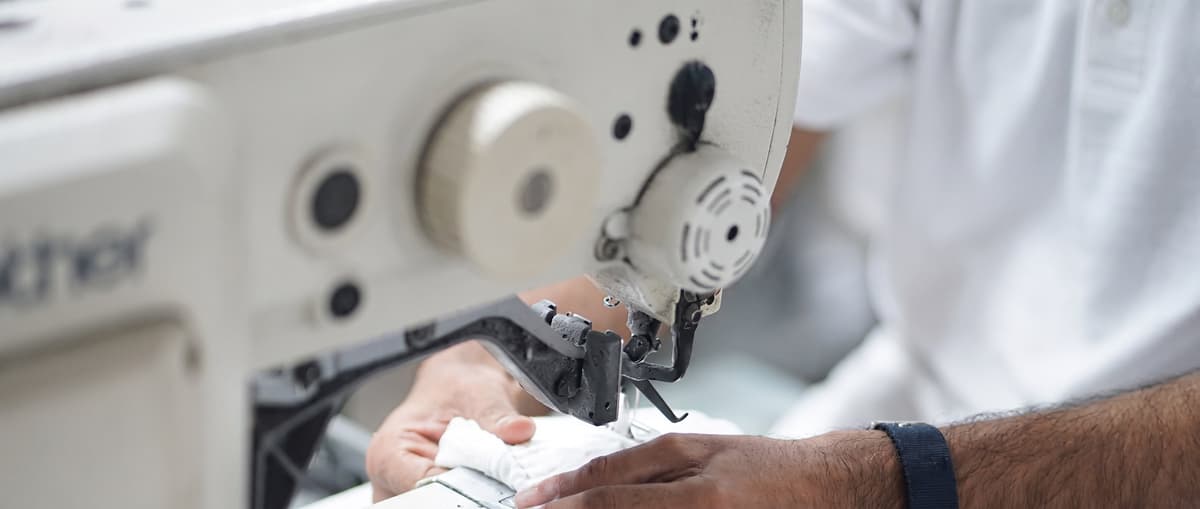
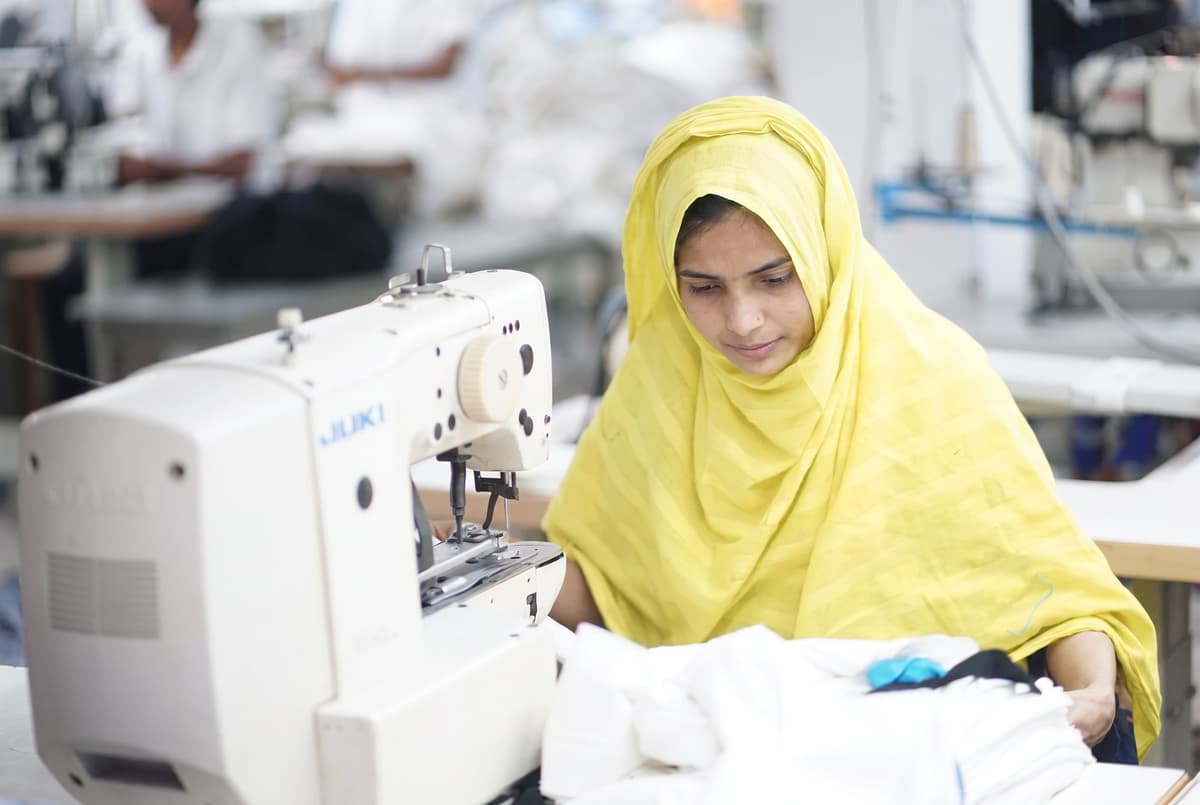
Made by our own team in Narayanganj. See the floor ↓Client reviews on Google ↗GOTS certificate RSC 9687 →
Every other country page we've written spends most of its length explaining a duty rate, a VAT percentage, or a graduation date that changes the numbers. A clothing manufacturer for Hong Kong brands doesn't need any of that, because Hong Kong genuinely doesn't charge either tax on clothing. Hong Kong is a free port: Hong Kong Customs levies duty on exactly four categories of goods — liquor, tobacco, hydrocarbon oil and methyl alcohol — and clothing has never been one of them. There is no VAT, no GST, no general sales tax on imports of any kind.
We want to be direct about how unusual that is, because it's easy to read as too good to be true. It isn't a promotional rate, a free-zone workaround, or a preference tied to Bangladesh's LDC status that could change on a graduation date. It's Hong Kong's standing trade policy, and it applies to clothing from any country of origin, not just ours. Whatever your quote, the tax line is US$0. Not a discount — zero.
That doesn't mean there's nothing to plan for. You'll still want a customs broker or freight forwarder to handle import declarations correctly, and if any part of your business model involves re-exporting into mainland China afterward, that's a separate, genuinely more complex picture with its own duty and VAT rules — Hong Kong's zero-tax position applies to goods entering Hong Kong itself, not wherever they go next. Tell us if that's your situation and we'll say plainly what we do and don't know about the onward leg.
We ship DDP regardless, so freight, insurance and clearance are inside one number — from a genuine 150-piece minimum with organic cotton available under our GOTS certification. With no tax line to calculate, the landed cost you're quoted is about as close to the factory price as any market we sell into gets.
| What applies | Hong Kong position for clothing | Source |
|---|---|---|
| Import duty | 0%. Only liquor, tobacco, hydrocarbon oil and methyl alcohol are dutiable; clothing is not one of them | GovHK |
| VAT, GST or sales tax at import | None | InvestHK |
| Import licence or textiles notification | Not needed. Licensing and notification for all textiles imports and exports ended on 21 November 2014 | Hong Kong Government, 13 June 2014 |
| Import declaration | Lodged with Customs within 14 days after the goods arrive, usually by the forwarder or courier | Customs and Excise Department |
| Country-of-origin label | Not mandatory, but if used it must not be false or misleading. Ours read Made in Bangladesh | Legislative Council paper, 16 Nov 2004 |
| Fibre content | Composition is a trade description under Cap. 362, so any fibre content stated must be accurate | Trade Descriptions Ordinance, s. 2 |
| Safety warnings | Any warning or caution must be given in both English and Chinese | Customs and Excise Department |
Hong Kong taxes only liquor, tobacco, hydrocarbon oil and methyl alcohol. Clothing has never been on that list — this isn't a scheme, it's standing free-port policy.
No duty percentage, no VAT rate, no graduation date to track. Whatever your quote, the tax line is genuinely US$0.
Launch or test in the Hong Kong market with 150 pieces per style, per colourway.
Hong Kong's zero-tax position covers goods entering Hong Kong itself. Re-exporting into mainland China afterward is a separate, more complex picture — tell us and we'll say what we do and don't know.
The import declaration. No duty is charged on clothing, but an import declaration must still be lodged with the Customs and Excise Department within 14 days of the goods arriving. Your forwarder or courier usually files it; check who does before the goods ship.
Sizing. Many Hong Kong brands sell to customers who find US and European grading large. We can grade a size chart from your own sample measurements rather than from a Western standard, so a medium fits the way your customers expect.
Climate. Humid summers favour lighter cotton jersey and looser fits; heavyweight fleece sells for a shorter season than in Europe. Choosing the weight per style, rather than one weight for the range, avoids slow sellers.
Two ordinances, both enforced by the Customs and Excise Department, bear on the garment itself. The Trade Descriptions Ordinance (Cap. 362) lists composition and place of manufacture among the trade descriptions a seller applies to goods, and it is an offence to supply goods carrying a false one. On origin, a 2004 Legislative Council paper sets out the principle: marking is not mandatory, but where it is used it must not be false or misleading.
The Consumer Goods Safety Ordinance (Cap. 456) places a general safety requirement on manufacturers, importers and suppliers of consumer goods for private use in Hong Kong. Its regulation adds one rule a label designer needs to know: any warning or caution about the safe keeping, use or disposal of the goods must be given in both English and Chinese.
On our side, the fabric is knitted at partner mills in Bangladesh and the garments are cut and sewn on our own floor in Narayanganj, so the place of manufacture is Bangladesh and our labels say so. We sew in care and composition labels to the wording you approve, so the fibre line should match the fabric agreed at sampling. If your labels carry Chinese text, send it to us as final artwork. For the rules in the US, EU, UK, Canada and Australia, see our clothing labelling guide by country.
Wonderful people to work with — very professional and knowledgeable, also accommodating to the needs of their customers.
I have had a very good experience with this company. They are very friendly, professional, and provide fast service. They speak fluent English, which makes communication very easy. The quality of their manufacturing is excellent. I have no doubt in recommending this company to anyone looking for a reliable manufacturing partner in Bangladesh.
Collective Studios under the direction of Mr Jamish and his daughter Homaira represent the future of RTW production in Bangladesh. A thorough approach to detail governed by a genuine standard of quality. Masters of and partners in the process!
We ship there: Collective Studio has no production in Hong Kong, and your Hong Kong order is cut and sewn on our own floor in Narayanganj, Bangladesh, then delivered to Hong Kong DDP. If your brand needs garments physically made inside Hong Kong, a local workshop will suit you better, and that is worth settling before any sampling starts. What Hong Kong founders get from us instead is knitwear made to their spec, including tees, hoodies, joggers, activewear and loungewear, from 150 pieces per style and colour, organic cotton available under our GOTS certification (RSC 9687, scope certificate available on request), and a route into a market that charges no import duty or VAT on clothing. You deal directly with the family-run factory rather than a trading company in between, so questions about fabric, fit or finishing reach the people making your clothes. Send your tech pack through our contact page and we reply within one business day.
Yes: GovHK states that only liquor, tobacco, hydrocarbon oil and methyl alcohol are subject to duty in Hong Kong (read 27 Sep 2026), so a tee or hoodie made in Bangladesh enters at 0% duty. The government's public finance factsheet adds that Hong Kong is a free port and does not levy any tariffs on imports, and InvestHK lists no sales tax or VAT, so there is no import VAT or GST line either. This is Hong Kong's standing free-port policy for goods from any country of origin, not a promotional rate or a preference tied to Bangladesh's development status, so Bangladesh's LDC graduation timeline does not change it the way it can in other markets we ship to. Zero tax is not zero paperwork: import declarations still have to be handled correctly, and because we ship DDP, freight and clearance come as one number.
Then you are asking a separate, more complex question, because Hong Kong's zero-tax position covers goods entering Hong Kong itself, not wherever they go next. Mainland China has its own import duty and VAT regime, entirely separate from Hong Kong's, and Hong Kong's free-port policy says nothing about what happens when you move goods across that border afterwards. Many businesses do use Hong Kong as a logistics and distribution base for the wider region, and that can be a genuinely good structure, but the onward leg is a question for a customs broker or trade lawyer familiar with cross-border China-Hong Kong movement, not something we'll guess at. What we can do is quote DDP to a Hong Kong address you name, so our side of the job ends at that address and the onward leg sits clearly outside our price. Tell us your actual structure before we quote and we'll say plainly what we do and don't know.
The minimum is 150 pieces per style, per colour, and how you split those pieces across sizes is up to you. What makes Hong Kong different is the arithmetic after that: with no import duty and no VAT, the DDP price we quote per piece is your landed cost per piece, with no percentage added at the border. Whatever your quote comes to, duty and tax add US$0 to it. At the minimum, two styles in one colour each come to 300 pieces, and whether you stop there or add a second colourway, the tax side of the sum stays at nothing. Each colourway still runs as its own fabric and dye lot and is priced that way, so extra colours cost more to produce, just never more to import. Our free MOQ calculator shows how styles, colours and sizes add up before you ask us for a quote.
Sampling takes about ten days, bulk production forty to fifty days once the pre-production sample is approved, then freight on top. Sea freight typically lands at Hong Kong within three to four weeks of leaving Chattogram, often via a transshipment hub like Singapore or Colombo. Air freight adds roughly five to seven days door to door and suits a launch date or a first order where speed matters more than cost. We ship DDP either way, so clearance at the border is handled on our side, and with no tax to calculate, there's very little for a broker to hold up. Before anything ships, our QC team, led by Walter Meyer, checks finished pieces against your approved sample, so a fault is caught in Narayanganj rather than in your Hong Kong stockroom. If you are planning back from a launch, our launch-date calculator lets you enter your own Hong Kong transit figure. From order to your door, plan on about 70 days by air.
No. Hong Kong ended licensing and notification for all textiles imports and exports on 21 November 2014, when two amendments gazetted that June came into effect, and the government said at the time that this fully liberalised a textiles control system that had run for over half a century. Clothing from Bangladesh therefore needs no import licence, quota or textiles notification. What remains is the import declaration: anyone importing goods that are not exempt must lodge an accurate and complete declaration with the Customs and Excise Department within 14 days after importation, and a late one draws a penalty charge. Because we ship DDP, clearance at the Hong Kong end is arranged on our side, but ask us to confirm in writing who will lodge the declaration and in whose name before the goods leave Chattogram. On a courier shipment, the courier usually files it as part of its service, so check that too.
Yes, as long as the label does not suggest the garment was made in Hong Kong. Under section 2(2) of the Trade Descriptions Ordinance, goods count as manufactured where they last went through a process that permanently and substantially changed the shape, nature, form or utility of their materials. For our garments, the fabric is knitted at partner mills in Bangladesh and cut and sewn on our floor in Narayanganj, so the place of manufacture is Bangladesh, even when the design and patterns come from your Hong Kong studio. Origin marking is not mandatory in Hong Kong, but where it is used it must not be false or misleading, so the safe pattern is to state both facts plainly: Designed in Hong Kong, Made in Bangladesh. A line that names only Hong Kong can read as a place-of-manufacture claim. Have your final label wording checked with the Customs and Excise Department or a lawyer before you order labels in bulk.
No general rule requires a Hong Kong clothing label to be in Chinese, but any safety warning or caution on the garment must be given in both English and Chinese. That requirement comes from the regulation made under the Consumer Goods Safety Ordinance (Cap. 456), and it covers warnings about safe keeping, use or disposal. The rest of the label is governed by accuracy rather than language. Under the Trade Descriptions Ordinance (Cap. 362), fibre composition and place of manufacture are trade descriptions, so whatever you state must be true. Country-of-origin marking is not mandatory in Hong Kong, but where it is used it must not be false or misleading. You can still choose bilingual care and composition labels if your customers expect them. Collective Studio sews care and composition labels to the wording you approve, with origin shown as Made in Bangladesh. If your labels carry Chinese text, send it as final artwork so nothing is retyped.
Trade and regulatory details on this page last verified 19 September 2026. Tariff and compliance terms change — ask us to confirm the current position for your order.
Whether it’s a large bulk or wholesale run or your first batch of 150, send a sketch, a reference, or a sentence. We’ll reply within one business day with fabric options and an indicative price.
Or message the factory directly: WhatsApp +880 1980 055026 · hello@collectivestudioltd.com · Homaira replies within one business day.