A founder who's actually worked in Malaysia
Jashim Uddin ran a garment warehouse in Malaysia from 2013 to 2017, before founding Collective Studio. We know this market from the buyer's side, not just a spreadsheet.
Premium knitwear manufacturing for Malaysian brands — the real import duty and SST worked out with a number, DDP so nothing arrives as a surprise invoice, and a factory whose founder has actually worked in Malaysia's garment trade.
Or message the factory directly: WhatsApp +880 1980 055026 · hello@collectivestudioltd.com · Homaira replies within one business day.
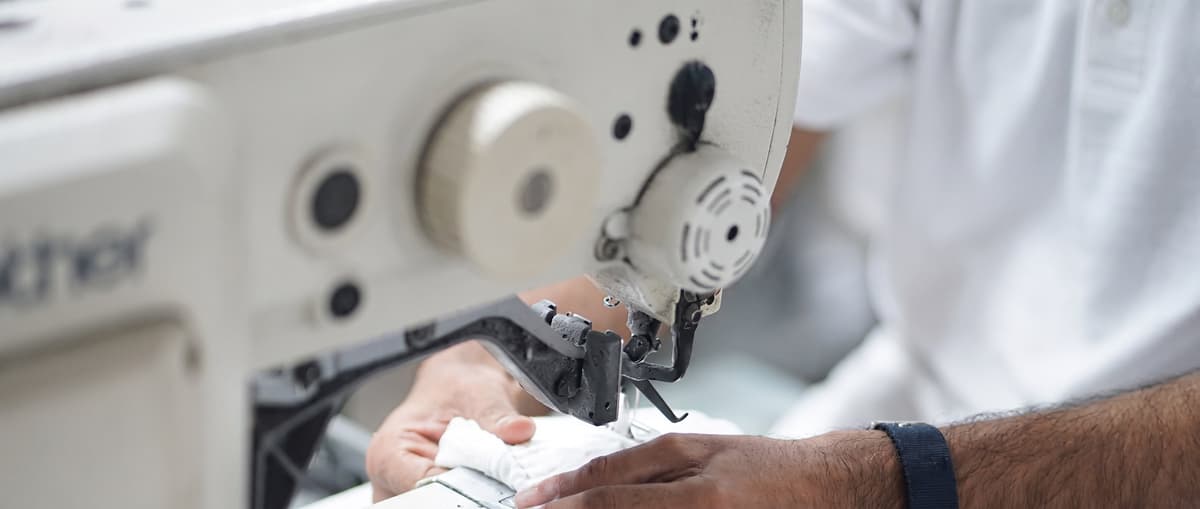
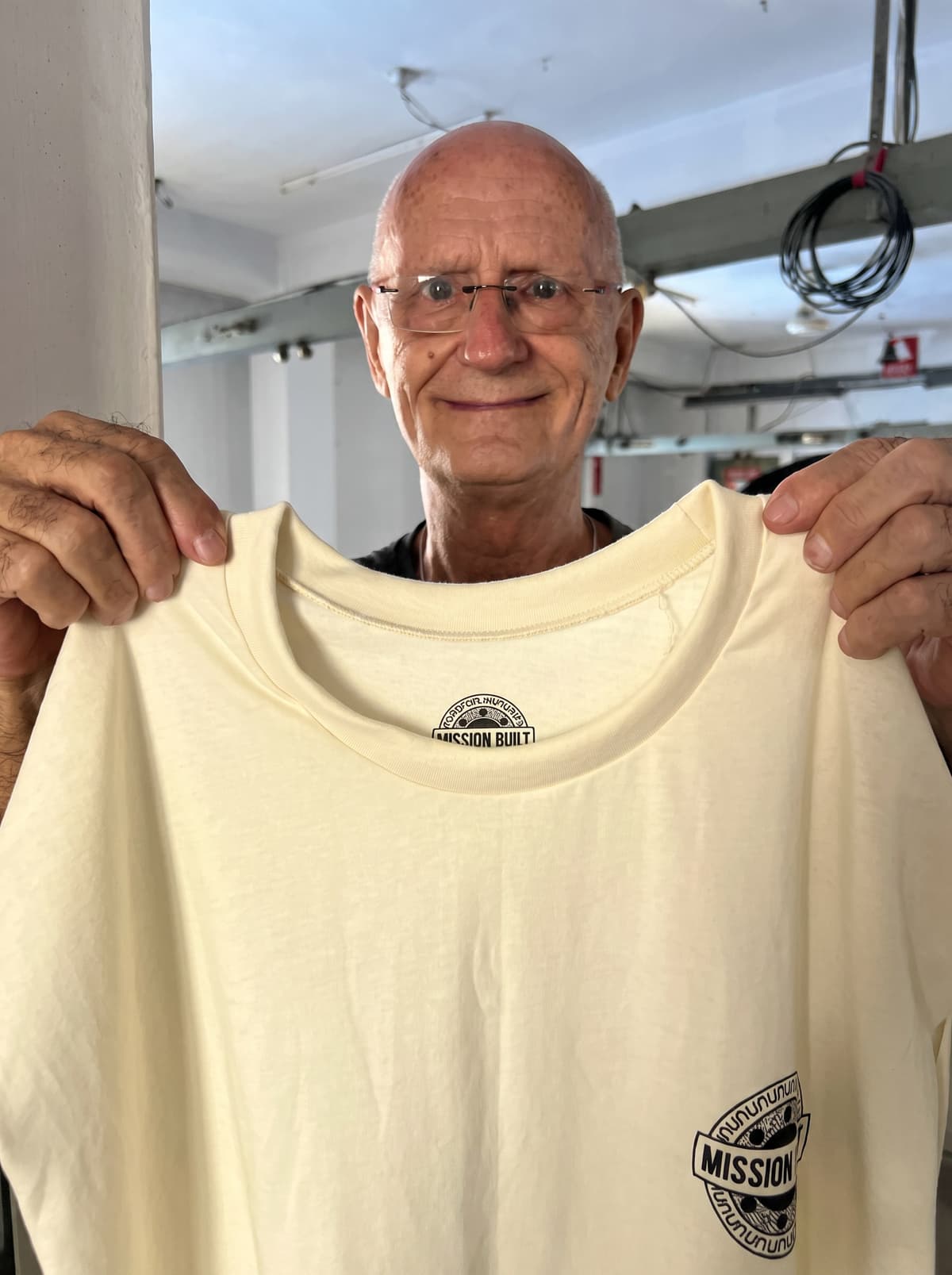
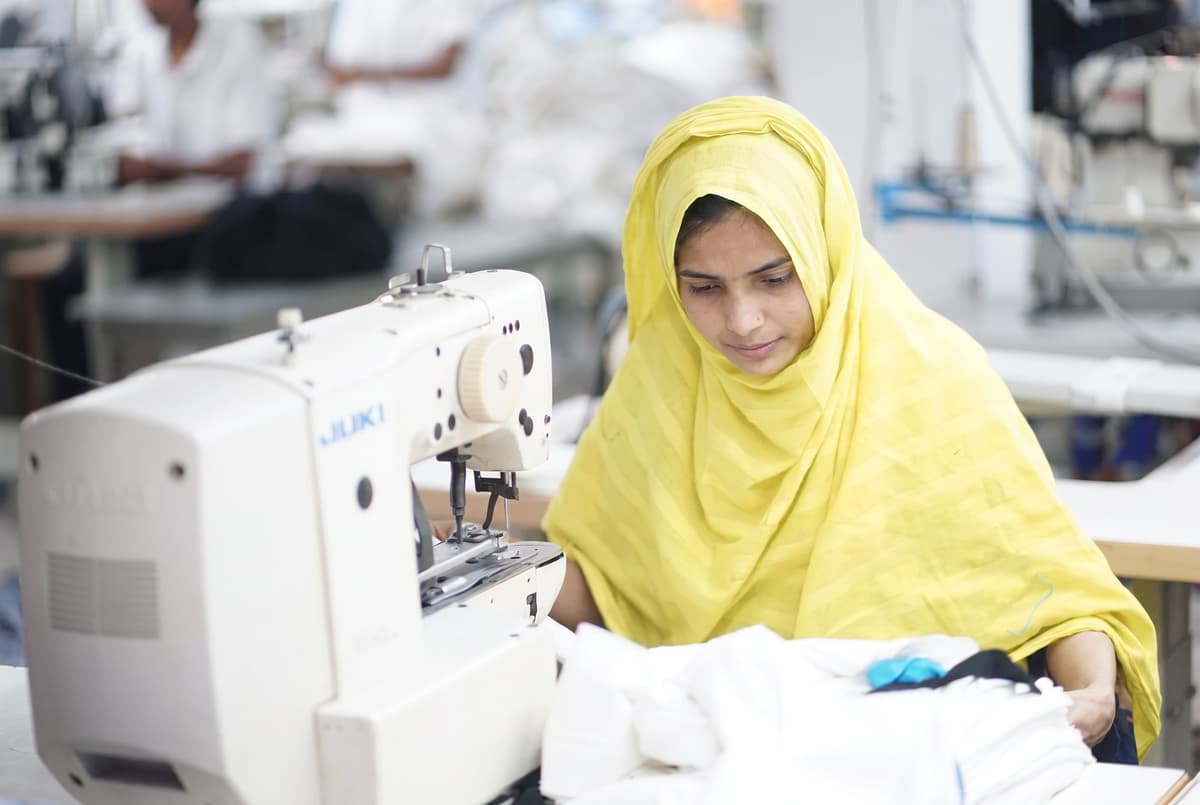
Made by our own team in Narayanganj. See the floor ↓Client reviews on Google ↗GOTS certificate RSC 9687 →
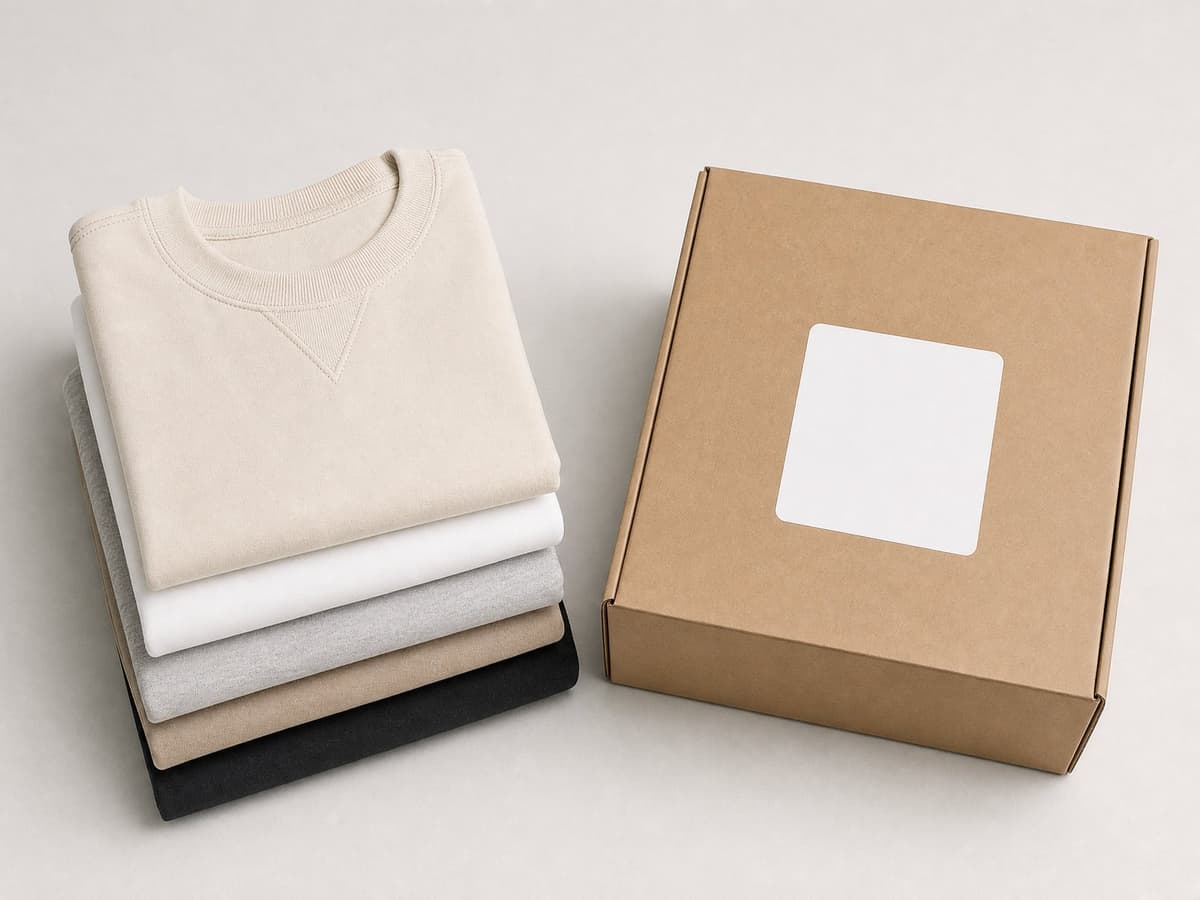
Short answer: yes, a Malaysian brand can produce with us in Bangladesh from 150 pieces per style, per colour. Knitted tees, hoodies, sweatshirts and joggers enter Malaysia at 0% import duty, with 10% sales tax under SST. We ship DDP, quote transit to Port Klang with your order, and label every garment Made in Bangladesh.
Before anything else: our founder Jashim Uddin ran a garment warehouse in Malaysia from 2013 to 2017, his first years in apparel, before founding Collective Studio in 2019. We're not claiming local presence we don't have — we manufacture in Narayanganj, Bangladesh, not Malaysia — but a clothing manufacturer for Malaysian brands whose founder has actually worked the buyer's side of that specific market is a genuinely different starting point than a generic sourcing pitch.
On the numbers: knitted apparel — the tees, hoodies and sweats that make up most of what we produce — enters Malaysia at 0% import duty. Royal Malaysian Customs' HS Explorer lists every tariff line under headings 6103, 6104, 6109 and 6110 of the Customs Duties Order 2025 at an import rate of 0% (read 2 October 2026), and the WTO's tariff profile for Malaysia puts 99.0% of clothing tariff lines at duty-free, with an average applied rate of 0.2% (2025 data). That is the standard MFN rate for every country of origin, not a preference for Bangladesh, so LDC graduation does not change it. Confirm the line for your exact product with Royal Malaysian Customs (JKDM) before pricing, and we'll help you check.
What Malaysia does charge is sales tax under its Sales and Service Tax (SST): the same HS Explorer lines show 10%. Worked through on 500 tees at a US$6.00 customs value (US$3,000 total): duty at 0% is US$0, and sales tax at 10% is US$300, 10% on top of the base cost — a real number, worked through rather than waved at.
We ship DDP so that US$300 is inside the number we quote before you commit, not a bill that finds you after the shipment lands — from a genuine 150-piece minimum with organic cotton available under our GOTS certification. If your product falls outside those headings, tell us and we'll help you confirm its line with JKDM rather than quoting you a number we can't back up.
Jashim Uddin ran a garment warehouse in Malaysia from 2013 to 2017, before founding Collective Studio. We know this market from the buyer's side, not just a spreadsheet.
On 500 tees at a US$6 customs value, that's US$0 duty + US$300 sales tax: 10% added. Checked against Royal Malaysian Customs' HS Explorer on 2 October 2026.
Duty, SST and freight are quoted inside one landed cost before you commit — not a customs bill that arrives after the shipment does.
Launch or test in the Malaysian market with 150 pieces per style, per colourway, cut and sewn to your pattern.
Start with origin. Your garments are cut and sewn on our floor in Bangladesh, so the origin line on the label reads Made in Bangladesh. Under Malaysia's Trade Descriptions Act 2011 the place of manufacture is a trade description, and a trade description has to be true. The FAQ below covers what that means if you finish or pack the goods in Malaysia.
If you sell in sealed retail packs, such as a three-pack of tees or a boxed lounge set, look at the Trade Descriptions (Marking of Quantity for Pre-Packaged Goods) Order 2023. It came into operation on 4 June 2024 and covers pre-packaged goods imported into Malaysia as well as those packed locally, and it is about quantity: the pack has to state what is inside, legibly. Check the marking with KPDN, the Ministry of Domestic Trade and Cost of Living, before the pack artwork goes to print; we print it to the artwork you approve.
Fibre content and care symbols are where brands that sell beyond Malaysia get caught. The US, EU, UK, Canada and Australia each set their own rules, compared side by side in our clothing labelling guide. If Malaysia is your first market and export comes later, a label built to the strictest of your future markets saves a reprint. We sew in your neck and care labels and attach your hang tag on our floor, and the artwork is signed off with the pre-production sample, before bulk starts.
Most of the time on a Malaysian order passes before anything ships: about ten days of sampling, then 40 to 50 days of production once the sample is approved. All in, that is about 70 days from order to your door by air; sea freight adds about a month. Freight comes on top. We don't publish a single transit time for Malaysia, because it moves with the carrier, the routing and whether the vessel tranships on the way, so we quote sea transit to Port Klang with your order, and air freight to Kuala Lumpur alongside it if you are working to a launch date.
Port Klang serves the Klang Valley. If your warehouse is in Penang, Johor or East Malaysia, give us the delivery address when you ask for a quote: DDP runs to your door, so the routing is planned around where the goods end up, not around one default port.
| Stage | Time | Who handles it |
|---|---|---|
| Sampling | About 10 days | Us, from your tech pack or a reference garment |
| Sample and label artwork sign-off | When you approve | You: fit, fabric, colour, neck and care labels, hang tag |
| Bulk production | 40-50 days after sample approval | Us: cutting, sewing, finishing, checking and packing on our own floor; knitting and dyeing at partner mills we specify and inspect |
| Sea freight, Chattogram to Port Klang | Quoted with your order | Us, booked under DDP |
| Air freight to Kuala Lumpur | Quoted alongside sea when you have a launch date | Us, booked under DDP |
| Malaysian customs: 0% duty on knitted lines, 10% SST | Inside the DDP quote | Us, so no duty or tax bill reaches you after landing |
| Delivery to your warehouse | Quoted with your order | Us, to the address you give us |
Wonderful people to work with — very professional and knowledgeable, also accommodating to the needs of their customers.
I have had a very good experience with this company. They are very friendly, professional, and provide fast service. They speak fluent English, which makes communication very easy. The quality of their manufacturing is excellent. I have no doubt in recommending this company to anyone looking for a reliable manufacturing partner in Bangladesh.
Collective Studios under the direction of Mr Jamish and his daughter Homaira represent the future of RTW production in Bangladesh. A thorough approach to detail governed by a genuine standard of quality. Masters of and partners in the process!
We manufacture in Bangladesh and ship to Malaysia; nothing is made in Malaysia itself. Every Malaysian order is cut and sewn on our own floor in Narayanganj, checked against your approved sample under our QC lead, Walter Meyer, then shipped DDP, so duty, SST and freight sit inside one landed cost you see before you commit. Our tie to Malaysia is personal rather than physical: founder Jashim Uddin ran a garment warehouse there from 2013 to 2017, his first years in apparel, before founding Collective Studio in 2019. He knows the market from the buyer's side, and this page works the duty and SST through with a number rather than a headline rate. What we don't have is a Malaysian office, showroom or sewing line. If you need garments made inside Malaysia, we're the wrong factory, and it's better you hear that now. If Bangladesh works for you, meet the founders before you write to us.
None on the garments we make: Royal Malaysian Customs' HS Explorer lists every tariff line in headings 6103, 6104, 6109 and 6110 of the Customs Duties Order 2025, which cover knitted tees, sweatshirts, hoodies, joggers and shorts, at an import rate of 0% (read 2 October 2026). The WTO's tariff profile for Malaysia agrees: 99.0% of clothing tariff lines are duty-free and the average applied rate is 0.2% (2025 data). This is Malaysia's standard MFN rate for every country of origin, so it does not depend on Bangladesh's least-developed-country status and LDC graduation does not change it. What you do pay is 10% sales tax, covered in the next question. A few clothing lines outside those headings can carry duty, so confirm the line for your exact product with Royal Malaysian Customs (JKDM) before pricing; we state the rate for your order in writing with the quote.
Malaysia's Sales and Service Tax, reintroduced in 2018, applies a sales tax to most goods at the point of import or domestic sale. Standard goods, apparel included, sit in the 10% bracket — a smaller 5% bracket applies to certain essential and near-essential goods, which general fashion apparel doesn't qualify for. Sales tax is charged on the duty-inclusive value, and because import duty on knitted apparel is 0%, that value is the customs value itself. Worked through on 500 tees at a US$6.00 customs value (US$3,000 total): duty is US$0 and sales tax at 10% is US$300, so 10% on top of the base cost. Royal Malaysian Customs' HS Explorer shows both rates, 0% import duty and 10% SST, on every line in headings 6103, 6104, 6109 and 6110 (read 2 October 2026); confirm the line for your exact product before pricing.
It does not need one for the garments we make: Malaysia's standard MFN duty on knitted apparel in headings 6103, 6104, 6109 and 6110 is already 0% for every origin (JKDM HS Explorer, read 2 October 2026). Malaysia's free trade agreement portal, run by the Ministry of Investment, Trade and Industry (MITI), lists no bilateral agreement with Bangladesh (read 27 Sep 2026). Both countries signed the D-8 Preferential Tariff Agreement in 2006, but MITI's D-8 page, whose status section reports negotiations only up to a meeting scheduled for March 2008, says it becomes operational only once its rules of origin are concluded, and we found no Malaysian clothing rate granted under it. Nor does Bangladesh appear among the countries MITI lists as having ratified the TPS-OIC rules of origin. So we quote Malaysian orders at the standard MFN rate, which is 0% on those lines. If you think a preference covers your HS code, check it on the MITI FTA portal or with Royal Malaysian Customs (JKDM), and we'll help you confirm it.
150 pieces per style, per colour, and for a Malaysian brand the per-colour rule matters more than the headline number. Two styles in three colourways are six separate runs, so 900 pieces before you meet the minimum, while the same two styles in one colour need only 300. Each colourway is dyed as its own fabric lot, so three colours at a hundred and fifty pieces each are priced as three lots rather than one. Given the 10% sales tax on the customs value, the number worth planning around is the full landed cost, not just the factory price. Every extra colourway adds its own lot and raises the value that tax is charged on, so a first order in fewer colours keeps both lower. Our MOQ calculator turns a plan into styles, colours and a size split, and the DDP quote we send back for that plan already carries the duty and SST.
Sampling takes about ten days, bulk production forty to fifty days once the pre-production sample is approved, then freight on top. Sea freight is comparatively fast given the shipping lanes between the Bay of Bengal and the Strait of Malacca, typically landing at Port Klang within two to three weeks of leaving Chattogram. Air freight adds roughly four to six days door to door and suits a launch date or a first order where speed matters more than cost. We ship DDP either way, so duty, SST and clearance at the border are handled on our side, and you receive one landed cost and one delivery. Whichever mode you choose, the duty and SST are inside the number we quote before you commit, not a bill that finds you after the shipment lands. From order to your door, plan on about 70 days by air.
No. Malaysia's Trade Descriptions Act 2011 counts the place of manufacture as a trade description (section 6(1)(l)) and makes applying a false trade description to goods an offence (section 5(1)(a)). Your garments are cut, sewn, finished and checked on our floor in Narayanganj, so the true place of manufacture is Bangladesh, and that is what the origin line on the label says. Attaching a swing tag, folding, steaming or packing the pieces in your Malaysian warehouse does not change where they were made. What stays entirely yours is the brand: your name on the neck label, your hang tag, your packaging and your story about why you chose a family-run floor. If you plan genuine manufacturing work in Malaysia on garments we make, such as printing or embroidery, ask KPDN, the ministry that enforces the Act, how the origin should be described before anything is printed. We'd rather you settle that early than relabel a delivery.
For retail packs, the rule to check is the Trade Descriptions (Marking of Quantity for Pre-Packaged Goods) Order 2023. The testing body TÜV Rheinland reports that it has been in operation since 4 June 2024 and applies to pre-packaged goods imported into Malaysia as well as those packed locally. A summary by HQTS says the quantity must be marked in clear words, in the national language or English depending on the origin of the goods, legibly and in a colour that contrasts with the background. Neither summary spells out which language applies to goods made abroad, so confirm the wording for your pack with KPDN, the Ministry of Domestic Trade and Cost of Living, before it goes to print. For the sewn-in garment label, language is mostly a choice about your customers. We print whatever you approve on the pre-production sample, in Malay, English or both, and if you also sell abroad, we check it against those markets' rules too.
Trade and regulatory details on this page last verified 2 October 2026. Tariff and compliance terms change — ask us to confirm the current position for your order.
Whether it’s a large bulk or wholesale run or your first batch of 150, send a sketch, a reference, or a sentence. We’ll reply within one business day with fabric options and an indicative price.
Or message the factory directly: WhatsApp +880 1980 055026 · hello@collectivestudioltd.com · Homaira replies within one business day.