Landed cost, honestly compared
Duty-free under EU EBA, 23% Polish VAT inside one DDP price, and a plain statement of when a Łódź workshop is the better choice.
Premium knitwear manufacturing for Polish brands — duty-free under Everything But Arms, Poland's 23% import VAT inside one landed price, labels in Polish as the Polish Language Act requires, and an honest landed-cost comparison against making at home.
Collective Studio cuts and sews knitwear for Polish labels in Narayanganj, Bangladesh, from 150 pieces per style and colour, and delivers DDP through Gdańsk, Gdynia or Warsaw Chopin after 40–50 days' production plus freight. About 70 days from order to your door by air. Duty is 0% under Everything But Arms, Poland's 23% VAT is inside the quote, labels are in Polish under the Polish Language Act, and the page sets that landed cost honestly against a Łódź workshop.
Or message the factory directly: WhatsApp +880 1980 055026 · hello@collectivestudioltd.com · Homaira replies within one business day.
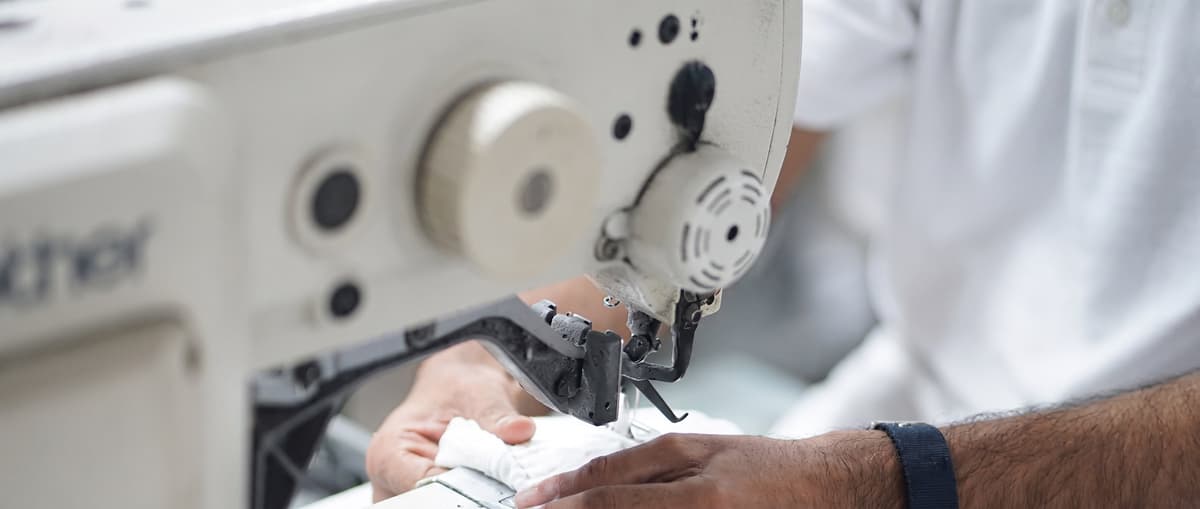
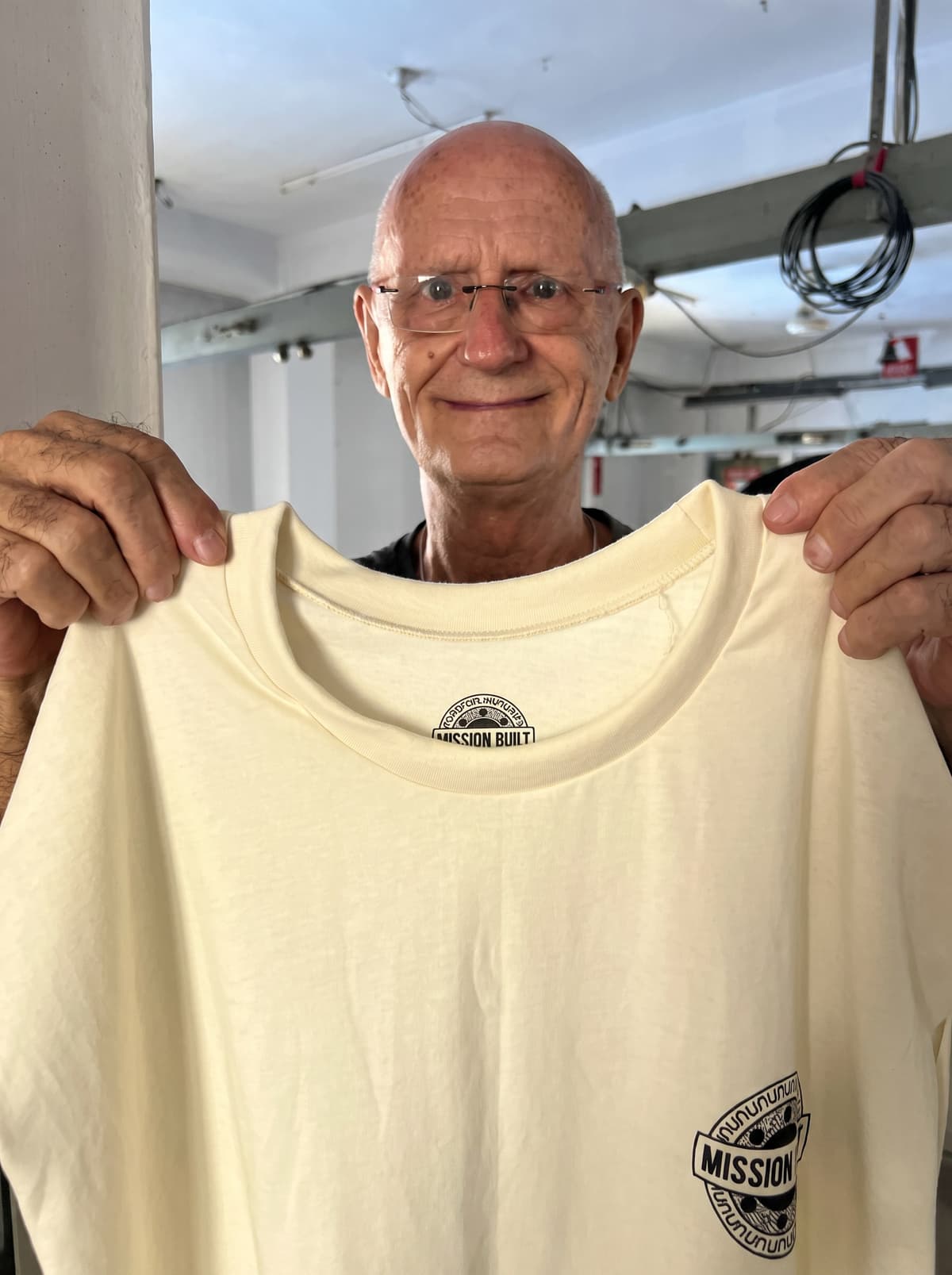
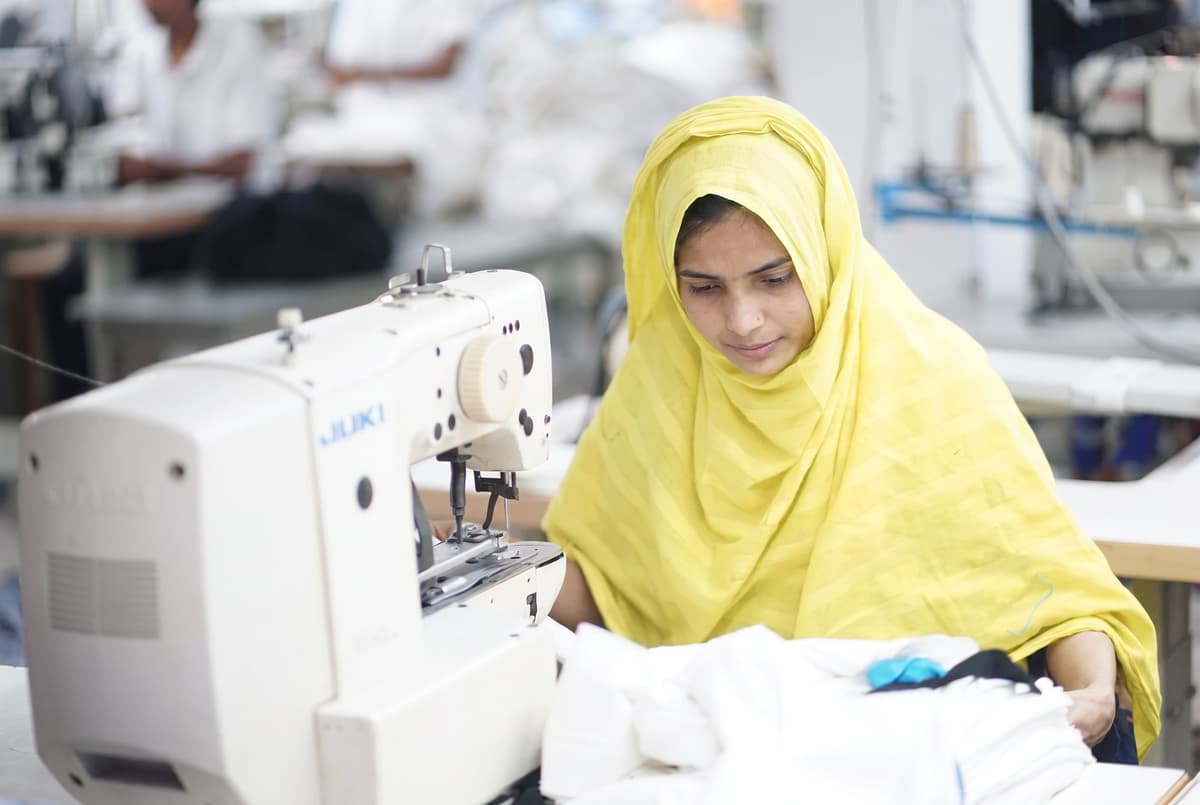
Made by our own team in Narayanganj. See the floor ↓Client reviews on Google ↗GOTS certificate RSC 9687 →
In short: Poland has 10,550 clothing manufacturers employing 60,879 people (Eurostat, 2024), and Bangladesh is the largest source of the knitted clothing it buys from outside the EU. We cut and sew knitwear in Narayanganj from 150 pieces per style and colour and ship DDP to Poland at 0% duty, with the 23% import VAT inside your quote.
We are a clothing manufacturer for Polish brands: our own family-run cut-and-sew knitwear floor is in Narayanganj, Bangladesh, our brand office in Amsterdam, and we make t-shirts, polos, hoodies, sweatshirts, joggers, shorts, activewear and loungewear from 150 pieces per style and colour. Poland has a real garment industry of its own, Łódź above all, so a Polish founder is not asking whether a factory exists but whether the landed price from Bangladesh beats the one down the road. This page gives the numbers to make that comparison honestly.
The figures: duty on Bangladesh-made apparel is nil under Everything But Arms, and Poland levies import VAT at the 23% stawka podstawowa on the customs value plus any duty and the transport to the first place of destination. With DDP terms the VAT is inside the price you approve rather than a separate assessment at Gdańsk, and an active VAT payer normally deducts it on its return. Ask your księgowy how you want the import VAT handled and tell us before we file the entry.
Where Poland wins: a re-cut of fifty pieces next week, a woven or tailored piece, or a range whose story is made in Poland. Where we win is knit at volume at low minimums: a 320 GSM hoodie or a 180 GSM tee cut and sewn to your pattern from a hundred and fifty pieces, organic cotton available under our GOTS certificate RSC 9687, and a landed cost that includes the duty you do not pay and the VAT you do. Many Polish brands run exactly that split, and we will say plainly which pieces belong where.
Labelling: the Polish Language Act requires Polish in consumer trade, and Article 7a extends that to the naming of goods, warnings and information for consumers required by other regulations, and information about the properties of goods, which covers a fibre label. So labels for Poland are in Polish, sewn to your artwork, with other languages added if you sell across the Union. The General Product Safety Regulation adds the manufacturer's name and addresses on the product or packaging and an EU-established responsible operator, which a Polish company importing from us is.
Ports and timing: most sea freight enters at Gdańsk, with Gdynia next door, and air freight at Warsaw Chopin. Gdańsk's deep-water terminal takes direct calls from Asia, so a sailing need not transship in western Europe; the transit for your port comes with the quote, not as a printed figure. Plan on roughly 10 days of sampling, then 40–50 days of production from sample approval, then the voyage; the launch-date calculator counts back from your Polish on-sale date.
Our floor does not make denim, jackets or woven shirts; the sister buying house sources those as a separate order. If your shortlist of producent odzieży options abroad is mostly agents, ask each for a street address, BKMEA membership and a video call from the factory floor while a shift is running. Ours is Plot-A-132, Road No. 02, BSCIC Industrial Area, Panchabati, Narayanganj 1420.
| Bangladesh (our floor) | China | Vietnam | Turkey | Poland (Łódź workshop) | |
|---|---|---|---|---|---|
| Duty into Poland | 0% under Everything But Arms, single-transformation origin, three-year transition after LDC graduation (checked 14 Oct 2026); 23% VAT on every import | No EU preference; the full rate for the CN code applies | A preference under the EU–Vietnam deal, conditional on its fabric-origin rules | Duty-free in free circulation under the EU–Turkey customs union | Domestic production: no customs entry and no import VAT, though domestic VAT applies |
| Sea route to Poland | Via Suez to Gdańsk or Gdynia, with direct Asia calls at Gdańsk's deep-water terminal; we quote the transit for your port | Suez and on to the Baltic, much like ours | Suez and the Baltic again; a comparable leg | Road or short-sea; days, not weeks | Courier or van within Poland; days |
| Where each is strongest | Cotton knit basics from 150 a colour, organic cotton under GOTS certificate RSC 9687, landed cost | Breadth of fabrics and trims, technical construction | Large woven, outerwear and sportswear runs | Speed, denim and knit at mid-range cost | Re-cuts at short notice, woven and tailored pieces, a made-in-Poland story |
| Choose it when | Landed cost decides and the range is knitwear at 150 pieces a colour, with the GPSR file built during production | Your material or construction is beyond a knit specialist | Your programme is large and woven or performance-led | Stock must arrive in weeks and the unit price can rise to pay for it | You need fifty pieces next week, or the label must say made in Poland |
Duty-free under EU EBA, 23% Polish VAT inside one DDP price, and a plain statement of when a Łódź workshop is the better choice.
The Polish Language Act requires Polish on goods information for consumers; we sew Polish labels to your artwork, with other languages added for the rest of the Union.
A first Polish drop can be a single style in a single colour: 150 pieces, cut and sewn to your pattern.
For organic pieces, GOTS certificate RSC 9687 gives your GPSR file its fibre, chemistry and traceability evidence; UOKiK supervises product safety in Poland.
Re-checked on 14 October 2026 against podatki.gov.pl, EUR-Lex and the UN LDC portal; links under Sources below.
Customs duty is a Union matter, so a Polish import of our knitwear follows the same rule as any other EU entry: cutting and sewing in Narayanganj satisfies the single-transformation origin rule of Everything But Arms, and the garments clear at 0%. Regulation (EU) 2026/1395, adopted on 17 June 2026, keeps Bangladesh on its EBA list and allows a three-year transition after LDC graduation. What is Polish is the tax: podatki.gov.pl gives the basic rate as 23% from 1 January 2011, with the 8% and 5% rates kept for listed goods, and clothing is not one of them.
In numbers: 500 tees at US$6.00, a customs value that already includes freight and insurance to the EU border, make US$3,000. Duty is nil and VAT is US$690, plus 23% of the transport to the first place of destination in Poland, all inside our DDP price; an active VAT payer deducts it on its return.
Have your agencja celna confirm the CN code for each style before you set a price list. We confirm the duty position for your order in writing, and the landed-cost calculator runs the same sum at any quantity.
Re-checked on 14 October 2026 against the Sejm, gov.pl and EUR-Lex; links under Sources below.
Regulation (EU) No 1007/2011 sets what a fibre label says, every fibre by generic name and percentage, largest first, on a durable, legible label, and its Article 16(3) lets a member state require its own language; the Commission's Your Europe guidance tells sellers to translate into every official language where the garment is sold. Poland's answer is the Polish Language Act, published by the Sejm: Article 7 makes Polish the language of consumer trade on Polish territory, and Article 7a extends it to the naming of goods, to warnings and consumer information required by other rules, and to information about a product's properties. A label for Poland therefore reads "100% bawełna", with other EU languages added if the range travels. The fibre regulation does not require a country of origin, but the customs entry states Bangladesh and any origin you print has to match.
Product safety in Poland runs on the General Product Safety Regulation (EU) 2023/988 plus a national act: the Act of 7 November 2025 on the supervision of general product safety has applied since 3 January 2026 and gave UOKiK new powers, as the Small and Medium-Sized Enterprises Ombudsman explains. For goods you import, your Polish company is the EU-established operator and keeps the technical file for ten years; under your own brand you are also the manufacturer named on the garment or packaging. Our side of the file comes from production: GOTS certificate RSC 9687 for organic pieces, the REACH azo-dye restriction of 30 mg/kg for listed amines in textiles worn against the skin, and EN 14682 for cords on children's clothing. The GPSR guide walks through it.
Textile waste is moving from councils to brands. Since January 2025 Polish gminy have had to accept used textiles, at minimum through their PSZOK collection points, as the Ministry of Climate and Environment explained on 13 January 2025. Producer responsibility for clothing comes next: Directive (EU) 2025/1892 requires Poland to transpose by 17 June 2027 and to have a textile scheme operating by 17 April 2028, with a public register that a brand must join before placing clothing on the Polish market, and fees that can reflect durability and recyclability. The apparel Digital Product Passport follows separately; the Commission plans that act for late 2027, with at least 18 months before it applies.
Every Polish quote is DDP: freight, clearance at Gdańsk, Gdynia or Warsaw, the 23% VAT and delivery to your door in a single landed price, with the commercial invoice, packing list and statement on origin sent before the goods leave Bangladesh. Sea transit depends on the sailing, so we state it per order; air freight into Warsaw Chopin takes days.
Poland is five hours behind Narayanganj in winter and four in summer, because Bangladesh stays on UTC+6 all year. The floor works Saturday to Thursday, 09:00 to 17:00, which puts a Warsaw morning in our afternoon; the Amsterdam office keeps Polish hours and handles design, samples and paperwork in English for the rest of your day.
Re-checked on 14 October 2026 on the UN LDC portal and EUR-Lex.
Graduation from Least Developed Country status is now set for 24 November 2029 on the UN LDC portal. Bangladesh requested an extension in February 2026, the Committee for Development Policy judged one appropriate on condition of significant progress on domestic reforms, and the Economic and Social Council recommended on 21 July that the General Assembly decide before 24 November. On 29 October 2026 the General Assembly granted it, moving graduation back three years from 24 November 2026.
For a Polish buyer the exposure has a floor: Regulation (EU) 2026/1395 runs Everything But Arms for three years past graduation, so 0% duty lasts until about late 2032, and the 23% VAT is untouched. Beyond that window the rate depends on GSP+ eligibility, which is unresolved; our LDC graduation guide maps the outcomes.
If you searched for a clothing manufacturer in Poland, the official numbers show what you are likely to find. Eurostat business statistics count 10,550 clothing manufacturers in Poland in 2024, employing 60,879 people, an average of about six per firm. Both figures are falling: there were 12,456 firms and 74,182 people in 2021, so employment dropped by about 18% in three years. Small workshops suit the short re-cuts and woven pieces this page suggests keeping in Poland; before you brief one, ask how many pieces per colour it will cut and which stages happen on its own premises.
Knitwear is where Bangladesh comes in. In 2025 Poland imported 434,705 tonnes of knitted clothing, the customs chapter (HS 61) that covers tees, hoodies, sweatshirts and joggers, and exported 254,492 tonnes, 87% of it to other EU countries, according to Eurostat Comext trade data. Bangladesh supplied 83,176 tonnes, 19.1% of the import total and the highest figure for any partner country, a fraction above Germany at 83,095 tonnes. The two are not quite alike: for trade inside the EU, Eurostat records the country goods were sent from, not where they were sewn. Of the tonnage that came from outside the Union, where the partner is the country of origin, Bangladesh supplied 35.0% and China 30.7%. A Polish label ordering knitwear from our floor is using a route the country's importers already rely on.
| Measure | Poland | Year |
|---|---|---|
| Clothing manufacturers (NACE C14) | 10,550 enterprises (12,456 in 2021) | 2024 |
| People employed in clothing manufacture | 60,879 (74,182 in 2021) | 2024 |
| Average size | About 6 people per enterprise | 2024 |
| Knitted clothing (HS 61), imports and exports by weight | 434,705 tonnes imported, 254,492 tonnes exported | 2025 |
| Knitted clothing exports sent to other EU countries | 87.4% of the tonnage | 2025 |
| Knitted clothing imports from other EU countries | 45.3% of the tonnage, 65.5% of the value | 2025 |
| Largest partner countries for knitted clothing imports by weight | Bangladesh 83,176 tonnes (19.1%), Germany 83,095 tonnes (19.1%), China 72,941 tonnes (16.8%); for EU partners Eurostat records the country of consignment, not of origin | 2025 |
| Share of knitted clothing imports from outside the EU | Bangladesh 35.0% by weight and 33.2% by value; China 30.7% and 30.2%; India 9.5% and 8.8% | 2025 |
Wonderful people to work with — very professional and knowledgeable, also accommodating to the needs of their customers.
I have had a very good experience with this company. They are very friendly, professional, and provide fast service. They speak fluent English, which makes communication very easy. The quality of their manufacturing is excellent. I have no doubt in recommending this company to anyone looking for a reliable manufacturing partner in Bangladesh.
Collective Studios under the direction of Mr Jamish and his daughter Homaira represent the future of RTW production in Bangladesh. A thorough approach to detail governed by a genuine standard of quality. Masters of and partners in the process!
Yes: a Polish brand can place a first order of 150 pieces, as long as those 150 are one style in one colour. The minimum counts per colourway, not per order, so the same hoodie in black and ecru is 300 pieces. You choose the sizes within each 150; our MOQ calculator starts from a common curve with 45 pieces each in M and L, which you adjust to your customers. One colour deep usually beats three shallow, because each extra colour is a separate dye lot and is priced accordingly. For a first Polish range the fixed work is done once per style: the Polish-language label artwork and the GPSR technical file, both reused on reorders. If you need fewer than 150 of a colour, a Łódź workshop may suit that piece better, and we will tell you so. Our DDP quote shows the landed cost to your Polish address.
Use a Łódź workshop for quick re-cuts, woven or tailored pieces and a made-in-Poland story; use Bangladesh for cut-and-sew knitwear from 150 pieces per style and colour, where landed cost decides. Making at home means no import, no customs entry and no import-VAT event, and a re-cut of fifty pieces next week is the job a local workshop does best. Our floor makes tees, polos, hoodies, joggers, activewear and loungewear to your pattern, such as a 320 GSM hoodie or a 180 GSM tee, with organic cotton available under our GOTS certificate RSC 9687. Our DDP quote includes freight and Poland's 23% import VAT, with 0% duty under Everything But Arms, so set that landed figure against the Polish price. Denim, jackets and woven shirts are not made on our floor; our sister buying house sources them as a separate order. Splitting a range between the two often makes sense, and we will tell you which pieces belong in Łódź.
No, not at present: a garment cut and sewn on our floor enters Poland duty-free under the EU's Everything But Arms scheme, because Poland applies the EU's common customs rules. The origin test is a single transformation, which cutting and sewing in Narayanganj meets, so the garments qualify for 0% duty at entry in Gdańsk, Gdynia or Warsaw. Bangladesh's LDC graduation has moved from 24 November 2026 to 24 November 2029: the UN General Assembly granted its extension request on 29 October 2026. Regulation (EU) 2026/1395 keeps EBA for three years after graduation, so duty-free entry lasts until about the end of 2032. Zero duty also keeps Poland's 23% import VAT lower, because with no duty in it the VAT base is the customs value plus transport to the first destination in Poland. We state the live position for your order in writing, and our LDC graduation guide sets out what may follow.
Poland charges import VAT on clothing at its basic rate of 23%, in force since 1 January 2011 according to podatki.gov.pl (read 27 Sep 2026). The 8% and 5% reduced rates are reserved for listed goods, and clothing is not among them. The base is the customs value, which includes freight and insurance to the EU border, plus any duty and the transport costs to the first place of destination in Poland, so every US$1,000 of that base carries US$230. On our DDP terms the VAT sits inside the price you approve. Where your company is the importer on the entry, as an active VAT payer it can deduct that VAT on its return; Article 33a of the VAT Act lets an importer settle it in the return instead, if it files monthly JPK_V7M and meets the other conditions on biznes.gov.pl, including declaring through a customs representative. Ask your księgowy and tell us before the entry is filed.
Yes: garments sold to consumers in Poland need their label information in Polish. Article 7 of the Polish Language Act applies Polish to consumer trade on Polish territory, and Article 7a extends it in particular to the naming of goods, to warnings and consumer information required by other regulations, and to information about a product's properties, which covers a fibre label. Regulation (EU) No 1007/2011 sets the content: each fibre under its generic name with its percentage, largest first, on a durable and legible label, so the fibre names appear in Polish. That regulation does not require a country of origin, but the customs declaration states Bangladesh, and any 'Made in' line you choose to print has to be accurate. We sew the label in Polish to your artwork, adding other languages if you also sell elsewhere in the Union, and the GPSR name-and-address details can sit on the same label, or on the packaging only where the garment cannot carry it.
The EU-established responsible economic operator is: when your Polish company is the importer placing the garments on the Polish market, that is you, under the General Product Safety Regulation (EU) 2023/988, which has applied since 13 December 2024. Selling under your own name or trademark makes you the manufacturer under Article 3(8), so the risk analysis and the technical file are yours to draw up, with our help during production; you keep the file for ten years and put your own name, postal and electronic address on the garment, or on the packaging where that is not possible, with a batch or style identifier. Because Article 7a of the Polish Language Act covers warnings and consumer information, any safety wording for Poland goes in Polish as well. For organic pieces, GOTS certificate RSC 9687 supplies the fibre, chemistry and traceability records behind the file, with the scope certificate available on request. The REACH limit on azo dyes in textiles worn against the skin applies to every piece, whatever the fibre.
It depends on whether the calendar or the landed cost decides: Turkey suits a Polish brand that needs stock in weeks, not months, and Bangladesh suits cotton knit basics at low minimums, GOTS-certified production and landed cost. Both enter Poland without duty, on different grounds: our garments under Everything But Arms, Turkish goods in free circulation under the EU–Turkey customs union. Poland's 23% import VAT applies to both, so the difference sits in the unit price and the freight. Turkey reaches Poland by road and short-sea in days rather than weeks, while our goods travel via Suez to Gdańsk or Gdynia, and we quote the transit for your port. Turkey is also strong in denim and knit at mid-range cost, and you carry a higher unit cost for its speed. Choose our floor for cut-and-sew knitwear at 150 pieces per style and colour, with the GPSR file built during production.
About ten days for sampling, forty to fifty days for production once the pre-production sample is signed off, then transit to Gdańsk or Gdynia by sea, sometimes on a direct Asia service, or to Warsaw Chopin by air in days; we confirm the figure for your port with the quote. Gdańsk is the usual sea entry, with Gdynia beside it, and Warsaw Chopin is the air entry. The quote puts freight, the customs entry at Gdańsk, Gdynia or Warsaw, the import VAT and delivery to any Polish address inside one landed price. The commercial invoice and packing list reach you before the goods move, and we confirm the origin paperwork for your entry with the quote, so your księgowy and your warehouse can prepare for the arrival. Count back from your on-sale date in Poland with our launch-date calculator, and tell us early if your range is timed to a Polish season. From order to your door, plan on about 70 days by air.
Bangladesh is five hours ahead of Poland in winter and four in summer. Bangladesh Standard Time is UTC+6 with no daylight saving, which is why the gap changes when Poland moves its clocks, and why a Polish morning is already afternoon in Narayanganj. Our Amsterdam office at Soetendaal 61 works in your time zone, so design conversations, samples and compliance paperwork can run inside your own working day rather than across the gap. The working language is English, and we reply within one business day. What your customers read is prepared in Polish: under Articles 7 and 7a of the Polish Language Act, the naming of the goods, the fibre names, warnings and consumer information on labels for Poland are in Polish, sewn to your artwork. Walter Meyer, our QC lead, brings 38 years in the trade and checks finished pieces against your approved sample before DDP shipping.
Eurostat counts 10,550 clothing manufacturers in Poland in 2024, the businesses classed under NACE C14, manufacture of wearing apparel, and they employed 60,879 people. That is an average of about six people per firm, and both numbers have fallen every year since 2021, when there were 12,456 firms and 74,182 people. The count takes in very small businesses, so a directory that lists a few dozen Polish factories is showing only a slice of the sector. For a founder this means two things. Finding a Polish workshop is not hard, in Łódź above all, and a local workshop is the natural place for a short re-cut of a woven or tailored piece. Whether a given workshop takes cut-and-sew knitwear in several colours is a separate question, so ask each about its minimum per colour, its sampling time and which stages it does in-house. For knitwear, we cut and sew from 150 pieces per style and colour, DDP to Poland.
Mostly from other EU countries and from Asia. Eurostat's Comext data show Poland imported 434,705 tonnes of knitted clothing in 2025, the customs chapter that covers tees, hoodies, sweatshirts and joggers. About 45% of that tonnage came from other EU member states, and it made up about 65% of the value. Bangladesh supplied 83,176 tonnes, 19.1% of the total and the most of any partner country, narrowly ahead of Germany at 83,095 tonnes and ahead of China at 72,941; for trade inside the EU, Eurostat records the country goods were sent from, not where they were made. Of the knitwear arriving from outside the Union, Bangladesh supplied 35.0% by weight and 33.2% by value, ahead of China, India, Türkiye and Pakistan. An order from our floor follows that route: it clears at 0% duty under Everything But Arms with the exporter's statement on origin, and pays the same 23% import VAT as any non-EU import.
Trade and regulatory details on this page last verified 14 October 2026. Tariff and compliance terms change — ask us to confirm the current position for your order.
Whether it’s a large bulk or wholesale run or your first batch of 150, send a sketch, a reference, or a sentence. We’ll reply within one business day with fabric options and an indicative price.
Or message the factory directly: WhatsApp +880 1980 055026 · hello@collectivestudioltd.com · Homaira replies within one business day.