Low MOQ — from 150 pieces
A league, an academy or a sports brand can start at 150 pieces per style and colour. A tracksuit is two styles, so one colour of set is 300 pieces.
Sports kit cut and sewn to your own pattern, fabric and colours: jerseys, training wear and tracksuits from 150 pieces per style and colour, delivered worldwide.
Collective Studio cuts and sews sportswear in Narayanganj, Bangladesh, from 150 pieces per style and colour: sublimated team and club jerseys, training tees, shorts, polos and tracksuit sets in French terry or fleece. 40–50 days' production after sample approval, shipped DDP. About 70 days from order to your door by air. It suits brands, leagues and multi-team clubs, not one squad.
Or message the factory directly: WhatsApp +880 1980 055026 · hello@collectivestudioltd.com · Homaira replies within one business day.
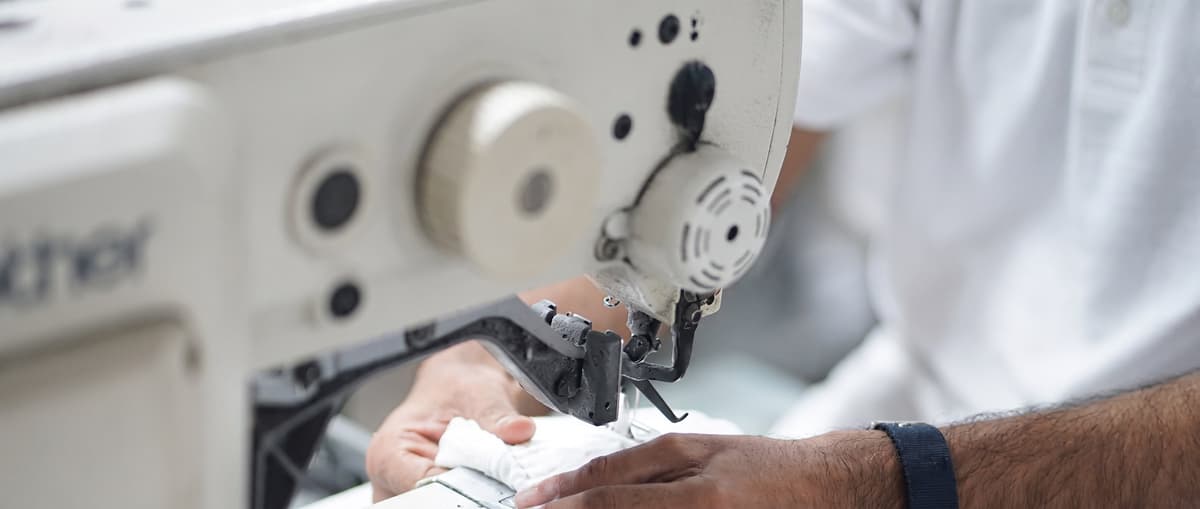
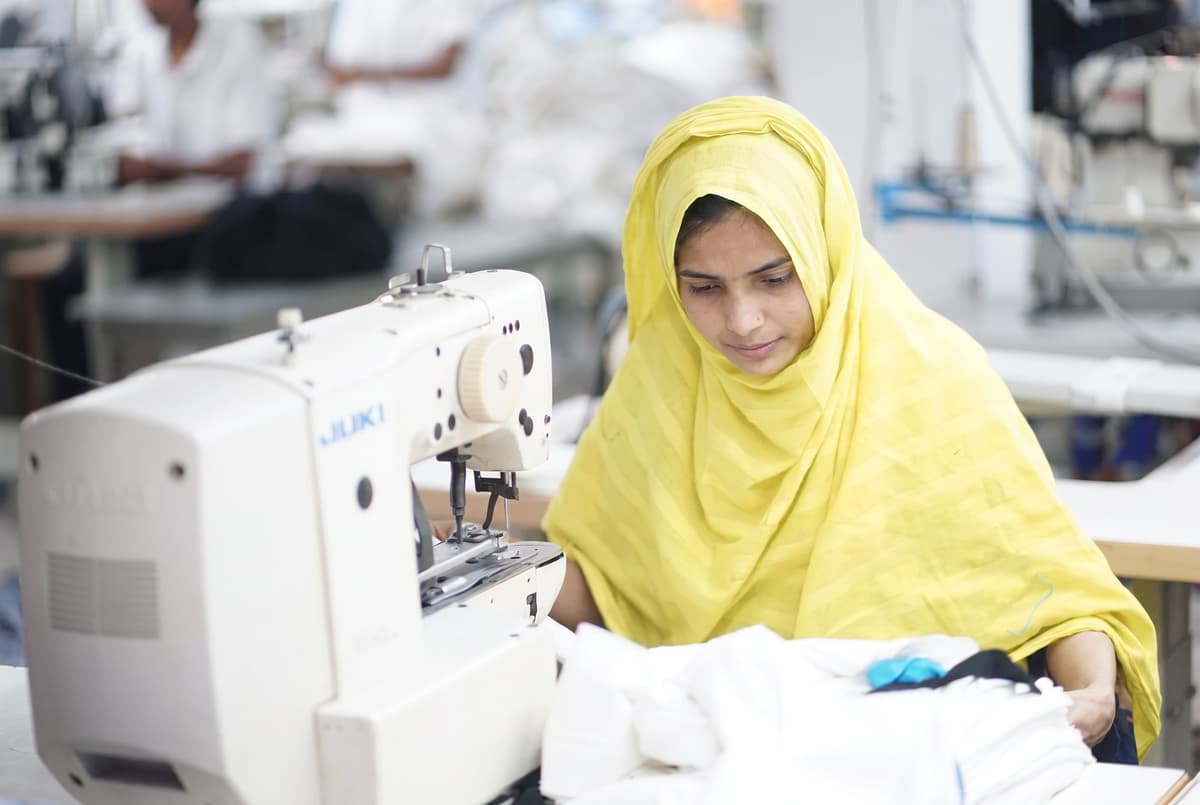
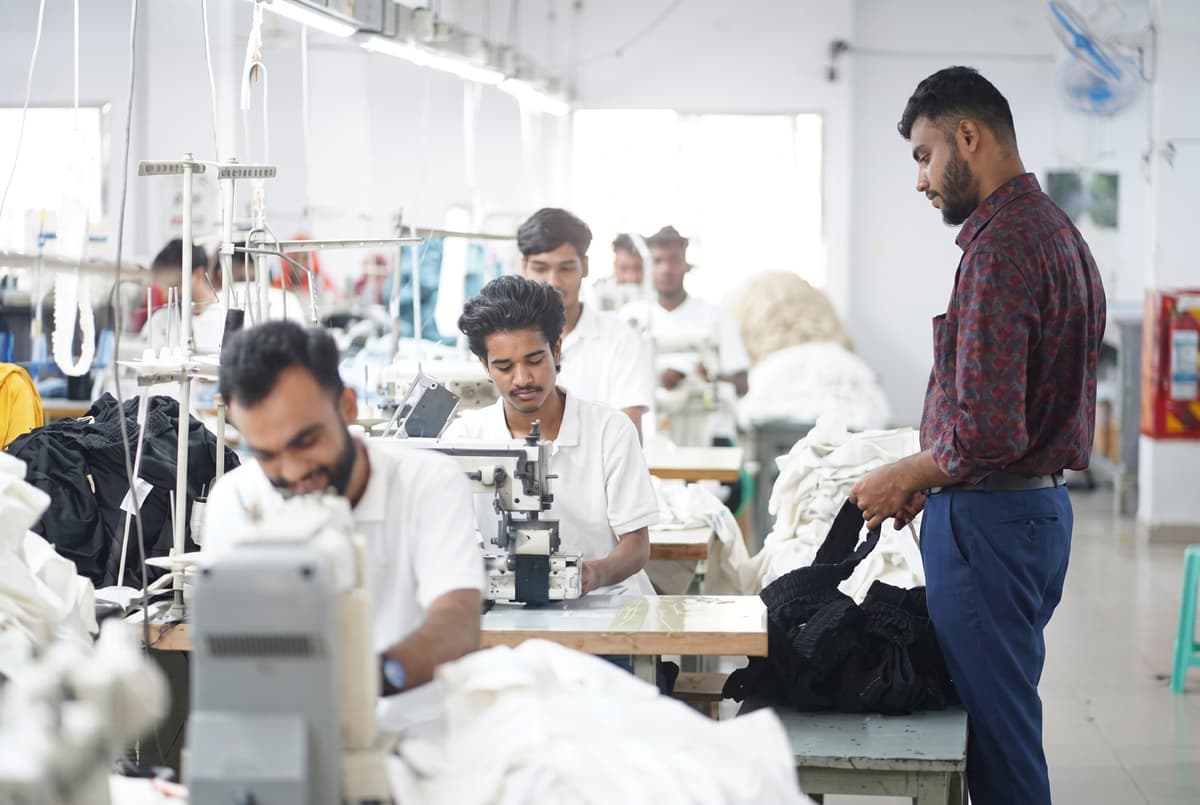
Made by our own team in Narayanganj. See the floor ↓Client reviews on Google ↗GOTS certificate RSC 9687 →
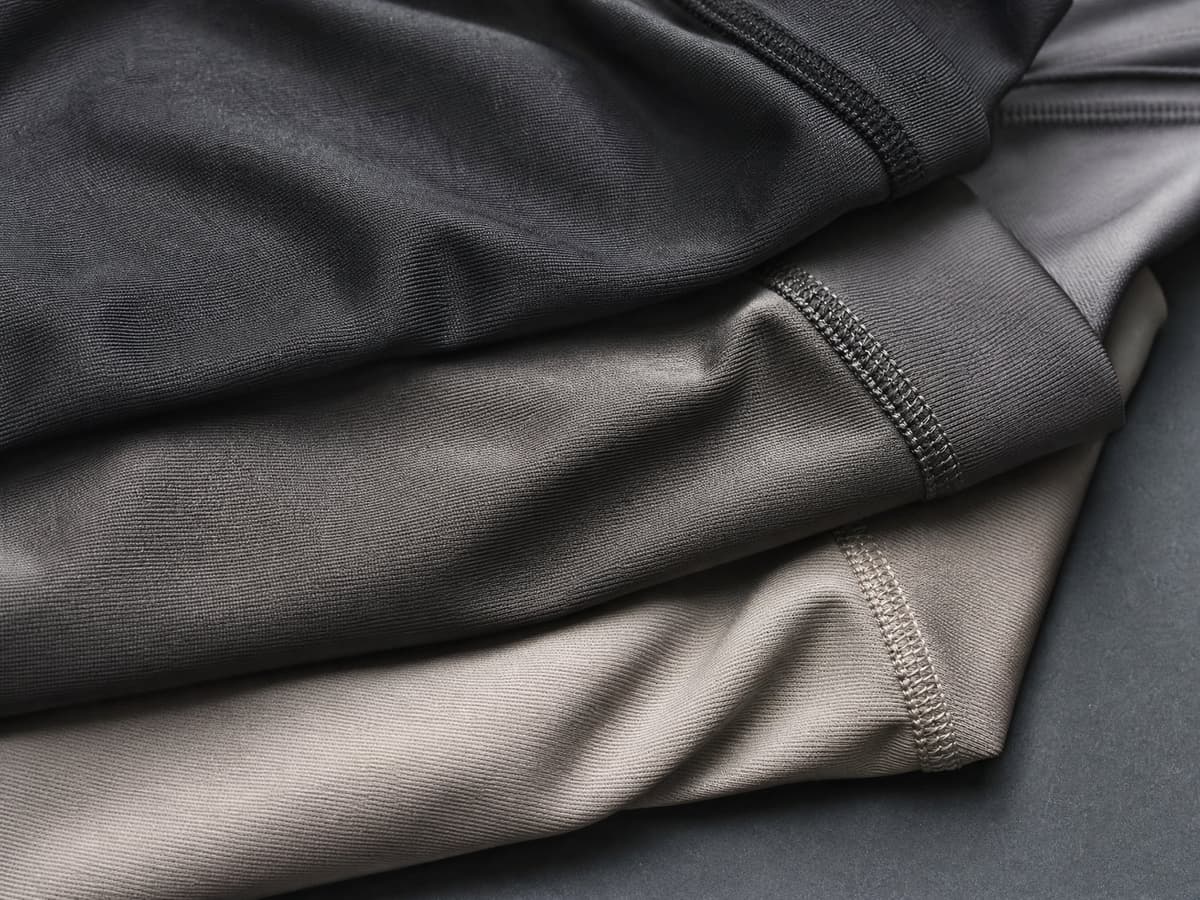
Sportswear is the word with the widest gap between what buyers type and what suppliers sell. Search for a sportswear manufacturer and much of the first page is teamwear shops that add a club badge to stock kit, twenty shirts at a time. That is a real service, and for one squad it is the right one. This page is about the other kind: kit that is cut and sewn from your own pattern, in your own fabric and colours, for a sports brand, a league, an academy, an event, or a club large enough to order 150 pieces per style and colour.
What we make for sport is knitted, because ours is a knitwear floor. That covers team and club jerseys, running tees and cycling tops in knitted polyester, usually with an all-over design sublimated onto the panels before they are sewn; training tees, singlets and shorts; club polos; and the off-field layer of hoodies, sweatshirts and joggers in French terry or brushed fleece, sold separately or as a matching tracksuit. Leggings and sports bras have their own page, activewear manufacturing, which goes into opacity and stretch in detail.
Three decisions shape a piece of sports kit more than its design does. The first is the knit: interlock is smooth and stable and takes a sublimated design cleanly, mesh lets air through where a body heats up, and piqué gives a polo its texture. The second is how the design gets onto the garment, because a crest, a sponsor logo and an all-over pattern each suit a different method. The third is repeatability. Club kit is reordered season after season, and the second run has to match the first in shade and in fit.
We quote DDP, so freight, customs clearance and any duty sit inside one landed quote to your door. The duty rule differs by market, and our pages for UK brands, European brands and Australian brands each work through the one that applies to you.
Where we are the wrong choice: one team's worth of kit, shirts individually named and numbered in small batches, seamless knitted garments, woven shell jackets and rain layers, footwear and protective equipment. For any of those a teamwear supplier or a specialist factory will serve you better, and we would rather say so now than after a sample.
| Piece | Fabric it is usually made in | How the design goes on | What decides whether it works |
|---|---|---|---|
| Team or club jersey | Knitted polyester, commonly interlock, with mesh panels where wanted | Sublimation onto the panels before sewing, so the design crosses the seams | A light base fabric: sublimation adds colour and cannot print white |
| Running tee or cycling top | Lightweight knitted polyester, with elastane for a closer fit | Sublimation, or a small logo on a plain dyed fabric | Flat seams wherever the garment moves against skin |
| Training tee or singlet | Polyester-elastane for sessions; cotton jersey around 180–220 GSM for gym-to-street | Screen print or embroidery on dyed fabric | Coverage in pale colours, judged on the sample |
| Shorts | Lightweight jersey, mesh or a performance blend, 140–220 GSM | A printed or embroidered logo at the hem | A waistband that lies flat again after stretching, and a liner where the fabric is sheer |
| Club polo | Piqué, interlock or jersey | Embroidered crest | A collar specified for recovery, so it does not curl |
| Tracksuit set | French terry or brushed fleece, 280–450 GSM | Embroidery or screen print | Top and bottom cut from the same dye lot, so the set matches |
A league, an academy or a sports brand can start at 150 pieces per style and colour. A tracksuit is two styles, so one colour of set is 300 pieces.
On polyester jerseys the stripes, fades and sponsor logos are sublimated before sewing, so the design crosses the seams and nothing sits on the surface to crack or peel.
A tracksuit top and bottom are booked into and cut from the same dye lot, with rib knitted in matching yarn, so the set reads as one colour when it is worn together.
No single-squad orders, no seamless knits, no woven shell jackets, no footwear. If your kit needs one of those, we say so before you spend on a sample.
A club or a sports brand rarely orders one thing. It orders a kit bag, and the pieces in it are worn in different ways, washed at different rates and judged by different people. Treating them as one product is how a range ends up with a match shirt that is too heavy or a club-shop hoodie cut like training wear. The table splits the bag into its four jobs.
The practical point is the minimum. Each row is at least one style, and most are several, so a full kit bag in one colour is a large first order. Many buyers start with the two pieces that carry the identity, usually the jersey and the tracksuit, and add the rest on the second run, once the colours and sizes are proven.
| Part of the kit | How it is used | What that asks of the garment | What we would make it in |
|---|---|---|---|
| Match kit | Worn hard for a short time, washed after every use, seen from a distance | Colour that survives frequent washing, a design that reads from the touchline, a fabric that does not hold sweat | Sublimated knitted polyester jersey with matching shorts |
| Training kit | Several pieces per player, worn most days, replaced most often | Durable seams, quick drying, sizes that are easy to issue | Training tees, singlets and shorts in polyester or polyester-elastane; mesh where airflow matters |
| Travel and warm-up | Worn before and after, and in public as the face of the club | A set that matches, a crest that looks stitched, warmth without bulk | Tracksuit in French terry or brushed fleece, hoodie or zip-up, club polo with an embroidered crest |
| Supporter and club-shop range | Bought by members and families, worn as everyday clothes | An everyday fit rather than an athletic one, soft handle, adult and junior sizes | Cotton tees, hoodies and sweatshirts; organic cotton, made in our GOTS-certified facility (RSC 9687), where you specify it |
A production run makes many identical garments well. That suits everything on a kit that is the same on every piece: the club crest, the sponsor logos, the pattern, the manufacturer's mark and the care label. On a sublimated jersey all of these are part of the print file, laid out against the pattern pieces so each lands in the right place once the panels are sewn. On a polo, a hoodie or a tracksuit top, the crest is usually embroidered, and a sponsor logo is embroidered or screen printed.
What a production run is not built for is the part that differs from one garment to the next: a player's name, a squad number, initials on a tracksuit. Personalising pieces one at a time is finishing work, done in small batches close to the team, and it is what teamwear suppliers and club shops are set up for. The usual split is to have the kit made in bulk with everything common to all of it, and to add names and numbers locally as players are registered. If your order needs numbering, say so in the brief and we will tell you plainly whether it fits the run.
Sponsor logos need one check before anything is printed. A sponsor's brand guidelines normally fix its colours, its clear space and its smallest allowed size, and a logo that breaks them will be rejected after the kit is made. Send the sponsor's vector file and its guidelines with your artwork, and have the sponsor approve the placement on the sample, in writing, before bulk.
A quote is only as exact as the brief behind it, and sports kit has a few questions that ordinary clothing does not. You do not need a finished tech pack to start. A garment you want to match, your artwork and your numbers are enough for a first answer. The table lists what we ask for, and why.
| What to send | Why we ask |
|---|---|
| The sport, and what each piece is for: match, training, travel or club shop | It decides the fabric and the seam before anything else |
| Pieces per style, per colour and per size, with adult and junior sizes listed separately | It tells us whether each style reaches 150, and how the cutting is planned |
| Artwork as vector files, plus the sponsor's own files and guidelines | Clean outlines print and stitch as drawn; a low-resolution image has to be redrawn |
| Colour references: a Pantone code for each club colour, or a physical sample | A colour name is a family of shades; a reference is one shade |
| A garment you want to match in fabric and fit, posted to us if you can | We can weigh and measure a real garment, which is more exact than a description |
| Where each crest and logo sits, measured from a fixed point | A factory left to guess will centre it and hope |
| The date the kit must be in players' hands, and the countries it will be sold in | The first sets the schedule; the second sets the care and origin labels |
Most buyers searching for sportswear are choosing between three kinds of supplier without knowing it. Each is right for a different order.
| Made to order by a factory | Stock kit from a teamwear supplier | Blank garments decorated locally | |
|---|---|---|---|
| Smallest sensible order | 150 per style and colour | One team, often fewer than 20 pieces | A handful |
| Design freedom | Your own pattern, fabric, colours and all-over design | A catalogue of shapes in set colours, with your badge added | Whatever fits the print area of a stock garment |
| Names and numbers | Not what a production run is for | Their core service | Easy, piece by piece |
| Fabric choice | Specified for your sport and knitted for the order | Fixed by the catalogue | Fixed by the blank |
| Time | About 70 days from order to door by air on a first order | Days to a few weeks | Days |
| Best for | Sports brands, leagues, academies, events, multi-team clubs | A single team or a small club | One-off events and very small groups |
| Wrong choice when | You need 25 shirts by next month | You want kit nobody else can buy | The garment itself has to be yours |
Plenty of clubs use two of these at once: kit made to order in bulk, then names and numbers added locally as players register.
Production takes 40 to 50 days once you approve the sample, with freight on top. For sports kit, work back from the day it must be in players' hands, and leave room for the approvals that sit outside the factory.
The sport, the pieces, the quantities by size and the artwork. Sponsor files and guidelines arrive now, not after the sample.
Club colours are fixed by Pantone reference or a physical sample. A sublimated design is checked as a printed sample on the real fabric, because colour on a screen is light and colour on cloth is dye.
Made in the real fabric with the real decoration, so the fit and the placement of every crest and logo can be judged together.
The step that slips most often. A committee, a head coach and a sponsor may each need to approve. Agree who signs before the sample ships, and get the sponsor's approval in writing.
Where delay usually hidesCutting, printing or embroidery, sewing, finishing and inspection on our own floor, counted from sample approval.
Each piece is inspected, then shipped duty paid. Air freight takes about 5–8 days depending on market; sea takes longer and suits a planned reorder.
Wonderful people to work with — very professional and knowledgeable, also accommodating to the needs of their customers.
I have had a very good experience with this company. They are very friendly, professional, and provide fast service. They speak fluent English, which makes communication very easy. The quality of their manufacturing is excellent. I have no doubt in recommending this company to anyone looking for a reliable manufacturing partner in Bangladesh.
Best supplier! On time, reliable and perfect craft.
The minimum is 150 pieces per style and colour, and in sportswear the word that needs care is style. A home shirt and an away shirt are two styles. A jersey and the shorts that go with it are two styles. A tracksuit is a top and a bottom, so one colour of tracksuit is 300 pieces. Inside each 150 you split the sizes however you sell or issue them, and adult and junior sizes can share a run when the pattern and fabric are the same. With sublimated kit a colourway is a new print file, not a new dye lot, but each colourway still counts as its own 150. That floor suits a sports brand, a league, an academy or a club with several teams. It does not suit one squad of twenty, and for that a teamwear supplier decorating stock kit is the better answer.
Usually not, and it is better to hear that before you send artwork. Our floor is set up for production runs: fabric is knitted and dyed or printed for your order, panels are cut in stacks, and a line of machinists sews one style at a time. Below 150 pieces per style and colour that set-up does not make sense for you or for us. One team of twenty players needs a teamwear supplier, which keeps stock garments and adds your badge, names and numbers in small batches. Where we do fit is one level up: a club that kits out every age group in the same design, a county or state association, a school or university sports department, a tournament or mass-participation event, or a brand selling its own kit. If you are not sure which side of the line you are on, send the numbers per style and we will tell you.
We make knitted garments, cut and sewn in our own building in Narayanganj. For sport that means team and club jerseys, running tees and cycling tops in knitted polyester; training tees, singlets and shorts; club polos in piqué, interlock or jersey; and hoodies, sweatshirts and joggers in French terry or brushed fleece, alone or as a matching tracksuit. Leggings and sports bras are on our activewear page. We do not make seamless garments, which are knitted to shape on circular machines; woven shell jackets, rain layers and woven training trousers, which need a different floor; protective equipment; or footwear. If your range mixes knitted kit with a woven jacket, tell us at the start. The woven piece can be handled as a separate order through our sister buying house, CMB Sourcing Ltd, so you are not left with half a range.
It depends on what the design has to do. Sublimation suits an all-over design on polyester: stripes, fades, patterns and sponsor logos are printed into the panels before sewing, so nothing sits on the surface to crack, peel or add weight. It needs a light base fabric, because the dye adds colour and cannot print white, and it does not work on cotton. Screen printing suits a bold logo in a few colours on a dyed fabric, such as a training tee or a cotton warm-up top. Embroidery suits a crest on a polo, a hoodie or a tracksuit top, where a stitched badge is expected. On a thin match jersey embroidery can pucker the fabric, so the crest there is usually part of the sublimated print. Many kits use two methods: a sublimated jersey and an embroidered polo. Our sublimation page goes further into artwork and fabric.
Knitted polyester, for most sports, because it does not absorb sweat the way cotton does and it is the fibre sublimation needs. The choice inside polyester is the knit. Interlock is smooth on both faces, stable and opaque, which makes it a common body fabric for a match jersey. Mesh has open holes that let air through, so it is used for whole training tops or as panels under the arm and down the side. Piqué has a textured face that sits a little off the skin. Adding elastane gives the closer fit that cycling and running tops need. Recycled polyester is available. A lighter fabric feels faster but shows more through pale colours, so judge coverage on a sample in your real colours, not on a swatch. Performance fabric is knitted at partner mills we specify and inspect, and fabric test reports come from the mill or an independent lab.
Yes, in French terry or brushed fleece, usually between 280 and 450 GSM: a hoodie, zip-up or crew-neck top with joggers. The detail that decides whether a tracksuit looks like a set is the dye lot. Fabric dyed in two batches can differ slightly in shade, and the difference shows as soon as the top is worn above the bottom. So the two pieces are booked into and cut from the same lot, with the cuff and hem rib knitted in matching yarn so it dyes alike. For the minimum, a set is two styles: 150 tops and 150 bottoms in each colour. Tell us whether the pieces will also be sold separately, because that changes how the sizes are split. One limit to know: this is a knitted tracksuit. A woven shell tracksuit is a different product from a different floor. Our joggers page covers the bottoms in detail.
Work back from the date the kit has to be in players' hands, not from the first fixture. A first order with us runs about 70 days from order to your door by air: about 10 days for the sample, 40 to 50 days of production after you approve it, then freight. Sea freight adds about a month and suits a planned reorder better than a first run. Add time for your own decisions, because approval is the step that most often slips: a committee signing off a design, a sponsor approving its logo, a second sample if the fit changes. If the kit will be sold through a club shop before the season, add the weeks you need to photograph and list it. Our launch date calculator does the arithmetic backwards from your date. A repeat of an approved style has less to decide, but production still takes the same 40 to 50 days.
Yes. We grade children's sizes alongside adult ones, and a junior run can share fabric and artwork with the adult kit. The rule to know concerns cords. The European standard EN 14682, which Great Britain also uses, limits drawcords and functional cords on children's clothing by age band, with young children counted up to 7 years, or 134 cm in height, and older children above that. It exists because cords can catch in playground equipment, doors and vehicles. We go further than the minimum: on every children's size we fit no hood or neck cord and no functional drawcord, and the waist is held by elastic. So a junior hoodie or tracksuit will not have the drawcord the adult version has, by design. Our guide to children's clothing safety rules by market sets out the UK, EU, US and Australian requirements.
It should, and three things make it likely. First, colour is fixed by reference, not by name: your approved lab dip is kept on file for dyed fabric, and the approved printed sample is the standard for a sublimated design. Second, fit is fixed by the approved sample and its measurement table with tolerances, so the pattern is not redrawn. Third, the fabric is specified by composition, knit and weight, so the mill makes the same cloth again. What can still move is shade between dye lots: two batches of the same recipe are never perfectly identical, which matters when new shorts are worn with last season's shirts. If mixing old and new stock matters to you, say so, and keep a few pieces from the first run as a reference. Our guide to dye lots and reorders explains what is normal and what is a fault.
Trade and regulatory details on this page last verified 11 November 2026. Tariff and compliance terms change — ask us to confirm the current position for your order.
Whether it’s a large bulk or wholesale run or your first batch of 150, send a sketch, a reference, or a sentence. We’ll reply within one business day with fabric options and an indicative price.
Or message the factory directly: WhatsApp +880 1980 055026 · hello@collectivestudioltd.com · Homaira replies within one business day.