For Mexican clothing brands · NOM-004 labels in Spanish · From 150 piecesEspañol

Clothing Manufacturer for Mexican Brands

Cut-and-sew knitwear for Mexican brands, made on our own floor in Bangladesh from 150 pieces per style and colour. We set out Mexico's 35% duty, 16% IVA and labelling rules before you commit.

Collective Studio makes cut-and-sew knitwear for Mexican brands in Narayanganj, Bangladesh, from 150 pieces per style and colour. Mexico charges 35% duty on cotton T-shirts and sweatshirts from Bangladesh, plus 16% IVA, and we price that in before you commit. Labels are sewn to NOM-004-SE-2021 in Spanish, and organic cotton is available, made in our GOTS-certified facility (RSC 9687).

Or message the factory directly: WhatsApp +880 1980 055026 · hello@collectivestudioltd.com · Homaira replies within one business day.

Minimum order
150 pcs per style, per colour
Lead time
~10 days sampling, 40–50 days bulk after sample approval, then freight
Fabrics
Organic cotton (GOTS-certified production), recycled blends, premium cottons
Products
Tees, hoodies, joggers, activewear, loungewear
A Collective Studio team member holding up a finished black T-shirt with a sunburst design on the factory floor in Narayanganj, Bangladesh.

We're a clothing manufacturer for Mexican brands, and the first thing to know about making clothing in Bangladesh for Mexico is the duty, because it is higher than in most of our markets. Bangladesh has no trade agreement with Mexico, and Mexico grants no preference for least developed countries, so cotton knit T-shirts and sweatshirts from our floor pay Mexico's general import tax. Since 1 January 2026 that is 35% on both lines, under the decree published in the Diario Oficial de la Federación on 29 December 2025. On top comes IVA at 16%, calculated on the customs value plus the duty and the customs processing fee. Verified 14 October 2026; confirm the live line for your tariff item with your customs broker.

We would rather say that plainly than let you discover it on your first pedimento. The 35% is the same rate a garment from China or Turkey pays, so it does not put Bangladesh at a disadvantage against other origins without a trade agreement; it does against an origin that has one, such as the EU or the CPTPP members, where their rules of origin are met. The case for making with us in Mexico rests on what happens before customs: minimums of 150 pieces, organic cotton made in our GOTS-certified facility, the people who run the factory answering you directly, and a garment made to your sealed sample.

The second thing to know is labelling. Clothing sold in Mexico must carry the information set by NOM-004-SE-2021, in Spanish: brand, fibre content, size, care, country of origin and, for an imported garment, the importer's name, fiscal address and RFC. Mexican customs checks it at the border, so a label that is wrong when the goods land is a problem at the port, not later in the shop. We sew those labels to your artwork in Bangladesh, with your RFC on them, so the goods arrive already compliant.

The third is registration. Your company needs to be in the Padrón de Importadores and in its textile and apparel sector, which covers every item in chapters 50 to 63 of the tariff, and the pedimento is in practice filed by your agente aduanal. Finished garments can no longer come in temporarily under IMMEX: since 20 December 2024 chapters 61 to 63 are excluded, so clothing for the Mexican market is a definitive import that pays duty and IVA.

On timing: our lead time is about 10 days for sampling, then 40–50 days of production once you approve the sample, plus shipping on top. Worth asking competing suppliers for the same three-part split rather than one number, since a single figure usually covers production only and leaves the sampling weeks off the page. For Mexico the freight leg depends on air or sea and on your route, and we give you that figure at quote stage.

If you are searching for a low MOQ clothing manufacturer that will work with a Mexican brand, ours is 150 pieces per style and colour, and it stays 150 after you enquire. We make T-shirts, hoodies, sweatshirts, joggers, activewear and loungewear, with embroidery and printing in our own building, and our guide to duty on clothing from Bangladesh by market sets Mexico's position beside the others.

Bangladesh (our floor)ChinaVietnamTurkeyPortugal
Duty into Mexico on cotton knit tees and sweatshirts35% general rate since 1 Jan 2026; no trade agreement and no LDC preference (verified 14 Oct 2026)35% general rate: no trade agreement with MexicoCPTPP preference where its origin rules are met; otherwise the general rateNo trade agreement with Mexico; general rateEU–Mexico agreement: preferential rate where EU origin rules are met
Where it tends to be strongestCotton knit basics at low minimums, organic cotton in GOTS-certified production, ex-factory costBreadth of fabrics, trims and technical constructionLarge woven, outerwear and sportswear programmesSpeed to Europe, denim and knit, mid-range costPremium made-in-EU positioning, small runs, highest unit cost
Choose it whenYou want cut-and-sew knitwear from 150 pieces, with Spanish NOM-004 labels sewn in and the export paperwork handled, and the 35% duty still works in your costingYou need materials or constructions a knit specialist cannot sourceYou are placing large programmes that can meet CPTPP origin rulesYour customers are mainly European and speed to that market mattersThe made-in-Europe label is central to the brand and price is secondary
Our own view, for orientation only: it is not a price list and the other columns are not quotes. Duty positions change; confirm the current rate for any origin with your customs broker.

The duty, stated before you commit

Mexico charges 35% on cotton knit T-shirts and sweatshirts from Bangladesh since 1 January 2026, plus 16% IVA on the duty-inclusive value. We put that in writing for your tariff item before you place an order. Verified 14 October 2026.

NOM-004 labels sewn in Bangladesh

Spanish fibre content, care, size, origin and your RFC as importer, sewn to your artwork on our floor, so the goods meet NOM-004-SE-2021 when they reach Mexican customs.

Low MOQ — from 150 pieces

Launch or test in the Mexican market with 150 pieces per style, per colour.

Paperwork your agente aduanal can use

Commercial invoice, packing list and certificate of origin sent before the goods move, so your broker can prepare the pedimento and the electronic file the 2026 customs rules ask for.

Import duty and IVA on clothing imported into Mexico

Last verified: 14 October 2026, against the official sources listed under Sources below.

Bangladesh has no free trade agreement with Mexico, so its garments pay the general import tax (IGI) in Mexico's tariff. Since 1 January 2026 that rate is 35% on cotton knit T-shirts (tariff item 6109.10.03) and on cotton knit sweatshirts, hoodies and jumpers (6110.20.05), set by the decree published in the Diario Oficial de la Federación on 29 December 2025, which raised duties on about 1,463 tariff items for countries without a trade agreement with Mexico. The same 35% had applied to these lines temporarily since 20 December 2024 under the decree of 19 December 2024; the 2025 decree made it part of the tariff itself, with no end date.

We could find no Mexican tariff preference for least developed countries: Mexico is not among the preference-granting members on the UN LDC Portal's list of non-reciprocal schemes. Bangladesh-made garments therefore pay the same 35% as garments from China or Turkey. Origins with a trade agreement in force with Mexico, such as the EU or the CPTPP members, can enter at a preferential rate where their rules of origin are met.

On top of the duty, IVA at 16% is charged on the import. Under article 27 of the Ley del Impuesto al Valor Agregado it is calculated on the customs value plus the IGI and the other contributions paid because of the import, which include the customs processing fee (DTA) of 8 per thousand of the customs value set by article 49 of the Ley Federal de Derechos. IVA is a tax rather than a duty; your accountant will tell you how it is credited for your company. Confirm the live line for your exact tariff item with your customs broker before pricing a range; we state the position for your order in writing.

Labelling clothing for Mexico under NOM-004-SE-2021

Last verified: 14 October 2026, against the official sources listed under Sources below.

Clothing sold in Mexico must carry the commercial information set by NOM-004-SE-2021, published in the DOF on 14 January 2022. The information must be in Spanish, on one or more permanent labels at the lower neck or waist or another visible place: the brand, the fibre content by mass in order of predominance in whole numbers, the size, the care instructions and the country of origin. Every fibre at 5% or more is named by its generic name; fibres under 5% may be grouped as "otras fibras". Care instructions may be given as symbols under NMX-A-3758-INNTEX-2014 or as short, clear text.

For an imported garment the label also names the party responsible: the importer's name, fiscal address and RFC. That part may go on the permanent label, on a temporary label or on closed packaging. For origin, the standard asks for "Hecho en Bangladesh" where the garment and all its inputs were made here, and "Hecho en Bangladesh con insumos importados" where an input such as the yarn came from another country; we confirm which wording applies from the mill documents for your fabric.

Mexican customs checks this standard at the border: Annex 26 of the 2026 foreign trade rules, published on 15 January 2026, lists NOM-004-SE-2021 among the labelling standards whose omitted or inaccurate data customs records. We sew the labels to your artwork with your RFC on them, so the goods arrive already labelled.

Importer registration, customs brokers and IMMEX

Last verified: 14 October 2026, against the official sources listed under Sources below.

To import clothing into Mexico your company must be in the Padrón de Importadores and, for garments, also in the textile and apparel sector of the Padrón de Importadores de Sectores Específicos, which covers every tariff item in chapters 50 to 63, according to the SAT's registration guide for that sector. The application is made online with your e.firma, and it takes time, so start it before your first order ships.

The import declaration, the pedimento, is in practice filed by a licensed customs broker (agente aduanal or agencia aduanal). Article 40 of the Ley Aduanera also lets a company clear its own goods through an accredited legal representative, but few small brands do. Since 1 January 2026, under the customs law reform published on 19 November 2025, fines for omitted duties and taxes can reach 300%, and the electronic file behind each import must hold the invoice, contracts, proof of payment and the freight and insurance costs. We send the commercial invoice, packing list and certificate of origin before the goods move, so your broker has them in hand.

One route is closed: since 20 December 2024 finished garments in chapters 61, 62 and 63 can no longer be imported temporarily under the IMMEX programme, by the same decree of 19 December 2024. Clothing for sale in Mexico is a definitive import that pays the duty and IVA.

Shipping, Incoterms and working hours

We quote DDP, delivered duty paid, so freight, clearance, duty and delivery sit inside one landed price. Mexico's rules shape how that works: the importer named on the pedimento has to be registered in the Padrón, and the label has to carry the importer's RFC. In practice that is your company, cleared through a customs broker. Tell us at quote stage who your broker is, and we will set out in writing how the clearance for your order will be handled and what sits inside our price.

Sea freight from Bangladesh to Mexico usually comes in through the Pacific ports, such as Manzanillo; air freight suits launch dates. We give you the freight leg for your route and delivery address at quote stage rather than a generic figure. Bangladesh Standard Time is UTC+6 and Mexico City is UTC−6, twelve hours behind us. Our floor works Sunday to Thursday, 09:00 to 18:00, so we hold calls with Mexican clients in our evening, which is early morning in Mexico City, and anything you send gets a reply within one business day. Our Amsterdam office adds a European working day if that suits you better.

LDC graduation: why it does not change your Mexican duty

Last verified: 14 October 2026, against the official sources listed under Sources below.

Bangladesh is scheduled to graduate from UN Least Developed Country status on 24 November 2026. It has asked for an extension; in July 2026 the Economic and Social Council referred the request to the General Assembly, and no decision had been published when we checked on 14 October 2026 (UN LDC portal).

For a Mexican order this changes nothing. Bangladesh-made clothing gets no LDC preference in Mexico today, so it has nothing to lose at graduation: the 35% general rate applies before and after. In markets such as Canada or the EU the graduation date matters; in Mexico, what can move your landed cost is a change to the tariff itself, which is why we date every rate on this page.
Inside the factory, and the people who run it

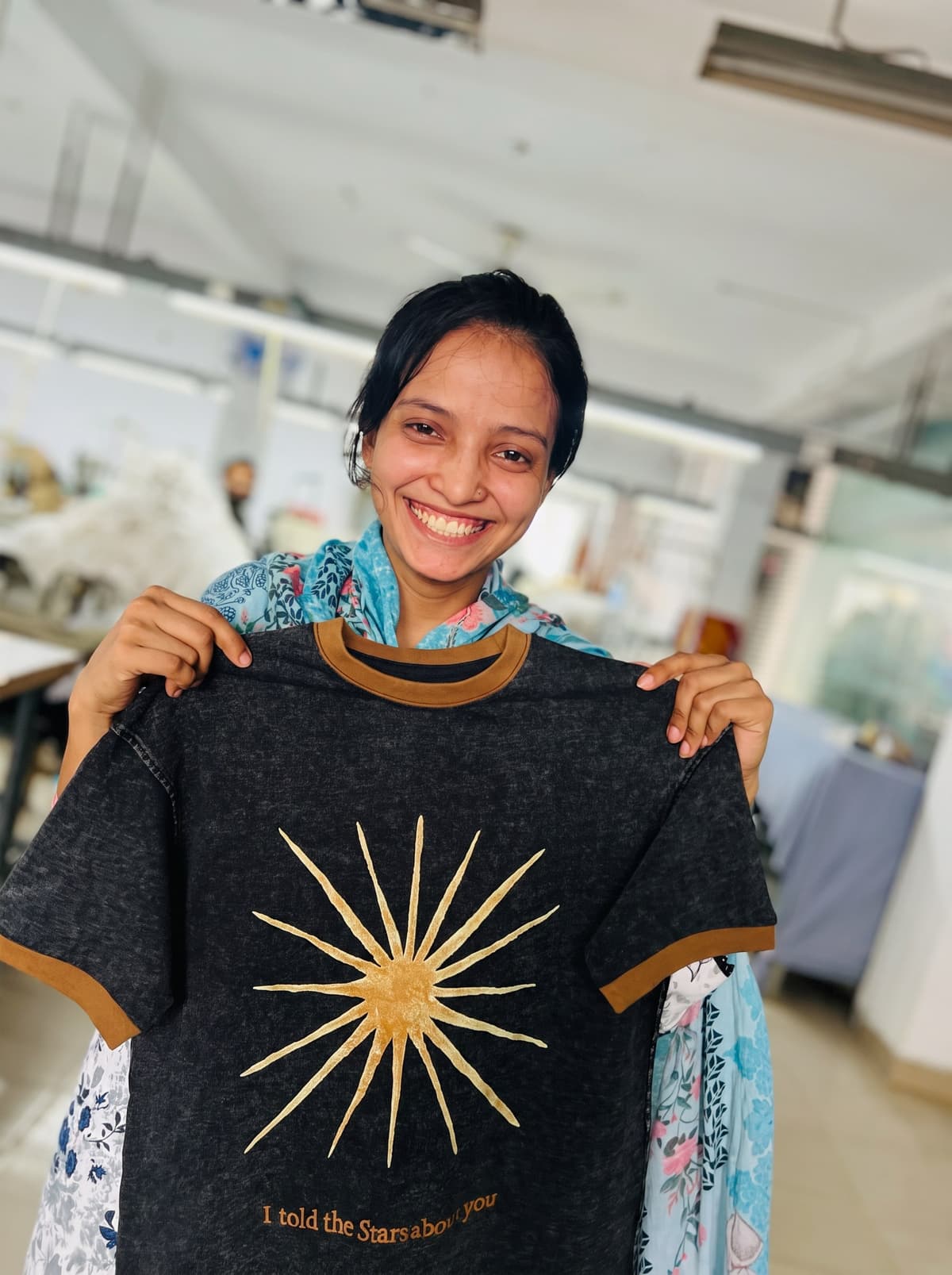
Co-founder Homaira Jashim walks our floor in Narayanganj, Bangladesh: the line your order is cut and sewn on before it ships to Mexico.
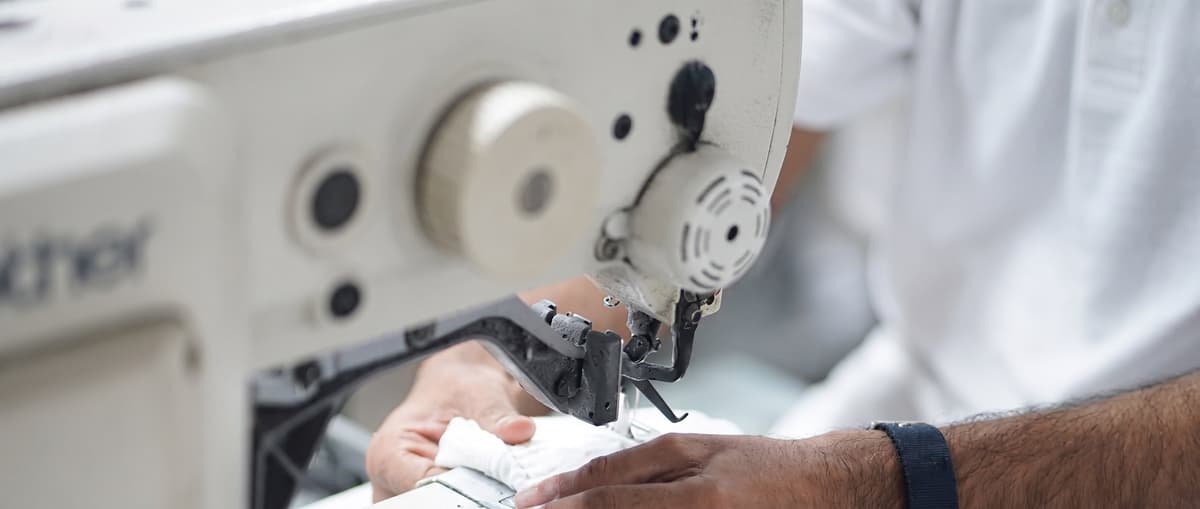
Two machinists on the coverstitch line in Narayanganj. Your order is cut and sewn here, on our own floor, not brokered out to another unit.

What clients say

Collective Studio is up and coming. Very hard working people who want to please their customers and grow partnerships together. Homaira is very knowledgeable in the knit industry and always willing to learn more. We are looking to grow our business with them.
Warren Green Jeans, Canada
Collective Studios under the direction of Mr Jamish and his daughter Homaira represent the future of RTW production in Bangladesh. A thorough approach to detail governed by a genuine standard of quality. Masters of and partners in the process!
Donald Dolce USA LinkedIn ↗
I have had a very good experience with this company. They are very friendly, professional, and provide fast service. They speak fluent English, which makes communication very easy. The quality of their manufacturing is excellent. I have no doubt in recommending this company to anyone looking for a reliable manufacturing partner in Bangladesh.
Burney Vaz Dias Netherlands
Read every review on Google ↗

Clothing manufacturing for Mexican brands — specs at a glance

Products
Tees, hoodies, joggers, activewear, loungewear
Minimum order
150 pcs per style, per colour
Import duty
35% on cotton knit T-shirts (6109.10.03) and sweatshirts (6110.20.05) since 1 Jan 2026; no trade agreement or LDC preference for Bangladesh — verified 14 Oct 2026
IVA
16% on the customs value plus duty and other import contributions, including the DTA
Labelling
NOM-004-SE-2021: Spanish, fibre %, size, care, origin, importer's name, fiscal address and RFC
Importer
Padrón de Importadores plus its textile and apparel sector; pedimento filed through a customs broker
Fabrics
Organic cotton (GOTS-certified production), recycled blends, premium cottons
Lead time
~10 days sampling, 40–50 days bulk after sample approval, then freight

Questions about clothing manufacturing for Mexican brands, answered

Do you ship clothing to Mexico?

Yes. We quote DDP, delivered duty paid, so freight, clearance, duty and delivery sit inside one landed price. Mexico's rules shape how that works in practice. The importer named on the pedimento must be registered in the Padrón de Importadores, including its textile and apparel sector, and the NOM-004 label must carry the importer's name, fiscal address and RFC. That importer is normally your company, with the goods cleared by your customs broker. Tell us at quote stage who your agente aduanal is and where the goods are going, and we will set out in writing how the clearance will be handled and what is inside our price. We send the commercial invoice, packing list and certificate of origin before the goods move, so your broker has the documents in hand. Sea freight usually comes in through Mexico's Pacific ports, such as Manzanillo, and we give you the transit time for your route rather than a generic figure.

What import duty does Mexico charge on clothing from Bangladesh?

Thirty-five per cent on cotton knit T-shirts and sweatshirts, verified 14 October 2026. Bangladesh has no free trade agreement with Mexico, so its garments pay the general import tax, the IGI. A decree published in the Diario Oficial de la Federación on 29 December 2025 set the rate at 35% from 1 January 2026 for tariff item 6109.10.03, cotton T-shirts, and 6110.20.05, cotton sweatshirts, hoodies and jumpers, among about 1,463 items whose duties rose for countries without a trade agreement. The same 35% had applied temporarily since 20 December 2024. The duty is charged on the customs value, and IVA at 16% then falls on the customs value plus the duty and the other import contributions. Your exact tariff item decides the line, so confirm it with your customs broker; we state the position for your order in writing before you commit, and because we quote DDP it is inside our price.

Does Bangladesh get a lower duty rate in Mexico as a least developed country?

No. Unlike Canada, the EU, the UK or Australia, Mexico grants no tariff preference for least developed countries that we could find, and it does not appear among the preference-granting members on the UN LDC Portal's list of non-reciprocal schemes. Bangladesh-made clothing therefore pays the same 35% general rate on cotton knit T-shirts and sweatshirts as clothing from China or Turkey. That also means Bangladesh's graduation from LDC status, scheduled for 24 November 2026 with an extension request before the UN General Assembly, changes nothing for a Mexican order: there is no preference to lose. What can move your duty is a change to Mexico's tariff itself, which is why every rate on this page carries the date we checked it. Origins with a trade agreement in force with Mexico, such as the EU or the CPTPP members, can pay less where their rules of origin are met, and we would rather say so than leave it out.

How is IVA calculated on clothing imported into Mexico?

IVA on an import is 16%, and it is not charged on the invoice value alone. Under article 27 of the Ley del Impuesto al Valor Agregado it is calculated on the customs value plus the general import tax and the other contributions paid because of the import, which include the customs processing fee, the DTA, of 8 per thousand of the customs value under article 49 of the Ley Federal de Derechos. As an illustration of the arithmetic, not a quote: on every 100 pesos of customs value for a cotton T-shirt, the duty is 35 pesos and the DTA 0.80, so IVA is 16% of 135.80, about 21.73 pesos. IVA is a tax rather than a duty, and your accountant will tell you how it is credited for your company. Your customs broker calculates the exact figures on the pedimento, and we include them in the landed price we quote.

What must a clothing label include in Mexico?

NOM-004-SE-2021 sets it, and everything must be in Spanish. On permanent labels at the lower neck, waist or another visible place, the garment shows the brand, the fibre content by mass in order of predominance in whole numbers, the size, the care instructions and the country of origin. Every fibre at 5% or more is named by its generic name; smaller ones may be grouped as otras fibras. Care can be shown with the symbols of NMX-A-3758-INNTEX-2014 or in short, clear text. For an imported garment the label also gives the importer's name, fiscal address and RFC, which may go on a permanent or temporary label or on closed packaging. Origin reads Hecho en Bangladesh, or Hecho en Bangladesh con insumos importados where an input such as yarn came from elsewhere. Customs checks this at the border, so we sew the labels to your artwork before the goods leave. Our labelling guide compares Mexico with other markets.

Do I need to register to import clothing into Mexico?

Yes. Your company must be in the Padrón de Importadores and, for clothing, also in the textile and apparel sector of the Padrón de Importadores de Sectores Específicos, which covers every tariff item in chapters 50 to 63. The SAT handles both online, with your e.firma and your tax affairs up to date, and the sector registration asks for details of your shareholders, legal representatives and warehouses, so start it well before your first order ships. The pedimento is in practice filed by a licensed agente aduanal; article 40 of the Ley Aduanera also lets a company clear its own goods through an accredited legal representative, but few small brands do. Since 1 January 2026 fines for omitted duties and taxes can reach 300%, so a broker who checks the classification and the label before arrival is worth the fee. Finished garments can no longer enter temporarily under IMMEX, so clothing for sale in Mexico is a definitive import.

What's your minimum order?

One hundred and fifty pieces per style, per colour. That floor exists because of fabric, not sewing: knit fabric is produced in minimum runs on circular machines, and dyeing happens in lots, so a hundred and fifty pieces is roughly where the material stops being sampling and starts being production. For a Mexican brand testing a first range, a realistic opening order is three to five hundred pieces across two or three styles. We would generally steer you toward fewer styles ordered deeper rather than a wide shallow range: a hundred and fifty each of five styles costs meaningfully more per piece than seven hundred and fifty of two, and with a 35% duty and IVA on top, a lower ex-factory price per piece matters more in Mexico than in a duty-free market. A deeper run also gives more useful sell-through data for reordering. Our free MOQ calculator compares those two shapes side by side.

Sources & further reading

Trade and regulatory details on this page last verified 14 October 2026. Tariff and compliance terms change — ask us to confirm the current position for your order.