How to Import Clothing into the US from Bangladesh: Importer of Record, Duty, Fees and Labels
To import clothing from Bangladesh into the United States, a business named as importer of record files an entry with U.S. Customs and Border Protection (CBP), directly or through a licensed customs broker, and a formal entry also needs a customs bond. Cotton knit T-shirts, sweatshirts and hoodies pay 26.5% duty today: the 16.5% MFN rate plus a 10% Section 301 duty on goods of Bangladesh entered since 24 July 2026. Small parcels no longer enter duty-free, the Merchandise Processing Fee has new limits for fiscal year 2027, and every garment needs FTC-compliant labels.
The steps below run in the order the work is done. We cut and sew knitwear for US brands in Narayanganj, so read anything said here about suppliers as coming from an interested party. Every rule is linked to the statute, regulation or agency notice it comes from. This is not legal advice: a licensed customs broker should confirm the classification and entry type for your own goods. Last verified: 23 September 2026.
What you have to do, and when
| Step | Who does it | When |
|---|---|---|
| Agree who will be importer of record, and get the name in writing | You and your supplier | Before you accept a quote |
| File CBP Form 5106 so CBP holds an importer number, normally an IRS employer identification number | The importer of record, and the ultimate consignee if that is a different party | With the first formal entry |
| Appoint a licensed customs broker under a power of attorney, or file entries yourself | The importer of record | Before the goods ship |
| Put a single-entry or continuous customs bond in place | The importer of record | Before the first formal entry |
| Confirm the HTS code and duty rate for each style | Your broker, from the fibre content and construction the factory supplies | At costing, and again before shipping |
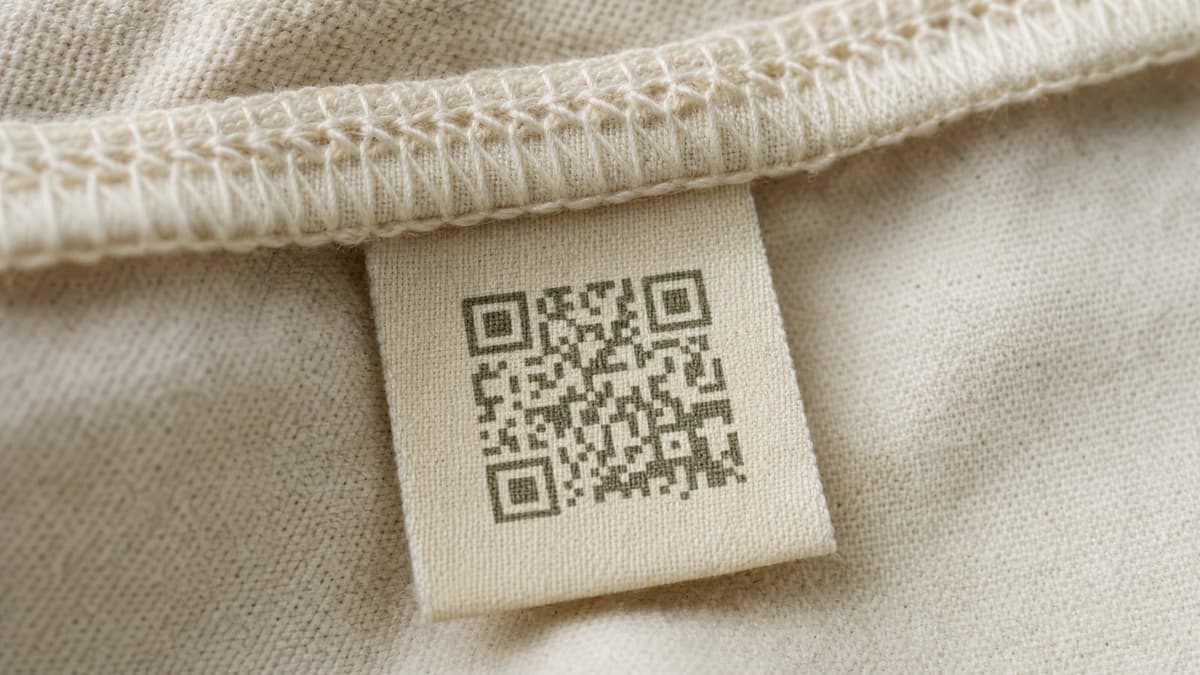
| Approve label artwork: fibre content, Made in Bangladesh inside the neck, your company name or RN, care instructions | You approve; the factory sews | Before labels are printed |
| Issue a product safety certificate where one is needed and eFile its data | The importer of record | At entry, a requirement since 8 July 2026 |
| For sea freight, lodge the Importer Security Filing | The ISF importer or its agent | No later than 24 hours before the cargo is loaded at the foreign port |
| File the entry and pay duty, the Merchandise Processing Fee and, on a formal entry by sea, the Harbor Maintenance Fee | The importer of record or its broker | At entry |
| Keep the entry records | The importer of record | Five years from the date of entry |
Who is the importer of record, and why does it matter?
The importer of record is the party named on the entry as answerable to CBP for it. US law lets only the owner or purchaser of the goods, or a licensed customs broker designated by the owner, purchaser or consignee, fill that role (19 U.S.C. 1484(a)(2)(B)). Whoever is named carries four things a brand should care about:
- The duty debt. Duty is a personal debt of the importer to the United States, and paying a broker does not discharge it if the broker never pays CBP (19 CFR 141.1(b)).
- Reasonable care. The importer of record must use reasonable care when it enters, classifies and values the goods (19 U.S.C. 1484(a)(1)), so an error found later is its to correct.
- Product certificates. Where the CPSC requires a certificate, the importer of record is the certifier for an imported finished product (16 CFR 1110.3 and 1110.7).
- Refunds. When duty is refunded, as the IEEPA duties now are, CBP pays the importer of record or a party it designates. The refund section below explains who receives it.
A company based outside the United States can act as importer of record, but a nonresident corporation may enter goods for consumption only if it has a resident agent authorised to accept service of process and a bond with a resident corporate surety (19 CFR 141.18). CBP also expects a Form 5106 for the ultimate consignee on an entry, so a brand receiving the goods can need its own importer number on file even when another company is importer of record (19 CFR 24.5).
Under a DDP quote the seller delivers with duty paid, so the seller or its agent usually arranges the entry; under FOB or EXW the entry is yours to arrange. The trade term alone does not say which company appears on the entry, so ask any supplier quoting DDP to name the importer of record in writing and to send you a copy of each entry summary. Our guide to reading a garment quote sets out what each trade term includes.
Do you need a customs broker and a customs bond?
A broker is optional. CBP does not require an importer to hold a licence or permit, and a business entering goods solely for its own account may transact that customs business without a broker's licence (19 CFR 111.2). A licensed customs broker, which CBP licenses but does not employ, must hold your power of attorney before it acts in your name (19 CFR 141.46); it can then classify each style, file the entries electronically and pay the duty on your behalf. Hiring one does not move the liability: if you are importer of record, the duty stays your debt.
A bond is not optional for a formal entry. The goods are not released until a single-entry or continuous bond carrying the basic importation conditions is on file (19 CFR 142.4). CBP's public guide to bond amounts sets the minimum continuous bond at $50,000 or 10% of the duties, taxes and fees paid in the previous 12 months, whichever is greater, and a single-transaction bond at generally no less than the entered value plus the duties, taxes and fees on that entry. A brand importing a few times a year should ask its broker which of the two costs less.
Sea freight adds a deadline of its own. The Importer Security Filing, known as 10+2, applies to cargo arriving by vessel: the seller, buyer, importer number, consignee, manufacturer, ship-to party, country of origin and HTS codes must reach CBP no later than 24 hours before the cargo is loaded at the foreign port (19 CFR 149.2), and the bond conditions set liquidated damages of $5,000 for each violation (19 CFR 113.62(j)). Your broker or forwarder can file it as your agent, but several of those details come from the supply side, so agree who files it before the booking is made.
Which HTS code, and what duty?
Duty is the MFN rate for the garment's line in the Harmonized Tariff Schedule plus, for goods of Bangladesh entered from 24 July 2026, an additional 10% under heading 9903.05.26 (Federal Register 2026-15181): 26.5% in all on cotton knit T-shirts and hoodies, and 42% on the same garments in man-made fibres, where the fibre that predominates by weight decides the line. Our duty guide has the full line-by-line rates, so give your broker the exact composition of each style before you price it.
Which country's rate applies depends on US origin rules, not on where the yarn or fabric was made. For a knit garment cut from fabric and sewn from two or more pieces, 19 CFR 102.21 gives origin to the country where it was wholly assembled, so a T-shirt sewn in Bangladesh from imported fabric is a good of Bangladesh. The entry must also carry a manufacturer identification code built from the name and address of the factory that did that assembly (19 CFR 102.23), so your broker needs the sewing factory's details even if you bought through an agent. For the same garments in the UK, the EU, Canada and Australia, see our duty by country guide.
How the US duty on goods of Bangladesh changed in 2025 and 2026
Several rates have been charged on goods of Bangladesh since April 2025: IEEPA duties that reached 20% before the Supreme Court held on 20 February 2026 that IEEPA does not authorise tariffs, then a temporary 10% surcharge under Section 122 until the Section 301 duty took over on 24 July 2026. Refunds depend on the rate charged on the date of entry, and our US tariff guide sets out that history date by date.
Two open items are worth watching. The Section 301 notice tells USTR to set up tariff-rate quotas for Bangladesh, for an initial three years, once it judges them feasible, letting a set volume of specific textiles and apparel enter free of the Section 301 duty in line with Bangladesh's imports of US cotton and textile inputs. The MFN duty would still apply, and no quota had been published in the Federal Register on 23 September 2026, so every entry pays the full 10% for now. Bangladesh's graduation from the UN list of least developed countries is scheduled for 24 November 2026; it has asked for an extension and a UN decision is pending (UN LDC portal). Graduation does not move the US rate either way, because Bangladesh is not on the tariff schedule's list of least-developed beneficiary countries (General Note 4(b)(i)). Our US tariff guide follows the quota.
What is the customs value? Freight is not part of it
US duty is charged on the transaction value of the goods, and the law defines the price for that purpose to exclude the cost of transport, insurance and related services for the international shipment to the United States (19 U.S.C. 1401a(b)(4)(A)). US customs duties and federal taxes payable on import are left out too, provided they are identified separately from the price. So a delivered price is not the figure duty is charged on: the broker works back to the value of the goods, which is simpler when the supplier's invoice shows goods, freight, insurance and any US duty as separate lines.
Some costs are added rather than taken away. Packing costs and selling commissions paid by the buyer are added, as are royalties the buyer must pay as a condition of the sale and resale proceeds that flow back to the seller. So are assists: anything you supply to the factory free or below cost for use in production, such as labels or trims you send, is added at its value (1401a(b)(1) and (h)(1)). Design work and plans count as assists only when they are done outside the United States, so a tech pack drawn up in the US is not one.
As an illustration, not a quote: a formal entry of cotton knit tees with a customs value of US$10,000, arriving by sea, pays US$2,650 in duty at 26.5%, US$34.64 in Merchandise Processing Fee at 0.3464%, which is just above the minimum for both fiscal year 2026 and fiscal year 2027, and US$12.50 in Harbor Maintenance Fee at 0.125%. That is US$2,697.14 to the government, with freight in none of the bases. Brokerage, the bond premium and the freight itself come on top.
Samples and small parcels: there is no de minimis
The $800 duty-free de minimis exemption is suspended for goods from every country. Executive Order 14324 suspended it for goods entered from 29 August 2025, and Executive Order 14388 kept it suspended from 24 February 2026, after the Supreme Court ruling, regardless of value, country of origin or mode of transport. Two CBP interim final rules published on 24 June 2026 then made the suspension indefinite, one for courier and cargo shipments and one for post, and CBP notes that Congress has ended the exemption by statute from 1 July 2027. A courier parcel of samples, or an order shipped from Bangladesh straight to a US customer, now needs an entry and pays duty like any other import.
The entry type depends on value. CBP's June rule names informal entry, Entry Type 11, as the main route for parcels that used to go through as de minimis, and its e-commerce FAQs say informal entry is generally allowed up to $2,500, subject to eligibility, with formal entry required above that. CBP may require a formal entry for any shipment (19 CFR 143.22). One detail affects goods of Bangladesh: the regulation still excludes from informal entry articles valued over $250 that are classified in subchapters III and IV of chapter 99 (19 CFR 143.21(a)), and the Section 301 heading 9903.05.26 sits in subchapter III. CBP suspended that exclusion until further notice in its September 2025 notice implementing the de minimis suspension, and we found no notice lifting it on 23 September 2026. Ask your broker or courier which entry type they will file before you send anything worth more than $250.
Posting samples does not get round this. Under CBP's June 2026 mail rule, a mail shipment of goods subject to chapter 99 duties, as goods of Bangladesh are, or claiming duty-free treatment under chapter 98 needs a formal entry, with compliance required from 22 October 2026 (19 CFR 145.12(a)(2)(vi)).
Marked samples are the one narrow exception. HTS 9811.00.60 admits free of duty a sample valued at no more than $1, or one marked, torn, perforated or otherwise treated so that it is unsuitable for sale or for use other than as a sample, where it is used in the United States only to solicit orders for foreign products. Where CBP accepts an entry under chapter 98, the Section 301 duty does not apply (U.S. note 52) and neither does the Merchandise Processing Fee (19 CFR 24.23(c)). Whether a fit or pre-production sample qualifies is for your broker to judge, so agree the marking before the factory ships it. Our sampling guide explains what each sample round is for.
The Merchandise Processing Fee for fiscal year 2027
A formal entry pays the Merchandise Processing Fee (MPF): 0.3464% of the customs value, held between a minimum and a maximum, while an informal entry pays a flat fee instead (19 CFR 24.23). Each year CBP compares consumer prices over the latest June-to-May period with the year before, and when the rise is more than 1% it raises the limits from 1 October, the first day of the federal fiscal year. For fiscal year 2027 the rise was 2.84%, so the limits go up on 1 October 2026 and a figure without a date on it is probably out of date.
| Fee | Entries to 30 September 2026 | Entries from 1 October 2026 |
|---|---|---|
| MPF on a formal entry | 0.3464% of value; minimum $33.58, maximum $651.50 | 0.3464% of value; minimum $34.58, maximum $670.86 |
| MPF on an automated informal entry not prepared by CBP | $2.69 per entry | $2.77 per entry |
| Harbor Maintenance Fee, formal entries unloaded from a vessel at a US port | 0.125% of value | 0.125% of value |
In practice the minimum applies to any formal entry with a customs value below about $9,983 from 1 October 2026, and the maximum is reached at about $193,666. The exemptions in 19 CFR 24.23(c) do not reach ordinary garments from Bangladesh. They cover, among others, chapter 98 goods such as marked samples, goods originating under the USMCA, and products of the least-developed beneficiary countries listed in General Note 4(b)(i) of the tariff schedule, a list that does not include Bangladesh.
Labels a US shipment needs
Clothing sold in the United States is labelled under the Textile Fiber Products Identification Act, which the Federal Trade Commission enforces. Each label must give three things (16 CFR 303.16): the generic names and percentages by weight of the fibres, in order of predominance; the name or RN of the manufacturer or of a business marketing or handling the garment; and the country where it was processed or manufactured, which for garments cut and sewn in Bangladesh is Bangladesh.
The name must be the one the business trades under, or a word trademark registered in the United States and used as a house mark (16 CFR 303.19). The FTC issues RNs only to businesses in the United States (16 CFR 303.20), and an RN is optional: a brand based elsewhere can use its trading name, and for imported goods the FTC's guidance allows the name of the foreign manufacturer or distributor, or the name or RN of the importer, the wholesaler or, with its consent, the retailer.
On anything with a neck, the origin label goes on the inside centre of the neck, midway between the shoulder seams or close to another label there, and the country must appear on the front of that label (16 CFR 303.15(b)). Care instructions come under a separate FTC rule, which lets the ASTM care symbols stand in place of words (16 CFR 423.8(g)). Our labelling requirements guide covers each element; for the import itself, what matters is that the artwork is final, with your name or RN on it, before the factory prints the labels.
The commercial invoice has its own apparel rule. For textile wearing apparel it should give the fibre breakdown by weight for the whole garment and separately for the outer shell and any lining, and for an all-white T-shirt or singlet it must say whether the garment has pockets, trim or embroidery (19 CFR 141.89), because the tariff schedule gives plain all-white tees a statistical line of their own.
Safety certificates: children's clothing, and adult fleece
A children's product is one designed or intended primarily for children aged 12 or younger (16 CFR 1200.2). Its importer must issue a Children's Product Certificate stating that it meets each applicable children's product safety rule, based on tests by a third-party laboratory the CPSC has accepted: the laboratory issues test reports, and the importer issues the certificate. Since 8 July 2026, under the CPSC's Certificates of Compliance rule, the certificate data for an imported product that must be certified has to be eFiled in CBP's system when the entry is filed (16 CFR 1110.13(a)(1)). Children's garments also need permanent tracking information on the product and its packaging, to the extent practicable, including the manufacturer or importer, the place and date of production, and a batch or run number. Our children's clothing safety guide sets out the safety rules by market.
Adult clothing is covered too. The flammability standard for clothing textiles, 16 CFR part 1610, is on the CPSC's list of rules that require a General Certificate of Conformity, which the importer issues. Since 2016 the CPSC has not enforced that certificate for adult apparel made entirely from fabrics the standard exempts from testing: plain-surface fabrics weighing 2.6 ounces per square yard (about 88 GSM) or more, and fabrics made entirely of acrylic, modacrylic, nylon, olefin, polyester or wool (16 CFR 1610.1(d)). A brushed cotton fleece has an intentionally raised, napped surface (16 CFR 1610.2), so it is on neither list; ask your broker or a testing laboratory what a fleece hoodie needs before it ships.
Who receives an IEEPA refund
IEEPA duties paid on goods of Bangladesh are being refunded with interest, and the refund follows the entry rather than the invoice. Only the importer of record for the entries, or the licensed broker that filed them on its behalf, can submit the CAPE declaration in CBP's ACE portal that claims one, and CBP pays refunds electronically to the importer of record or to a party it has designated on CBP Form 4811 (CBP IEEPA duty refunds). So if a supplier or forwarder was importer of record on your 2025 shipments, the money goes to them and passing it on is a matter for your contract. Which entries each refund phase covers is tracked in our US tariff guide.
What the factory has to give you
Most of this is the importer's work, but some of the inputs can only come from the supplier. Ask for these before the goods leave:
- The fibre content by weight and the construction of each style, so your broker can classify it.
- The name and address of the factory that cut and sewed the goods, for the manufacturer identification code.
- A commercial invoice that shows goods, freight, insurance and any US duty as separate lines and gives the apparel fibre breakdown, plus a packing list.
- Labels sewn to the artwork you approved.
Tell your broker, too, about anything you send the factory free of charge, such as labels or trims, because its value may belong in the customs value. We cut and sew knitwear in Narayanganj from 100 pieces per style, per colour. Our page for US clothing brands covers what we make and how we quote, and our Canada import guide does the same job for brands importing into Canada.
Sources
Last verified: 23 September 2026. Every rate, fee, date and rule on this page was checked that day against the sources below. US trade measures on goods of Bangladesh changed several times between April 2025 and July 2026, so check the live position with a licensed customs broker before you set prices.
- Federal Register 2026-15181 — USTR notice of Section 301 actions, 10% on goods of Bangladesh from 24 July 2026
- USITC — Harmonized Tariff Schedule of the United States, Revision 19 (2026)
- CBP CSMS 67834313 — ending collection of IEEPA duties from 24 February 2026
- Federal Register 2026-12670 — indefinite suspension of the de minimis exemption, all modes other than post
- Federal Register 2026-15530 — customs user fees for fiscal year 2027
- 19 U.S.C. 1401a — transaction value
- CBP — IEEPA duty refunds and CAPE
- Federal Register 2024-30826 — CPSC Certificates of Compliance rule
- FTC — Threading Your Way, labelling under the Textile and Wool Acts
The full list, with each regulation section cited in this guide, is in the references at the foot of the page.
Frequently asked questions
What does a formal entry of Bangladesh-made clothing cost besides the duty?
Two government fees and two service costs, on top of duty that is 26.5% on cotton knit tops. The Merchandise Processing Fee is 0.3464% of the customs value on a formal entry, held between a floor of $34.58 and a ceiling of $670.86 for fiscal year 2027, which began on 1 October 2026. A formal entry unloaded from a vessel also pays the Harbor Maintenance Fee of 0.125%, which an air shipment does not. On cotton tees with a customs value of $10,000 arriving by sea, that comes to $34.64 in MPF and $12.50 in HMF. The service costs are the customs bond, which must be on file before a formal entry is released, and the broker's fee if you use one; the surety and the broker price those, not CBP, so ask for both in writing. Sea freight also needs an Importer Security Filing, and the bond conditions set liquidated damages of $5,000 for each violation.
Do I need a customs broker to import clothing from Bangladesh?
No, but someone has to file the entry correctly. A business entering goods only for its own account can transact that customs business without a broker's licence, and CBP does not require an importer to hold a licence or permit. What you cannot skip is the work: entries are filed electronically, a formal entry is not released until a customs bond is on file, and the tariff classification you declare sets the duty. That is the work a licensed broker does for you under a power of attorney. Appointing one does not move the liability. If you are importer of record, the duty remains your personal debt to the United States, and paying the broker does not clear it if the broker fails to pay CBP. Ask any broker you are considering to price both a single-entry bond and a continuous bond, which CBP's guidance sets at a minimum of $50,000.
Can I still send clothing samples from Bangladesh to the US duty-free under $800?
No. The $800 de minimis exemption has been suspended for goods from every country since 29 August 2025, and CBP made the suspension indefinite in June 2026, with one rule for courier and cargo shipments and another for post. A courier parcel of samples now needs an entry, usually an informal entry when it is worth $2,500 or less, and pays duty at the normal rate, 26.5% for a cotton knit tee. Sending it by post is no shortcut: from 22 October 2026 a mail shipment of goods subject to chapter 99 duties, as Bangladeshi goods are, needs a formal entry. The narrow exception is HTS 9811.00.60, which admits free a sample worth $1 or less, or one marked, torn or perforated so that it cannot be sold, when it is used only to take orders. Whether a fit sample qualifies is your broker's call, so agree the marking before the factory ships it.
What is the Merchandise Processing Fee on a clothing entry?
It is the fee CBP charges for processing an entry. A formal entry pays 0.3464% of the customs value, held between a floor and a ceiling: for fiscal year 2027, which covers entries from 1 October 2026, the floor is $34.58 and the ceiling $670.86, so any formal entry valued below about $9,983 pays the minimum. An automated informal entry pays a flat $2.77 instead. In fiscal year 2026, for entries up to 30 September 2026, the limits were $33.58 and $651.50 and the flat fee $2.69. Goods of Bangladesh get no exemption, since the regulation exempts only products of the least-developed beneficiary countries named in General Note 4 of the tariff schedule, and Bangladesh is not one of them. CBP reviews the limits every year and raises them when prices have risen by more than 1%, so date every figure in your landed-cost sheet.
Who should be the importer of record on a DDP shipment?
Whichever eligible company you and the supplier agree in writing before the order is confirmed. US law allows the goods' owner or purchaser to act, or a licensed customs broker that they or the consignee appoint, and a corporation based outside the United States can act only with a resident agent for service of process and a bond from a resident corporate surety. A DDP price makes the seller responsible for the duty, and usually for arranging the entry, yet the trade term alone does not name the company on it. That name decides who owes the duty if something goes wrong, who keeps the entry records for five years, who certifies children's clothing to the CPSC and who receives any refund. Ask every supplier quoting DDP to name that party and to send you each entry summary, and ask your broker whether you also need a Form 5106 on file as ultimate consignee.
Who gets the IEEPA refund on a shipment someone else imported?
The importer of record, not the brand that paid for the goods. CBP pays IEEPA refunds, with interest, electronically to the importer of record on each entry or to a party that importer has designated on CBP Form 4811. Only the importer of record, or the licensed broker that filed the entries for it, can submit the CAPE declaration that starts a refund. So if a supplier, forwarder or DDP seller was named on entries made between April 2025 and February 2026, the refund goes to that company, and whether any of it reaches you depends on your contract with them. Ask the party named on each entry summary whether it has filed, and agree in writing how a refund will be passed on. CBP charges no fee for a refund. Our US tariff guide follows which entries each phase of CAPE covers.
Where this applies
The manufacturing pages this guide relates to, if you are costing a real run.
Sources & further reading
- Federal Register 2026-15181 — USTR notice of actions in the Section 301 investigations: an additional 10% on goods of Bangladesh entered from 24 July 2026, and tariff-rate quotas when feasible
- USITC — Harmonized Tariff Schedule, Revision 19 (2026): 6103.42.10, 6104.62.20, 6109.10.00, 6109.90.10, 6110.20.20, 6110.30.30, 9811.00.60
- USITC — HTS chapter 99 (headings 9903.01.66, 9903.02.05 and 9903.05.26; U.S. note 52)
- USITC — HTS General Notes (General Note 4(b)(i), least-developed beneficiary developing countries)
- USITC — HTS chapter 50, including the Section XI notes and subheading note 2 on mixed fibres
- Federal Register 2025-06063 — Executive Order 14257, reciprocal tariff (10% from 5 April 2025; country rates from 9 April 2025)
- Federal Register 2025-06462 — Executive Order 14266, suspending country-specific rates from 10 April 2025
- Federal Register 2025-12962 — Executive Order 14316, suspension extended to 1 August 2025
- Federal Register 2025-15010 — Executive Order 14326, Further Modifying the Reciprocal Tariff Rates (from 7 August 2025)
- The White House — Joint statement on a framework for a United States–Bangladesh Agreement on Reciprocal Trade (9 February 2026)
- USTR — Fact sheet: the United States and Bangladesh reach an Agreement on Reciprocal Trade (February 2026)
- Learning Resources, Inc. v. Trump, No. 24-1287 — slip opinion of the Supreme Court, decided 20 February 2026 (PDF)
- Federal Register 2026-03832 — Executive Order 14389, Ending Certain Tariff Actions
- CBP CSMS 67834313 — Ending collection of IEEPA duties for goods entered from 24 February 2026
- Federal Register 2026-03824 — Proclamation 11012, temporary 10% import surcharge under Section 122 (24 February to 24 July 2026)
- CBP — IEEPA duty refunds and CAPE declarations (updated 2 September 2026)
- Federal Register 2025-14897 — Executive Order 14324, suspending duty-free de minimis treatment for all countries
- Federal Register R1-2026-03829 — Executive Order 14388, continuing the de minimis suspension (republished with its annex on 9 April 2026)
- Federal Register 2026-12670 — CBP interim final rule, indefinite suspension of the de minimis exemption for all modes other than post (effective 24 June 2026)
- Federal Register 2026-12669 — CBP interim final rule, indefinite suspension of the de minimis exemption for mail and the new postal informal entry process
- Federal Register 2025-16802 — CBP notice implementing Executive Order 14324, including the suspension of the $250 chapter 99 clause in 19 CFR 143.21(a)
- CBP — E-Commerce frequently asked questions (informal and formal entry after de minimis)
- Federal Register 2025-13869 — CBP Dec. 25-10, customs user fees for fiscal year 2026
- Federal Register 2026-15530 — customs user fees for fiscal year 2027 (from 1 October 2026)
- eCFR — 19 CFR 24.23, Merchandise Processing Fee and exemptions
- eCFR — 19 CFR 24.24, Harbor Maintenance Fee
- U.S. Code — 19 U.S.C. 1401a, value (transaction value and assists)
- U.S. Code — 19 U.S.C. 1484, entry of merchandise (importer of record and reasonable care)
- eCFR — 19 CFR 141.1, liability of importer for duties
- eCFR — 19 CFR 141.18, entry by nonresident corporation
- eCFR — 19 CFR 24.5, filing identification number (CBP Form 5106)
- eCFR — 19 CFR 111.2, when a customs broker licence is required
- eCFR — 19 CFR 141.46, broker power of attorney
- eCFR — 19 CFR 142.4, bond required for entry
- CBP — A Guide for the Public: How CBP Sets Bond Amounts (February 2024)
- CBP — Importer and exporter tips (licences and customs brokers)
- eCFR — 19 CFR 149.2, Importer Security Filing timing
- eCFR — 19 CFR 113.62, basic importation and entry bond conditions (ISF liquidated damages)
- CBP — Importer Security Filing 10+2
- eCFR — 19 CFR 143.21, merchandise eligible for informal entry
- eCFR — 19 CFR 143.22, formal entry may be required
- eCFR — 19 CFR 145.12, entry of mail shipments (formal entry for goods subject to chapter 98 or 99 duties)
- eCFR — 19 CFR 102.21, country of origin of textile and apparel products
- eCFR — 19 CFR 102.23, manufacturer identification code for textile and apparel entries
- eCFR — 19 CFR 163.4, record retention period
- eCFR — 19 CFR 141.89, invoice information for wearing apparel
- FTC — Threading Your Way: labelling requirements under the Textile and Wool Acts
- eCFR — 16 CFR 303.15, label placement (origin at the inside centre of the neck)
- eCFR — 16 CFR 303.16, required label information
- eCFR — 16 CFR 303.19, name used on labels
- eCFR — 16 CFR 303.20, registered identification numbers
- eCFR — 16 CFR 423.8, care labelling exemptions and ASTM care symbols
- Federal Register 2024-30826 — CPSC final rule, Certificates of Compliance (effective 8 July 2026)
- eCFR — 16 CFR part 1110, certificates of compliance (importer of record as certifier; eFiling at entry)
- eCFR — 16 CFR 1200.2, definition of children's product
- CPSC — Children's Product Certificate business guidance
- CPSC — Tracking label business guidance
- CPSC — General Certificate of Conformity business guidance
- CPSC — Rules requiring a General Certificate of Conformity (wearing apparel, 16 CFR part 1610)
- Federal Register 2016-04533 — CPSC statement of policy on certificates for adult wearing apparel exempt from testing
- eCFR — 16 CFR 1610.1, flammability of clothing textiles: scope and exemptions
- eCFR — 16 CFR 1610.2, definitions (plain and raised surface fabrics)
- UN LDC Portal — Bangladesh graduation status
Have an idea? Let’s make it.
We manufacture from 100 pieces per style and colour, with GOTS-certified organic options and photos at every stage. Send a sketch or a sentence — we’ll reply within one business day.