1
Business day to first reply Homaira reads every brief personally. You'll hear back within one business day.
Send a tech pack, a sketch, or just describe the kind of garment you want. We’ll come back with fabric options and a sampling plan within one business day.
We manufacture for export, shipping DDP worldwide from 150 pieces per style and colour. Brands come to us from the UK, US, Canada, Australia, Germany and the Gulf. If you’re building a brand that sells outside Bangladesh, you’re in the right place — tell us what you want to make.
Five answers are enough for a real reply — fabric options, an indicative price and a sampling timeline. A tech pack is welcome but not required. Nothing here is binding.
Plot-A-132, Road No. 02, BSCIC Industrial Area, Panchabati, Narayanganj 1420, Bangladesh
The map is loaded from Google Maps.
Wonderful people to work with — very professional and knowledgeable, also accommodating to the needs of their customers.
150 pieces per style, per colourway — cut and sewn from your pattern, not printed onto ready-made blanks. The "per colourway" part is what catches most new brands out: a t-shirt in black and white is two minimums, 300 pieces total, because each colour is a separate fabric batch and dye lot with its own setup. You can split those 150 pieces across sizes however you like. Below roughly 150 units of cut-and-sew, the fixed costs — pattern making, the mill's own fabric minimums, a production line changeover — stop spreading sensibly, which is the honest reason for the number rather than an arbitrary policy. If you see minimums of 25 or 50 advertised elsewhere, ask whether they're printing on blanks, quoting per order rather than per colour, or charging two to three times the unit price.
No. A sketch on paper, a photo of a garment whose fit you like, or a paragraph describing what you want is enough for fabric options and an indicative price, and most founders who contact us don't have a tech pack. A tech pack is the spec sheet a factory works from: points of measure for every size, fabric and GSM, trims, stitch types and label placement. If you arrive without one, we put it together with you as part of the quote, so the spec is settled before any money goes on a sample. A garment you own helps most here, because it shows the fit you want more precisely than a description can. The form has no upload button, so paste a link to a sketch, tech pack or shared Drive folder into the optional message box. Our free tech pack template is there if you want to start one yourself, but it is optional, never a barrier to getting in touch.
Yes. We quote DDP, delivered duty paid, so freight, customs clearance and import duty sit inside one landed price handled by us, and duty and freight never arrive as separate bills. That is why the form asks for your destination country: duty depends on where you sell. Checked on 19 September 2026, a cotton knit tee from Bangladesh carried 0% duty into the UK, the EU, Canada and Australia, and 26.5% into the US, and we confirm the live rate for your order in the quote. Your quote also states how import VAT or GST is handled, because that varies by market too. When you compare our number with another factory's, check the incoterm first. An FOB price stops at the port of origin, leaving international freight, insurance, duty, brokerage and inland delivery to arrive as separate invoices, so an FOB quote nearly always looks cheaper than a DDP quote for the same goods. Our landed cost calculator adds up the full sum.
Roughly 40–50 days from approved sample to delivery at your door. That breaks down as about 10–15 days for sampling (we make one physical piece and ship it to you), then 20–25 days for bulk production once you've approved it, then final QC and DDP shipping. Add a few days at the start for speccing and quoting. The honest caveat: the single biggest cause of delay is decisions on your side rather than production on ours — waiting on sample feedback, fabric colour approval, or label artwork. Brands that turn decisions around quickly land at the fast end of that range. If you have a fixed launch date, tell us at the start and we'll tell you straight whether it's realistic rather than agreeing and missing it. The optional Target launch field on the form lets you tell us your timeframe up front.
A single paragraph is enough, and the form on this page asks for only five things: your name, email, the country you ship to, the quantity per style and what you're making. The destination matters because duty and delivery differ by market, and the quantity bands start at 150 to 300 pieces, our smallest run. In the optional message box, the most useful extras are the number of colours, a link to a reference photo of a fit or fabric you like, your target market and the price you hope to sell at. If there's a sample garment you want matched, say so there too. Under "Add more detail" you can add your brand name and target launch, and tick GOTS-certified organic, fabric swatches, a factory visit or DDP shipping. Rough numbers are fine; nobody expects precision yet. If you'd rather talk it through, a 20-minute intro call with Homaira usually gets further than a long email.
With us, Homaira Jashim, our co-founder, reads every enquiry personally and replies within one business day. The reply sets out fabric options for your garment, an indicative price and a sampling plan, so you can judge the numbers before anything is agreed. If the project isn't a fit, for example stock for the domestic market in Bangladesh or fewer than 150 pieces per style and colour, we tell you straight in that reply rather than after weeks of emails. Expect a few questions back as well, usually about fabric weight, fibre and finish, how many colours you need, and the price you want to sell at, because those decide the cost. From there you can book a 20-minute intro call, or carry on by email or WhatsApp, whichever suits you. Once fabric and spec are agreed, we make one physical sample and ship it to you, and the piece you approve becomes the sealed sample your bulk order is checked against.
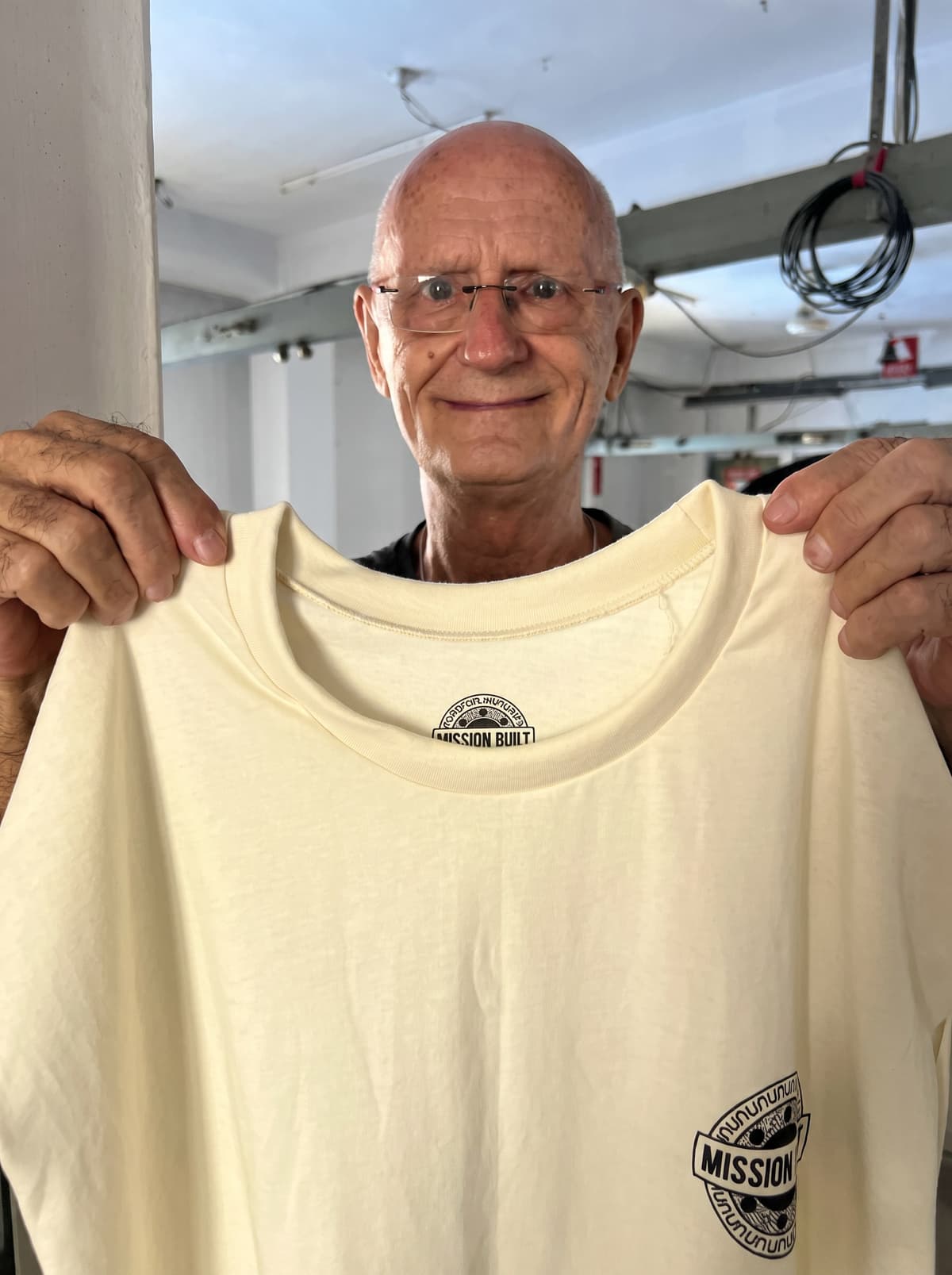
We put it right: if goods arrive wrong against the sealed sample you approved, that sample is the reference we fix them to. A sealed sample is one physical garment you sign off before bulk starts, and it is the reference production is checked against, not a photo or a written description. Walter Meyer, our QC lead with 38 years in quality control, leads those checks; he is pictured on this page. On a 150-piece run every garment is inspected against the sealed sample; larger runs are sampled to the AQL written into your purchase order. You get photos at each production stage and the inspection report before anything ships, so a fault shows up while it can still be fixed rather than after the full run. No factory can honestly promise nothing will ever go wrong. What protects you is a defined reference and a straight answer when there's a gap.
No. Your designs, patterns and tech packs stay yours, we don't make your styles for anyone else, and we're happy to sign an NDA before you send anything sensitive. It's a fair question, and a promise on a contact page is not proof, so here is how to protect yourself. You don't need to attach your whole range to a first message: a short brief, plus a sketch or reference photo of one style, is enough for us to quote. Share full patterns and artwork once the NDA is signed and you've decided to sample. The commercial logic also runs your way: we're a family-run factory that depends on brands coming back to reorder, and copying a client would end that. The protection that really holds up is yours to hold: register your trademark in your own market. Our guide on whether a manufacturer will steal your design explains why.
Your quote sets out the exact payment terms in writing before you commit to anything, and they depend on order size, product and whether it's a first order or a repeat. Sending the form on this page commits you to nothing. Across the industry, apparel manufacturing usually runs on a deposit before production, because the deposit pays for fabric the factory must buy before cutting, with the balance due before shipping. Sampling is normally charged separately from bulk, and we quote the sample cost for your order. On any first order, be wary of a supplier that wants the full amount upfront or accepts only payment methods with no recourse. If a structure doesn't suit your cash flow, raise it on the intro call with Homaira before any money moves. Our guide to payment terms for bulk clothing orders explains where the useful negotiation happens.
Yes. Founders making their first collection are a large share of who we work with, and it's why our minimum is 150 pieces per style and colour rather than 500 or 1,000. You don't need industry contacts, a tech pack or manufacturing vocabulary to fill in this form. If you're unsure of numbers, choose "Not sure yet" in the quantity field, and "Something else" if your garment isn't listed; we'll work it out with you. Three things make our first reply more useful: what you want to make, who it's for, and the price you want to sell it at, because those decide fabric, construction and cost. If you'd rather talk than type, book the 20-minute intro call and Homaira will tell you straight whether we fit. If you're still testing whether anyone will buy, we'll say so: print-on-demand is often the smarter first step, and we'd sooner point you there than take an order you aren't ready for.
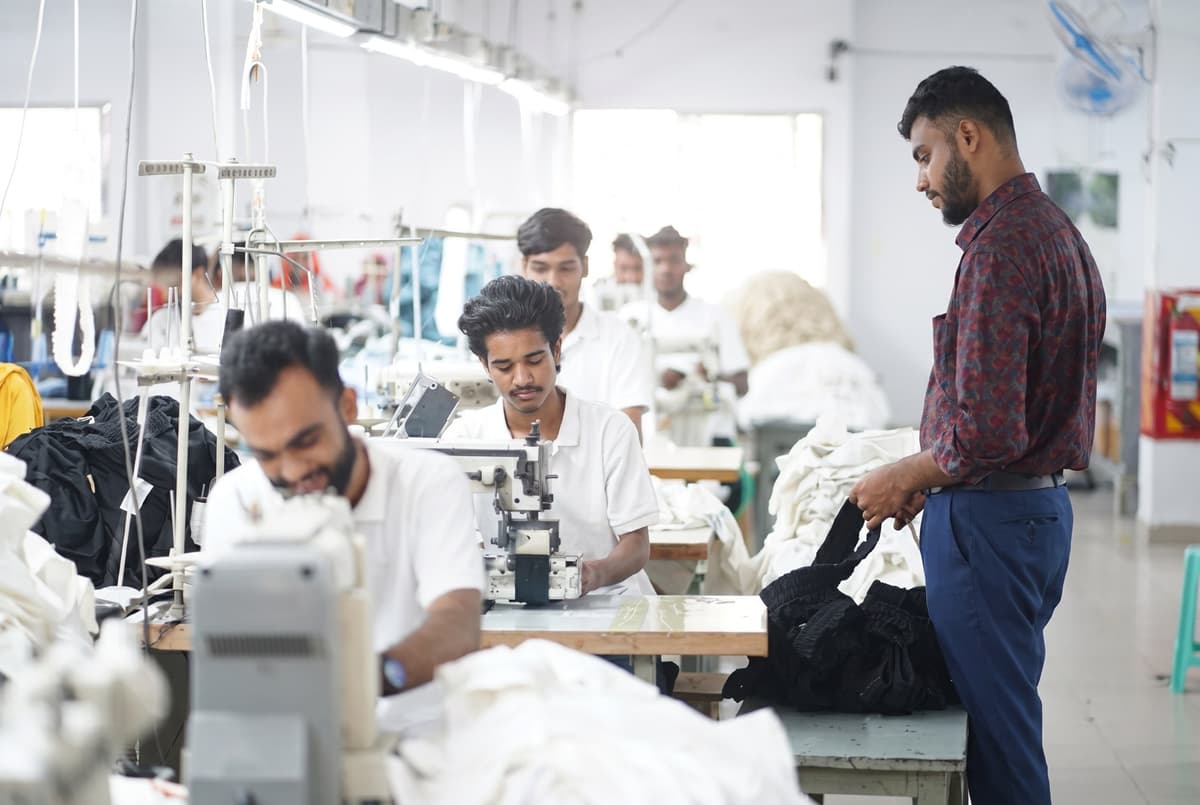
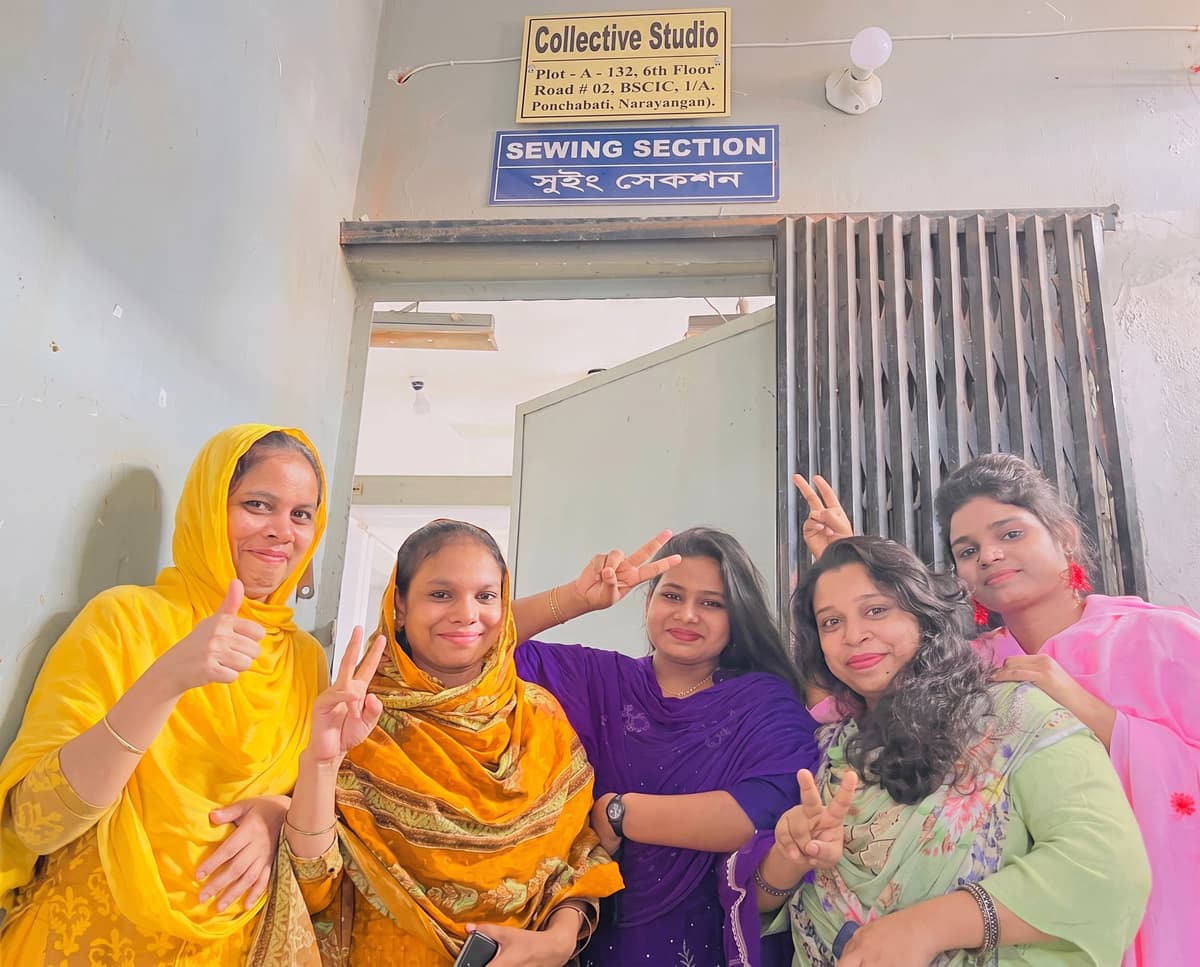
Yes. Pre-arranged visits to our factory at Plot-A-132, Road No. 02, BSCIC Industrial Area, Panchabati, Narayanganj 1420 are welcome, and seeing a floor in person is the surest way to check any manufacturer. To arrange one, open "Add more detail" on the form, tick "Schedule a visit", and we'll agree dates with you. The photographs on this page show what you'll see: the sewing line, Walter Meyer inspecting a finished tee, and the sewing section team, whom you're welcome to meet. If you can't travel to Bangladesh, ask for a live video walkthrough of the production floor instead. If you're in Europe, our Amsterdam office at Soetendaal 61 handles brand and design meetings. Our fabric mills and dye houses are separate partner businesses, and what you walk through is our own cut-and-sew floor. A factory that turns evasive when you ask to visit, or to see the floor on video, is telling you something.
We hold GOTS certification under certificate RSC 9687, and the scope certificate is available on request, so you see the document rather than a logo. GOTS covers organic fibre content, bans restricted chemistry including PFAS under version 7.0, and audits working conditions against core ILO conventions across the supply chain. We're also members of BKMEA (Bangladesh Knitwear Manufacturers and Exporters Association) and the Narayanganj Chamber of Commerce. If you need certified organic pieces, tick "GOTS-certified organic" on the form so we price certified fabric from the start; we arrange a Transaction Certificate on request for each order and quote its fee in your costing. Other fibres on offer include recycled performance blends, hemp, bamboo viscose and modal. Stretch fabric qualifies only within GOTS fibre limits: a 95/5 organic cotton and elastane blend can carry the organic label, a high-synthetic technical fabric can't, so we'll flag which pieces in your range can make the claim.
We're an export manufacturer — the whole operation is built around shipping DDP to brands abroad, and effectively all of our work goes overseas. The distinction that matters is where the goods end up, not where you happen to be sitting. If you're a Bangladeshi-owned brand selling into Europe, North America, Australia or the Gulf, that is squarely what we do and you should get in touch; plenty of our clients are founders with roots here and a customer base somewhere else. If what you need is stock for the domestic retail market in Dhaka, Chattogram or Narayanganj, we're honestly not the right factory for you — our minimums, our documentation and our pricing are all built around export orders, and a local supplier will serve you faster and cheaper. We'd rather say that plainly now than after you've spent a week on a tech pack.